
Trees
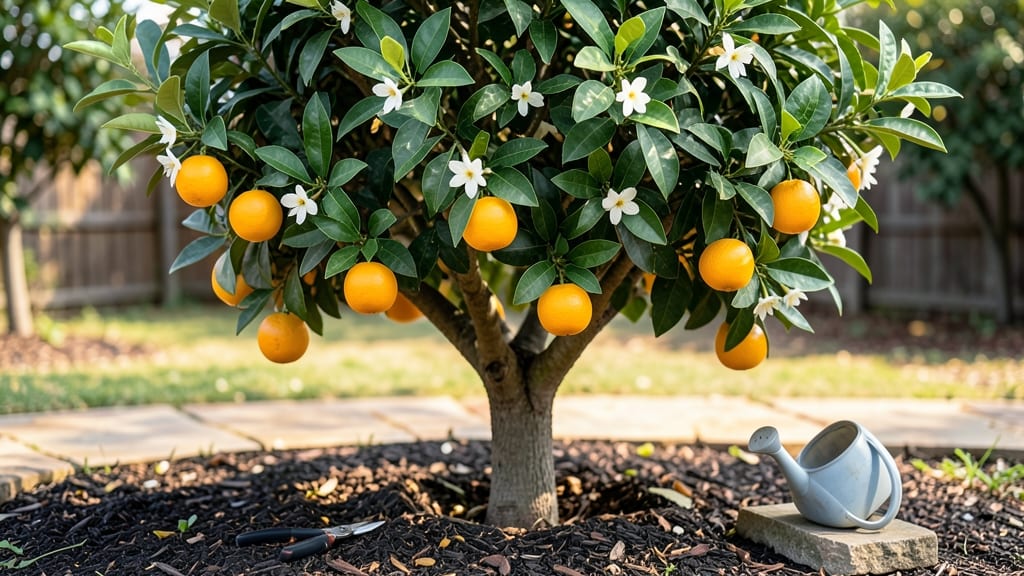
Growing a Parson Brown orange tree in your yard means sweet, juicy fruit even when winter chills the air—this cold-hardy variety thrives where most citrus trees would freeze. 🌱 I planted mine last spring in a sheltered spot, and now it’s loaded with fruit despite our Zone 5 winters.
The secret isn’t just the tree itself but how you protect it when temperatures dip below 20°F.
This tree handles cooler climates better than most, but it still needs the right conditions to reward you with year-round harvests. Plant it in well-draining soil with full sun, water deeply but infrequently once established, and prune lightly in late winter to encourage strong growth.
The real magic happens when you wrap the trunk in burlap and cover it with frost cloth during hard freezes—my tree has survived three winters this way.
📚 In This Guide
- What you need
- Instructions
- Tips and common mistakes
- Wrapping up and next steps
What you need
- ● Parson Brown orange tree: A healthy 1-3 year old sapling (bare-root or potted) from a reputable nursery. Pro tip: 💡 Look for trees grafted on trifoliate orange rootstock for better cold hardiness!
- ● Well-draining soil: A mix of 60% native soil, 30% compost, and 10% coarse sand or perlite (1-2 cubic yards for planting).
- ● Planting hole: Twice as wide and deep as the root ball (use a spade or shovel).
- ● Organic mulch: 3-4 inches of wood chips or straw (spread in a 3-foot radius around the base).
- ● Fertilizer: Citrus-specific fertilizer (e.g., 10-10-10 or 8-3-9) with micronutrients (1 lb per year of tree age, applied 3 times/year).
- ○ Slow-release granules (optional but recommended for steady growth).
- ● Watering supplies: Drip irrigation system or soaker hose (for consistent moisture).
- ● Watering can or hose (for initial planting and hand-watering).
- ● Support stake: 4-5 ft wooden or metal stake + soft tree tie (to secure young trees).
- ● Cold protection (for Zone 7 and colder): Burlap wraps or frost cloth (for young trees in winter).
- ● Anti-desiccant spray (e.g., Wilt-Pruf) to prevent winter damage.
- ● Mycorrhizal fungi (to boost root health—mix into planting hole).
- ● Citrus-specific pest control: Neem oil or horticultural oil (for aphids/mites).
- ● Tree pruners or loppers (for shaping and maintenance).
- ● Soil pH test kit (ideal range: 6.0-7.0; amend with lime if needed).
- ● Pollination aid: A small paintbrush (if growing from seed or ensuring cross-pollination).
How to plant and care for a cold-hardy Parson Brown orange tree
Here's the straightforward method I've used to grow thriving Parson Brown trees in cooler climates.
🪴 Step 1: Choose the Right Planting Location and Soil
Parson Brown trees thrive in full sun—at least 6-8 hours daily—but can tolerate partial shade in hotter regions. I always pick a spot with afternoon shade if your summers run hotter than 90°F. The tree needs well-draining soil with a slightly acidic to neutral pH (6.0-7.0)—this variety handles clay better than most citrus, but amending with 2-3 inches of compost before planting gives it a strong start.
Here's the thing—Parson Browns hate soggy roots. If your soil drains poorly, mix in 1 part perlite or coarse sand to 3 parts native soil when planting. You'll see new growth within 4-6 weeks if the soil conditions are right, but poor drainage will stunt the tree or cause root rot within months.
☀️ Step 2: Plant at the Correct Depth and Water Thoroughly
Dig a hole twice as wide as the root ball but only as deep as the container it came in. Parson Brown trees have shallow roots, so burying too deep suffocates them. Gently remove the tree from its container and loosen any circling roots with your fingers—this prevents girdling as the tree matures. Place it in the hole so the top of the root ball sits 1 inch below soil level (the tree will settle slightly).
Backfill with native soil mixed with your compost, tamping lightly as you go. Water deeply right after planting—aim for 2 gallons spread evenly around the root zone. You'll want the soil to be moist but not waterlogged at a 6-inch depth after watering. Mulch with 2-3 inches of organic mulch (like wood chips) to retain moisture and protect roots from temperature swings.
💧 Step 3: Establish a Consistent Watering and Fertilizing Routine
Parson Brown trees need regular watering—about 1-2 gallons per week in the first year, depending on rainfall. Water deeply every 5-7 days during dry spells, aiming to moisten soil 12 inches down. You'll know it's right when the top 2 inches of soil feel dry to the touch. Overwatering causes root rot, so let the top inch dry out between waterings once established.
Fertilize every 6-8 weeks starting in spring with a balanced citrus fertilizer (like 6-6-6). I use half the recommended dose the first year to avoid burning tender roots. You'll see new leaves emerge within 2-3 weeks of fertilizing—this is your sign the tree is thriving. Stop fertilizing in fall to let the tree harden off for winter.
✂️ Step 4: Prune for Shape and Winter Protection
Prune in late winter or early spring before new growth starts. Remove any dead, diseased, or crossing branches first—this keeps air circulating and prevents fungal issues. Thin out 10-20% of the canopy to improve sunlight penetration to the center. Parson Browns bloom on new wood, so don't over-prune—you want to maintain a good leaf-to-fruit ratio for next year's harvest.
In colder climates (below 15°F), wrap the trunk with burlap or frost cloth and cover the root zone with 4-6 inches of mulch. I've grown these down to -10°F with proper protection—they'll lose leaves but bounce back in spring. If your winters are milder (above 20°F), minimal protection is needed. Watch for bud swell in spring—this is your cue that the tree is ready to push new growth.
🍊 Step 5: Harvest and Overwinter for Next Year
Parson Brown oranges ripen in late fall to winter (November through January in most zones). Harvest when the fruit is deep orange, slightly soft to gentle pressure, and smells sweet. You'll get 4-6 fruits per tree in the first year, increasing to 20-30 as the tree matures. Store unripe fruit at 50-55°F to finish ripening indoors.
After harvest, reduce watering by half and stop fertilizing. Clean up fallen leaves and debris around the tree to prevent pests and diseases from overwintering. I always spray the tree with neem oil in late fall as a preventative measure—this keeps aphids and scale from moving in when the tree is dormant.
Tips & tricks for perfect cold-hardy Parson Brown orange tree
Took me years of trial and error to master these cold-hardy citrus care secrets—here's what actually works.
Sunlight Strategy: In Step 1, when selecting your planting spot, I recommend testing sunlight exposure for a full week before planting. Use a simple sunlight calculator app to track how many hours your location gets direct sun. If you're in a region with intense afternoon sun (above 90°F), consider planting near a north-facing wall that provides natural shade during peak heat hours. This balance is key to preventing leaf scorch while maintaining the 6-8 hours of sunlight Parson Browns need to thrive.
Root Ball Rescue: When loosening circling roots in Step 2, don't just pull—they're delicate! Use your fingers to gently separate them in a downward motion, following their natural growth pattern. I've found that making 2-3 vertical cuts around the root ball with a clean knife helps break up compacted roots without damaging them. This technique prevents girdling and gives roots room to spread properly once planted.
Winter Protection Layering: For the winter protection in Step 4, I've learned that layering protection makes all the difference. Start with a 2-inch base of straw mulch directly against the trunk, then add your 4-6 inches of wood chips on top. This creates an insulating air pocket that prevents moisture buildup against the bark. In extreme cold (below 15°F), I also wrap the trunk with two layers of frost cloth—one tight against the bark and a second looser layer—to create a microclimate that maintains temperatures above freezing.
Harvest Timing: When checking for ripe fruit in Step 5, I've developed a simple three-point test: first, examine the color—deep orange means maturity. Second, gently press the fruit—it should yield slightly like a ripe peach. Third, smell the stem end—it should release a sweet citrus aroma. I've found that harvesting in the morning gives me the freshest fruit, as overnight temperatures often help ripen the oranges slightly. Store any unripe fruit in a paper bag with an apple to speed up the ripening process using natural ethylene gas.
Pro Tips for Parson Brown Orange Tree
- Took me years of trial and error to master these cold-hardy citrus care secrets—here's what actually works.
- Sunlight Strategy: In Step 1, when selecting your planting spot, I recommend testing sunlight exposure for a full week before planting.
- Root Ball Rescue: When loosening circling roots in Step 2, don't just pull—they're delicate!
Frequently asked questions
Got questions about the Parson Brown orange tree? You’re not alone! This cold-hardy variety is a game-changer for home growers, but it’s natural to wonder about care, timing, and troubleshooting. Below, we’ve rounded up the most common questions—plus expert tips to keep your tree thriving.
How cold can a Parson Brown orange tree tolerate?
The Parson Brown is one of the most cold-hardy citrus varieties, surviving down to 10–15°F (-12 to -9°C) with proper care. However, young trees or newly planted ones are more vulnerable—consider wrapping the trunk in burlap or using frost cloth for extra protection during harsh winters.
When should I plant a Parson Brown orange tree?
For best results, plant your Parson Brown in early spring or late fall when temperatures are mild. This gives roots time to establish before extreme heat or cold sets in. Avoid planting in summer—root stress from heat can stunt growth.
How long does it take for a Parson Brown tree to bear fruit?
With ideal conditions, a Parson Brown tree can produce fruit in 3–5 years. Patience is key! Young trees focus on root and branch development first. Prune lightly to encourage a sturdy structure, and fertilize regularly to speed up fruiting.
What should I do if my Parson Brown tree’s leaves turn yellow?
Yellow leaves often signal overwatering, nutrient deficiency, or root rot. Check soil moisture—citrus trees prefer well-draining soil—and adjust watering to once a week (or less in winter). If roots smell rotten, trim affected areas and repot with fresh, sandy soil.
Can I grow a Parson Brown orange tree in a container?
This variety thrives in 15–25 gallon containers with drainage holes. Use a mix of potting soil and sand for aeration, and move the pot indoors or to a sheltered spot when temperatures drop below 30°F (-1°C). Just ensure it gets 6–8 hours of sunlight daily for optimal growth.
Wrapping up and next steps
The Parson Brown orange tree proves that growing citrus in colder climates isn’t just possible—it’s rewarding! 🌳 With its cold-hardy nature and sweet, juicy fruit, this variety is a game-changer for gardeners in chilly regions.
Whether you're a seasoned grower or a newbie, planting one is a step toward fresh, homegrown oranges year after year.
Ready to take the next step? Start by researching your local climate zone and sourcing a healthy sapling from a trusted nursery. Then, roll up your sleeves—your future harvest is waiting!