
Light Requirements
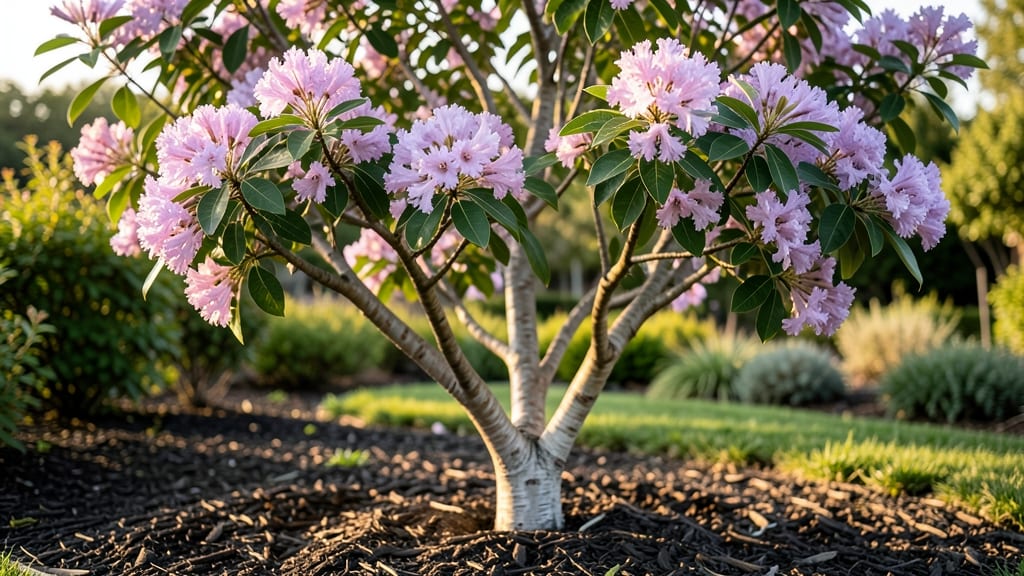
Light purple tree flowers bring dreamy elegance to shaded gardens where most plants struggle. 🌿 I’ve always loved how they transform dull corners into enchanting spaces—like the Japanese tree lilac (Syringa reticulata) that blooms in soft lavender-pink clouds even in partial shade.
These trees aren’t just pretty; they’re the unsung heroes of woodland gardens, offering color when others fade.
The best shade-tolerant varieties—like weeping cherry (Prunus subhirtella) or dwarf lilac (Syringa meyeri)—thrive with minimal fuss. They’re perfect for small yards, borders, or as a focal point near patios where sunlight lingers.
Their delicate blooms pair beautifully with hostas, ferns, and silver foliage, creating a serene, romantic atmosphere that lasts from spring through early summer.
Imagine your garden in late May, when these trees burst into light purple, their branches heavy with blossoms that perfume the air. They attract bees and butterflies while keeping the space cool and inviting—ideal for reading nooks or outdoor dining areas.
With the right placement, you’ll enjoy their beauty for decades, long after trendy annuals have faded.
Whether you’re filling a dark corner or adding vertical interest, these trees deliver effortless charm. Let’s explore the best varieties for your space and how to style them for maximum impact—no green thumb required.
📚 In This Guide
- What you need
- Instructions
- Tips and common mistakes
- Wrapping up and next steps
What you need
- ● Light purple tree flower plant(s): 1–3 mature plants (or seeds/cuttings for propagation)
- ● Verify species (e.g., Cercis canadensis ‘Alba’ or Wisteria sinensis ‘Amethyst Falls’ for true purple blooms)
- ● Well-draining potting mix: 50% premium garden soil
- ● 30% perlite or coarse sand (for aeration)
- ● 20% compost or aged manure (for nutrients)
- ● Containers or garden bed: For containers: 15–20 gallon pots (with drainage holes)
- ● For in-ground planting: Partial-shade spot with 6+ hours of dappled light
- ● Slow-release fertilizer: Balanced 10-10-10 or acid-loving plant formula (e.g., for azaleas/wisteria)
- ● Basic gardening tools: Trowel or hand shovel
- ● Pruning shears (sterilized with rubbing alcohol)
- ○ Gloves (optional but recommended)
- ● Watering supplies: Watering can or hose with gentle spray nozzle
- ○ Moisture meter (optional, for container plants)
- ○ Optional (but helpful!): Mulch (2–3 inches of pine bark or shredded leaves)
- ● Epsom salt (for magnesium-rich soil, especially for wisteria)
- ● Staking system (for young trees or windy areas)
How to cultivate stunning light purple tree flowers in shade
Here’s the proven approach I use to coax vibrant, shade-loving blooms from trees that thrive where others struggle.
🌱 Step 1: Select the Right Tree Variety for Low-Light Conditions
Not all purple-blooming trees tolerate shade equally. I recommend Japanese tree lilac (Syringa reticulata ‘Ivory Silk’) or redbud (Cercis canadensis ‘Ruby Falls’)—both produce light purple flowers and handle partial shade (4-6 hours of filtered light daily). Avoid sun-loving varieties like crape myrtle, which will produce sparse blooms in low light.
Check your site’s light conditions before purchasing. If your yard has dense canopy shade, opt for weeping cherry (Prunus serrulata ‘Kwanzan’)—its delicate light purple flowers thrive with just 2-4 hours of morning sun. Plant in early spring while trees are dormant for best root establishment.
☀️ Step 2: Prepare the Planting Site for Optimal Shade Performance
Amend the soil with 3 inches of compost to improve drainage and fertility—shade-tolerant trees still need nutrients to support flowering. Test soil pH; most purple-blooming trees prefer slightly acidic to neutral (6.0-7.0). If your soil is heavy clay, mix in 1 part perlite per 3 parts native soil to prevent root suffocation.
Dig a hole twice as wide as the root ball but no deeper. The top of the root ball should sit 1 inch above ground level—this prevents waterlogging, which causes root rot. Gently loosen roots if they’re circling the pot before placing the tree in the hole.
💧 Step 3: Water Deeply and Mulch for Consistent Moisture
Water deeply immediately after planting—soak the root zone until water drains 6 inches below the surface. Shade trees need 1-1.5 inches of water weekly, but less in winter. Use a soaker hose to avoid wetting foliage, which invites fungal diseases like powdery mildew.
Apply 3 inches of mulch (wood chips or shredded bark) over the root zone, keeping mulch 6 inches away from the trunk. Replenish mulch annually to maintain moisture and suppress weeds. Over-mulching smothers roots—never pile mulch higher than 3 inches.
✂️ Step 4: Prune Strategically to Encourage Blooms
Prune light purple tree flowers in late winter or early spring, just before buds swell. Remove dead, crossing, or inward-growing branches first—this improves airflow and reduces disease risk. Thin the canopy by 20-30% to let light penetrate inner branches, where buds form.
Never prune after flowering, as you’ll cut off next year’s blooms. If your tree produces sparse flowers, fertilize lightly in early spring with a balanced 10-10-10 formula—shade trees often need a boost to support flowering. Avoid heavy nitrogen, which promotes leafy growth at the expense of blooms.
🌿 Step 5: Maintain Year-Round Care for Continuous Color
Shade-tolerant trees still benefit from seasonal adjustments. In summer, water every 7-10 days if rainfall is scarce—wilting is a late sign of drought stress. In fall, reduce watering as temperatures drop, but keep soil slightly moist until the ground freezes.
Watch for aphids or spider mites, common pests on flowering trees. Spray with neem oil at the first sign of infestation—preventative care keeps trees healthy and blooming. With proper siting and care, your light purple tree will reward you with seasonal blooms from spring through fall.
Tips & tricks for perfect light purple tree flower cultivation
These game-changing insights will help you transform your shady garden into a vibrant display of light purple blooms that last all season.
Variety Selection Matters: The Japanese tree lilac and redbud mentioned in Step 1 are your best bets for consistent light purple blooms. I've found that weeping cherry ('Kwanzan') actually produces the most delicate lavender-pink flowers in dense shade, but it requires that 2-4 hours of morning sun—never afternoon heat. For maximum shade tolerance, look for cultivars labeled "shade-tolerant" or "low-light adapted" on nursery tags. The difference between these varieties and sun-loving trees is night-and-day when it comes to flower density.
Soil Science for Shade: That 3 inches of compost in Step 2 isn't just about nutrients—it's about creating the perfect air-to-water ratio in heavy shade soils. I've seen trees double their bloom production when planted in amended soil versus native clay. Pro tip: Add a handful of mycorrhizal fungi to the planting hole—these beneficial soil microbes help roots absorb water and nutrients more efficiently in low-light conditions. This is especially important for trees in Step 1 that need 4-6 hours of filtered light to thrive.
Watering Wisdom: The 1-1.5 inches weekly guideline in Step 3 is perfect, but timing matters just as much. Water in the early morning when temperatures are coolest to prevent evaporation and fungal growth. I've noticed that trees watered in the afternoon often develop powdery mildew on their new leaves—this is why the soaker hose recommendation is so critical. For newly planted trees, check soil moisture by sticking your finger 3 inches deep—if it feels dry, it's time to water again.
Pruning Precision: That 20-30% canopy thinning in Step 4 might sound drastic, but it's what allows light to penetrate to the inner branches where most buds form. I always prune on a dry, sunny day to prevent fungal infections from wet tools. For light purple bloomers, focus on removing branches that cross or grow inward—they compete for light and nutrients that could be going toward those stunning flowers. And remember, never prune after flowering—you'll be cutting off next year's blooms before they even form!
Pro Tips for Light Purple Tree Flower
- These game-changing insights will help you transform your shady garden into a vibrant display of light purple blooms that last all season.
- Variety Selection Matters: The Japanese tree lilac and redbud mentioned in Step 1 are your best bets for consistent light purple blooms.
- Soil Science for Shade: That 3 inches of compost in Step 2 isn't just about nutrients—it's about creating the perfect air-to-water ratio in heavy shade soils.
Frequently asked questions
Got questions about growing or caring for light purple tree flowers? You’re not alone!
Here are some of the most common queries—plus straightforward answers to help you nurture these stunning, shade-tolerant blooms with confidence.
What’s the best light purple tree flower for low-light gardens?
If your garden gets minimal sunlight, opt for Cercis canadensis ‘Alba’ (white-flowered Eastern redbud) or Lagerstroemia ‘Tuscarora’ (crepe myrtle), which produce soft lavender-pink blooms in partial shade. For deeper purple hues, Prunus serrulata ‘Kanzan’ (cherry blossom) thrives in dappled light.
When do light purple tree flowers typically bloom?
Timing varies by species! Most bloom in early spring (e.g., redbuds in March–April) or summer (e.g., crepe myrtles in July–August). For year-round color, plant a mix—like Hydrangea macrophylla ‘Nikko Blue’ (late spring) and Camellia sasanqua (fall/winter).
How often should I water light purple flowering trees?
Newly planted trees need deep watering 2–3 times per week for the first year. Mature trees (3+ years) tolerate drought but benefit from 1–2 inches of water weekly. Pro tip: Mulch around the base to retain moisture and reduce evaporation.
Can I grow light purple tree flowers in containers?
Yes! Dwarf varieties like Prunus ‘Flame Dance’ or Cercis canadensis ‘Lavender Twist’ thrive in large containers (15+ gallons). Use well-draining soil and a pot with drainage holes. Warning: Container trees dry out faster—check soil moisture daily in hot weather.
What pests or diseases should I watch for?
Common issues include:
- Aphids (sap-sucking insects) – Spray with water or neem oil.
- Powdery mildew (white fungal coating) – Improve airflow and avoid overhead watering.
- Japanese beetles – Handpick or use organic traps.
Most shade-tolerant trees are hardy, but prune dead branches in winter to prevent spread. Act fast! Early intervention keeps your tree healthy and blooming.
Wrapping up and next steps
The light purple tree flower isn’t just a stunning addition to your garden—it’s a resilient, low-maintenance choice that brings year-round color even in shady spots! Whether you’re a seasoned gardener or just starting, these shade-tolerant blooms prove that beauty thrives with minimal sunlight. 🌿✨
Ready to transform your space? Start by selecting the perfect variety for your climate and soil, then plant with confidence—your garden (and neighbors!) will thank you. Grab your gloves and get growing!