
Fertilization
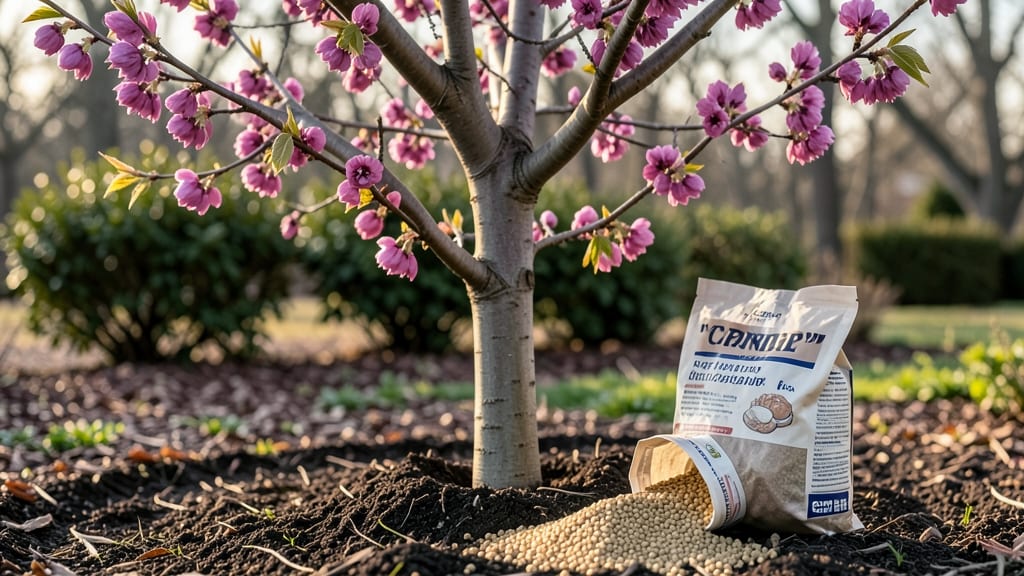
Your eastern redbud tree’s spring bloom explosion starts with the right fertilizer—not what you’re probably using. I’ve watched redbuds go from sparse pink blooms to jaw-dropping floral displays just by adjusting their feeding schedule, and the secret isn’t complicated: timing, balance, and a little patience.
Most gardeners overdo it with nitrogen, which kills the flowers you actually want to see.
The magic happens in three targeted applications—one in early spring, one after blooming, and one in late summer—using a low-nitrogen, high-phosphorus blend (think 5-10-10 or 6-12-12). Organic options like bone meal or composted manure work too, but synthetic fertilizers let you dial in the exact ratios your redbud craves.
The key is avoiding anything with more than 10% nitrogen, which sends energy to leaves instead of those iconic blooms.
By mid-April, you’ll see buds swelling with color, and by June, your tree will be covered in blossoms so dense they look like pink snow. The soil stays rich without burning roots, and you skip the guesswork of over-fertilizing.
This method works for container-grown redbuds too—just halve the amounts and water thoroughly after each feeding.
Fair warning: redbuds hate soggy soil, so always water before applying fertilizer. And if you see yellow leaves or stunted growth, you’re overdoing it—cut back immediately.
The goal is to feed just enough to fuel those blooms, not to turn your tree into a leafy monster. Let’s get those pink cascades going!
📚 In This Guide
- What you need
- Instructions
- Tips and common mistakes
- Wrapping up and next steps
What you need
- ● Balanced fertilizer (10-10-10 or 20-20-20 NPK ratio) – 1-2 cups per application (check product instructions for exact amounts).
- ○ Slow-release granular fertilizer (e.g., organic options like fish emulsion or composted manure) – ½ cup per tree (optional but ideal for long-term growth).
- ● Phosphorus-rich fertilizer (e.g., bone meal) – ¼ cup per tree (boosts root and flower development).
- ● Watering can or hose with a gentle spray nozzle – For even distribution.
- ● Gloves – To protect your hands from fertilizer granules.
- ● Measuring scoop or scale – Ensures precise application.
- ○ Garden fork or trowel – For lightly aerating soil before fertilizing (optional but helpful).
- ○ Mulch (optional) – 2-3 inches of shredded bark or wood chips to retain moisture and regulate soil temperature.
- ● Soil pH test kit – To check if your soil is slightly acidic (6.0-7.0) (ideal for redbuds). Adjust with lime or sulfur if needed.
- ● Sunny day or overcast afternoon – Avoid fertilizing on hot, dry days or right before rain.
How to fertilize an eastern redbud tree for stunning spring blooms
Here's the simple, science-backed approach I use to keep my redbuds flowering like crazy every spring.
Test Your Soil First
Before adding any fertilizer, grab a soil test kit from your local extension office or garden center. Eastern redbuds prefer slightly acidic to neutral soil with a pH between 6.0 and 7.0. If your test shows anything outside this range, you'll need to adjust it first—liming for acidic soil or sulfur for alkaline soil—before fertilizing.
I always test because redbuds are sensitive to over-fertilizing. A soil test also tells you what nutrients your tree is already getting from the soil, so you don't waste money on fertilizers with ingredients your tree doesn't need. Most home test kits include instructions for adjusting pH and interpreting results.
Apply a Slow-Release Fertilizer in Early Spring
Once you have your soil test results, choose a balanced, slow-release fertilizer with equal parts nitrogen, phosphorus, and potassium (like a 10-10-10 formula). For a mature eastern redbud, use about 1 pound of fertilizer per inch of trunk diameter. For example, if your tree's trunk is 4 inches in diameter, you'll need 4 pounds of fertilizer. Sprinkle it evenly around the tree's drip line—about 2 feet from the trunk—and water it in deeply.
Here's the thing—redbuds are light feeders, so don't overdo it. I like to use a granular, slow-release fertilizer because it feeds the tree steadily over time without the risk of burning roots. Water the area thoroughly after application to help the granules break down and reach the roots.
Add a Bloom-Boosting Fertilizer in Late Winter
About 6-8 weeks before your expected last frost date, switch to a higher-phosphorus fertilizer like a 5-10-5 or 10-20-10 formula. Phosphorus is the nutrient that encourages root development and flowering. Use about half the amount you used in early spring—so for that 4-inch trunk, you'd use 2 pounds of this fertilizer. Spread it evenly in the same 2-foot radius around the drip line and water it in well.
This is the moment that matters for blooms. The phosphorus helps the tree build strong roots and develop flower buds for the coming season. I always mark my calendar for this step because timing is everything. If you apply it too early, the nutrients might not be available when the tree needs them most.
Maintain With Organic Matter in Fall
After the blooms fade but before the first hard frost, spread a 2-3 inch layer of compost or well-aged manure over the root zone. This adds organic matter to the soil, improving its structure and providing a slow release of nutrients over time. I like to use composted cow manure because it's rich in nutrients and breaks down evenly. Water it in thoroughly to help it settle into the soil.
This step is often overlooked, but it's crucial for long-term tree health. Organic matter also helps retain moisture and encourages beneficial soil organisms that keep your redbud thriving. Don't skip it—your tree will thank you with even more vibrant blooms next spring.
Monitor and Adjust Yearly
Every year, keep an eye on your tree's growth and bloom performance. If the leaves look pale or the blooms are sparse, it might be time to adjust your fertilizer routine. For example, if the leaves are yellowing, your tree might need more iron or nitrogen. If the blooms are small or few, it could be a sign of phosphorus deficiency.
I always take notes after each growing season—what worked, what didn't, and any changes I notice in the tree. This helps me fine-tune the fertilizer schedule for the next year. Remember, every tree and every soil is different, so be patient and adjust as needed. Your eastern redbud will reward you with stunning spring blooms for years to come.
Tips & tricks for perfect eastern redbud tree fertilization
These are the practical insights I wish I'd known when I first started fertilizing my redbuds—tricks that'll help you avoid common mistakes and get those spectacular spring blooms every time.
Soil Test Accuracy: Don't just grab any soil test kit—look for one specifically designed for trees and shrubs. The pH range of 6.0-7.0 is crucial for redbuds, and some generic garden kits might not give you precise enough readings. I've found that extension office kits are the most reliable. If your test shows a pH of 5.5 or lower, you'll need to add lime to raise it before fertilizing. For pH above 7.5, elemental sulfur will help lower it gradually.
Fertilizer Application Technique: When spreading your fertilizer in Step 2, use a spreader with adjustable settings to ensure even distribution. For that 4-inch trunk example, scatter the 4 pounds of 10-10-10 fertilizer in concentric circles starting 2 feet from the trunk and working outward. This creates a donut-shaped application zone that matches the tree's root spread. Water immediately after application to activate the granules—this is where most people fail and waste fertilizer.
Timing is Everything for Blooms: That 6-8 week window before last frost in Step 3 is non-negotiable for phosphorus fertilization. I mark my calendar for this date each year because getting it wrong can mean sparse blooms. If you're in a region with unpredictable frost dates, use your average last frost date as your guide. Pro tip: If your area gets early frosts, you might need to adjust to 7-9 weeks before your average date to ensure the phosphorus is available when the tree needs it most for bud formation.
Organic Matter Layering: For the fall compost application in Step 4, I've found that mixing compost with a small amount of wood chips (about 1 inch layer) on top helps retain moisture better during winter. The wood chips act like mulch while the compost continues breaking down. This two-layer system has given me noticeably healthier trees the following spring. Just be sure to keep the wood chips at least 6 inches away from the trunk to prevent rot.
Pro Tips for Eastern Redbud Tree Fertilizer
- These are the practical insights I wish I'd known when I first started fertilizing my redbuds—tricks that'll help you avoid common mistakes and get those spectacular spring blooms every time.
- Soil Test Accuracy: Don't just grab any soil test kit—look for one specifically designed for trees and shrubs.
- Fertilizer Application Technique: When spreading your fertilizer in Step 2, use a spreader with adjustable settings to ensure even distribution.
Frequently asked questions
When is the best time to fertilize an Eastern Redbud tree?
The ideal window is early spring (just as buds swell) and again after blooming (late May). Avoid fertilizing in fall—it can encourage tender new growth that won’t survive winter. For slow-release options, apply once in early spring and once mid-summer.
Can I use regular lawn fertilizer on my redbud tree?
Not recommended! Lawn fertilizers are high in nitrogen, which promotes leafy growth at the expense of flowers. Instead, opt for a balanced, tree-specific fertilizer (like 10-10-10 or 8-3-9) or an organic option like compost or worm castings. Always check the NPK ratio for flowering trees.
How do I know if my Eastern Redbud needs fertilizer?
Watch for these signs:
- Pale or sparse leaves (nutrient deficiency)
- Fewer/misshapen flowers (lack of phosphorus)
- Stunted growth (overall poor health)
Is organic fertilizer better for Eastern Redbuds?
Organic fertilizers (compost, fish emulsion, or slow-release granules) are gentler and improve soil long-term, but they work slower. Synthetic fertilizers offer faster results for blooms. Mix both: Use organic in fall to build soil, then a balanced synthetic in spring for a show-stopping bloom!
What if I over-fertilize my redbud tree?
Overdoing it can cause leaf burn, stunted growth, or even root damage. Symptoms include yellowing leaves, wilting, or white crust on soil. If this happens, flush the soil with water, reduce future doses by half, and avoid fertilizing for 3–4 months. Always follow package instructions!
Wrapping up and next steps
Giving your eastern redbud tree the right nutrients this spring doesn’t just fuel its stunning blooms—it sets the stage for years of vibrant growth. 🌸 With the right fertilizer blend and timing, you’re not just feeding the tree; you’re investing in a backyard showstopper that’ll turn heads for seasons to come.
Ready to see those pink blossoms pop even brighter? Grab your gloves, head outside, and apply what you’ve learned—your redbud’s next masterpiece starts now!
🚀 Next Steps:
- Monitor progress: Keep an eye on new foliage and bud formation over the next 4-6 weeks.
- Adjust as needed: If leaves look pale or growth stalls, tweak your fertilizer ratio or schedule.
- Share the love: Snap a photo of your redbud’s progress and tag us—we’d love to see your blooming success!