
Pruning
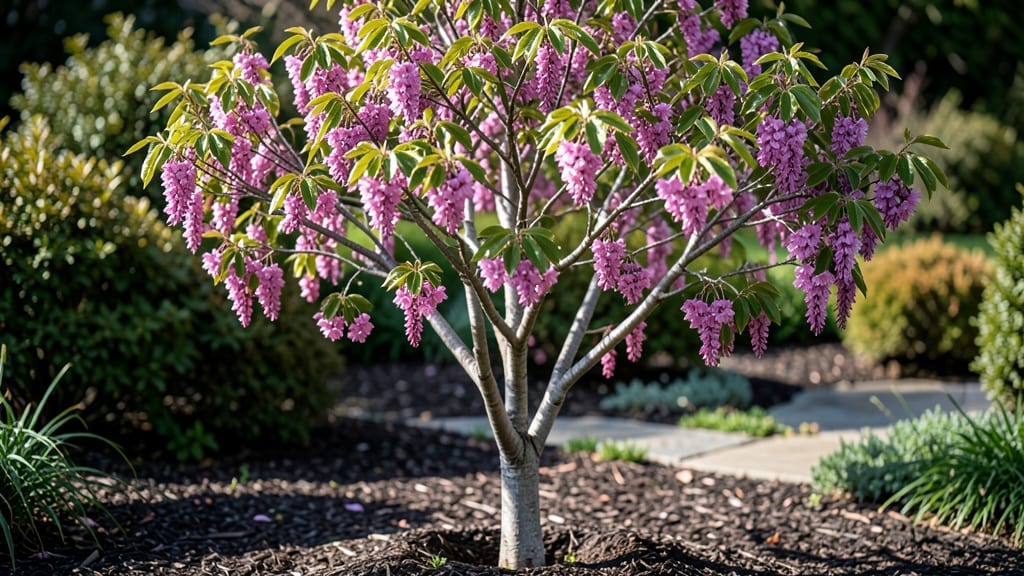
Your redbud tree’s mature size determines whether it becomes a showstopper or a space hog—a 20- to 30-foot spread is typical, but pruning can shrink it to half that.
I learned this the hard way after planting one too close to my patio, where its branches stretched over the table every spring. The key? Understanding how fast it grows (12-18 inches per year) and how its roots spread wider than its canopy does.
Redbuds thrive in small spaces because they’re naturally compact compared to oaks or maples, but their roots demand room. Plant at least 15 feet from structures unless you’re happy with pruning every year.
Varieties like 'Forest Pansy' stay slightly smaller (20 feet tall), while 'Rubra' grows taller but narrower—ideal for narrow yards. Containers work too, but expect slower growth and more pruning to control height.
With the right pruning, you’ll keep it from outgrowing its spot while maximizing those stunning pink blooms. Focus on removing water sprouts and shaping in late winter, when the tree’s dormant.
I’ve seen redbuds pruned back by 30% still burst into bloom the next spring—proof that size control doesn’t mean sacrificing beauty.
For multiple trees, space them 20-25 feet apart to avoid future pruning battles. And if you’re planting near a fence or driveway, factor in a 5-foot clearance for safety and aesthetics. The payoff? A tree that fits your space and steals the show every April.
📚 In This Guide
- What you need
- Instructions
- Tips and common mistakes
- Wrapping up and next steps
What you need
- ● Pruning shears – Bypass pruners (1 pair), sharp and clean for clean cuts.
- ● Loppers – 16-24" (40-60 cm) reach, for thicker branches (½"–1.5" diameter).
- ● Pruning saw – Curved-tooth saw, for branches too thick for loppers (1.5"+ diameter).
- ● Gloves – Heavy-duty, cut-resistant (e.g., leather or reinforced fabric).
- ● Disinfectant – 70% isopropyl alcohol or bleach solution (1:9 ratio), to sterilize tools between cuts.
- ○ Pruning sealant – Optional but helpful for large cuts (>2" diameter) to prevent disease.
- ● Ladder or step stool – Sturdy, 6–10 ft (1.8–3 m) height, if your tree exceeds 6 ft (1.8 m).
- ● Safety glasses – ANSI-rated, to protect from debris.
- ● Work boots – Slip-resistant, closed-toe for stability.
- ● Trash bags or bucket – For collecting pruned branches (1–2 large bags or a 5-gallon bucket).
- ● Weather check – Prune on a dry, calm day (avoid wind or rain).
- ● Timing – Late winter/early spring (just before buds swell) for best results.
- ● Tree assessment – Safety first! Inspect the tree for dead, diseased, or crossing branches before starting.
- ● Local regulations – Check if your area requires permits for large pruning jobs.
- ● Extension pole pruners – For high branches without a ladder.
- ● Tree wound dressing – Alternative to sealant (e.g., Tanglefoot Tree Wound Pruning Sealer).
- ● Notebook & pen – To sketch your pruning plan or track progress.
- ● Hand sanitizer – For post-pruning clean-up.
How to control redbud tree size through strategic pruning
Small spaces deserve big beauty—here’s how to keep your redbud tree in check.
Understand the Right Time for Pruning
Timing makes all the difference with redbuds. Prune immediately after flowering, when the vibrant pink blooms have faded but before new growth hardens. This ensures you don’t cut off next year’s flowers, which form on last year’s wood. Early spring pruning (March-April) works best in most climates. You’ll know it’s the right moment when you see fresh, bright green leaves appearing but the branches still feel slightly soft to the touch.
Never prune in late summer or fall—this encourages tender new growth that won’t harden off before winter, making your tree vulnerable to cold damage. If you miss the spring window, wait until late winter (just before buds swell) for a second chance, but avoid heavy pruning then.
Remove Problem Branches First
Start by eliminating any branches that cross, rub together, or grow straight upward at steep angles. These compete for space and energy, creating weak attachment points that can split during storms. Look for branches thinner than your thumb—these are candidates for removal. Use clean, sharp pruning shears to make cuts just outside the branch collar (the swollen area where the branch meets the trunk).
Also remove any dead, diseased, or damaged branches immediately. Redbuds are susceptible to fungal issues, so don’t leave stubs—they invite infection. Make your cuts at a slight angle to prevent water from pooling on the wound. You’ll notice healthier branches have smooth bark and vibrant green leaves, while problem branches often show brown or cracked areas.
Thin the Canopy for Airflow
Selective thinning opens up the tree’s interior for better light penetration and airflow. Focus on removing branches from the center that block sunlight from reaching the lower canopy. Aim to reduce density by about 20-30%—this prevents overcrowding while maintaining the tree’s natural shape. Start at the outer edges and work inward, removing smaller branches first.
When thinning, avoid cutting back to stubs. Instead, make cuts that leave a natural branch collar. You’ll see immediate improvement in leaf color and growth vigor after a few weeks. If you’re unsure which branches to remove, step back and look at the tree from all sides—you’re looking for a balanced silhouette with no heavy clusters on one side.
Shape Gradually for Compact Growth
For a naturally compact redbud, limit structural pruning to removing no more than 25% of the tree’s foliage in any single year. Use the “third cut rule”: if you’re unsure about a cut, wait until you can see clearly how it will affect the tree’s shape. Focus on reducing the height by pruning the uppermost branches first, then work your way down.
Young redbuds respond best to gradual shaping. If you have a mature tree that’s become too large, you’ll need to spread pruning over 2-3 years. Always prune in stages—removing too much at once stresses the tree and can lead to dieback. After pruning, monitor the tree’s response: healthy growth should appear within 4-6 weeks as new buds develop along remaining branches.
Tips & tricks for perfect redbud tree pruning
Keeping your redbud tree compact takes patience and precision—here’s how to avoid common mistakes and get the best results.
Timing is Everything: I can’t stress this enough—the window between when blooms fade and new growth hardens is your only chance to prune without sacrificing next year’s flowers. If you’re unsure, wait until you see fresh leaves appearing but branches still feel slightly soft to the touch. This typically falls in early spring (March-April), but check your local frost dates to be safe. Missing this window means you’ll have to wait another year for ideal pruning conditions.
Branch Selection Matters: When removing branches in Step 2, focus on those thinner than your thumb—these are the weak points that often break during storms. Also watch for branches growing straight upward at steep angles, as they create awkward shapes and compete with others for sunlight. Remember, you’re aiming for a balanced silhouette, so step back frequently to visualize the tree’s form as you work. The goal is to maintain its natural beauty while keeping it manageable.
Canopy Thinning Technique: In Step 3, when you’re thinning the canopy, aim to remove branches from the center first—this is where sunlight gets blocked most often. Start with smaller branches and work your way inward, always leaving at least 70% of the foliage intact. This 20-30% reduction prevents overcrowding while still allowing plenty of light to reach the lower branches. You’ll notice healthier leaves and better airflow almost immediately after pruning.
Gradual Shaping Wins: The “third cut rule” in Step 4 is your best friend—if you hesitate, wait until you can clearly see how the cut will affect the tree’s shape. For mature trees, spread pruning over 2-3 years to avoid stressing the tree. After pruning, monitor for new growth within 4-6 weeks. If you don’t see buds developing, you may have removed too much foliage in one session. Patience here pays off with a stronger, more compact tree over time.
Pro Tips for Redbud Tree Size
- Keeping your redbud tree compact takes patience and precision—here’s how to avoid common mistakes and get the best results.
- Timing is Everything: I can’t stress this enough—the window between when blooms fade and new growth hardens is your only chance to prune without sacrificing next year’s flowers.
- Branch Selection Matters: When removing branches in Step 2, focus on those thinner than your thumb—these are the weak points that often break during storms.
Frequently asked questions
Got questions about managing your redbud tree’s size?
You’re not alone! Whether you’re dealing with pruning, growth expectations, or space constraints, these answers will help you keep your tree thriving—without the guesswork.
How big does a redbud tree typically grow?
A mature redbud tree usually reaches 20–30 feet tall and 25–35 feet wide, though some varieties stay smaller (like the Eastern Redbud, which tops out at 15–20 feet). Pruning young trees early can help control height and width, keeping them perfect for small yards or urban landscapes.
When is the best time to prune a redbud tree for compact growth?
Prune redbuds right after flowering (late spring) to avoid cutting off next year’s blooms. For structural shaping, winter or early spring (before buds swell) is ideal. Avoid heavy pruning in fall—it can stimulate weak growth before winter dormancy.
Why is my redbud tree growing too fast or looking leggy?
Leggy growth often means too much shade or over-fertilizing with nitrogen. Thin out dense branches to improve airflow, and prune back overlong stems by 1/3 to encourage bushier growth. Redbuds thrive in full sun—consider relocating if shade is the issue.
Can I keep a redbud tree in a container or small space?
Yes! Dwarf varieties like ‘Alba’ or ‘Forest Pansy’ stay under 10 feet tall and work well in large pots (at least 24-inch diameter). Repot every 2–3 years and prune annually to maintain shape. Just ensure it gets 6+ hours of sunlight daily.
How much can I prune a redbud tree without harming it?
Redbuds tolerate moderate pruning (up to 25% of foliage per year), but avoid removing more than 30% in a single session. Focus on dead, crossing, or weak branches first. For dramatic size reduction, spread cuts over 2–3 years to minimize stress.
Wrapping up and next steps
Whether you’re dreaming of a whimsical, compact redbud tree or a towering shade provider, mastering pruning is your key to success! 🌿 With the right tools, timing, and techniques—like thinning cuts, heading back, and selective pruning—you can shape this stunning tree to fit your space and celebrate its vibrant blooms. Start small, stay patient, and watch your redbud thrive!
Ready to transform your yard? Grab your pruners and sketch a quick plan—then roll up your sleeves and give it a try! 🌸 No experience needed; just enthusiasm and a little green thumb magic.