
Pruning
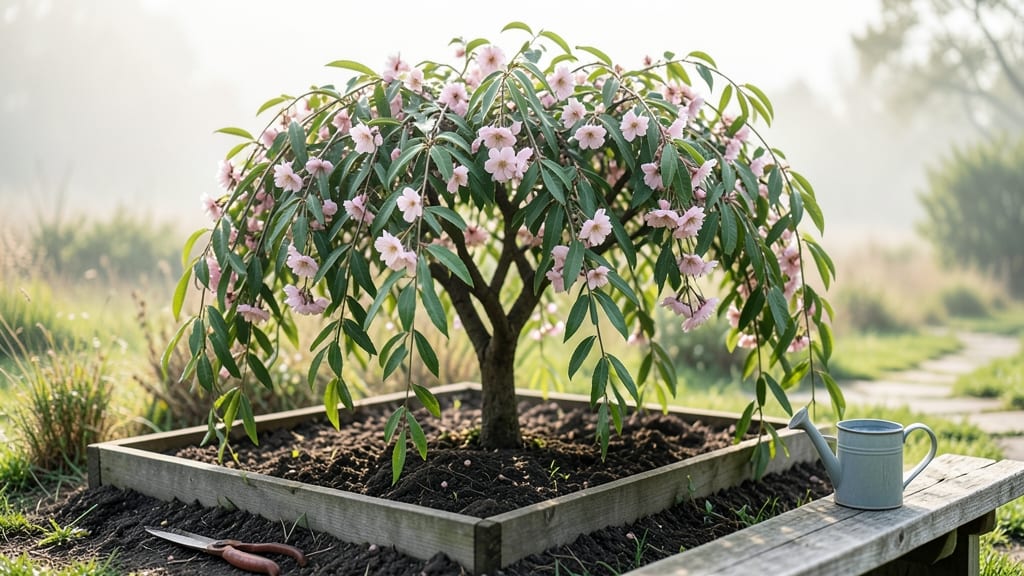
Your weeping peach tree fruit harvest starts with three pruning secrets that transform a pretty ornamental into a productive powerhouse. 🌱 I’ve seen these trees go from barely any fruit to buckets of juicy peaches just by adjusting when and how I cut—and it’s easier than you think.
The key lies in shaping the branches to catch sunlight while leaving room for airflow, both of which directly impact fruit set.
Most gardeners skip the early-season pruning that actually encourages heavy fruiting. You’ll need sharp pruners, a ladder for higher branches, and a clear day to work—no more than 2-3 hours total.
The goal is to open up the canopy so sunlight reaches the center, where most fruit forms, while thinning out crowded branches that compete for energy. Think of it like giving your tree a spa day: less stress, more rewards.
By mid-summer, you’ll notice clusters of tiny peach blossoms forming where you made those strategic cuts. Each bloom has the potential to become a fruit, and with proper pollination (more on that later), you’ll end up with 10-20% more peaches than an unpruned tree.
The fruit itself will be sweeter too, thanks to better air circulation reducing rot and pests. It’s the kind of transformation that makes neighbors ask, “How’d you do that?”
This method works in zones 6-9, whether you’re growing in full sun or partial shade with afternoon relief. The same principles apply whether you’re dealing with a young tree or one that’s been neglected—just adjust the intensity.
Ready to turn that weeping beauty into a fruiting machine? Let’s get to the first secret.
📚 In This Guide
- What you need
- Instructions
- Tips and common mistakes
- Wrapping up and next steps
What you need
- ● Pruning shears: Bypass pruners (sharp, clean, and sterilized to prevent disease). Recommended: Felco F-2 or similar (1 pair).
- ● Loppers: For thicker branches (1.5"–2" diameter). Tip: Look for ratchet-style for extra leverage (1 pair).
- ● Pruning saw: For branches too thick for loppers (2"–4" diameter). Example: Fiskars X27 (1 saw).
- ● Gloves: Heavy-duty, cut-resistant (e.g., Mechanix or gardening gloves with reinforced palms, 1 pair).
- ● Disinfectant: 70% isopropyl alcohol or 10% bleach solution (small spray bottle or wipe).
- ○ Pruning sealant: Optional but helpful for large cuts (e.g., Tanglefoot Tree Wound Pruning Seal, small jar).
- ● Ladder or step stool: Sturdy, extendable (height depends on tree size; 8–12 ft recommended).
- ● Tarp or drop cloth: To catch debris (1 large sheet, 6’x8’ or bigger).
- ● Marking twine or tape: For tagging branches to remove (1 roll).
- ● Safety gear: Eye protection (goggles) and long sleeves/pants (1 set).
- ● Weather check: Prune on a dry, cloudy day (avoid frost or extreme heat).
- ● Tree health assessment: Inspect for pests/disease (e.g., peach leaf curl, borers). Treat if needed before pruning.
- ● Clean workspace: Remove weeds/grass within a 3-foot radius of the tree base.
- ● Sharp tools: Test shears/loppers on a small branch—they should cut cleanly, not tear.
- ○ Plan your cuts: Sketch a rough map of the tree’s structure (optional but highly recommended for beginners!).
- ● Pruning rope: For supporting weak branches (e.g., 1/4" nylon cord, 20 ft roll).
- ● Tree paint: For sealing cuts on young trees (e.g., horticultural sealant, small can).
- ● Camera: Snap before/after photos to track progress!
- ● Garden hose: For rinsing tools post-pruning (if using bleach solution).
Step-by-Step pruning for a productive weeping peach tree
Here's how I transform a weeping peach tree into a fruit-bearing powerhouse—no guesswork, just proven techniques.
✂️ Step 1: Winter Pruning for Structure and Airflow
Start in late winter while the tree is still dormant. I look for branches that cross or rub against each other—these create wounds where pests and disease love to hide. Use sharp bypass pruners to make clean cuts at a 45-degree angle, about ¼ inch above an outward-facing bud. This angle keeps water from pooling on the cut.
Remove any dead, diseased, or weak branches completely. You'll know a branch is dead if it snaps when bent or has no green cambium layer when cut open. For larger branches, make the cut just outside the branch collar—the swollen area where the branch meets the trunk. This ensures the tree heals properly and new growth emerges from the right spot.
Here's the thing—weeping peach trees need open centers. Thin out branches that grow inward to let sunlight and air reach the center of the tree. Aim for a vase-like shape with branches spaced 12-18 inches apart. This spacing prevents overcrowding, which leads to smaller fruit and more pest problems.
☀️ Step 2: Summer Thinning for Fruit Size and Quality
Once the tree flowers and fruit begins to form, it's time to thin. I wait until the fruit is about 1 inch in diameter—this gives you time to see which fruit set properly. Remove excess fruit by gently twisting it off with your fingers or using clean pruners. Leave 6-8 inches of stem attached to each remaining fruit to prevent disease entry points.
Focus on keeping fruit spaced 4-6 inches apart along each branch. This might seem cruel, but fewer, larger peaches are sweeter and easier to harvest. You'll notice clusters where branches grow too close together—these are prime spots for thinning. Real talk: if you leave too much fruit, the branches can break under the weight, and the fruit will be small and tart.
This is also the time to check for suckers—those vigorous shoots growing from the base or along the trunk. Cut them off at the base with clean pruners. Suckers drain energy from fruit production, and if left unchecked, they'll overtake your tree's shape.
⏰ Step 3: Post-Harvest Pruning for Next Year's Crop
After harvest, take one last look at your tree. Remove any branches that produced poor-quality fruit or showed signs of disease, like brown spots or cracked bark. I also cut back any branches that grew excessively during the season—aim to return them to their original shape. This keeps the tree balanced and encourages strong growth in the next season.
Pay special attention to the tips of branches. If they grew too long and leggy, trim them back by ⅓ to encourage bushier growth. You'll see new buds forming along the cut branch, which will turn into next year's fruit. This step is crucial for maintaining the weeping shape while maximizing fruit production.
Don’t forget to clean your tools with rubbing alcohol between cuts. This prevents spreading any lingering diseases or pests from one branch to another. Store your pruners in a dry place until next season—rusty tools can introduce bacteria into fresh cuts.
Tips & tricks for perfect weeping peach tree fruit
Here's what nobody tells you about keeping your weeping peach tree thriving—and producing fruit like crazy.
Tool Prep Matters: Before you start pruning, sharpen your bypass pruners with a file or sharpening stone. Dull blades tear bark instead of making clean cuts, which slows healing and invites disease. I also keep a small bottle of rubbing alcohol handy to wipe down blades between cuts—this prevents cross-contamination of any potential pathogens hiding in your tree.
Visual Cues for Healthy Cuts: When making your 45-degree angle cuts in Step 1, look for the branch collar—the swollen area where the branch meets the trunk. Your cut should be just outside this collar, leaving a small bump. This bump is nature's way of sealing the wound. If you cut flush with the trunk, water pools and rot sets in. Think of it like how a scab forms on a cut—you want that natural seal to protect the tree.
Thinning Strategy: In Step 2, when you're thinning fruit to 4-6 inches apart, focus on keeping the largest, healthiest peaches. I look for fruit with smooth skin, no cracks, and vibrant color. Remove any fruit growing in dense clusters first—these compete for nutrients and often end up small and tart. Pro tip: Thin on a dry day when the tree isn't stressed from heat or drought.
Seasonal Timing: Late winter pruning (Step 1) should happen when temperatures are consistently above freezing but before buds swell. For most climates, this means February or early March. Summer thinning (Step 2) works best when fruit is 1 inch in diameter, which typically occurs 6-8 weeks after bloom. Post-harvest pruning (Step 3) can wait until after your first frost—this gives you time to assess which branches performed well and which need adjustment.
Pro Tips for Weeping Peach Tree Fruit
- Here's what nobody tells you about keeping your weeping peach tree thriving—and producing fruit like crazy.
- Tool Prep Matters: Before you start pruning, sharpen your bypass pruners with a file or sharpening stone.
- Visual Cues for Healthy Cuts: When making your 45-degree angle cuts in Step 1, look for the branch collar—the swollen area where the branch meets the trunk.
Frequently asked questions
What’s the best time of year to prune a weeping peach tree for fruit?
Prune your weeping peach tree late winter or early spring (just before buds swell) to encourage new growth and fruit production. Avoid heavy pruning in fall—it can stimulate late-season growth that’s vulnerable to frost damage. Light shaping pruning can happen after harvest to maintain its weeping form.
How do I encourage more fruit on a weeping peach tree?
Balance is key! Thin out excess branches to improve airflow, and fertilize with low-nitrogen, high-phosphorus (like 5-10-10) in early spring. Pro tip: Prune to open the canopy to sunlight—peaches need full sun (6+ hours/day) to set fruit. Overcrowded branches often mean fewer, smaller peaches.
Why aren’t my weeping peach tree’s fruits ripening evenly?
Uneven ripening often stems from poor sunlight exposure or inconsistent watering. Check for shaded branches (trim them back) and water deeply 1–2 times per week (more in drought). Peaches also need cross-pollination—plant a second peach variety nearby if yours is self-pollinating but struggling.
Can I prune a weeping peach tree too much?
Yes! Over-pruning can stress the tree, reducing fruit yield or even killing it. Never remove more than 25% of the canopy in one season. Weeping peaches are delicate—focus on selective thinning to maintain their graceful shape while preserving fruit-bearing branches.
What’s the best alternative if my weeping peach tree isn’t fruiting?
If your tree is young (<3 years), be patient—it needs time to establish roots. For faster results, try dwarf varieties (like ‘Bonanza’ or ‘Redhaven’) grafted onto a weeping rootstock. Or consider container-growing peaches (e.g., ‘Bonanza’ in a large pot) for controlled conditions.
| Quick Troubleshooting Guide |
|---|
| Problem: No fruit buds |
| Solution: Check for pests (aphids, scale), adjust fertilizer (add zinc/manganese if leaves are yellow), and ensure full sun. |
| Problem: Small, misshapen fruit |
| Solution: Thin fruit early (leave 6–8" between peaches) and ensure consistent watering (1–2" per week). |
| Problem: Branches breaking under fruit weight |
| Solution: Install support stakes or a trellis. Prune to reduce weight on weak branches. |
Wrapping up and next steps
Growing a weeping peach tree with year-round fruit isn’t just possible—it’s a rewarding journey with the right pruning secrets! By mastering selective thinning, strategic shaping, and seasonal maintenance, you’ll enjoy lush canopies and delicious peaches well beyond the typical harvest window. 🌿✨
Ready to transform your garden? Start by applying these techniques this season—whether you’re a beginner or a seasoned gardener, every trim brings you closer to that dream orchard. Grab your pruners, sketch a quick plan, and watch your weeping peach tree thrive! 🍑🌟