
Pruning
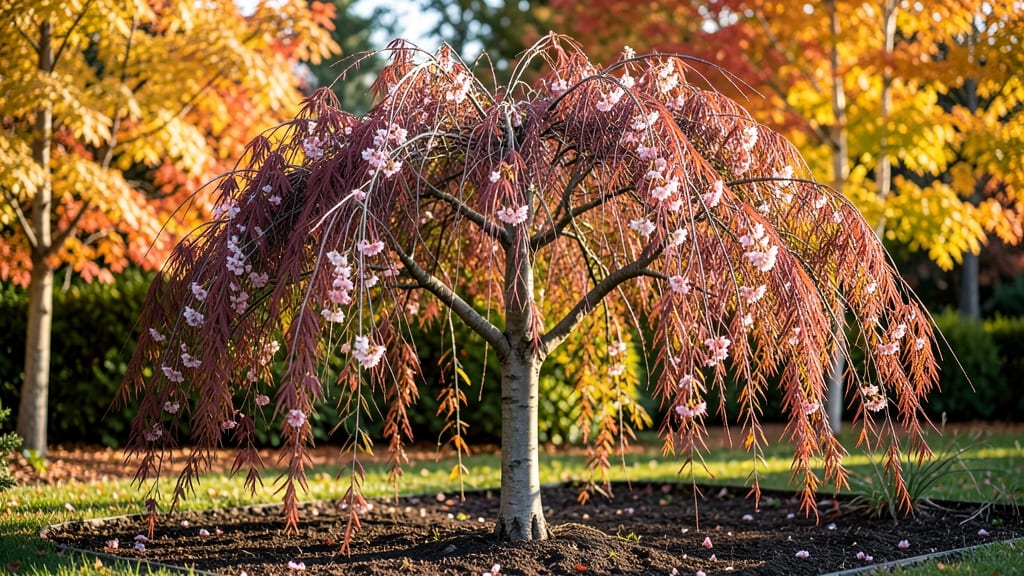
Weeping cherry trees turn fall into a living watercolor painting—crimson, gold, and bronze leaves cascading like liquid fire. 🌿 I’ve watched mine transform my backyard into a quiet sanctuary every October, when the air smells like woodsmoke and the branches sway with autumn’s gentle drama.
The key to keeping this showstopper thriving? Three simple pruning moves that preserve its graceful shape while encouraging the most vibrant foliage.
Most gardeners prune in late winter, but fall is actually the perfect time to shape weeping cherries before winter dormancy. You’ll need basic pruning tools—a sharp pair of shears, gloves, and a bucket for clippings—and just 30 minutes to work your magic.
The goal isn’t drastic cuts but strategic trims: remove dead wood first, then thin out crowded branches to improve airflow, and finally, shape the outer canopy to maintain that signature weeping silhouette.
What you’ll end up with is a tree that becomes the centerpiece of your fall garden—its branches heavy with jewel-toned leaves, its bark adding texture as the season progresses.
Neighbors will stop to admire it, and you’ll have the satisfaction of knowing you’ve extended its lifespan while enhancing its natural beauty. The best part? These same moves prepare it for winter, so you’re setting it up for next year’s even more spectacular display.
Works for both Prunus subhirtella and Prunus serrulata varieties, whether planted in containers or as standalone specimens. Once you try it, you’ll never see fall the same way again—and your tree will thank you with years of drama.
📚 In This Guide
- What you need
- Instructions
- Tips and common mistakes
- Wrapping up and next steps
What you need
- ● Pruning shears – Bypass-style, sharp, and clean (for small branches, 6–8 inches in diameter).
- ● Loppers – Long-handled, 8–10 inches (for medium branches, 1–2 inches in diameter).
- ● Pruning saw – Curved-tooth or bow saw (for thick branches, 2+ inches in diameter).
- ● Disposable gloves – Heavy-duty, cut-resistant (to protect hands from thorns and sap).
- ● Rubbing alcohol (70% or higher) – Small bottle (for sterilizing tools between cuts).
- ○ Pruning sealant (optional but recommended) – Tree wound paint or pruning paste (to prevent disease entry on larger cuts).
- ● Bucket or trash bag – For collecting pruned branches (keep your workspace tidy!).
- ● Ladder or step stool – Sturdy and stable (if your tree is taller than 6 feet).
- ● Notebook & pencil – For sketching pruning plans (helps visualize cuts before you start!).
- ● Pole pruner – For high branches (saves time if you’re working solo!).
- ● Extension cord & string trimmer – If removing large, fallen branches post-pruning.
- ● Mulch or wood chips – To replenish the tree’s base after cleanup.
- ● Camera or phone – Capture your progress (because autumn foliage deserves a photo op!).
How to prune a weeping cherry tree for stunning fall color
Fall is the moment your weeping cherry tree truly shines—here’s how to keep it thriving.
✂️ Step 1: Remove Dead or Diseased Branches First
Start by inspecting the tree for any branches that are brown, brittle, or showing signs of disease like black spots or oozing sap. These branches won’t contribute to the fall display and could spread problems to healthy wood. Use sharp, clean pruning shears to make cuts just outside the branch collar—the swollen area where the branch meets the trunk.
I always prune these first because they’re the easiest to spot and remove. If you wait, the tree’s energy will be wasted trying to revive dead wood instead of producing vibrant fall foliage. Cut at a 45-degree angle if the branch is larger than ½ inch in diameter to help water run off.
✂️ Step 2: Thin Out Crowded Branches for Better Airflow
Weeping cherry trees naturally grow with a cascading habit, but too many branches rubbing together can lead to weak wood and reduced fall color. Look for branches that cross each other or grow inward—these are your targets. Remove about one-third of the smallest, weakest branches to open up the canopy and let sunlight reach the inner foliage.
This step is where the drama happens: when you thin properly, the remaining branches will produce brighter reds, oranges, and purples in autumn. Make your cuts just above an outward-facing bud or branch to encourage new growth in the right direction. Avoid "heading back" (cutting back to a larger branch)—it creates dense, ugly regrowth.
✂️ Step 3: Shape for Balance and Fall Impact
Now’s the time to refine the tree’s natural weeping shape while ensuring it won’t become top-heavy in winter storms. Step back and look at the tree from all angles—you’re aiming for a graceful, symmetrical silhouette. Focus on the outer edges: trim any branches that grow straight up or outward too aggressively, as these can make the tree look awkward against the fall sky.
For dramatic effect, leave the longest, healthiest branches to cascade naturally—they’ll carry the most foliage and create that signature weeping look. If a branch is too long, shorten it by cutting just above a bud that faces outward. Never cut more than one-third of the branch’s length in a single cut, or you’ll shock the tree and reduce its fall color vibrancy.
⏰ Step 4: Time Your Pruning for Peak Autumn Show
Late winter or early spring is ideal for most pruning, but for fall color enhancement, wait until just after the leaves drop—usually November to early December. This gives the tree time to heal before winter dormancy. Avoid pruning in late fall when frost is likely, as fresh cuts are more vulnerable to cold damage.
Here’s the thing—your timing affects the tree’s energy reserves. Pruning too early in fall can stimulate new growth that won’t harden off before winter. Prune too late, and you miss the chance to shape the tree for next year’s showstopping foliage. A little patience here pays off with deeper colors and longer-lasting leaves next autumn.
Tips & tricks for perfect weeping cherry tree pruning
Here's what nobody tells you about transforming your weeping cherry tree into a fall masterpiece.
Tool Prep: Before you even touch the tree, sharpen your pruning shears with a file or hone them on a sharpening stone. Dull tools crush branches instead of making clean cuts, which stresses the tree and invites disease. I learned this the hard way after noticing more dead branches than expected—always start with sharp tools!
Visual Cue for Step 2: When thinning crowded branches in Step 2, imagine looking at your tree from above—you want to see sunlight streaming through the center like rays. If you can't see light filtering through, you haven't thinned enough. The goal is to remove just enough branches to let sunlight reach the inner foliage without creating big gaps that look unnatural.
Branch Collar Protection: In Step 1, when removing larger branches over ½ inch in diameter, avoid cutting too close to the trunk. Always make your cut just outside the branch collar—the swollen area where the branch meets the trunk. This protects the tree's natural healing mechanism. I once cut too close and noticed blackened edges later—never make that mistake!
Seasonal Timing Secret: The November to early December window in Step 4 is critical because it gives the tree enough time to heal before winter dormancy. If you're in a particularly mild climate, you might extend this slightly into January, but never prune when frost is forecasted. The tree needs time to seal its cuts before the cold sets in.
Pro Tips for Weeping Cherry Tree In Fall
- Here's what nobody tells you about transforming your weeping cherry tree into a fall masterpiece.
- Tool Prep: Before you even touch the tree, sharpen your pruning shears with a file or hone them on a sharpening stone.
- Visual Cue for Step 2: When thinning crowded branches in Step 2, imagine looking at your tree from above—you want to see sunlight streaming through the center like rays.
Frequently asked questions
Got questions about keeping your weeping cherry tree stunning in fall? Here are some common ones—and their answers!
When is the best time to prune a weeping cherry tree for fall color?
Prune your weeping cherry tree late winter or early spring (just before buds swell) for the best fall foliage. Avoid heavy pruning in summer or fall—it stresses the tree and can reduce autumn color vibrancy. Light shaping in early fall (after leaves drop) is fine, but keep cuts minimal to preserve energy for next year’s growth.
Will a weeping cherry tree lose its leaves too early in fall?
Some early frosts or drought stress can cause premature leaf drop, but healthy weeping cherry trees typically hold foliage until late fall. To delay shedding, ensure consistent watering (1–1.5 inches per week) and mulch the base to retain moisture. If leaves turn brown and crispy before falling, it’s likely due to fungal issues—check for signs like black spots or powdery residue.
Can I replace a weeping cherry tree if it’s not thriving in fall?
If your tree’s fall color is lackluster or it’s struggling, consider dwarf varieties like ‘Crave’ or ‘Royal Burgundy’ for easier maintenance. Alternatively, try ornamental cherries like Prunus ‘Okame’ (early bloomer) or Prunus ‘Shirotae’ (pure white bark). Always plant replacements in full sun with well-draining soil for optimal fall performance.
Why are my weeping cherry tree’s leaves curling or yellowing in fall?
Curling or yellowing leaves often signal pests (like lace bugs or spider mites) or nutrient deficiencies. Start by hosing down leaves to dislodge pests. For yellowing, test soil pH (ideal: 6.0–7.0) and amend with iron or nitrogen if needed. Avoid over-fertilizing—cherry trees prefer lean soil. If symptoms persist, consult a local arborist for a diagnosis.
How can I enhance my weeping cherry tree’s fall colors?
Boost autumn drama with these tips:
- Mulch: Apply 2–3 inches of organic mulch (like shredded bark) to retain moisture and cool roots.
- Light pruning: Remove dead or crossing branches in early fall to improve airflow and color.
- Companion plants: Pair with golden barberry or Japanese maples for contrasting textures.
- Water deeply: 1–2 times per week if rainfall is scarce—hydrated trees produce richer fall hues.
Wrapping up and next steps
The weeping cherry tree in fall transforms your garden into a breathtaking masterpiece—its cascading branches and fiery foliage creating a scene straight out of a postcard. 🍁 With the right pruning moves, you’ll keep it healthy, vibrant, and ready to dazzle for seasons to come.
Now that you’re armed with the how-to, grab those shears and give your tree the care it deserves! Start small—even a single branch trimmed today will make a difference tomorrow. Happy pruning!