
Pruning
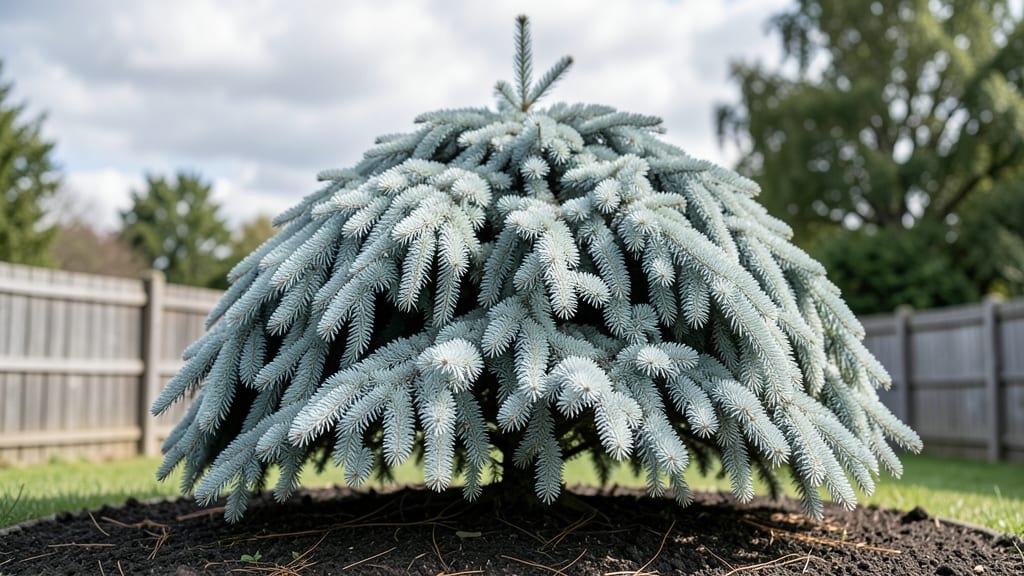
A weeping blue spruce tree transforms any garden into a winter wonderland with its dramatic cascading branches and silvery-blue needles that shimmer year-round. 🌲 I planted mine near the front porch last autumn, and the way it drapes over the stone path creates this magical, almost fairy-tale entrance—especially when dusted with snow.
The secret lies in its natural shape: no heavy pruning needed, just strategic placement to highlight its graceful silhouette.
This evergreen thrives in full sun to partial shade, making it versatile for both sunny borders and woodland edges. For maximum impact, position it where its branches can spill over patios, walkways, or even small ponds—just give it 10-15 feet of space to mature fully.
Pair it with low-growing perennials like creeping thyme or hostas to contrast its height without competing for attention.
What you’ll love most is how it softens hard landscapes while adding textural depth—the feathery blue foliage contrasts beautifully with dark evergreens or bright seasonal blooms. In formal gardens, it anchors pathways; in cottage styles, it adds whimsy to a mixed border.
The best part? It stays lush in winter when other plants fade.
For long-term success, water deeply the first two years to establish roots, then let nature take over. Mulch around the base to protect roots in winter, and resist the urge to prune unless removing dead branches—this tree’s natural shape is its greatest asset.
Whether you’re designing a focal point or filling a corner, it delivers effortless elegance with minimal upkeep.
📚 In This Guide
- What you need
- Instructions
- Tips and common mistakes
- Wrapping up and next steps
What you need
- ● Pruning shears – Bypass pruners (sharp, 6-8 inch blades) for clean cuts on smaller branches.
- ● Loppers – 8-10 inch bypass loppers for thicker branches (up to 1.5 inches in diameter).
- ● Pruning saw – For branches larger than 1.5 inches (avoid cutting when wet).
- ● Gloves – Heavy-duty, cut-resistant gloves to protect hands from sharp needles and sap.
- ● Disinfectant (70% isopropyl alcohol or pruning sealant) – To sterilize tools between cuts and prevent disease.
- ○ Extension pole (optional) – 6-10 foot pole with a saw or shears attachment for high branches.
- ● Heavy-duty trash bags or bucket – For collecting pruned branches and debris.
- ● Weather check – Prune on a dry, cool day (avoid extreme heat or frost).
- ● Safety gear – Safety glasses and long sleeves to protect against sap and falling debris.
- ● Tree health assessment – Inspect the tree for disease, pests, or dead branches before pruning.
- ● Ladder (if needed) – A sturdy, extendable ladder for safe access to higher branches.
- ● Tree wound dressing – For large cuts (though modern pruning philosophy often skips this—let the tree heal naturally!).
- ● Marking spray or tape – To outline branches for removal before cutting.
- ● Notebook & pen – To sketch a pruning plan or track progress.
- ● Water & snacks – Because even elegant pruning sessions deserve hydration! 💧
Step-by-step guide to planting and pruning a weeping blue spruce tree
This majestic evergreen thrives with the right placement and careful shaping—here's how to set it up for decades of beauty.
🪴 Step 1: Select and Prepare the Planting Site
Choose a location with full sun exposure (at least 6 hours daily) and well-draining soil. Weeping blue spruces tolerate a range of soil types but perform best in slightly acidic to neutral pH (6.0-7.0). If your soil is heavy clay, amend it with 2-3 inches of compost mixed into the top 12 inches of soil before planting.
Dig a hole twice as wide as the root ball but only as deep as the container's root base. The top of the root ball should sit 1-2 inches above ground level—this prevents water from pooling around the trunk and causing rot. If your tree arrives in a 15-gallon container, the hole should be 30 inches wide and 12 inches deep for proper root spread.
☀️ Step 2: Plant with Proper Spacing and Support
Gently remove the tree from its container and loosen any circling roots with your fingers. Place it in the hole so the root flare (where roots meet trunk) is visible above the soil line. Backfill with native soil, tamping lightly every 3 inches to eliminate air pockets. Water thoroughly after planting to settle the soil and encourage root contact.
Weeping blue spruces grow 1-2 feet annually, reaching 10-15 feet tall and 8-12 feet wide at maturity. Space multiple trees 8-10 feet apart to allow their graceful branches to cascade without crowding. For the first year, stake the tree if needed—use two stakes placed 18 inches from the trunk and tie with soft fabric strips (never wire, which can girdle the trunk).
✂️ Step 3: Prune for Structure and Health
Prune in late winter or early spring before new growth begins. Remove dead, diseased, or crossing branches first using clean, sharp pruners. Make cuts just outside the branch collar (the swollen area where the branch meets the trunk) to promote quick healing. For weeping varieties, avoid heavy pruning—their natural shape is their beauty, so focus on light shaping to maintain balance.
If you notice brown needles in the lower canopy, this is normal aging. However, if new growth appears yellow or stunted, it may signal iron deficiency—sprinkle iron sulfate granules around the root zone in early spring. Never prune more than 25% of the canopy in one season, as this stresses the tree and can invite pest problems.
💧 Step 4: Water and Mulch for Long-Term Health
Water deeply once a week during the first growing season, providing 1-2 gallons per inch of trunk diameter. For a 3-inch diameter trunk, that’s 3-6 gallons per watering. After the first year, water only during prolonged dry spells—mature weeping blue spruces are drought-tolerant once established. Always water at the base, avoiding wetting the needles to prevent fungal diseases like needle cast.
Apply 3-4 inches of mulch (such as pine straw or shredded bark) around the base, keeping it 6 inches away from the trunk. Replenish mulch annually to retain moisture, regulate soil temperature, and suppress weeds. Avoid piling mulch against the trunk—this creates a moist environment that invites rot.
Tips & tricks for perfect weeping blue spruce tree planting
Here's what I've learned after watching these graceful trees thrive in my own landscape—tricks that'll help yours flourish too.
Soil Preparation Secret: The 6 hours of daily sun requirement is non-negotiable, but soil quality makes all the difference. Before planting, test your soil's pH—if it's outside the 6.0-7.0 range, amend with sulfur to lower pH or lime to raise it. I've seen trees struggle in heavy clay soil until I incorporated that 2-3 inches of compost into the top 12 inches, creating the perfect loose, well-draining environment their roots crave.
Planting Depth Precision: That 1-2 inch elevation of the root ball above ground level is critical—it prevents water from pooling and causing rot. I use a level to verify this before backfilling. For trees in 15-gallon containers, remember the 30-inch wide by 12-inch deep hole specification exactly. Any deeper, and you'll smother the roots; any shallower, and they won't establish properly.
Staking Strategy: When staking your weeping blue spruce, place those two stakes 18 inches from the trunk at a 45-degree angle. This creates a stable triangle support system. Use only soft fabric strips—never wire—as wire can cut into the bark as the tree grows. I've seen too many trees with girdled trunks from improper staking, so don't skip this detail.
Pruning Timing Insight: That late winter or early spring pruning window is perfect because the tree is dormant but about to burst with new growth. I mark my calendar for February 15th as my target date—this gives me that full month before active growth begins. When pruning, remember the 25% canopy rule: if you remove more than a quarter of the branches in one season, you risk stressing the tree and inviting pests.
Pro Tips for Weeping Blue Spruce Tree
- Here's what I've learned after watching these graceful trees thrive in my own landscape—tricks that'll help yours flourish too.
- Soil Preparation Secret: The 6 hours of daily sun requirement is non-negotiable, but soil quality makes all the difference.
- Planting Depth Precision: That 1-2 inch elevation of the root ball above ground level is critical—it prevents water from pooling and causing rot.
Frequently asked questions
Got questions about your weeping blue spruce? You’re not alone—this stunning tree has unique needs! Here are answers to the most common queries to keep your evergreen thriving year-round.
Why is my weeping blue spruce "weeping"?
The weeping habit comes from its naturally drooping branches, a genetic trait that creates its graceful, fountain-like shape. Unlike some trees that "weep" from disease, this is purely ornamental—just part of its charm! Prune selectively to maintain its signature silhouette.
When’s the best time to prune a weeping blue spruce?
Late winter or early spring (just before new growth starts) is ideal. Avoid heavy pruning in fall, as it can stress the tree before winter. Light shaping in summer is fine, but never prune in extreme heat—wait for cooler days.
What should I do if my weeping blue spruce has brown tips?
Brown tips often signal dry air or winter burn. Mulch the base to retain moisture, and avoid overhead watering. For severe browning, trim affected branches just above healthy growth—but don’t overdo it, as spruces heal slowly.
Can I grow a weeping blue spruce in a container?
Yes! Choose a large, sturdy pot with drainage holes and use a well-draining soil mix (like 60% pine bark, 30% peat, 10% sand). Repot every 2–3 years, and move containers to partial shade in summer to prevent stress. Dwarf varieties are best for containers.
What’s a good alternative if my weeping blue spruce isn’t thriving?
Consider these low-maintenance evergreens with similar elegance:
- Emerald Green Arborvitae – Dense, upright, and cold-hardy.
- Dwarf Alberta Spruce – Compact with soft blue-green needles.
- Weeping Norway Spruce – Larger but hardy in colder climates.
Wrapping up and next steps
The weeping blue spruce isn’t just a stunning addition to your landscape—it’s a year-round masterpiece that rewards patience and care.
With the right pruning techniques, you’ll nurture its graceful, cascading beauty while keeping it healthy and vibrant. Now’s the perfect time to roll up your sleeves and give your tree the attention it deserves!
Start by scheduling your next pruning session—whether it’s shaping those lush branches or removing dead growth. Review the steps one more time, gather your tools, and enjoy the process.
Your weeping blue spruce will thank you with seasonal elegance that turns heads (and maybe even a few jealous glances from neighbors!).