
Pruning
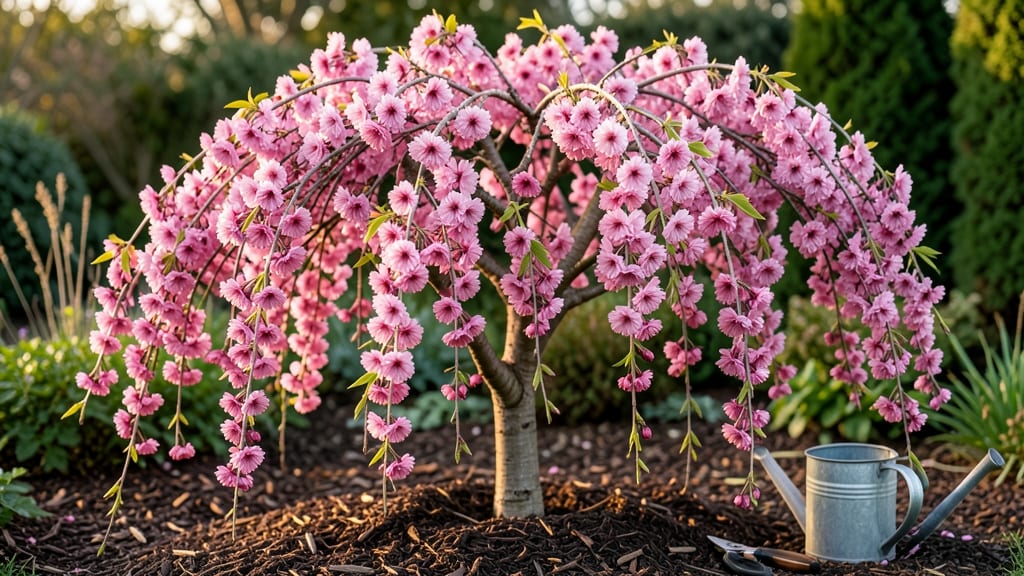
This pink shower weeping cherry tree transforms any garden into a dreamy springtime painting—its cascading branches heavy with blush-pink blossoms that feel like a secret shared only with the bees. 🌸 I still remember the first time I saw one arching over a quiet patio, its petals drifting like confetti in the breeze, and I knew it would become the centerpiece of my own yard.
The magic isn’t just in the flowers, though—it’s in how the tree’s graceful habit softens hard edges, whether planted as a standalone statement or woven into borders where its branches can spill over pathways.
What makes this tree so versatile is its ability to play multiple roles: a focal point in a front yard, a romantic backdrop for outdoor seating, or even a privacy screen when grouped with other shrubs.
It thrives in full sun but tolerates partial shade, and its disease-resistant nature means less fuss than you’d expect from such a showstopper.
Pair it with spring bulbs like daffodils or tulips to extend the floral display, or tuck in low-growing perennials like hostas or ferns to catch the dappled shade its branches create.
You’ll love how it evolves through the seasons—spring’s blossoms give way to glossy green leaves that turn golden in fall, and even its winter silhouette has character.
The key to keeping it looking its best is light pruning after flowering to maintain its weeping shape, but beyond that, it’s a low-maintenance star that rewards patience with years of effortless beauty.
Imagine sipping morning coffee while petals drift onto your patio table—this tree doesn’t just grow; it creates moments.
For best results, give it 15-20 feet of space to sprawl naturally, and plant it where its branches can weave through other plants or frame a view. In larger gardens, consider planting two as a dramatic archway, or use it to soften the lines of a modern home’s facade.
The possibilities are endless, but the reward is always the same: a garden that feels like a living poem, one season at a time.
📚 In This Guide
- What you need
- Instructions
- Tips and common mistakes
- Wrapping up and next steps
What you need
- ● Pruning shears: Sharp, bypass-style shears (for clean cuts) or anvil-style for thicker branches (test sharpness on a pencil first!)
- ● Loppers: 1 pair (for branches ½"–2" in diameter)
- ● Pruning saw: 1 (for branches 2"+ in diameter; bow saw or pruning saw with a fine-tooth blade)
- ● Rubbing alcohol (70%+) or bleach solution: 1 small bottle (for sterilizing tools between cuts)
- ● Garden gloves: 1 pair (cut-resistant, like nitrile-coated or leather)
- ● Disposable pruning bags: 2–3 (to collect debris; 13-gallon capacity recommended)
- ● Ladder or step stool: 1 (if tree exceeds 6 ft; extendable or foldable for safety)
- ● Sharpie or permanent marker: 1 (for labeling cuts if needed)
- ● Pruning sealant: 1 small tube (for large cuts > ½"; Tanglefoot Tree Wound Pruning Seal or Ortho brand)
- ● Hand pruners with a bypass blade: 1 (for precision work on small branches)
- ● Safety glasses: 1 pair (to protect from debris)
- ● Tree wound dressing: 1 (controversial but useful if birds/animals frequent the area)
- ● Camera or phone: 1 (to document "before" and "after" shots—so satisfying!)
How to plant and care for a pink shower weeping cherry tree
Here's the straightforward method I use to keep these stunning trees thriving for decades.
🪴 Step 1: Choose and Prepare the Perfect Planting Site
Select a location with full sun exposure for at least 6-8 hours daily. The Pink Shower Weeping Cherry loves open spaces where its graceful branches can spread naturally. Avoid low spots where cold air settles—these trees are only hardy down to USDA Zone 5.
Dig a hole twice as wide and just as deep as the tree's root ball. Loosen the sides of the hole with your shovel to prevent soil compaction. Here's the thing—amend the native soil with 2-3 inches of compost mixed into the bottom of the hole. This improves drainage while providing essential nutrients for the tree's first critical growth phase.
🌱 Step 2: Plant with Proper Technique for Strong Establishment
Gently remove the tree from its container and loosen any circling roots with your fingers. Position the tree so the top of the root ball sits 1-2 inches above ground level. This prevents water from pooling around the trunk and causing rot. The tree's natural taper should face outward from the planting site.
Backfill the hole with native soil, tamping down lightly every 4-6 inches to eliminate air pockets. Water thoroughly until the soil settles. You'll know it's right when water drains freely but the surface remains slightly damp. Spread 2-3 inches of mulch around the base, keeping it 6 inches away from the trunk to prevent moisture buildup.
☀️ Step 3: Water and Fertilize for First-Year Growth
Water deeply 2-3 times per week during the first growing season, providing about 10-15 gallons each time. The soil should feel moist 6 inches down after watering. Overwatering causes root rot, while underwatering stresses the tree during establishment. Here's what I do—water in the morning so foliage dries quickly, reducing disease risk.
Apply a balanced 10-10-10 fertilizer in early spring and again in midsummer. Use only half the recommended rate to avoid burning tender roots. You'll see new growth within 4-6 weeks—that's your signal everything's working. Prune only to remove dead branches during the first year; the tree's natural weeping form needs no shaping.
✂️ Step 4: Prune and Maintain for Year-Round Beauty
Prune during late winter or early spring before new growth begins. Remove any dead, diseased, or crossing branches first. Then selectively thin the canopy to improve air circulation and light penetration. The weeping habit means gravity does most of the work—just guide rather than force the shape.
Fertilize annually in early spring with slow-release granules. These trees thrive with minimal intervention once established. Watch for signs of stress—yellowing leaves often mean either overwatering or nutrient deficiency. The Pink Shower Weeping Cherry's signature pink blossoms appear in late spring, followed by small, edible cherries that birds adore.
Tips & tricks for perfect pink shower weeping cherry tree planting
Took me years to figure out what really makes these trees thrive—here's what nobody tells you about planting and caring for your Pink Shower Weeping Cherry.
Sunlight Strategy: While the instructions mention 6-8 hours of full sun, I've found these trees actually perform best with morning sun and afternoon shade in hotter climates. The delicate pink blossoms can scorch in intense afternoon heat, so if you're in Zone 6 or higher, consider planting near a structure that provides afternoon shade during peak summer months.
Root Ball Positioning: That 1-2 inch elevation above ground level is critical—don't skip it! I learned this the hard way after planting two trees too deep, which led to root rot. Use a level to ensure the root ball sits perfectly straight, and mark the original soil line on the container before planting to reference. The tree's natural taper should face outward from the planting site for optimal branch development.
Watering Wisdom: Those 10-15 gallons per watering might seem like a lot, but here's the thing: the soil should stay moist 6 inches down, not just at the surface. I use a long screwdriver to check moisture levels—if it comes out dry, water again. In extreme heat, you might need to water daily during the first year, especially if you notice leaves wilting or curling at the edges.
Mulch Mastery: The 2-3 inches of mulch should be organic (like shredded bark) and refreshed annually. I've seen people use rocks or gravel, but that actually prevents soil temperature regulation and moisture retention. Keep that 6-inch clearance from the trunk to prevent moisture from sitting against the bark, which can cause rot. Spread mulch in a donut shape around the tree, wider than the canopy.
Pro Tips for Pink Shower Weeping Cherry Tree
- Took me years to figure out what really makes these trees thrive—here's what nobody tells you about planting and caring for your Pink Shower Weeping Cherry.
- Sunlight Strategy: While the instructions mention 6-8 hours of full sun, I've found these trees actually perform best with morning sun and afternoon shade in hotter climates.
- Root Ball Positioning: That 1-2 inch elevation above ground level is critical—don't skip it!
Frequently asked questions
Got questions about your pink shower weeping cherry tree? You’re not alone! Here are some of the most common concerns—plus expert tips to keep your tree thriving year-round.
When is the best time to prune a weeping cherry tree for maximum blooms?
Prune your Prunus serrulata in late winter or early spring (before buds swell) to encourage vibrant pink blooms. Avoid heavy pruning in fall—it can stimulate late growth vulnerable to frost damage. Light shaping in summer (after flowering) is fine, but focus on removing dead or crossing branches.
How do I encourage more pink flowers on my weeping cherry tree?
For a bloom explosion, prioritize:
- Full sun (6+ hours daily)
- Well-draining soil (amend clay with compost)
- Balanced fertilizer in early spring (10-10-10 ratio)
- Avoid over-pruning—thin branches to improve airflow
Why aren’t my weeping cherry tree’s branches staying weeping-shaped?
If branches are uprighting, it’s often due to:
- Insufficient light (shade weakens the weeping habit)
- Over-pruning the tips (which signals the tree to grow upright)
- Age or stress (older trees may lose structure)
Can I grow a pink shower weeping cherry tree in a pot?
Yes, but with limitations! Choose a large container (20+ gallons) with drainage holes and use a fast-draining potting mix. Expect slower growth and fewer blooms than in-ground trees. Repot every 2–3 years and winter-protect potted trees in cold climates (use burlap wraps + mulch).
What pests or diseases should I watch for in weeping cherry trees?
Common issues include:
- Cherry leaf spot (dark spots on leaves)—remove infected leaves and apply fungicide in spring.
- Borers (holes in bark)—prune infested branches and treat with insecticide.
- Aphids/spider mites (sticky leaves)—blast off with water or use neem oil.
How tall will a weeping cherry tree grow, and how fast?
Mature height ranges from 10–20 feet, with a sprawling 10–15-foot canopy. Growth rate is moderate (12–24 inches per year), but younger trees grow faster. Dwarf cultivars (like ‘Amanogawa’) max out at 6–8 feet—ideal for small spaces!
Wrapping up and next steps
The pink shower weeping cherry tree is a stunning addition to any landscape, offering year-round beauty with its graceful branches and breathtaking blooms. With the right pruning techniques, you can ensure it thrives for decades, blending elegance with low-maintenance care. 🌸
Ready to transform your outdoor space? Start by gathering your tools and scheduling your first pruning session—your tree (and your neighbors!) will thank you. Happy pruning!