
Pruning
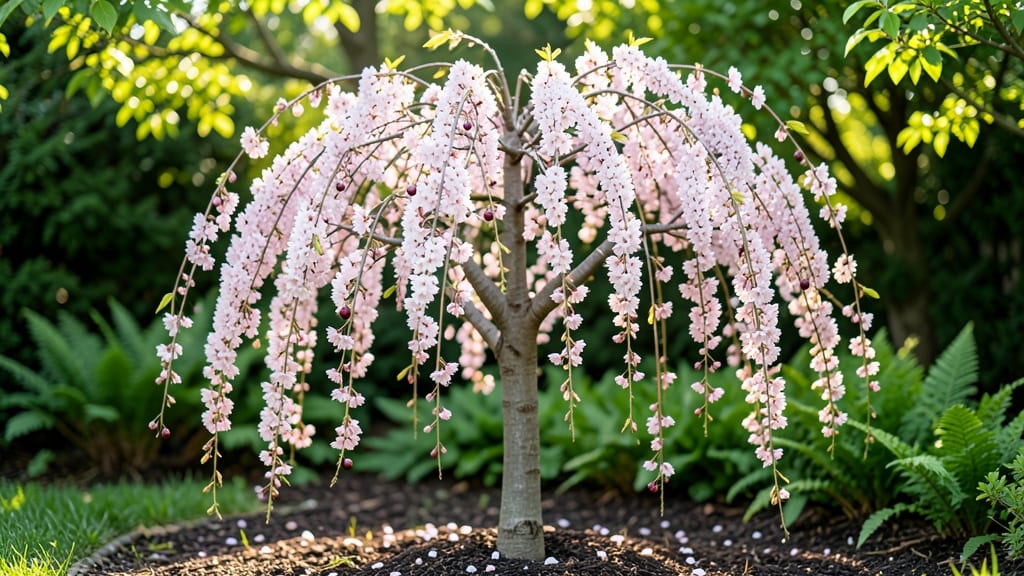
A weeping cherry tree's graceful branches turn heads year-round—but only if you shape it right from the start. 🌿 I’ve learned the hard way that skipping early pruning leads to a tangled mess, not that elegant fountain effect.
The secret lies in understanding how these trees grow naturally and guiding them with strategic cuts.
These trees thrive in full sun with well-draining soil, and planting in early spring gives roots time to establish before summer heat. Space them at least 15 feet apart to avoid future crowding, and mulch around the base to retain moisture while protecting roots.
The first year is all about establishing strong structure—think of it like teaching a toddler to walk before letting them run.
With the right pruning, you’ll end up with a lush, layered canopy that cascades like a living waterfall. The key is timing: light pruning in late winter before buds swell, and shaping cuts in early summer after new growth appears.
By fall, you’ll see branches filling in beautifully, ready for winter’s bare-branch elegance.
Whether you’re using it as a focal point in a courtyard or lining a driveway, this tree’s year-round interest makes it worth the effort. The payoff? A backyard centerpiece that looks stunning in every season—with minimal upkeep once you get the hang of it.
📚 In This Guide
- What you need
- Instructions
- Tips and common mistakes
- Wrapping up and next steps
What you need
- ● Pruning shears: Bypass pruners (for clean cuts on branches up to ½ inch thick). Recommended: Felco F-2 or Corona 1000.
- ● Loppers: Bypass loppers (for branches ½ to 1½ inches thick). Recommended: Felco 202 or Fiskars X27.
- ● Pruning saw: Curved-tooth pruning saw (for thicker branches). Recommended: Bahco or Fiskars.
- ● Disinfectant: 70% isopropyl alcohol or rubbing alcohol (to sterilize tools between cuts).
- ○ Pruning sealant: Tree wound sealant (optional but helpful for larger cuts). Recommended: Tanglefoot Tree Wound Pruning Seal.
- ● Gloves: Heavy-duty gardening gloves (to protect hands from thorns and sap).
- ● Safety gear: Safety goggles and long sleeves (to shield from debris and sap).
- ● Measuring tape: Flexible 25-foot tape (for assessing branch lengths and spacing).
- ● Notebook & pen: (to jot down pruning notes or sketch your tree’s structure).
- ● Extension pole: 3- to 6-foot pole saw (for high branches).
- ● Step stool or ladder: Sturdy, non-slip ladder (for safe reaching).
- ● Tree bag or tarp: (to collect fallen branches and debris).
- ● Sharpener: Pruner sharpening tool (to keep blades in top condition).
- ● Reference guide: Pruning chart or diagram of a weeping cherry tree’s ideal shape.
Step-by-Step guide to pruning and training your weeping cherry tree
Here’s how to coax that dreamy, cascading silhouette year-round—without stressing the tree.
✂️ Step 1: Prune for Structure in Late Winter
Wait until late February or early March when the tree is still dormant but just before buds swell. Grab your bypass pruners and focus on removing dead, crossing, or inward-growing branches first. These are the easiest cuts—they won’t leave ugly stubs or stress the tree. I like to start at the outer edges and work my way inward, always cutting just outside the branch collar (that swollen area where the branch meets the trunk).
Next, thin out about 20% of the canopy to improve airflow. Look for branches that create dense clusters—they’ll shade inner growth and encourage disease. Make sure each cut is at a 45-degree angle if you’re removing larger branches over ½ inch thick. The goal? A balanced framework where sunlight can reach every limb. You’ll see the difference in just a few weeks as new, vigorous growth fills in the gaps.
🌿 Step 2: Train New Growth in Early Spring
Once buds burst in late March or April, switch to hand pruners for lighter trimming. This is when you shape the weeping habit. Gently guide the longest, most vigorous shoots downward by tying them to flexible support wires (I use 18-gauge wire wrapped loosely around the branch). Never force them—just let gravity and the wire encourage a natural drape. If a shoot grows too upright, you can pinch back the tip to redirect energy into side branches.
Watch for water sprouts—those fast-growing, vertical shoots that pop up everywhere. Snip them off at the base immediately. They’re energy vampires, stealing nutrients from the tree’s graceful form. I do this every 2-3 weeks until June, when growth slows naturally. The result? A canopy that flows like a fountain instead of a tangled bush.
☀️ Step 3: Summer Maintenance for Airflow and Light
Mid-summer is all about light maintenance. Remove any leafy growth that’s blocking sunlight from the lower branches—this keeps the tree healthy and encourages blooms for next year. Use sharp pruners to make clean cuts just above a leaf node (where new growth can sprout). Avoid heavy pruning now; you’ll stress the tree when it’s already working hard to produce flowers and fruit.
Here’s the thing—weeping cherries grow fast, so I check the canopy every 4-6 weeks for branches that need redirecting. If a limb starts growing too upright, I’ll shorten its tip by about ⅓ to encourage bushier growth. You’ll know you’re doing it right when the tree’s silhouette looks balanced and full from all angles. No bare spots, no tangled mess—just elegant, flowing branches.
⏰ Step 4: Fall Cleanup for Winter Readiness
By October, when leaves start turning but haven’t all fallen, do a final sanitation prune. Remove any diseased or pest-damaged branches—burn them, don’t compost, to prevent reinfestation. Then, trim back any overly vigorous shoots that grew too long during summer. The rule here? Less is more. You’re not shaping the tree; you’re just tidying up for winter.
This is also the time to winterize any support wires if you used them. Gently loosen them and remove them completely if branches have settled into place naturally. Mulch the base with 2-3 inches of organic mulch (like shredded bark) to protect roots from freeze-thaw cycles. A well-maintained weeping cherry will thank you next spring with stronger blooms and more graceful growth—no guesswork involved.
Tips & tricks for perfect weeping cherry tree pruning
Mastering the art of pruning your weeping cherry tree transforms it from a tangled mess into a graceful fountain of branches. Here's how to elevate your technique and keep your tree thriving year after year.
Timing is Everything: The late February to early March window for Step 1 is critical because it's when the tree is still dormant but just before buds swell. This timing ensures you're not removing growth that could have produced flowers or fruit. I've learned this the hard way—pruning too early can stress the tree, while waiting too long risks removing potential blooms. If you miss this window, don't panic—just wait until the tree is fully dormant again next winter.
Tool Selection Matters: Using the right tool for each job makes all the difference. For Step 1, bypass pruners are essential for clean cuts on larger branches, while hand pruners work perfectly for the lighter trimming in Step 2. I keep a small pair of sharp hand pruners in my gardening belt for quick water sprout removal during those 2-3 week intervals. Always make sure your tools are clean and sharp to prevent damaging the tree and spreading disease. A dull blade crushes rather than cuts, leaving jagged wounds that heal poorly.
The 45-Degree Rule: When removing branches over ½ inch thick in Step 1, that 45-degree angle isn't just a suggestion—it's crucial for proper healing. The angled cut allows water to run off rather than pool in the wound. I mark my pruners with tape at the 45-degree angle to ensure consistency. For smaller branches, you can cut straight across just outside the branch collar. This technique prevents water from collecting in the wound, which could lead to rot or disease.
Visual Growth Check: During summer maintenance (Step 3), use the "balanced silhouette" test every 4-6 weeks. Walk around your tree and look for any bare spots or overly dense areas. The goal is to see a graceful, cascading shape from every angle. I like to take photos every season to track progress—it's amazing how much difference proper pruning makes over just a few months. This visual approach helps you make more intuitive decisions about which branches to trim.
Pro Tips for Weeping Cheery Tree
- Mastering the art of pruning your weeping cherry tree transforms it from a tangled mess into a graceful fountain of branches.
- Timing is Everything: The late February to early March window for Step 1 is critical because it's when the tree is still dormant but just before buds swell.
- Tool Selection Matters: Using the right tool for each job makes all the difference.
Frequently asked questions
When is the best time to prune a weeping cherry tree?
Prune your weeping cherry tree late winter or early spring (just before new growth starts). This timing promotes healthy blooms and prevents disease. Avoid heavy pruning in fall—it can stress the tree and leave it vulnerable to cold damage. Light shaping in summer is fine, but focus on removing dead or crossing branches.
How much can I trim without harming the tree?
Never remove more than 25% of the tree’s foliage in a single session. Weeping cherries are delicate—over-pruning can stunt growth or reduce flowering. For dramatic shaping, space out pruning over 2-3 years. If you’re unsure, start with small cuts and observe the tree’s response before committing to bigger changes.
Will pruning affect next year’s flowers?
Pruning after flowering (late spring) won’t harm blooms, but heavy cuts in winter can reduce next year’s flowers. Weeping cherries bloom on old wood, so prioritize light shaping over aggressive trimming. If you prune too much, you might see fewer (but larger) blossoms the following spring.
How do I fix overgrown or leggy branches?
For leggy branches, thin them out by cutting back to a healthy bud or side branch. Avoid leaving stubs—always make clean cuts just above a leaf node. If branches are too long, shorten them gradually over a few years. For a fuller look, prune the tips of upright branches to encourage bushier growth.
Are there alternatives if my weeping cherry isn’t thriving?
If your tree struggles with disease, pests, or poor growth, consider dwarf varieties (like ‘Skyline’ or ‘Chelsea’) or ornamental cherries like ‘Kwanzan’ or ‘Weeping Higan’. These retain the graceful shape but often require less maintenance. For instant impact, companion plants like boxwood or Japanese maples can fill gaps while you recover your tree.
What should I do if my tree gets brown or dead branches?
Remove any dead, diseased, or dying branches immediately—they can spread harm to healthy parts. Cut back to the collar (the swollen area where the branch meets the trunk). Sterilize your tools with rubbing alcohol between cuts to prevent bacterial spread. If the issue persists, check for fungal infections or pests and treat accordingly.
Wrapping up and next steps
The weeping cherry tree is a stunning addition to any landscape, offering year-round elegance with its graceful, cascading branches.
By mastering the art of pruning—whether for shaping, rejuvenation, or seasonal care—you can keep its canopy lush and full of life. Your effort will be rewarded with a tree that’s not just beautiful but healthy and resilient.
Ready to transform your tree into a masterpiece? Grab your tools, roll up your sleeves, and schedule your next pruning session—spring or late winter is the perfect time to start! 🌿✨