
Trees
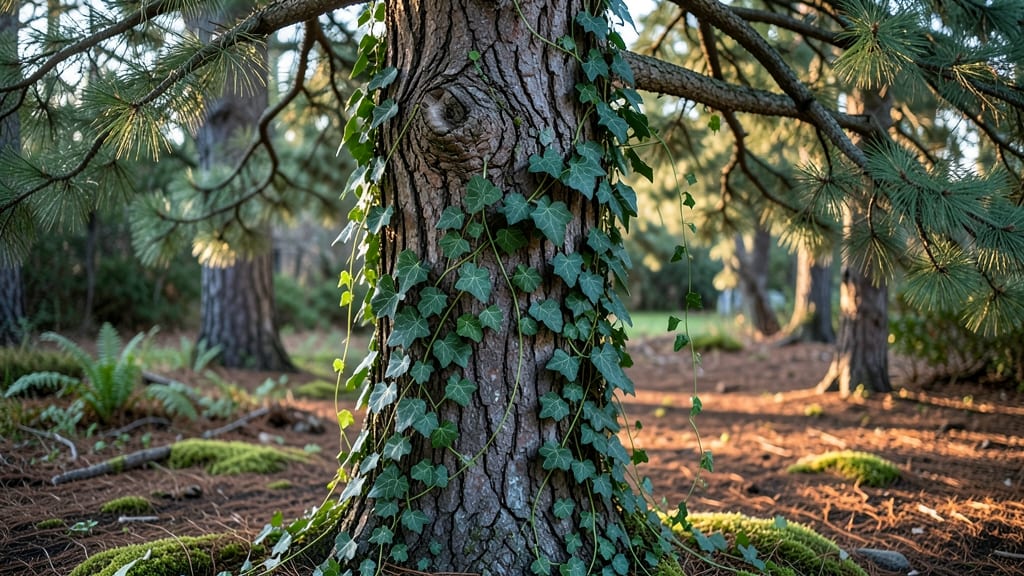
When vines creep up your pine trees, they’re stealing sunlight, water, and nutrients that should feed your tree—not the invader. 🌿 I’ve wrestled with mistletoe and poison ivy on my own pines, and the damage they cause—yellowing needles, stunted growth, even death—isn’t worth ignoring.
The good news? You can prune them out without harming your tree, and I’ll show you exactly how.
First, identify the vine: mistletoe clings with aerial roots, while poison ivy clambers with tendrils. Both sap nutrients from your pine, but mistletoe is especially aggressive, forming dense clusters that block sunlight.
Grab your pruners, safety gloves, and a tarp to catch falling debris—this isn’t a quick job, but it’s worth the effort for a healthy tree that thrives for years.
Start by cutting vines at their base, then trim any remaining stems back to the trunk. For mistletoe, you might need to remove entire branches if the infestation is severe—just sterilize your tools between cuts to prevent spreading disease.
The goal is to weaken the vine while preserving your pine’s structure, so work methodically and avoid tearing bark.
Once the vines are gone, keep an eye out for regrowth and treat the area with a 3% hydrogen peroxide spray to discourage new infestations. With consistent care, your pine will bounce back stronger, and those fruit loads you’re after will finally shine.
Let’s get those trees back to their full glory!
📚 In This Guide
- What you need
- Instructions
- Tips and common mistakes
- Wrapping up and next steps
What you need
- ● Pruning shears (bypass or anvil type) – Choose sharp, high-quality shears (8-10" blade length) for clean cuts.
- ● Loppers – Heavy-duty (18-24" blade) for thicker vines (1" diameter or larger).
- ● Pruning saw – For vines too thick for loppers (2-3" diameter).
- ● Gloves (heavy-duty, cut-resistant) – Protects hands from thorns, sap, and sharp edges.
- ● Safety glasses – Shields eyes from debris and sap splashes.
- ● Ladder or extension pole – Reaches high branches safely (ensure it’s stable and rated for your weight).
- ● Disinfectant (70% isopropyl alcohol or bleach solution) – Cleans tools between cuts to prevent disease spread.
- ● Heavy-duty trash bags or bucket – For collecting pruned vines (5+ gallon capacity recommended).
- ○ Rope or harness (if working high) – For safety when pruning tall pines (optional but highly recommended for heights over 10 feet).
- ● Pole pruner – Extends reach without a ladder (great for large trees).
- ● Tree wound dressing – Speeds healing of larger cuts (use sparingly—only on cuts >2" diameter).
- ● Spray bottle with water – Keeps tools cool and sap from sticking.
- ● Notebook & pen – To map out pruning plans or track growth progress.
Step-by-Step guide for pruning vines on pine trees
Healthy pine trees with vines need careful pruning to balance growth and fruit production.
✂️ Step 1: Identify and Mark Problematic Vines
Start by examining the pine tree for vines that are either strangling branches or competing for nutrients. Look for thick, woody vines or those growing directly into the tree's trunk—these are your top priorities. I use a small flagging tape to mark each vine I plan to remove, which helps me stay organized and avoid missing spots later.
Focus on vines that have wrapped around branches more than once or are thicker than your pinky finger. These are the ones causing the most damage. Healthy vines will have a thinner, more flexible stem and won't be tightly coiled around the pine's limbs. Use a pair of gloves to protect your hands while inspecting—some vines have thorns or rough surfaces.
✂️ Step 2: Prune Vines Gradually to Avoid Shock
Never remove all the vines at once—this can stress the pine tree and leave it vulnerable to pests or disease. Instead, tackle one section at a time. Begin by cutting vines at their base, just above a bud or lateral branch if possible. This encourages new growth in the right direction and prevents regrowth from the same spot.
Use sharp, clean pruning shears to make clean cuts—ragged edges can invite infections. If the vine is thick, I like to use a handsaw for the initial cut, then finish with shears. Always cut at a slight angle to prevent water from pooling on the wound. After pruning, dispose of the vines immediately—don't leave them piled at the base of the tree, as they can regrow.
✂️ Step 3: Monitor and Maintain Pruned Areas
After pruning, keep an eye on the tree for the first few weeks. Look for signs of stress, like yellowing needles or wilting branches, which could indicate over-pruning. Healthy pine trees will show new growth within a few weeks—this is your signal that the pruning was successful. If you notice any new vines sprouting, remove them immediately before they become established.
Water the tree deeply after pruning to help it recover. Focus on the root zone, giving it about 1-2 gallons of water depending on the tree's size. Mulch around the base with 2-3 inches of organic mulch (like pine straw or wood chips) to retain moisture and protect the roots. Avoid piling mulch directly against the trunk—keep it 3-4 inches away to prevent rot.
🌿 Step 4: Encourage Healthy Growth with Proper Care
To keep the pine tree thriving after pruning, ensure it gets the right care. Pine trees need full sun (at least 6-8 hours daily) and well-draining soil. If your tree isn't getting enough light, you'll see slow growth or sparse needle production. Fertilize lightly in early spring with a balanced, slow-release fertilizer to support new growth without overloading the tree.
Here's the thing—pine trees are resilient, but they need time to recover from pruning. Avoid heavy pruning in the same areas for at least 6-12 months. Instead, focus on maintaining the tree by removing any new vines or dead branches as they appear. Regular check-ups every 3-4 months will keep the tree healthy and prevent future vine issues.
Tips & tricks for pruning vines on pine trees
Pruning vines from pine trees might seem intimidating, but these simple tricks will keep your tree thriving while preventing common mistakes.
Identification Tip: In Step 1, when you're marking vines, pay special attention to those growing directly into the trunk or wrapping more than once around branches. These are the real troublemakers—they can actually strangle the tree over time. I've seen vines thicker than my wrist completely encircle a branch, cutting off circulation. Use your pinky finger as a guide—anything thicker deserves immediate attention.
Gradual Pruning Strategy: The instructions emphasize pruning gradually, and here's why: pine trees are tough, but they still need time to adjust. In Step 2, when you're cutting, make sure to remove vines at their base—this prevents regrowth from the same spot. I've learned the hard way that leaving even a small stub can mean more work later. Also, always cut at a slight angle to prevent water from pooling on the wound, which could lead to rot.
Post-Pruning Care: After you've finished pruning, don't just walk away. In Step 3, the deep watering and mulching are critical for recovery. Give the tree about 1-2 gallons of water, focusing on the root zone. I like to use pine straw mulch because it mimics the tree's natural environment. Just remember to keep the mulch 3-4 inches away from the trunk to prevent rot. This simple step can make all the difference in how quickly your tree bounces back.
Long-Term Maintenance: The 6-12 month wait between heavy pruning sessions in Step 4 is non-negotiable. Pine trees need time to recover and build new growth. I've seen people over-prune in the same areas year after year, leading to weak, stressed trees. Instead, focus on regular check-ups every 3-4 months to catch any new vines or dead branches early. It's like giving your tree a health exam—small efforts now prevent big problems later.
Pro Tips for Vines On Pine Trees
- Pruning vines from pine trees might seem intimidating, but these simple tricks will keep your tree thriving while preventing common mistakes.
- Identification Tip: In Step 1, when you're marking vines, pay special attention to those growing directly into the trunk or wrapping more than once around branches.
- Gradual Pruning Strategy: The instructions emphasize pruning gradually, and here's why: pine trees are tough, but they still need time to adjust.
Frequently asked questions
Got questions about vines climbing your pine trees? You’re not alone!
Here are answers to the most common concerns—from pruning timing to long-term care—so you can keep your trees thriving and your vines in check.
Why are vines growing on my pine tree, and is it harmful?
Vines like ivy or wisteria latch onto pine trees for support, but they can strangle the tree by blocking sunlight or competing for nutrients. While not always deadly, they weaken branches over time—especially if left unchecked. Pines rely on airflow; dense vines create a perfect environment for pests and disease.
When’s the best time to prune vines off pine trees?
Late winter or early spring (just before new growth) is ideal. This lets you remove vines before they drain energy from the tree. Avoid pruning in fall—new growth could sprout too close to winter, making it vulnerable to frost damage. Pro tip: Wear gloves—some vines (like poison ivy) can irritate skin!
Can I let a few vines stay for aesthetics, or should I remove them all?
While a small vine or two might seem harmless, even minimal coverage can compromise the tree’s health long-term. Pines grow slowly; vines steal moisture and nutrients, leading to stunted growth or dead branches. If you love the look, opt for ground covers or trellises instead—keep vines off your pines entirely!
What’s the best tool for removing tough vines from pine bark?
Use a sharp pruning saw or loppers for thick vines, and a hand pruner for thinner stems. Scrape off stubborn roots with a putty knife or plastic scraper to avoid damaging the bark. Never use a dull blade—it tears bark, inviting disease. Disinfect tools with rubbing alcohol between cuts to prevent spreading pathogens.
Will removing vines kill my pine tree?
Not if done correctly! Healthy pines bounce back quickly once vines are gone. Focus on gradual removal—don’t strip the tree all at once. Monitor for stress signs (yellow needles, wilting) and water deeply after pruning. With proper care, your pine will thrive vine-free!
What’s a vine-resistant alternative for my yard?
Swap climbing vines for pine-friendly plants like:
- Ornamental grasses (e.g., fountain grass)—low-maintenance and airy.
- Creeping thyme—ground cover that repels pests naturally.
- Clematis (on a trellis)—keeps vines off your pines but adds color!
Bonus: These options enhance your pine’s health by improving airflow.
Wrapping up and next steps
Vines climbing up pine trees might seem like a natural curiosity, but with the right pruning techniques, you can protect your pine’s health while managing those creeping guests.
Whether you’re dealing with Boston ivy, wisteria, or other invasive vines, the key is consistent care—removing vines early, supporting your pine’s structure, and monitoring for pests or disease. 🌿
Your next step? Grab your pruners and schedule a seasonal check-up—spring and early summer are ideal times to tackle those vines before they tighten their grip. With patience and precision, your pine tree will thrive and keep your yard looking its best!