
Pruning
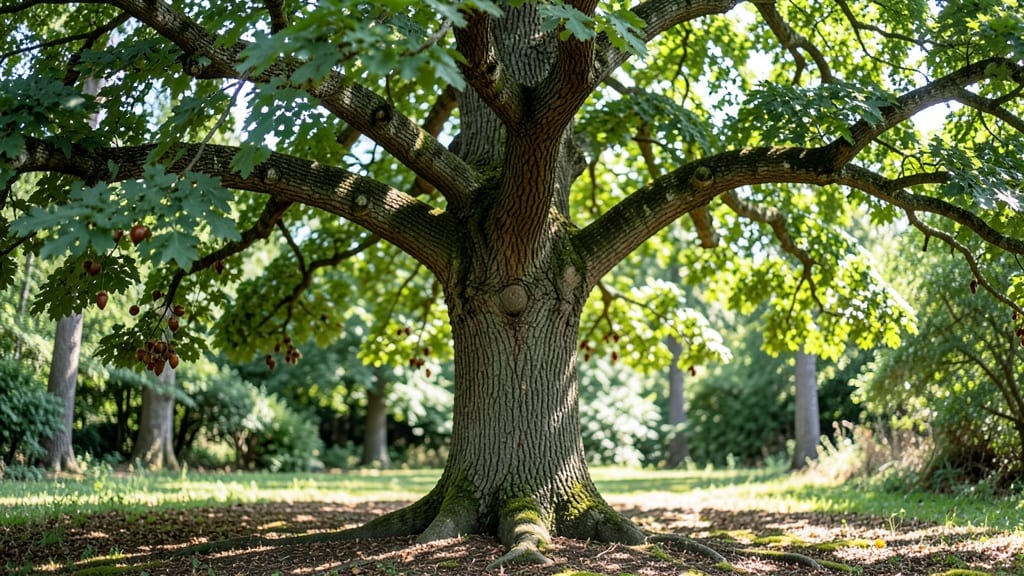
A large acorn tree isn’t just a towering shade provider—it’s the centerpiece of a landscape that feels like stepping into a forest. I’ve learned that pruning isn’t just about shaping; it’s about preparing those branches to hold heavy acorn loads without snapping under the weight.
The right cuts now mean fewer fallen branches later, and a tree that stays strong for decades.
Start by mapping the tree’s natural structure: strong branches should form a wide V-shape, while weak ones (thinner than your thumb) should go. Timing matters too—prune in late winter or early spring before new growth begins.
This isn’t a quick job, but it’s worth the effort: a well-pruned oak can support hundreds of pounds of acorns without stress. The payoff? A tree that looks majestic and stays safe for people and pets below.
Think beyond the tree itself. Underplant with shade-tolerant perennials like ferns or hostas, and add seasonal blooms like trilliums for early spring color. The contrast between the oak’s rough bark and delicate wildflowers creates a layered, naturalistic look.
Even in small yards, a single mature oak can anchor the space with drama—if you give it the right care from the start.
This blueprint works for any acorn-producing oak, whether it’s a young sapling or a century-old giant. The key is patience: pruning a large tree is a gradual process, but each cut brings you closer to that perfect balance of strength and beauty.
Ready to transform your oak into a lasting landscape feature?
📚 In This Guide
- What you need
- Instructions
- Tips and common mistakes
- Wrapping up and next steps
What you need
- ● Pruning saw: A bypass pruning saw (18–24" blade) for thick branches (1–4" diameter). Pro tip: Look for a sharp, carbon steel blade for cleaner cuts! 🔥
- ● Loppers: Bypass loppers (20–24" handles) for branches ½–2" thick. Anvil loppers are backup options but can crush wood.
- ● Hand pruners: Bypass pruners (7–8" blades) for twigs and small branches (Disinfect with rubbing alcohol between cuts to prevent disease. ✨
- ● Pole saw/pruner: Extendable (12–20 ft) for high branches—safety first! Choose a lightweight, aluminum or fiberglass pole.
- ● Safety gear: Heavy-duty gloves (cut-resistant, like mechanics’ gloves)
- ● Safety goggles (ANSI-rated)
- ● Hard hat (if branches are dense or overhead power lines are near)
- ● Ear protection (if using a chainsaw)
- ● Cleaning supplies: Rubbing alcohol (70% or higher)
- ● Bleach solution (1 part bleach to 9 parts water) for disinfecting tools
- ● Rags or paper towels
- ● Chainsaw: For very thick branches (4"+ diameter). Only use if experienced! Pair with a chain brake and safety chaps. ⚠️
- ● Ladder: Extension ladder (24–32 ft) with non-slip feet and sturdy base. Pro tip: Have a spotter hold the base! 👨🍳
- ● Tar or pruning sealant: Not always necessary for acorn trees, but can help large wounds (>½") heal faster.
- ● Disposable bags: For collecting debris—avoid plastic bags if composting.
- ● First-aid kit: Bandages, antiseptic wipes, and tweezers (for splinters or cuts).
- ● Weather check: Prune on a dry, calm day (avoid wind or rain). Early morning or late afternoon is ideal.
- ● Tree health assessment: Inspect for disease, pests, or dead branches before cutting. Mark branches to remove with flagging tape.
- ● Clear the area: Remove lawn furniture, pets, and bystanders from a 30-foot radius.
- ● Check local regulations: Some areas require permits for large tree removal or pruning near power lines.
How to prune a mature oak for healthier growth and acorn production
Strong branches and abundant acorn crops start with strategic cuts—here’s how to shape your oak without harming it.
Assess the Tree’s Structure and Identify Problem Areas
Start by examining the oak’s main branches and trunk for signs of stress. Look for dead or diseased limbs (gray, brittle wood with no leaves or acorns) and crossing branches (where two limbs rub together). These are prime candidates for removal. Focus on branches that grow at sharp angles—these often snap under heavy acorn loads.
Use a pole pruner to reach high branches safely. If a branch is thicker than 4 inches in diameter, call a professional—cutting large limbs improperly can damage the tree’s vascular system. Mark branches to remove with spray paint before climbing or using tools.
Make Clean Cuts at the Right Locations
For small branches (under 1 inch thick), cut just outside the branch collar—the swollen area where the branch meets the trunk. This ensures the tree seals the wound naturally. Avoid leaving stubs, which invite decay. Use sharp bypass pruners for clean cuts; dull tools tear wood, slowing healing.
For larger branches (1–4 inches thick), make a two-step cut to prevent bark from tearing. First, cut about 6–12 inches out from the branch collar on the underside of the limb. Then, cut down to remove the branch completely. This method prevents the weight of the limb from splitting the trunk.
Thin the Canopy to Improve Airflow and Light Penetration
Remove 20–30% of the tree’s foliage to reduce crowding, which prevents fungal diseases and encourages stronger acorn production. Focus on sparse branches at the tree’s center—these often block sunlight from reaching lower limbs. Thin selectively to maintain the oak’s natural shape.
Watch for water sprouts (fast-growing, weak shoots) and suckers (shoots from the base). These drain energy from the tree. Cut them back to the ground immediately. Prune in late winter or early spring (before buds swell) for best results—this lets the tree heal before summer stress.
Prune for Acorn Production and Structural Integrity
To boost acorn yields, prioritize branches with healthy, mature leaves and remove those with fewer than 5 acorns per cluster. Heavy fruit loads can weaken limbs, so thin clusters to reduce weight while keeping some for harvest. Avoid pruning during peak acorn season (fall)—this stresses the tree.
Strengthen the tree’s structure by shortening overly long branches (those extending beyond the tree’s natural canopy). Cut back to a lateral branch (side branch) that’s at least half the diameter of the main limb. This encourages bushier growth and prevents future breakage.
Clean Up and Monitor for Recovery
Remove all cut branches and debris from the base of the tree to prevent pests and disease. Sterilize tools with rubbing alcohol between cuts to avoid spreading pathogens. After pruning, water the tree deeply to help it recover—oaks need 1–2 inches of water per week during dry spells.
Monitor the tree’s response over 6–12 months. Healthy growth includes new shoots at branch collars and fewer dead limbs. If the tree shows signs of stress (yellowing leaves, oozing sap), adjust future pruning to be gentler. Repeat pruning every 2–3 years to maintain shape and productivity.
Tips & tricks for pruning a large acorn tree
Pruning an oak isn't just about cutting branches—it's about understanding how the tree responds. Here's what I've learned from years of working with these giants.
Branch Collar Matters: In Step 2, when you're cutting small branches, never leave a stub. The branch collar is your guide—cut just outside it to let the tree heal naturally. I've seen too many pruning jobs where stubs led to rot and disease. If you're unsure where the collar is, look for that swollen ridge where the branch meets the trunk.
Timing is Everything: The instructions mention late winter or early spring, but here's the thing—if your oak is in a particularly wet climate, wait until buds start to swell. Too-early pruning can stress the tree, while waiting too late means you risk encouraging new growth that won't harden off before winter. I've had clients who pruned in early winter and ended up with frost-damaged new shoots.
Structural Integrity Check: When you're shortening overly long branches in Step 4, make sure you're cutting back to a lateral branch that's at least half the diameter of the main limb. This creates a stronger union point. I once saw a pruning job where someone cut back to a tiny sprout—within two years, that branch snapped under the weight of acorns.
Watering Wisdom: That 1-2 inch weekly watering after pruning is crucial, but don't just pour water at the base. Spread it out in a wide circle under the canopy. Oaks have extensive root systems that spread far beyond the drip line. I've noticed trees recover much faster when they get this proper hydration.
Pro Tips for Large Acorn Tree
- Pruning an oak isn't just about cutting branches—it's about understanding how the tree responds.
- Branch Collar Matters: In Step 2, when you're cutting small branches, never leave a stub.
- Timing is Everything: The instructions mention late winter or early spring, but here's the thing—if your oak is in a particularly wet climate, wait until buds start to swell.
Frequently asked questions
Got questions about pruning your large acorn tree? You’re not alone!
Whether you're a newbie or a seasoned gardener, these answers will help you tackle the job with confidence. Let’s dive in:
When is the best time to prune a large acorn tree?
The ideal time is late winter or early spring, before new growth starts. This minimizes stress on the tree and reduces disease risks. Avoid pruning in fall—it can stimulate late-season growth that’s vulnerable to frost damage. Pro tip: If you must prune in summer, do it early and keep cuts small to avoid shocking the tree.
How much can I safely remove from a large acorn tree?
Never remove more than 25% of the tree’s canopy in a single pruning session. Large acorn trees are resilient, but aggressive cuts can weaken the tree or reduce its ability to support heavy acorn loads. Focus on thinning out dense branches rather than topping or shearing. For heavy fruit loads, prioritize removing water sprouts and crossing branches first.
Why is my acorn tree bleeding sap after pruning?
Sap bleeding (or “weeping”) is normal for some tree species, including oaks, but excessive bleeding can indicate stress. To minimize it, prune on a dry day and use clean, sharp tools. Apply a pruning sealant (like Tanglefoot Tree Wound Pruning Seal) to large cuts over 2 inches in diameter. Avoid sealing small cuts—they’ll heal faster without it!
Can I prune a large acorn tree myself, or should I hire a pro?
Small pruning tasks (like removing dead branches or thinning light limbs) are DIY-friendly with the right tools. However, for large branches (2+ inches thick), ladder work, or trees near power lines, hire an ISA-certified arborist. They’ll ensure safety and proper technique—especially important for heavy acorn trees prone to splitting.
What should I do if my acorn tree isn’t producing acorns?
Acorn production depends on tree age, health, and species—some large acorn trees (like white oaks) bear fruit every 2–4 years. If your tree is mature but acorn-less, check for:
- Poor nutrition: Test soil and fertilize with low-nitrogen, high-potassium options.
- Disease/pests: Look for signs of oak wilt or borers.
- Stress: Over-pruning or drought can reduce fruit production.
Wrapping up and next steps
Pruning your large acorn tree is a rewarding way to ensure its health, strength, and productivity—especially when supporting heavy fruit loads. By following the right techniques, timing, and tools, you’ll promote robust growth, reduce disease risks, and even enhance its natural beauty. 🌳✨
Now that you’re equipped with the knowledge, roll up your sleeves and get pruning! Start small if needed, and always prioritize safety. For ongoing care, mark your calendar to revisit your tree in late winter or early spring—just like the pros. Happy gardening!