
Pruning
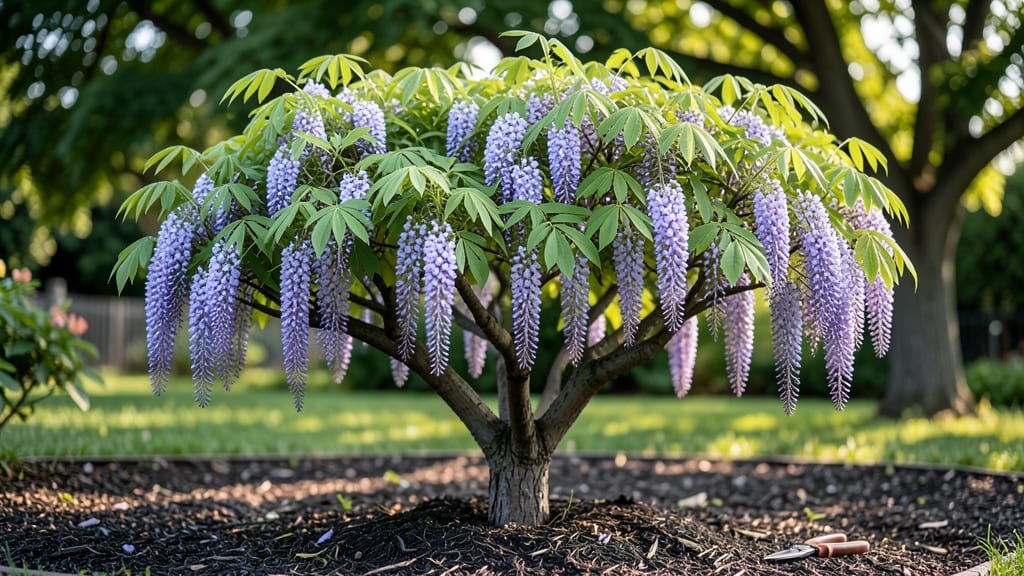
Pruning a small wisteria tree transforms it from a tangled mess into a fragrant, blooming showstopper—and it takes just three strategic cuts. 🌿 I’ve wrestled with wisteria vines that sprawled across fences and climbed into neighbors’ yards, but the right pruning turns them into contained, blooming trees that smell like spring in a compact package.
The secret? Timing and technique that keep the plant happy without sacrificing those iconic purple cascades.
You’ll need sharp pruners, a sturdy ladder (for higher branches), and a clear plan: prune once in late winter, again after blooming, and a final light trim in summer.
Most gardeners over-prune, leading to fewer flowers, but these three cuts strike the perfect balance—promoting new growth while preserving the blooms you love. The first cut shapes the tree, the second encourages next year’s flowers, and the third keeps it tidy without stressing the plant.
What you end up with is a tree that bursts with vibrant purple blooms from early spring through summer, filling your small space with fragrance. The foliage stays lush, the branches grow strong, and you avoid the messy, invasive vines that take over gardens.
It’s the difference between a wild, unruly plant and a neighborhood-envy small tree that’s easy to maintain.
Works for dwarf varieties like Amethyst Falls or Blue Moon, as well as trained small trees in containers. Whether you’re pruning in a backyard or a patio pot, these cuts keep your wisteria blooming beautifully without the chaos. Let’s get those pruners out!
📚 In This Guide
- What you need
- Instructions
- Tips and common mistakes
- Wrapping up and next steps
What you need
- ○ Pruning shears: Bypass pruners (sharp, clean, and disinfected—think blank">Felco F-2 or blank">Gonicc G92 for precision). Loppers: 1 pair (for thicker branches, 20-24" reach, e.g., blank">Fiskars X27). Pruning saw: 1 (for stubborn, woody stems—blank">Fiskars X7 is a solid pick). Gloves: Heavy-duty, cut-resistant (e.g., blank">Tiger Claw for thorn protection). Disinfectant: 70% isopropyl alcohol or bleach solution (1 part bleach : 9 parts water) to sterilize tools. Pruning sealant: Optional (e.g., blank">Tanglefoot Tree Wound Pruning Seal for large cuts). Ladder: Extendable (if your wisteria climbs >6 ft; ensure it’s stable and rated for your height). Trash bags or bucket: 1-2 (for clippings—wisteria vines can be heavy when wet!). 🌱 Prerequisites & Prep Work Weather check: Prune on a dry, overcast day (avoid frost or extreme heat). Safety gear: Safety glasses (to shield from flying debris) and long sleeves/pants (wisteria thorns are no joke!). Plan ahead: Sketch a simple map of your wisteria’s structure (mark dead/diseased branches in red, overgrown in yellow). Gather photos or references of healthy wisteria growth for comparison.
- ● Cleanup supplies: Rags or paper towels (for wiping tools between cuts) and compost bin access (wisteria clippings decompose quickly).
Step-by-step guide to pruning your small wisteria tree for continuous blooms
Here's how to keep your compact wisteria flowering beautifully year after year—just three strategic cuts make all the difference.
✂️ Step 1: Late Winter Cleanup Cut (The Reset)
Start in late February to early March when the tree is still dormant. This is your chance to remove all dead, crossing, or weak branches. I grab my hand pruners and make clean cuts just above a bud that faces outward—this encourages airflow and future blooms. Look for branches that rub against each other or grow inward; these compete with your plant's energy and produce fewer flowers.
Real talk: Don't be afraid to cut back up to one-third of the plant's growth if needed. Wisteria responds well to bold pruning when done correctly. After cutting, wipe your pruners with rubbing alcohol to prevent spreading any potential diseases between cuts. You'll see fresh, green growth emerge from the buds you left behind—this is your first sign the pruning worked.
✂️ Step 2: Post-Bloom Summer Pruning (The Bloom Booster)
Wait until after flowering (typically late June to early July) before making this cut. This is when you remove last year's flowered stems—they're the ones that produced blooms this spring. Cut these back to a strong outward-facing bud or to a main branch. I like to use my loppers for thicker stems, making the cut at a 45-degree angle about ¼ inch above the bud.
Here's the thing—this cut forces the plant to focus energy on new growth that will flower next year. You'll notice fresh, vibrant leaves sprouting from the buds you left behind within 2-3 weeks. If you see any suckers growing from the base, remove them completely—they drain energy from your main tree. This is also when I do a quick check for any pests like aphids or spider mites, treating them immediately if found.
✂️ Step 3: Light Fall Pruning (The Shape Refiner)
In early to mid-October, do a light pruning to shape your tree and remove any sparse or weak growth. This isn't about heavy cutting—just tidy up the overall form. Use your hand pruners to trim back any branches that are growing too long or out of balance. Cut just above a leaf bud or side branch to maintain the natural shape of your small wisteria.
This final cut helps prepare the tree for winter dormancy. You'll want to avoid heavy pruning now—it stimulates new growth that won't harden off before cold weather arrives. Instead, focus on removing any dead wood or branches that might harbor pests over winter. After this pruning, give your tree a deep watering to help it establish roots before the ground freezes.
Tips & tricks for perfect small wisteria tree pruning
Mastering these pruning techniques transforms your wisteria from a wild vine into a showstopper with continuous blooms. Here's what I've learned after years of trial and error.
Timing is Everything: The late February to early March window for your first cut is non-negotiable—this is when wisteria is fully dormant and can handle aggressive pruning. I've made the mistake of pruning too early when buds were still swelling, and the tree struggled to recover. If you miss this window, wait until the leaves first appear in spring, but don't delay beyond early April or you risk stunting new growth. The key is to catch it right before new shoots emerge.
Bud Direction Matters: When making your cuts, always look for outward-facing buds—they're the secret to an open, airy tree structure. I learned this the hard way after pruning inward-facing buds and ending up with a dense, tangled mess. For your summer cut, focus on removing last year's flowered stems completely down to a strong outward bud. This might seem drastic, but it's what forces those spectacular blooms next season. Think of it as making room for the tree to shine.
Tool Maintenance Prevents Disaster: Wiping your pruners with rubbing alcohol between cuts isn't just about hygiene—it's about protecting your investment. I once lost a small wisteria to bacterial blight because I skipped this step. Keep your tools sharp too; dull blades crush stems instead of making clean cuts, which stresses the plant. For thicker branches in Step 2, your loppers should cut cleanly at a 45-degree angle—no jagged edges that can invite pests.
Pro Tips for Small Wisteria Tree
- Mastering these pruning techniques transforms your wisteria from a wild vine into a showstopper with continuous blooms.
- Timing is Everything: The late February to early March window for your first cut is non-negotiable—this is when wisteria is fully dormant and can handle aggressive pruning.
- Bud Direction Matters: When making your cuts, always look for outward-facing buds—they're the secret to an open, airy tree structure.
Frequently asked questions
Got questions about tending to your small wisteria tree? You’re not alone!
Here are some of the most common concerns—plus quick, actionable answers to keep your blooms thriving year-round.
Can I prune my small wisteria tree at any time of year?
Pruning timing matters! For best results, trim your wisteria in late winter or early spring (just before new growth starts). Avoid heavy pruning in fall—it can stimulate tender shoots vulnerable to frost. Light shaping in summer is fine, but never prune after August to protect next year’s flowers.
How do I know which branches to cut first?
Start with dead, diseased, or crossing branches—these take priority. Next, remove overly long or leggy stems to encourage bushier growth. Focus on 1/3 of the oldest wood each year to maintain balance. Pro tip: Look for branches with no leaves or flowers—they’re often candidates for removal!
Why isn’t my small wisteria blooming as much as it used to?
Wisteria blooms on old wood, so aggressive pruning (like cutting back to bare stems) can reduce flowers. If blooms are sparse, check for:
- Over-pruning (leave some last year’s growth)
- Poor sunlight (wisteria needs 6+ hours of sun daily)
- Nutrient deficiencies (fertilize in early spring with high-phosphorus food)
Give it time—healthy wisteria often reblooms after 2–3 years of gentle pruning.
Are there smaller wisteria varieties better for containers or small yards?
Yes! If space is tight, consider these compact options:
- Amethyst Falls (dwarf variety, 8–10 ft tall, fragrant lavender blooms)
- Royal Purple (6–8 ft, deep purple flowers, slower growth)
- Prolific (hardy, 10–12 ft, great for trellises)
Container-growing is tricky (roots need depth), but 5-gallon pots with drainage work for young plants—just prune aggressively to control size.
What should I do if my wisteria gets powdery mildew or pests?
Powdery mildew (white powder on leaves) thrives in humid conditions. Prevent it with:
- Improved airflow (prune to open the canopy)
- Neem oil spray (apply in early morning)
- Resistant varieties (like ‘Black Dragon’)
For pests (aphids, spider mites), blast leaves with water or use insecticidal soap. Pro tip: Encourage ladybugs—they’re natural predators!
Wrapping up and next steps
Mastering the art of pruning your small wisteria tree is all about timing, technique, and a little patience—just like nurturing a beautiful friendship! 🌸 With the three strategic cuts you’ve learned, you’re well on your way to year-round blooms that’ll make your garden the envy of the neighborhood.
Remember, wisteria thrives on consistency, so grab those shears and make it a seasonal habit.
Ready to take the next step? Start small—prune just one section this week, then build your confidence. Before you know it, your wisteria will be a lush, fragrant star in your outdoor space! Happy pruning! ✂️🌿