
Orchid Care
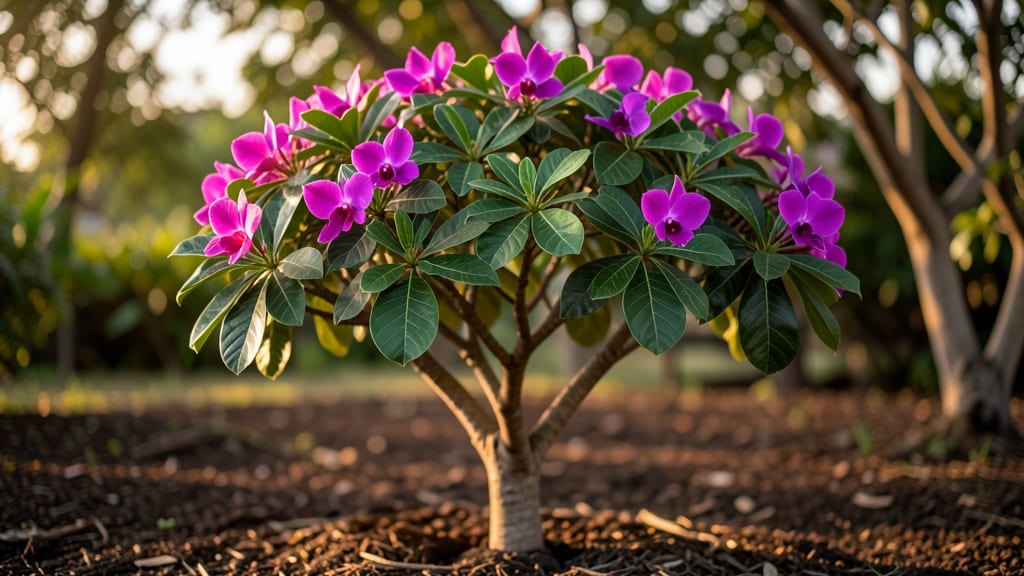
Your Arizona landscape could be bursting with purple orchid tree blooms year-round—if you know how to beat the desert’s challenges. 🌵 These stunning trees thrive in heat but need the right soil, watering rhythm, and pruning timing to survive our intense summers and mild winters.
I’ve grown mine for five years through Phoenix’s brutal summers, and here’s what actually works.
The key is drought-tolerant soil mixed with organic matter to hold moisture without drowning roots, plus deep but infrequent watering—think soaker hoses or drip irrigation to keep roots cool.
My tree gets water twice a week in summer, then tapers to once every two weeks in cooler months. Mulch helps retain that precious moisture while keeping roots from overheating.
You’ll reward yourself with vibrant purple blooms from spring through fall, and even some winter interest if you prune correctly. The tree’s papery leaves add texture, and its hardy nature means fewer pests than you’d expect in Arizona’s climate.
Just watch for spider mites in dry spells and scale insects—both are easy to treat with neem oil.
Perfect for sunny yards, parking strips, or even large containers if space is tight. The secret to long-term success? Plant in late winter, give it room to spread (15–20 feet wide), and prune lightly after blooms fade.
Your purple orchid tree will become the showstopper of your neighborhood—trust me, mine gets compliments every spring.
📚 In This Guide
- What you need
- Instructions
- Tips and common mistakes
- Wrapping up and next steps
What you need
- ● Purple orchid tree (Bauhinia purpurea) – Purchase a healthy 1- to 3-gallon container plant from a local nursery (ensure it’s acclimated to Arizona’s heat).
- ● Well-draining soil mix – Combine equal parts of: Cactus/succulent soil
- ● Perlite or pumice (for aeration)
- ● Compost (for nutrients)
- ● Container or in-ground planting spot: Container: A 15- to 20-gallon pot with drainage holes (terracotta or fabric pots work best).
- ● In-ground: A sunny, south- or west-facing location with at least 6–8 hours of direct sunlight daily.
- ● Mulch – 2–3 inches of organic mulch (like bark or gravel) to retain moisture and regulate soil temperature.
- ● Drip irrigation system or soaker hose – For consistent watering (Arizona’s heat demands deep but infrequent watering).
- ● Fertilizer: Balanced granular fertilizer (10-10-10 or 20-20-20) – Apply every 4–6 weeks during growing season (spring–fall).
- ○ Slow-release fertilizer (optional) – Mix into soil at planting for steady nutrients.
- ● Pruning shears – Sharp, sterilized shears for trimming dead blooms or shaping the tree.
- ○ Sun protection (optional) – Shade cloth (30–50%) for young plants or extreme heat waves (100°F+).
- ● Heat tolerance – Purple orchid trees thrive in Arizona’s USDA Zones 9–11 but may need winter protection (30°F or lower).
- ● Drought resistance – Once established, they require minimal water (water deeply 1–2 times per week in summer).
- ○ Cold hardiness prep (optional): Wrap the pot in burlap or move it indoors if temperatures drop below 32°F.
- ● Apply anti-desiccant spray to protect leaves from frost.
Step-by-Step guide for planting and maintaining purple orchid trees in Arizona
Here's how to establish these drought-tolerant beauties for stunning year-round color.
🪴 Step 1: Select the Perfect Planting Spot
Choose a location with morning sun and afternoon shade—Arizona's intense afternoon heat can scorch leaves. The purple orchid tree thrives in well-draining soil, so avoid low spots where water pools after rain. I always test the soil first by digging a 6-inch hole—if water doesn't drain within 30 minutes, amend with 1 part sand to 2 parts native soil.
Your spot should also protect the tree from strong desert winds. I plant mine near a stucco wall or use a temporary windbreak made of burlap until roots establish. Watch for the tree's natural growth habit—it spreads 15-20 feet wide at maturity, so give it plenty of room.
🌱 Step 2: Plant at the Right Time and Depth
Plant your purple orchid tree in late winter or early spring when temperatures are cool but warming. Dig a hole twice as wide as the root ball but no deeper—planting too deep suffocates roots. Gently remove the tree from its container and loosen any circling roots with your fingers.
Place the tree in the hole so the top of the root ball sits 1 inch above ground level. This prevents water from pooling around the stem. Backfill with native soil mixed with compost (about 1/3 of the mix) to give it a nutrient boost. Water deeply right after planting—5 gallons for a 5-gallon container tree—to settle the soil around roots.
☀️ Step 3: Water Deeply but Infrequently
The key to Arizona success is deep, infrequent watering. Water your tree once a week for the first month, then taper to every 2-3 weeks once established. Check moisture by sticking your finger 2 inches into the soil—if it feels dry, water thoroughly. Purple orchid trees store water in their trunks, so they hate frequent shallow watering.
Apply water slowly at the base to avoid runoff. I use a soaker hose for 30 minutes to ensure deep penetration. Mulch with 2-3 inches of wood chips (keeping mulch 6 inches away from the trunk) to retain moisture and regulate soil temperature. This is especially critical in Arizona's extreme heat.
✂️ Step 4: Prune for Shape and Blooms
Prune your purple orchid tree in late winter before new growth begins. Remove any dead, diseased, or crossing branches first—cut back to the nearest outward-facing bud. I always sterilize my pruners with rubbing alcohol between cuts to prevent bacterial spread.
To encourage bushier growth, trim back 1/3 of the longest branches to just above a leaf node. This stimulates branching and more abundant blooms. Avoid heavy pruning in summer—it stresses the tree and reduces flowering. Watch for new growth within 4-6 weeks after pruning as your signal that the tree is responding well.
Tips & tricks for perfect purple orchid tree care in Arizona
Here's what I've learned after watching these drought-resistant beauties thrive in Arizona's harshest conditions.
Soil Test Tip: That 30-minute drainage test in Step 1 is non-negotiable. If water pools longer than that, mix in more sand—up to 50% sand for heavy clay soils. I've seen orchid trees fail within months when planted in soil that doesn't drain properly. The roots need oxygen just as much as water!
Planting Depth Secret: The 1-inch above ground level rule prevents rot, but there's more to it. After planting, gently press down the soil to eliminate air pockets around the roots. This helps the tree establish faster. I tap the soil lightly with a board—just enough to firm it up without compacting.
Watering Wisdom: For the first month's weekly watering, split those 5 gallons into two sessions—morning and evening. This mimics natural rainfall patterns and prevents root stress. After establishment, if you notice leaves curling slightly in the afternoon heat, that's normal—it's the tree conserving water.
Pruning Precision: When you trim back 1/3 of the longest branches in Step 4, look for branches that are growing inward. These create dense, shaded areas that promote fungal growth. Cutting them opens up the tree's canopy for better airflow and more sunlight penetration to lower branches.
Pro Tips for Purple Orchid Tree Arizona
- Here's what I've learned after watching these drought-resistant beauties thrive in Arizona's harshest conditions.
- Soil Test Tip: That 30-minute drainage test in Step 1 is non-negotiable.
- Planting Depth Secret: The 1-inch above ground level rule prevents rot, but there's more to it.
Frequently asked questions
Can the Purple Orchid Tree survive Arizona’s extreme heat and drought?
The Purple Orchid Tree is highly drought-tolerant once established, making it a perfect fit for Arizona’s climate. However, young trees (under 2 years old) need regular watering (every 1-2 weeks) to help roots establish. Once mature, it thrives on deep but infrequent watering—think 1-2 times per month during monsoon season or dry spells. Mulching (3-4 inches of organic mulch) retains moisture and protects roots from heat stress. Pro tip: Avoid overhead watering to prevent fungal issues!
How long does it take for a Purple Orchid Tree to bloom?
Patience is key! Most Purple Orchid Trees take 2-5 years to produce their stunning purple orchid-like flowers in Arizona’s climate. Factors like sunlight, soil quality, and watering consistency can speed up blooming. For faster results, plant in full sun (6+ hours daily) and fertilize lightly in spring (use a balanced 10-10-10 fertilizer). Bonus: Pruning spent blooms encourages more frequent flowering in subsequent seasons.
What’s the best temperature range for a Purple Orchid Tree in Arizona?
This tree loves heat but can suffer in extreme cold. In Arizona, it tolerates temperatures down to 20°F (-7°C), but young trees or potted specimens may need protection if temps drop below 30°F (-1°C). For extra safety, wrap the trunk with burlap or move potted trees to a sheltered garage. Heatwave tip: If leaves scorch in 110°F+ temps, provide light afternoon shade until the tree adjusts.
Are there alternatives to the Purple Orchid Tree for Arizona gardens?
If you love drought-resistant, flowering trees but want options, consider these Arizona-friendly alternatives:
- Desert Willow (Chilopsis linearis): Thrives in heat, produces trumpet-shaped blooms, and is extremely low-maintenance.
- Texas Ranger (Leucophyllum frutescens): Blooms profusely after rain and handles alkaline soils well.
- Paloverde (Parkinsonia spp.): Native, evergreen, and supports local wildlife with its yellow flowers.
- Jacaranda (Jacaranda mimosifolia): While not native, it’s a showstopper with lavender-blue blooms in spring (needs moderate water).
Pro tip:
If you want orchid-like flowers, Bauhinia variegata (another Bauhinia species) is a hardier choice for Arizona’s low deserts.
Why are my Purple Orchid Tree’s leaves yellowing or dropping?
Yellowing or dropping leaves usually signal one of three issues:
| Issue | Cause | Fix |
|---|---|---|
| Overwatering | Soggy soil from too-frequent watering or poor drainage. | Let soil dry completely between waterings; improve drainage with gravel or sand. |
| Sunburn | Sudden intense Arizona sun after shade or transplant shock. | Gradually acclimate to full sun; provide light shade for a few weeks. |
| Pests/Nutrient Deficiency | Spider mites or nutrient-poor soil (common in alkaline Arizona soil). | Spray with neem oil for pests; test soil pH and amend with compost or sulfur if needed. |
Quick check:
Gently scratch the soil—if it smells rotten, you’re overwatering. If leaves feel crispy, it’s thirsty!
Wrapping up and next steps
Caring for your purple orchid tree in Arizona is all about balancing the state’s intense sun, heat, and dry climate with the plant’s tropical roots. With the right soil, watering routine, and seasonal adjustments, you’ll reward yourself with stunning blooms and a thriving tree year-round. 🌸
Ready to take the next step? Monitor your tree’s health weekly—adjust watering as needed, prune carefully, and enjoy watching your orchid tree flourish. Whether you’re a seasoned gardener or a curious beginner, every small effort makes a big difference!