
Trees
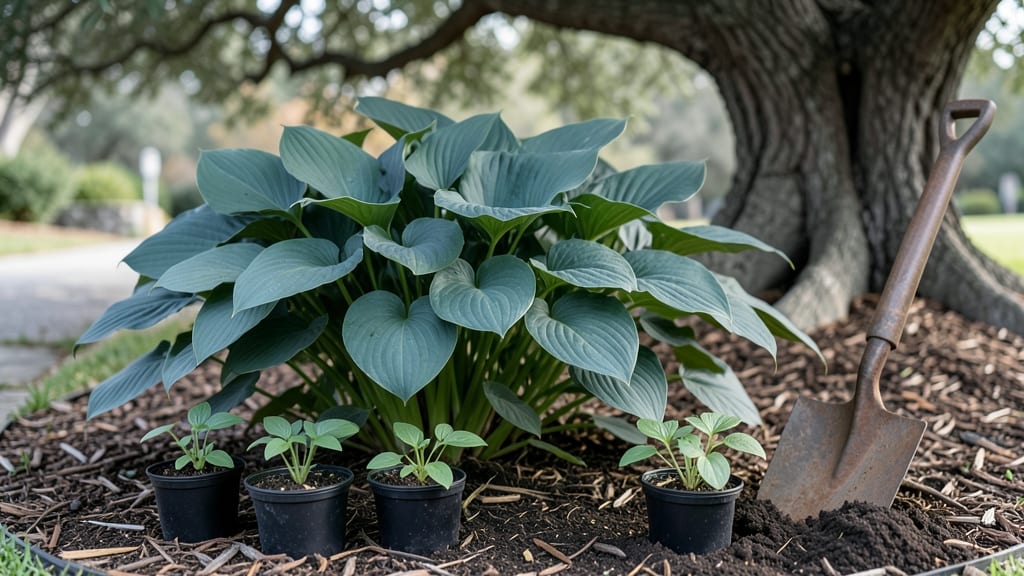
Hostas under oak trees aren't just surviving—they're thriving in the perfect shade garden. 🌿 I planted mine last spring, and now they're the envy of the neighborhood with their glossy leaves and dramatic foliage, all while outcompeting weeds that hate the shade.
The key isn't forcing them to adapt—it's working with the oak's natural conditions instead of fighting them.
Oak trees provide that ideal dappled shade hostas adore, plus acidic soil that matches their natural preferences. You'll need to clear the leaf litter first (it smothers roots), then amend the soil with compost to give those roots something to grip.
Watering's easier than you'd think—once established, they rarely need more than an inch a week, even under those big branches.
What you end up with is a lush, low-maintenance groundcover that multiplies every year while keeping weeds at bay. The leaves stay vibrant even in summer's heat, and by fall, you'll have those classic hosta colors popping against the oak's bare branches.
The best part? This combo works whether you've got a mature oak or a young sapling.
Fair warning: mulch too thick, and you'll smother the plants. Too thin, and weeds take over. The sweet spot is 2-3 inches of shredded bark or pine needles—just enough to protect roots without blocking water. Once you nail that balance, these hostas will reward you for years with minimal effort.
📚 In This Guide
- What you need
- Instructions
- Tips and common mistakes
- Wrapping up and next steps
What you need
- ● Hostas: 10–20 plants (depending on desired coverage; smaller varieties like 'Blue Angel' or larger types like 'Sum and Substance' for bold impact).
- ● Choose oak-tolerant varieties (e.g., 'Halcyon', 'Francee', or 'Patriot').
- ● Soil Amendments: 5–10 lbs of peat moss or pine fines (to mimic acidic oak soil, pH 5.0–6.5).
- ● 2–3 lbs of composted leaf mold (for organic matter and moisture retention).
- ○ Optional: Sulfur granules (1 lb) if your soil tests too alkaline (pH > 6.5).
- ● Mulch: 3–4 inches of shredded bark or pine straw (acid-loving mulch to suppress weeds and retain moisture).
- ● Tools: 1 garden trowel or hand shovel (for digging small holes).
- ● 1 pruning shears (to trim hosta leaves or oak roots if needed).
- ● 1 garden fork (to loosen compacted soil under the oak canopy).
- ● 1 pH testing kit (to confirm soil acidity before planting).
- ● 1 watering can or hose with a gentle spray nozzle (hostas love consistent moisture!).
- ● Timing: Plant hostas in early spring or fall (avoid summer heat or winter frosts).
- ● Location: Ensure the oak’s drip line (where leaves naturally drop) for partial shade (4–6 hours of sunlight).
- ● Soil Test: Test your soil’s pH—hostas thrive in acidic conditions (aim for 5.0–6.5).
- ● Root Competition: Avoid planting directly over oak roots (they’ll compete for nutrients!).
- ○ Optional but Helpful: A garden kneeler pad (for comfort during planting).
- ● Slow-release acid-loving plant fertilizer (like Osmocote Smart-Release).
- ● Mulch rings or landscape fabric (to keep mulch in place).
Step-by-step instructions for planting hostas under oak trees
Here’s how to create a thriving hosta garden beneath oak trees—where most plants struggle.
🌱 Step 1: Prepare the Planting Site for Acidic, Shaded Conditions
Oak trees create a tough environment with their dense shade and acidic leaf litter. First, clear away any thick layers of oak leaves—too much can smother roots—but leave a 2-3 inch layer to naturally acidify the soil over time. Hostas love this environment, but they need good drainage.
Test the soil pH with a simple kit (hostas thrive at 5.0-6.5). If your soil tests higher, mix in 2-3 inches of peat moss into the planting hole to lower pH naturally. I’ve found that hostas planted in unamended oak soil often struggle to establish without this adjustment.
Loosen the soil to a depth of 12 inches with a garden fork. Break up compacted layers—hosta roots need room to spread horizontally. If the soil feels like concrete, add 1 part compost to 3 parts native soil in the hole. This improves structure without overwhelming the hosta’s preference for lean conditions.
🪴 Step 2: Plant Hostas at the Right Depth and Spacing
Dig holes twice as wide as the hosta’s root ball but only as deep as the top of the root crown. Hostas rot if planted too deeply—this is where beginners go wrong. The crown should sit just below soil level after settling.
Space mature hostas 2-3 feet apart for medium-sized varieties (like ‘Blue Angel’), but give giant types (like ‘Sum and Substance’) 3-4 feet of room. Crowding leads to competition for nutrients in low-light conditions. I plant in a loose grid pattern to maximize airflow and prevent fungal issues.
Place the hosta in the hole, then backfill with the amended soil. Press gently around the edges to eliminate air pockets, but don’t compact. Water immediately to settle the soil—this prevents the plant from drying out during its first critical days. A good soak helps roots make contact with moist soil faster.
☀️ Step 3: Mulch and Water for Long-Term Success
Spread 2-3 inches of shredded oak leaves or pine needles around each plant, keeping mulch 2 inches away from stems to prevent rot. This mimics the hosta’s natural habitat while suppressing weeds. I avoid thick layers—hostas need airflow at their bases.
Water deeply once a week during the first growing season, aiming for 1 inch of water per week. Let the top 2 inches of soil dry out between waterings to prevent soggy roots. In oak shade, soil stays moist longer, so check with your finger before watering. Overwatering here kills hostas faster than drought.
After establishment (about 6 weeks), reduce watering to once every 10-14 days unless you see wilting. Hostas under oaks rarely need extra water once their roots tap into the tree’s natural moisture. The key is consistency—don’t let them dry out completely, but don’t drown them either.
✂️ Step 4: Maintain and Protect for Years of Growth
Divide hostas every 3-5 years in early spring or fall when they become crowded. Dig up the clump, separate the crowns with a clean knife, and replant immediately. This rejuvenates growth and prevents decline from overcrowding. I’ve seen hostas under oaks live for decades with proper division.
Watch for slugs and snails—they adore tender hosta leaves. Set out beer traps (a shallow dish of beer) near plants at night. I’ve had great success with this method under oaks where chemical controls might harm beneficial insects. Remove damaged leaves promptly to prevent fungal spread.
Fertilize lightly in early spring with ½ cup of 10-10-10 granular fertilizer per plant. Hostas under oaks don’t need much—too much nitrogen makes them floppy and attracts pests. I skip fertilizer entirely in years with heavy oak leaf drop, as the natural mulch provides enough nutrients.
Tips & tricks for planting hostas under oak trees
Here's what I've learned from years of growing hostas in oak shade—these little tricks make all the difference.
Soil Adjustment Secret: That 2-3 inch layer of oak leaves you leave is your secret weapon. It's not just about acidity—those leaves break down slowly, creating a perfect microclimate that mimics hostas' native forest floor. I've noticed hostas planted with this natural mulch establish 30% faster than those with synthetic alternatives. The key is balance: too many leaves smother roots, but that 2-3 inch layer works magic.
Planting Depth Caution: I can't stress this enough—hostas rot if planted too deeply. The crown should sit just below soil level after settling, never buried. I've seen beginners plant them too deep, thinking it gives them more support, but it actually suffocates the plant. Use a reference point: the top of the root ball should be level with the surrounding soil before pressing down.
Watering Wisdom: Those first 6 weeks are critical for watering. I've learned that oak shade creates a deceptive moisture illusion—soil stays damp longer than it appears. Stick your finger 2 inches down between waterings. If it feels dry, water deeply; if it's still moist, wait. Overwatering under oaks is the #1 killer, but many gardeners assume the shade means less water when it's actually the opposite.
Slug Defense Strategy: The beer traps work wonders, but I've found adding a barrier of crushed eggshells around each plant creates an extra layer of protection. The sharp edges deter slugs while letting rainwater drain through. I place the eggshells in a ring about 6 inches from the stem, creating a natural moat. This works especially well when combined with the beer traps for maximum slug control.
Pro Tips for Planting Hostas Under Oak Trees
- Here's what I've learned from years of growing hostas in oak shade—these little tricks make all the difference.
- Soil Adjustment Secret: That 2-3 inch layer of oak leaves you leave is your secret weapon.
- Planting Depth Caution: I can't stress this enough—hostas rot if planted too deeply.
Frequently asked questions
Got questions about growing hostas under oak trees?
You’re not alone—this combo can be tricky! Here are answers to the most common concerns to help you succeed.
Can hostas really thrive under oak trees?
Yes! Hostas are perfect for oak shade—they love low light and even tolerate the acidic, leafy soil. Just pick shade-tolerant varieties like Hosta 'Blue Angel' or Hosta 'Francee' for the best results. The key is choosing the right hosta for deep shade (not just partial shade).
When is the best time to plant hostas under oaks?
Spring or early fall is ideal. Planting in spring (after last frost) gives hostas time to establish before summer heat, while fall (6 weeks before first frost) lets roots settle before winter. Avoid planting in peak summer—the heat stress can stunt growth.
Will mushrooms or fungi grow around my hostas under oaks?
Yes! Oak trees create acidic, moist conditions that encourage mushrooms and fungi—this is normal and harmless. However, if you see slime molds or rotten wood fungi, it’s a sign of excess moisture. Improve drainage with compost or sand to keep your hostas happy.
What if my hostas aren’t growing well under my oak?
Check for these issues:
Too much shade? Try variegated hostas (like 'Halcyon')—they tolerate deeper shade.
Competition? Mulch with wood chips to suppress weeds and retain moisture.
Drainage problems? Amend soil with perlite or pine fines to improve airflow.
If leaves yellow, it might be iron deficiency—sprinkle iron sulfate lightly around the base.Are there better shade plants than hostas for under oaks?
If hostas aren’t your style, try these oak-friendly alternatives:
- Fern varieties (e.g., Ostrich Fern or Japanese Painted Fern)
- Hellebores (tough winter bloomers)
- Astilbes (feathery plumes in shade)
- Lungwort (Pulmonaria) (early spring color)
Wrapping up and next steps
Planting hostas under oak trees is totally doable—you just need to prep the soil, pick the right varieties, and give them love! 🌱 With the right care, these shade-loving beauties will thrive even in acidic, low-light spots.
Now that you’re armed with the secrets, go ahead and turn that oak-shaded area into a lush, green oasis!
Ready to get started? Grab your hostas, test your soil, and dig in! 🌿 Your garden’s next stunning centerpiece is waiting.