
Pruning
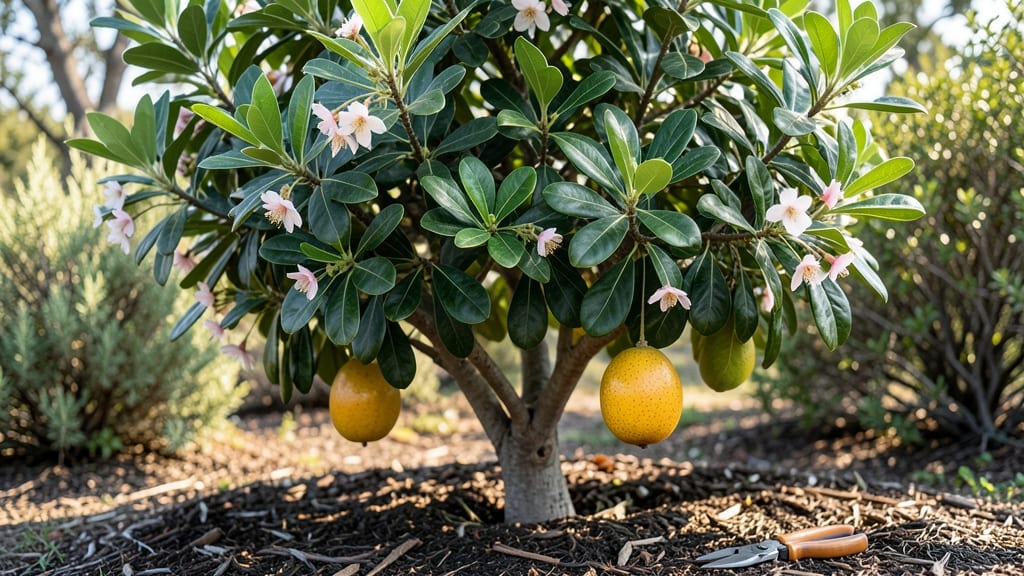
The pineapple guava tree (Acca sellowiana) transforms your yard into a tropical oasis with its fragrant flowers and sweet fruit—but only if you prune it right. I learned the hard way that skipping this step means fewer harvests and a tangled mess of branches.
This layered canopy technique boosts fruit production by opening the tree to sunlight and air, while keeping it manageable even in small spaces.
You’ll need sharp pruning shears, gloves, and a clear morning to work—cloudy days prevent stressing the tree. The goal is to create an open, tiered structure: cut back overgrown branches by one-third each year, and always prune just above outward-facing buds.
Start with the oldest wood first, then work your way to the newer growth. This method keeps the tree productive for decades, not just a few seasons.
Within 6-8 weeks, you’ll see new shoots emerging from those pruned spots, each one a potential fruit-bearing branch. The tree’s natural shape becomes more elegant, and the fruit—sweet, tangy, and packed with vitamin C—comes in heavier than ever.
Plus, the flowers release a perfume that rivals jasmine, making your garden smell like a South American paradise.
Works in USDA Zones 9-11, though cold-hardy varieties can handle brief dips to 20°F. For container growing, choose dwarf varieties and prune even more aggressively to maintain shape.
The key is patience—this isn’t a quick fix, but a long-term investment in a tree that rewards you with both beauty and bounty.
📚 In This Guide
- What you need
- Instructions
- Tips and common mistakes
- Wrapping up and next steps
What you need
- ● Pruning shears: Bypass pruners (sharp, clean, and capable of cutting up to ½-inch thick branches). Pro tip: Sterilize with rubbing alcohol to prevent disease spread! 💡
- ● Loppers: For branches ½-inch to 1.5-inch thick (look for bypass or anvil types with comfortable grips).
- ● Pruning saw: A curved-tooth saw for branches thicker than 1.5-inch (avoid dull blades to prevent tearing).
- ● Gloves: Heavy-duty, cut-resistant gloves (gardening or pruning-specific) to protect hands from thorns and rough bark.
- ● Disinfectant: 70% isopropyl alcohol or a 10% bleach solution (1 part bleach to 9 parts water) for sterilizing tools between cuts.
- ● Rubbing alcohol or hydrogen peroxide: For cleaning wounds on the tree (3% solution).
- ○ Pruning sealant (optional but recommended): A tree wound sealant (e.g., Tanglefoot Tree Wound Pruning Seal) for cuts larger than ½-inch in diameter.
- ● Ladder or step stool: Sturdy and tall enough to reach the tree’s canopy safely (ensure it’s rated for your weight).
- ● Bucket or trash bag: For collecting pruned branches and debris.
- ● Safety gear: Safety glasses (to shield eyes from debris) and long sleeves/pants (to protect from thorns and sun exposure).
- ● Sharpie or marker: For labeling branches if you’re training the tree for specific shapes.
- ● Tree growth regulator: Such as Paclobutrazol (follow label instructions) to encourage bushier growth in young trees.
- ● Compost or mulch: To replenish nutrients in the soil after pruning.
- ● Camera or sketchbook: To document the tree’s structure before and after pruning (great for tracking progress!).
Step-by-step guide to pruning a pinapple guava tree for maximum fruit production
This method transforms your tree into a fruit-bearing powerhouse by encouraging a balanced, layered canopy.
Assess the Tree Structure and Identify Growth Zones
Start by examining the tree's current architecture. Pinapple guava trees thrive with a multi-layered canopy that allows sunlight to penetrate all branches. Focus on the central leader (main vertical stem) and scaffold branches (primary horizontal limbs). Look for water sprouts (fast-growing, weak vertical shoots) and crossing branches that rub against each other.
Use a pruning saw for thick branches over ½ inch in diameter and bypass pruners for thinner growth. Mark branches to remove with twine or tape—this prevents accidental cuts later. The goal is to create 3-5 main scaffold branches spaced 12-18 inches apart vertically. Each scaffold should have secondary branches forming at 45-degree angles to distribute weight and sunlight evenly.
Remove Problematic Growth and Thin the Canopy
Begin by cutting out dead, diseased, or damaged branches first—these are easy to spot as they lack leaves, have blackened wood, or ooze sap. Next, remove water sprouts growing straight up from the trunk or scaffold branches. These compete with fruit-bearing wood for energy and rarely produce quality fruit. Use clean, sharp tools to make cuts just outside the branch collar (the swollen area where the branch meets the trunk).
Thin the canopy by selectively pruning branches that cross or rub against each other. These create wounds that invite pests and diseases. Aim to leave open space between branches—this improves airflow and reduces humidity, which is critical for preventing fungal issues like anthracnose. For each scaffold branch, keep 3-4 strong secondary branches and prune back weaker ones to a bud or lateral branch to encourage bushier growth.
Shape the Canopy for Optimal Sunlight Penetration
Step back and visualize the tree as a layered umbrella. The top layer should be the strongest scaffold branches, followed by mid-level branches, and finally lower branches that form a dense but open skirt. Prune the topmost branches to encourage outward growth rather than upward. Cut back the longest branches by ⅓ to ⅕ of their length to promote branching at the tips.
Focus on creating a balanced shape—avoid letting one side of the tree dominate. Pinapple guava trees produce fruit on new wood, so pruning stimulates fresh growth where fruit will develop. After shaping, sanitize your tools with a 10% bleach solution to prevent spreading disease between cuts. Water the tree deeply afterward to reduce stress and help it recover from pruning.
Encourage Layered Growth for Heavy Fruit Yields
To maximize fruit production, prioritize layered branching. Look for strong lateral buds along the scaffold branches and make heading cuts (cutting just above a bud) to encourage new growth. These new shoots will form secondary and tertiary branches, creating a dense, fruit-bearing structure. Avoid over-pruning—never remove more than ⅓ of the tree’s foliage in a single session, as this can shock the tree and reduce fruit set.
Pay special attention to the lower canopy. Pinapple guava trees often produce fruit on lower branches, so prune these lightly to maintain 3-4 feet of clearance from the ground. This prevents humidity buildup and makes harvesting easier. After pruning, apply a balanced fertilizer (e.g., 10-10-10) to support new growth. Monitor the tree closely for new shoots—these will be your future fruit-bearing wood.
Tips & tricks for perfect pinapple guava tree pruning
Transforming your pinapple guava tree into a fruit-bearing powerhouse starts with these strategic pruning insights that go beyond the basics.
Tool Selection Matters: The right tools make all the difference when pruning your pinapple guava. For branches over ½ inch thick, a sharp pruning saw is essential—dull blades tear wood, creating larger wounds that invite disease. I've found that bypass pruners work best for thinner branches because they make cleaner cuts that heal faster. Always sterilize your tools between cuts using a 10% bleach solution to prevent cross-contamination between branches, especially when dealing with potential fungal issues like anthracnose.
Visualizing the Layered Canopy: Step back frequently during pruning to visualize your tree as a three-dimensional umbrella. The top layer should consist of 3-5 main scaffold branches spaced 12-18 inches apart vertically. Each scaffold should have secondary branches forming at 45-degree angles—this creates the perfect framework for sunlight penetration. I recommend marking these branches with twine before cutting so you can easily identify your target structure as you work. The goal is to create a balanced shape where no single branch dominates the others.
Pruning for New Growth: Pinapple guava trees produce fruit on new wood, so strategic pruning stimulates exactly where you want fruit to develop. When making heading cuts (cutting just above a lateral bud), aim for strong lateral buds along scaffold branches. These will develop into secondary and tertiary branches that form your dense, fruit-bearing structure. Remember to never remove more than ⅓ of the tree's foliage in one session—this prevents shock and maintains the tree's energy reserves for fruit production.
Lower Canopy Care: Pay special attention to the lower branches, which often produce some of the best fruit. Maintain 3-4 feet of clearance from the ground to prevent humidity buildup and make harvesting easier. Lightly prune these lower branches to encourage outward growth rather than upward, creating a dense but open skirt that still allows sunlight to reach the lower canopy. This layered approach maximizes both fruit production and tree health.
Pro Tips for Pinapple Guava Tree
- Transforming your pinapple guava tree into a fruit-bearing powerhouse starts with these strategic pruning insights that go beyond the basics.
- Tool Selection Matters: The right tools make all the difference when pruning your pinapple guava.
- Visualizing the Layered Canopy: Step back frequently during pruning to visualize your tree as a three-dimensional umbrella.
Frequently asked questions
Got questions about pruning your pineapple guava tree for that lush, layered canopy and bumper crop? You’re not alone! Here are some of the most common queries—plus quick, actionable answers to keep your tree thriving.
How often should I prune my pineapple guava tree for maximum fruit?
Prune your pineapple guava tree twice a year: once in late winter (before new growth) to shape the canopy, and again after harvest to encourage new fruiting branches. Avoid heavy pruning during peak fruit production—focus on light trimming to maintain airflow and sunlight penetration.
When is the best time to prune for heavy fruit yields?
The ideal windows are:
- Late winter/early spring (before buds break) – removes deadwood and opens the canopy.
- Post-harvest (fall/winter) – stimulates new growth for next season’s fruit.
What should I do if my tree isn’t fruiting after pruning?
If your pineapple guava tree is skipping fruit, check these fixes:
- Light pruning: Over-pruning reduces fruiting branches. Aim to keep 30-50% of the canopy intact.
- Sunlight: Ensure it gets 6+ hours of direct sun daily—fruit production drops in shade.
- Water/nutrients: Drought or poor soil can stall fruit. Test soil pH (ideal: 6.0-7.0) and fertilize with citrus-friendly nutrients.
Can I prune too much? What are the signs?
Yes! Over-pruning weakens the tree and can lead to:
- No fruit (or tiny, sparse harvests).
- Yellowing leaves or excessive leaf drop.
- Pests/infections (open wounds invite issues).
Are there alternatives to pineapple guava for heavy fruit yields?
If pineapple guava isn’t your vibe, these high-yielding tropical fruit trees are great pruning projects too:
- Carambola (Star Fruit) – Drought-tolerant, loves pruning for shape.
- Loquat – Produces year-round fruit with minimal pruning.
- Soursop – Needs heavy structural pruning but rewards with massive harvests.
- Guava (Common) – More forgiving than pineapple guava but still benefits from annual shaping.
Wrapping up and next steps
Growing a thriving pineapple guava tree with a layered canopy isn’t just about patience—it’s about strategic care. By mastering pruning techniques like selective thinning, crown shaping, and seasonal trimming, you’ll unlock heavy fruit yields and a lush, balanced tree that rewards you for years.
Whether you’re a beginner or a seasoned gardener, the key is consistency and confidence—your tree will thank you with sweet, abundant harvests!
Ready to take the next step? Start small: pick one pruning technique from this guide and practice it this season. Before you know it, your pineapple guava will be a fruit-bearing powerhouse! 🌱✨