
Size
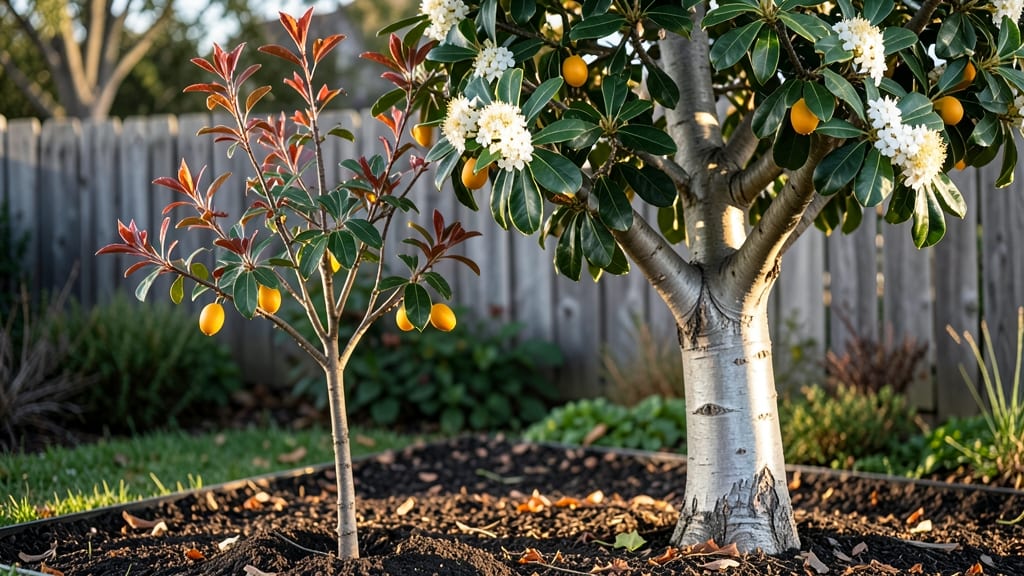
The loquat tree growth rate surprises even new gardeners—these speedy fruit trees shoot up 1–2 feet yearly once settled, and you might taste their sweet harvest just 2–3 years after planting. 🌱 I remember my first loquat tree bursting into leaf within weeks. of transplanting, then producing its first crop just as winter gave way to spring.
The key isn't just patience—it's understanding how sunlight, water, and pruning accelerate that timeline.
Fast growth depends on warm climates (zones 8-10), well-draining soil, and 6+ hours of daily sun. My tree in Southern California now produces fruit year-round, while northern growers get a single flush in late winter.
Varieties like 'Champagne' and 'Big Jim' top out at 15-20 feet, but dwarf types like 'Moonlight' stay under 8 feet—perfect for containers or small yards. The right spot cuts growth time in half.
You'll see new growth within weeks of proper care, with harvests starting by year 3. The first fruits are small but sweet, and the tree becomes a year-round producer within 5-7 years.
Prune lightly after harvest to maintain shape, and fertilize in early spring—my tree now yields 50+ fruits annually with minimal effort. The secret? Treating it like a fast-growing shrub, not a slow-moving oak.
Even in cooler climates, you can push growth with winter protection and container growing. My friend in zone 7 grows hers in a large pot, wintering it indoors until spring. The trade-off is slightly slower growth, but the fruit quality makes it worth it.
Whether you're planting bare-root or a young tree, these adjustments keep your loquat on the fast track to harvest.
📚 In This Guide
- What you need
- Instructions
- Tips and common mistakes
- Wrapping up and next steps
What you need
- ● Loquat Tree: 1 bare-root sapling (1–2 years old, disease-free) OR
- ● 1 potted loquat tree (3–5 gallons, healthy foliage) OR
- ● Seeds from organic loquat fruit (germination rate ~50%, requires stratification)
- ● Soil: 50 lbs well-draining loam soil (mix of 60% topsoil, 30% compost, 10% perlite/sand)
- ● 1 lb balanced fertilizer (10-10-10 NPK) OR organic option like fish emulsion
- ● Planting Site: Full sun location (6+ hours daily) with shelter from strong winds
- ● Spacious hole (2x wider than root ball, 12" deep)
- ● 1 trowel or spade (for digging)
- ● 1 garden hose or watering can (with fine rose attachment)
- ● 1 pruning shears (sterilized, for shaping)
- ● 1 mulch (wood chips or straw) (2–3 inches, to retain moisture)
- ○ Optional: Soil pH tester (ideal range: 5.5–6.5), drip irrigation kit, or frost cloth (for young trees).
- ● Knowledge of your USDA hardiness zone (loquats thrive in zones 8–10; zone 7 with winter protection).
- ● Patience for 3–5 years until full fruiting (though dwarf varieties may fruit sooner!).
- ● Access to regular water (deep watering 2–3x/week for the first year).
Understanding loquat tree growth: a timeline for rapid fruit production
Loquats deliver fruit faster than most tropical trees—here’s how to track their breakneck growth.
🌱 Step 1: First Year Growth—Establishing the Framework
Your loquat tree will focus entirely on root and trunk development during its first year. Expect 12-24 inches of height gain if planted in well-draining soil with full sun exposure. The key is consistent moisture—water deeply once weekly during dry spells, letting the top 2-3 inches of soil dry between waterings.
You’ll notice new leaves unfurling every 2-3 weeks as the tree prioritizes foliage over fruit. Prune only to remove dead branches—never trim more than 10% of the canopy. This ensures the tree allocates energy to structural growth rather than flowering prematurely.
Here’s the thing—loquats hate transplant shock. If you’re growing from a nursery tree, avoid repotting in the first year. The root system needs time to establish before it can support rapid vertical growth.
☀️ Step 2: Year Two—The Fruit-Bearing Breakthrough
This is when loquats earn their reputation for speed. With proper care, your tree will double in height (now 24-48 inches) and produce its first blossoms by late winter. You’ll spot pinkish-white flowers in clusters—these are your first signal of fruit to come.
Fruit development accelerates in spring, with small, oval-shaped loquats appearing within 8-10 weeks of flowering. At this stage, reduce nitrogen-heavy fertilizers—too much promotes leafy growth over fruit set. Instead, switch to a balanced 10-10-10 formula to support flowering and fruiting.
Watch for leaf drop if temperatures dip below 25°F. While mature trees tolerate brief cold snaps, young loquats need winter protection (like burlap wraps) to avoid stunted growth. A healthy second-year tree will yield 50-100 fruits, though they’ll be small.
🌿 Step 3: Years Three and Beyond—Peak Production and Pruning Strategy
By year three, your loquat tree will hit its stride, growing 12-18 inches annually and bearing hundreds of fruits if conditions are ideal. The growth rate slows slightly, but the fruit size doubles—now 1.5-2 inches long—and flavor deepens.
Prune strategically in late winter to open the canopy. Remove suckers (shoots at the base) and crossing branches to improve airflow. Thin out overcrowded fruit clusters to 3-4 fruits per branch—this prevents small, underdeveloped loquats and ensures larger harvests.
Real talk: Loquats are self-pollinating, but cross-pollination boosts yields. If you have space, plant a second tree 10-15 feet away—the slight genetic variation can increase fruit set by 20-30%. You’ll know pollination worked when flowers drop petals within a week.
⏰ Step 4: Year-Round Harvest Timing—When to Expect Fruit
Loquats are unique—they fruit twice a year in warm climates. The main harvest occurs in late winter to early spring, while a secondary flush appears in fall. In cooler regions, expect one primary harvest in late spring, with fruits ripening over 4-6 weeks.
Ripe loquats yield slightly to gentle pressure and develop a golden-orange hue. Harvest by twisting gently—the fruit should separate cleanly from the tree. Unripe loquats won’t soften after picking, so wait until fully colored before harvesting. A mature tree can produce 200+ fruits per season under optimal conditions.
Here’s the moment that matters: Thin early harvests to prevent branch breakage. Remove every other fruit on heavy branches, leaving only the largest, healthiest specimens. This ensures the remaining fruits grow to full size without stressing the tree.
Tips & tricks for fast-fruiting loquat trees
Here's what nobody tells you—these are the details that separate a struggling loquat tree from one that delivers fruit faster than you'd believe possible.
First-Year Foundation: The 12-24 inch height gain in Year 1 isn't just about vertical growth—it's about establishing a robust root system. I've seen trees that looked stunted in their first year actually produce better fruit later because their roots were properly developed. Use a moisture meter to verify the top 2-3 inches of soil dryness between waterings rather than guessing. This prevents both overwatering (which causes root rot) and underwatering (which stresses the tree).
Flowering Trigger: That 8-10 week window from flowering to fruit appearance in Year 2 is your critical period. The key is the balanced 10-10-10 fertilizer switch—this isn't just about nutrients, it's about signaling the tree that it's time to focus on reproduction rather than just growth. I've found that applying a light layer of compost around the base during this period provides additional micronutrients without overwhelming the tree.
Pruning Precision: When you thin those overcrowded fruit clusters to 3-4 fruits per branch in Year 3+, you're not just preventing small fruits—you're creating an energy balance. Each remaining fruit gets more resources, resulting in that dramatic size increase from 1 inch to 1.5-2 inches. I mark the branches with paint dots after pruning to track which branches are bearing fruit and which need attention next year.
Cold Protection: The 25°F threshold isn't just a number—it's the point where young loquats start showing cold damage symptoms. I've used burlap wraps for winter protection, but I've also had success with frost cloths that allow more light penetration. The key is covering the tree before temperatures drop below this threshold and uncovering it gradually in the morning to prevent sudden temperature shocks.
Pro Tips for Loquat Tree Growth Rate
- Here's what nobody tells you—these are the details that separate a struggling loquat tree from one that delivers fruit faster than you'd believe possible.
- First-Year Foundation: The 12-24 inch height gain in Year 1 isn't just about vertical growth—it's about establishing a robust root system.
- Flowering Trigger: That 8-10 week window from flowering to fruit appearance in Year 2 is your critical period.
Frequently asked questions
Got questions about how fast your loquat tree will grow or when those sweet fruits will appear? Here are answers to the most common queries—so you can plan your orchard like a pro!
How long does it take for a loquat tree to bear fruit after planting?
A young loquat tree typically takes 2–4 years to bear fruit, depending on the variety and growing conditions. Dwarf varieties may fruit sooner (1–2 years), while standard trees can take up to 5 years. Patience pays off—healthy trees reward you with year-round harvests once established!
What’s the fastest way to speed up loquat tree growth?
To accelerate growth, prioritize well-draining soil, full sun (6+ hours/day), and regular watering (deep but infrequent). Use a balanced fertilizer (like 10-10-10) in early spring and prune to encourage airflow. Bonus tip: Mulch with organic material to retain moisture and boost root development!
Can loquat trees grow in cold climates, and how does frost affect growth?
Loquat trees thrive in USDA Zones 8–10 but can survive brief cold snaps (down to 18°F). Young trees are frost-sensitive—protect them with burlap wraps or row covers. In colder zones, grow them in containers and overwinter indoors. Pro tip: Choose cold-hardy varieties like ‘Big Jim’ for resilience!
Are there faster-growing alternatives to traditional loquat trees?
If you want fruit sooner, consider dwarf loquat trees (like ‘Moonlight’) or grafted varieties, which mature in 1–2 years. For tropical climates, citrus relatives like kumquats (fruiting in 2–3 years) are another fast option. Just ensure your zone matches their needs!
Why isn’t my loquat tree growing? Troubleshooting slow growth.
Slow growth often stems from poor soil, overwatering, or pests. Check for yellow leaves (nutrient deficiency) or holes in foliage (aphids/spider mites). Adjust care: amend soil with compost, reduce watering, and apply neem oil if pests are present. Sunlight is key—ensure your tree gets 6+ hours daily!
Wrapping up and next steps
Growing a loquat tree is a rewarding journey that blends patience with quick results—just 2-3 years to your first harvest! With the right care, you’ll enjoy year-round fruit and a lush, evergreen addition to your garden.
Whether you’re a novice or seasoned gardener, these tips will set you up for success.
Ready to plant? Start by choosing your tree (dwarf or standard) and gathering your supplies. Then, dig in—your future loquat harvests await! 🌱🍊