
Trees
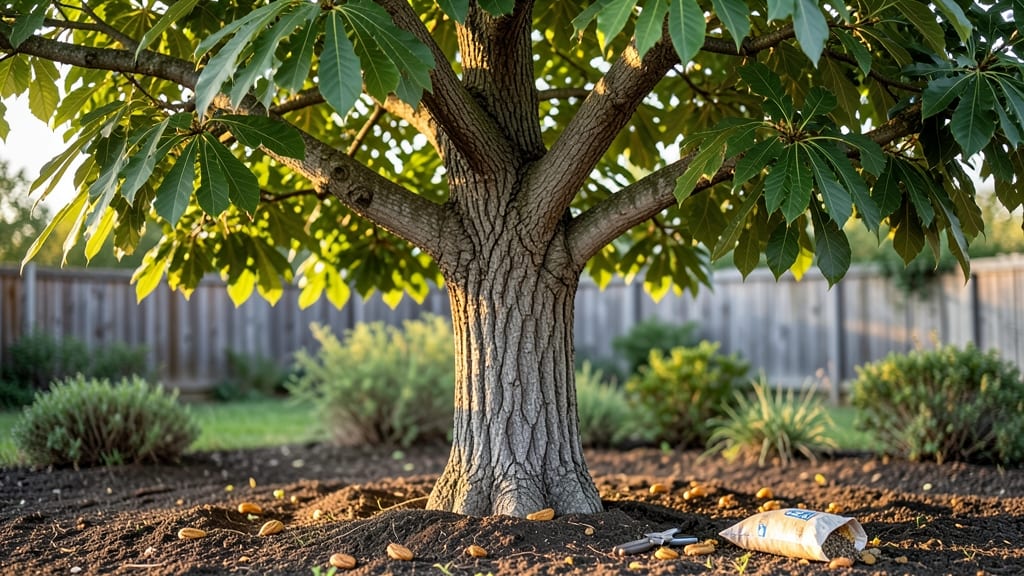
The health of your pecan tree starts with its bark—rough, ridged, and surprisingly revealing. 🌳 I’ve learned that a close look at those deep grooves and textured ridges can tell you whether your tree is thriving or fighting an unseen battle.
A single split or discolored patch might seem minor, but it’s often the first sign of stress, disease, or even pest invasion.
Healthy pecan bark should be thick, dark brown, and firmly attached to the trunk. When you run your hand over it, you’ll feel those characteristic ridges—nature’s way of protecting the tree from sun and pests.
But watch for cracks wider than a pencil, oozing sap, or patches where the bark peels away like old wallpaper. These are red flags that need attention before they become bigger problems.
By mastering these visual cues, you’ll catch issues early—before they spread. A tree with clean, intact bark is less likely to invite pests or fungal infections, meaning stronger growth, better nut production, and fewer headaches for you.
Think of it as your tree’s first line of defense, and knowing how to read it is half the battle.
This skill becomes especially useful when pruning or treating for pests. A healthy bark layer holds up better to stress, so your maintenance efforts will have a bigger impact. Let’s break down exactly what to look for—and what to do when you spot trouble.
📚 In This Guide
- What you need
- Instructions
- Tips and common mistakes
- Wrapping up and next steps
What you need
- ● Safety gear: Work gloves (heavy-duty, nitrile-coated for grip and protection)
- ● Safety glasses (ANSI-rated for eye protection)
- ● Inspection tools: Hand lens or magnifying glass (10x magnification for close-up bark analysis)
- ○ Moisture meter (optional but helpful for checking bark hydration)
- ● Digital camera (to document findings—12+ MP for clarity)
- ● Reference guides: Printed or digital pecan tree bark disease chart (e.g., from the University Extension Service)
- ● Notebook and pencil (for jotting down observations)
- ● Cleaning supplies: Disinfectant spray (70% isopropyl alcohol or tree-safe cleaner)
- ● Soft-bristle brush (for gentle bark cleaning)
- ● Pruning shears (bypass-style, for removing small diseased branches)
- ● Ladder or step stool (stable, 6+ ft for tall trees)
- ● Portable UV flashlight (to check for hidden fungal growth under bark)
- ● Tree health app (e.g., iNaturalist or PlantNet for ID confirmation)
How to examine pecan tree bark for signs of health
Here's how I check bark every season—it tells you more about tree health than leaves ever will.
🌿 Step 1: Inspect Bark Texture and Color
Run your hand gently over the trunk and branches. Healthy pecan bark should feel rough and textured like sandpaper, with a deep, rich brown color. Younger trees have smoother bark that darkens as they age. Look for any areas that feel soft or spongy—this signals decay or fungal infection.
Pay special attention to the bark's color variations. Healthy bark has consistent tones, while dark streaks or blackened patches indicate potential disease. I always check around wounds or pruning cuts first—these are common entry points for pests and pathogens. If you see peeling bark, it's usually harmless, but if it's peeling in large sheets, that could mean sunscald or environmental stress.
🌱 Step 2: Check for Cracks and Wounds
Vertical cracks are normal on mature pecan trees as the bark expands and contracts with seasonal changes. What you're looking for are deep, jagged cracks filled with dark, wet-looking material—that's a sign of internal rot. Run your finger along the edges of any cracks to test for moisture or softness.
Examine any pruning wounds you find. A properly healed wound should have calloused edges that blend into the surrounding bark. Open wounds with oozing sap or fungal growth need immediate attention. I like to mark these areas with a small flag so I can monitor them over time—some wounds take years to fully heal.
☀️ Step 3: Look for Pest Activity
Pecan bark is a magnet for certain pests, and their signs are often visible on the bark surface. Look for tiny holes or sawdust-like frass—this is a dead giveaway for boring insects like pecan weevils. The presence of woodpecker holes also indicates insect activity below the bark.
Check for webbing or silk-like strands between branches—this suggests spider mite infestations. I always examine the underside of branches too, as some pests hide there. Healthy bark should be clean of these signs, but don't panic if you find a few small holes—it's part of the tree's natural ecosystem.
⏰ Step 4: Test for Moisture and Decay
Use a small pocket knife to carefully scrape away a tiny section of bark—about the size of a dime. Healthy wood beneath should be light tan or brown. If you find dark, wet-looking wood or a foul odor, that's a sign of internal decay. I only do this test on trees showing other symptoms, as it creates a wound.
For a non-invasive test, use a bark gauge to measure bark thickness. Healthy pecan bark should be at least 1/4 inch thick on mature trees. Thin bark is more susceptible to sunscald and cracking. I take measurements at several points around the trunk to get an accurate reading—bark thickness can vary significantly.
Tips & tricks for perfect pecan tree bark inspection
Real talk: Bark inspection is where you catch tree problems before they become disasters. Here's what nobody tells you about making this process foolproof.
Seasonal Timing: The best time to inspect bark is during late winter or early spring when trees are dormant but pests are starting to wake up. This is when you'll spot early signs of infestations or winter damage that might have gone unnoticed. I always schedule my inspections right after pruning season—it's the perfect two-for-one check.
Tool Up for Accuracy: Grab a small pocket knife, a bark gauge, and a magnifying glass if you can. The bark gauge is my secret weapon—healthy pecan bark should measure at least 1/4 inch thick. Thin bark is a red flag for stress. I also keep a small notebook to track any suspicious areas over time, marking them with colored flags for easy reference.
Wound Monitoring System: When you find pruning wounds, don't just walk away. Mark them with small, inconspicuous flags and check them every 3-6 months. Some wounds take years to fully heal, and early signs of infection can be subtle. I've saved trees by catching fungal growth at the flagged areas before it spread.
Pest Pattern Recognition: Woodpecker holes aren't always bad news—they're actually a sign of natural pest control. But if you see excessive holes or fresh wood shavings, that's when you need to investigate further. I keep a reference photo of healthy bark versus infested bark on my phone to compare against what I find in the field.
Pro Tips for Pecan Tree Bark
- Real talk: Bark inspection is where you catch tree problems before they become disasters.
- Seasonal Timing: The best time to inspect bark is during late winter or early spring when trees are dormant but pests are starting to wake up.
- Tool Up for Accuracy: Grab a small pocket knife, a bark gauge, and a magnifying glass if you can.
Frequently asked questions
What does healthy pecan tree bark look like?
Healthy pecan tree bark is thick, dark gray to brown, and develops deep, diamond-shaped ridges (called "alligatoring") as the tree matures. Avoid trees with peeling, sunken, or oozing bark—these can signal disease or pest damage. Young bark may be smoother, but it should still feel firm and intact.
When is the best time of year to inspect pecan tree bark?
Late winter or early spring (before leaves emerge) is ideal—bark flaws are easier to spot without foliage blocking your view. Summer inspections are also useful, but watch for heat stress (like cracked bark) that might mimic disease. Avoid wet conditions; damp bark can hide issues or worsen them.
What does diseased or damaged pecan bark look like?
Watch for these red flags:
- Black, tar-like streaks (fungal diseases like Valsa canker).
- Sunken, dead patches (often from bacterial blight or borer infestations).
- Excessive peeling or flaking (could indicate scaly bark disease or environmental stress).
- Sawdust-like frass near the base (sign of pecan weevils or beetles).
If you see oozing sap or fungal growth, act fast—prune affected areas cleanly and disinfect tools.
Can I use pecan tree bark for anything besides identification?
Yes! While not edible, pecan bark has practical uses:
- Mulch or compost: Chipped bark breaks down slowly, enriching soil with nutrients (avoid diseased bark).
- Natural dye: Boiled bark yields brown/black hues for fabric or crafts (test on a small area first!).
- Wildlife habitat: Rough bark provides shelter for birds and beneficial insects.
Pro tip: Only harvest bark from healthy, fallen branches—never damage living trees.
Why is my pecan tree’s bark cracking or splitting?
Cracked bark is usually harmless but can signal environmental stress:
- Rapid temperature swings (common in winter/summer).
- Drought or poor soil drainage (bark dries out and splits).
- Physical damage (lawnmowers, animals, or hail).
To help: Water deeply during dry spells and apply 2–3 inches of mulch (keep it 6 inches away from the trunk). If cracks are deep or oozing, check for disease.
Wrapping up and next steps
Understanding pecan tree bark is your first step toward nurturing a thriving orchard or simply enjoying a stunning backyard tree. Healthy bark—smooth, grayish-brown, and free of cracks or lesions—is a clear sign of vitality, while discoloration or peeling may signal stress or disease.
Now that you’re equipped with the know-how, take action! 🌱
Next, inspect your trees regularly and compare what you see to the clues in this guide. If you spot issues, don’t hesitate to consult a local arborist or extend a helping hand with proper care. Your pecan trees will thank you—and so will your future harvests! 🍃