
Pruning
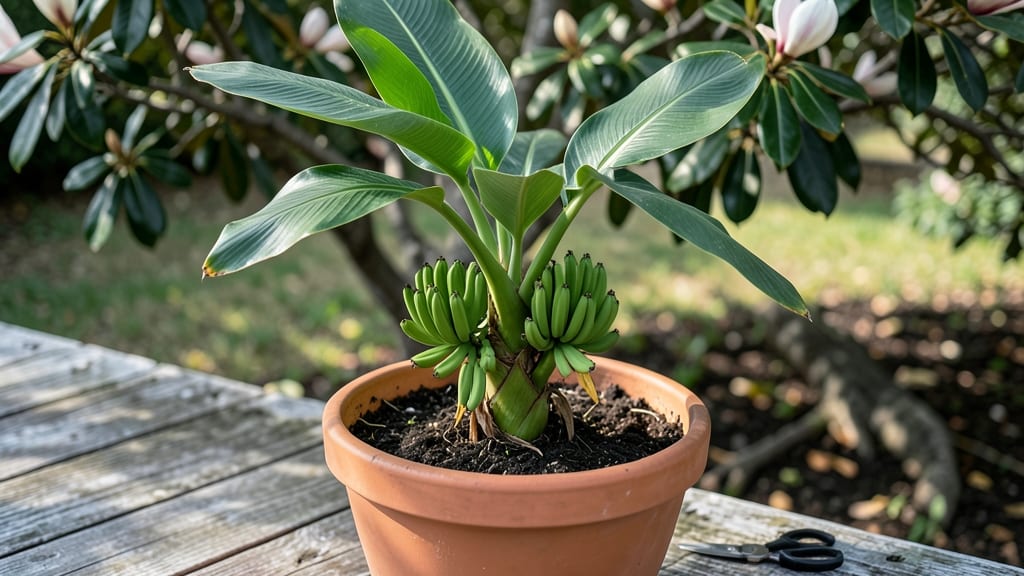
Your patio banana tree’s dormant season trim is the secret to a bushier, more productive plant next spring—here’s exactly how to do it without killing your tropical star. 🌿 After years of watching mine send up just one weak stalk while neighbors’ plants exploded with growth, I finally cracked the code: pruning at the right time and in the right way.
The difference is dramatic, and it all starts with a sharp pair of shears and a little patience.
You’ll need 5-gallon containers or larger (with drainage holes!) for dwarf varieties like Ensete ventricosum, while Musa basjoo thrives in 15-gallon pots or bigger. The soil mix should be 60% potting soil, 30% perlite, and 10% compost—banana trees hate soggy roots but love nutrients.
Place them in full sun (6+ hours daily) for best growth, or move indoors near a bright window when temperatures dip below 45°F.
When you prune in late winter or early spring, cut back old fronds at the base where they meet the trunk—never leave stubs. This encourages new shoots to emerge from the center, giving you that lush, multi-stemmed look.
After trimming, feed with a balanced fertilizer (10-10-10) every 4-6 weeks during growing season, and water only when the top 2 inches of soil feel dry.
Pro tip: Wrap the trunk in burlap or bubble wrap if frost threatens—banana trees are tender but surprisingly resilient with a little protection. The first year after pruning, you’ll see 3-5 new shoots by late spring, and those will mature into sturdy stalks ready for harvest (or just showy foliage).
For troubleshooting, yellow leaves usually mean overwatering, while brown tips signal dry air—mist occasionally in winter to keep humidity up.
📚 In This Guide
- What you need
- Instructions
- Tips and common mistakes
- Wrapping up and next steps
What you need
- ● Pruning shears or loppers – Sharp, sterilized tools (bypass pruners work best for clean cuts). Quantity: 1 pair.
- ● Gloves – Heavy-duty, cut-resistant gloves (banana tree sap can irritate skin). Quantity: 1 pair.
- ● Disinfectant – 70% isopropyl alcohol or bleach solution (1 part bleach to 9 parts water) to sterilize tools between cuts. Quantity: Small spray bottle or container.
- ○ Pruning saw – For thicker stems (1+ inch diameter). Quantity: 1 (optional but helpful for mature trees).
- ● Rubbing alcohol or hand sanitizer – For cleaning hands after handling sap.
- ● Trash bags or compost bin – For disposing of pruned fronds and debris. Quantity: 2–3 large bags.
- ● Hose with nozzle – To clean tools and rinse sap off hands/gloves.
- ● Pruning sealant – For large cuts (1+ inch diameter) to prevent disease. Quantity: Small tube.
- ● Knee pads – If your banana tree is tall or ground-level pruning is needed.
- ● Marking twine or flags – To label sections if you’re doing structured pruning.
- ● Safety glasses – If sawing thick stems to protect from debris.
Step-by-Step guide to pruning your patio banana tree
Transform your banana tree into a fuller, healthier specimen with these precise dormant-season cuts.
✂️ Step 1: Assess the Tree for Pruning Zones
Start by examining your banana tree for dead or damaged leaves—these are your first targets. Look for leaves that are completely brown, brittle, or hanging limp. Healthy leaves will have a firm texture and vibrant green color. I always begin pruning at the base of the plant, working my way upward to avoid missing any problem areas.
Next, identify pseudostems—the thick, layered stems that make up the banana tree's trunk. These are where new growth emerges. Mark the growth nodes (the small bumps where leaves attach) with a piece of twine or a small flag. These nodes are where you'll make your cuts to encourage bushier growth. Never cut into a healthy pseudostem—this is where the tree stores nutrients and produces new shoots.
✂️ Step 2: Remove Dead and Damaged Leaves
Using sterilized pruning shears, cut each dead or damaged leaf at its base, just above a growth node. Make clean, angled cuts to prevent water from pooling and causing rot. I like to work in stages, removing a few leaves at a time so I can monitor the tree's reaction. If you remove too many leaves at once, the tree may struggle to recover.
For leaves that are partially damaged but still alive, trim only the dead sections. Leave the healthy portions intact to continue photosynthesizing. You’ll know you’re doing it right when the tree’s center looks more open and air can circulate freely. This reduces humidity and prevents fungal diseases that thrive in dense foliage.
✂️ Step 3: Encourage Bushier Growth with Strategic Cuts
Now, focus on the pseudostems to promote multiple shoots. Look for the oldest pseudostem—it’s usually the largest and most mature. Using your pruning shears, cut this stem down to about 6 inches above the soil line. This signals the tree to redirect its energy to producing new shoots from the remaining growth nodes.
Leave at least two younger pseudostems intact to support the tree’s structure and continue photosynthesis. These will take over as the primary stems and encourage the tree to branch out. Avoid cutting more than one-third of the pseudostems at a time—this could shock the plant and stunt its growth. Watch for new shoots emerging within 4-6 weeks after pruning.
💧 Step 4: Post-Pruning Care for Recovery
After pruning, water your banana tree deeply to help it recover. The soil should be moist to a depth of 6-8 inches, but avoid waterlogging. I like to use a slow-release fertilizer at this stage to give the tree the nutrients it needs to regenerate. Apply it according to the package instructions, usually every 2-3 months during the growing season.
Place your tree in a bright, indirect light spot for the first 2 weeks post-pruning. Direct sunlight can stress the tree as it recovers, so a shaded patio or under a sheer curtain works best. Monitor the growth nodes closely—you’ll see new shoots emerge as the tree adjusts to its new shape. If you notice any yellowing leaves, it’s a sign of overwatering or nutrient deficiency, so adjust your care routine accordingly.
Tips & tricks for pruning your patio banana tree
Here's what I learned after pruning my own banana tree—and how to avoid the mistakes I made.
Tool Prep: Sterilize your pruning shears with rubbing alcohol before you begin. I learned this the hard way after my first pruning session introduced fungal spores to fresh cuts. Wipe blades thoroughly between cuts, especially when working with multiple stems. A clean cut heals faster and reduces disease risk.
Visual Cues for Growth Nodes: In Step 1, when marking growth nodes, look for the small triangular bumps where leaves attach—they're often hidden by overlapping fronds. I use a bright pink flagging tape that's easy to see against the green foliage. These nodes are your roadmap for encouraging new shoots, so don't rush this step.
Strategic Cutting Sequence: When removing pseudostems in Step 3, work from oldest to youngest. The oldest stems have already fulfilled their purpose—they're no longer producing fruit or leaves. Cutting them first redirects the tree's energy to the younger stems, which will then produce new shoots. This creates that beautiful bushy canopy we're all after.
Post-Pruning Light Management: During the 2-week recovery period in Step 4, avoid placing your tree in direct sunlight. I've seen trees develop sunburn after pruning when moved too quickly from shade to full sun. A sheer curtain or east-facing window provides perfect indirect light for recovery while still allowing photosynthesis.
Pro Tips for Patio Banana Tree
- Here's what I learned after pruning my own banana tree—and how to avoid the mistakes I made.
- Tool Prep: Sterilize your pruning shears with rubbing alcohol before you begin.
- Visual Cues for Growth Nodes: In Step 1, when marking growth nodes, look for the small triangular bumps where leaves attach—they're often hidden by overlapping fronds.
Frequently asked questions
Got questions about trimming your patio banana tree? You’re not alone! Here are answers to the most common concerns—from timing to troubleshooting—so you can prune with confidence.
When is the best time to prune a patio banana tree?
Prune your patio banana tree during dormancy (late fall to early spring, before new growth starts). This timing minimizes stress on the plant and encourages a bushier canopy. Avoid pruning in summer unless removing damaged leaves—heat stress can slow recovery.
How much can I cut back my banana tree without harming it?
For patio banana trees, you can safely remove up to 1/3 of the total foliage in one session. Focus on dead, yellowing, or overcrowded leaves first. Never cut into the pseudostem (the trunk-like structure)—this is where nutrients are stored!
What if my patio banana tree is in a cold climate? Can I still prune it?
Yes! Cold-hardy varieties (like Musa basjoo) can still be pruned in dormancy, but wait until after the last frost if your winters are harsh. Wrap the base with burlap for extra protection, and avoid heavy pruning if temps drop below 20°F—wait until spring.
My banana tree isn’t growing back after pruning—what went wrong?
If your tree seems stalled, check for root damage, over-pruning, or poor drainage. Ensure it’s in well-draining soil and water deeply but infrequently. If the pseudostem is hollow or mushy, it may be rotting—trim back further and repot if needed. Patience is key; new shoots can take 4–6 weeks to emerge!
Can I prune a patio banana tree for smaller growth, or is it unavoidable?
While banana trees naturally grow tall, you can slow their height by pruning only the top leaves (not the entire stalk) and pinching back new suckers. For true dwarf growth, consider Musa acuminata ‘Dwarf Cavendish’—it stays under 10 feet! Just remember, even "small" varieties need occasional pruning to manage size.
Wrapping up and next steps
Pruning your patio banana tree during the dormant season is a game-changer for lush, bushier growth—and you’ve got all the know-how now! 🌿 With the right tools, timing, and techniques, you’ll encourage vibrant foliage while keeping your plant healthy.
Remember, patience and precision pay off in a stunning tropical display.
Ready to transform your patio oasis? Grab your pruners and give it a try—your banana tree will thank you with bold, new leaves and a fuller canopy. Happy trimming! 🌱