
Pruning
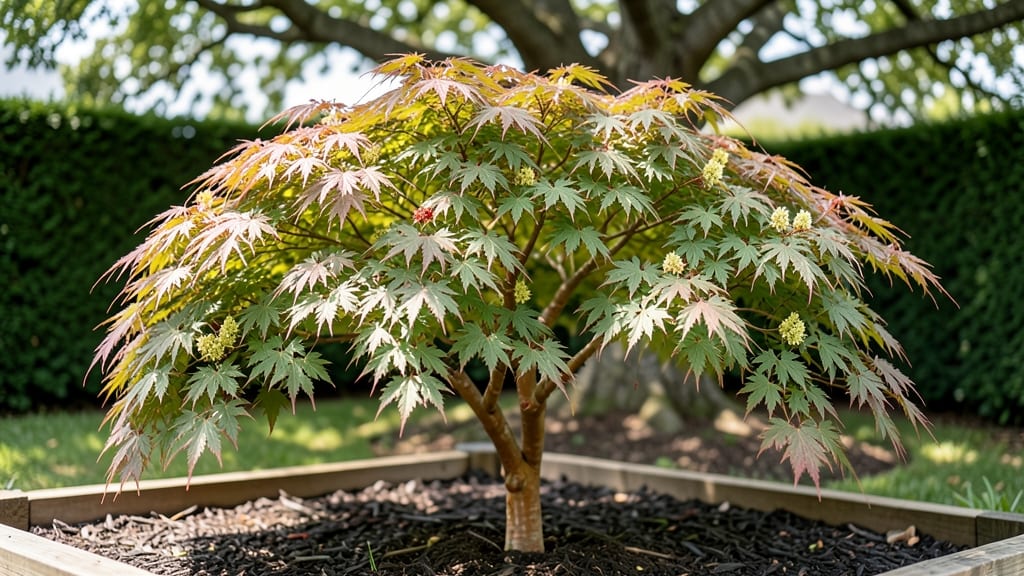
The lacy leaf maple tree (Acer palmatum 'Dissectum') transforms any garden into a living watercolor with its delicate, feathery foliage that dances in every breeze. 🌿 I fell in love with this tree after seeing one in a Japanese garden—its cascading branches and vibrant colors made me realize how much beauty fits in a small space.
The secret to keeping it looking like that? Understanding its unique needs and pruning it with care.
This tree thrives in partial shade, making it perfect for understory planting or as a container specimen on patios. It prefers well-draining, slightly acidic soil, and while it’s drought-tolerant once established, consistent moisture keeps its leaves lush and vibrant.
The real magic happens in pruning—thinning out dense growth in late winter or early spring ensures those signature lacy leaves stay open and airy, not crowded and leggy.
With the right care, your lacy leaf maple will reward you with year-round interest: fiery red fall foliage, subtle winter silhouette, and fresh spring growth. Even in containers, it stays compact enough for urban gardens, adding elegance without taking over.
The key is patience—this tree grows slowly but steadily, becoming more stunning with each passing season.
Whether you’re planting one as a focal point or using it to soften a corner, this tree delivers effortless sophistication. We’ll cover everything from planting to pruning, so you can enjoy its delicate beauty without the guesswork. Let’s get started!
📚 In This Guide
- What you need
- Instructions
- Tips and common mistakes
- Wrapping up and next steps
What you need
- ● Pruning shears: Bypass pruners (sharp, clean blades, 6–8" size) – 1 pair (required). Pro tip: 💡 Sanitize with rubbing alcohol between cuts to prevent disease!
- ● Loppers: Bypass loppers (8–10" handles, ratcheting or bypass type) – 1 pair (for thicker branches, ½"–1" diameter).
- ○ Pruning saw: Curved-tooth saw (for branches >1" diameter) – 1 (optional but handy for stubborn cuts).
- ● Extension pole: 6–10 ft telescoping pole with pruner attachment – 1 (for high branches; highly recommended).
- ● Gloves: Heavy-duty, cut-resistant gardening gloves – 1 pair (protects hands from thorns and debris).
- ● Ladder: Sturdy, non-slip ladder (8–12 ft, extension ladder preferred) – 1 (if tree exceeds 10 ft).
- ○ Safety gear: Safety glasses (to shield eyes from debris) – 1 pair (optional but smart!).
- ● Cleanup supplies: Heavy-duty trash bags (2–3) – for clippings.
- ● Rake or leaf blower – to clear debris.
- ● Timing: Prune during dormant season (late winter/early spring) or right after flowering (avoid summer heat!).
- ● Tree health check: Inspect for diseased or dead branches before trimming.
- ● Check for pests (e.g., aphids, scale) – treat if needed.
- ● Handheld tree sprayer (for fungicide if needed).
- ● Pruning sealant (for large cuts >½" diameter; controversial but some swear by it).
How to maintain a lacy leaf maple tree with year-round Precision
Here's the method I rely on for keeping these stunning trees healthy and vibrant through every season.
🌿 Step 1: Understand the Tree's Natural Growth Habits
Lacy leaf maples grow best with minimal intervention—over-pruning stresses them. Their delicate, fern-like foliage thrives when you let them grow naturally for the first 3-5 years. Real talk: I used to prune too early, and it took two seasons to recover the tree's natural shape.
Focus on removing only dead, diseased, or crossing branches during the first year. You'll know a branch is dead if it's brittle when bent or has no leaves. Crossing branches compete for sunlight and should be removed at their base with clean, sharp cuts.
This tree's beauty comes from its airy, open structure—don't be tempted to "neaten" it up too soon. Wait until you see new growth reaching 12-18 inches before considering any shaping.
✂️ Step 2: Perform Seasonal Pruning for Shape and Health
Spring is the best time to prune, right after new leaves emerge but before buds open. This ensures you're working with fresh growth and minimizes stress. I like to do a light pruning in late winter when the tree is still dormant—just enough to remove any winter-damaged branches.
Use sterilized pruning shears to make clean cuts just outside the branch collar (the swollen area where the branch meets the trunk). Never leave stubs—this invites disease. For larger branches, make a 1-inch cut away from the trunk to avoid tearing the bark.
Here's the thing—lacy leaf maples respond well to light structural pruning. Aim to remove no more than 10-15% of the tree's foliage in any single session. You'll see the tree's natural grace shine when you let its unique branching pattern guide the shape.
☀️ Step 3: Provide Optimal Light and Soil Conditions
These trees love full sun to partial shade, but their leaves will scorch if exposed to harsh afternoon sun in hot climates. I've found the sweet spot is morning sun with afternoon shade, especially in zones with intense summer heat.
Well-draining soil is critical—lacy leaf maples hate soggy roots. Amend heavy clay soil with compost or organic matter to improve drainage. You'll know the soil is right when water drains through in 1-2 hours after watering.
Mulch around the base with 2-3 inches of organic mulch, keeping it 6 inches away from the trunk. This conserves moisture and regulates soil temperature. Replenish the mulch annually to maintain its protective layer.
🪴 Step 4: Water and Fertilize Strategically
Water deeply once a week during the first growing season to establish strong roots. After that, water only when the top 2-3 inches of soil feel dry. Overwatering is the fastest way to kill these trees—yellowing leaves usually mean too much moisture.
Fertilize lightly in early spring with a balanced, slow-release fertilizer. I use a 10-10-10 ratio at half strength to avoid burning the roots. You'll see new growth within 4-6 weeks if the fertilizer is working—look for fresh, vibrant leaves emerging.
Skip fall fertilization entirely. The tree enters dormancy in late autumn, and feeding then encourages weak, tender growth that won't survive winter. Let the tree rest and store energy naturally.
⏰ Step 5: Protect Through Winter and Prepare for Spring
Young trees (under 3 years old) need winter protection. Wrap the trunk with tree guard to prevent rodent damage and wrap the canopy with burlap if your winters drop below 10°F. Remove the wrap in early spring before new growth begins.
Prune out any dead or broken branches in late winter, just before buds swell. This is your last chance to tidy up before spring growth kicks in. You'll see fresh, green buds forming along the branches—this is your signal that the tree is waking up.
Don't rush to prune for shape until you see new leaves fully unfurl. The tree's natural growth pattern will guide you on where to make cuts for the best balance. Patience here pays off with a tree that looks effortlessly elegant.
Tips & tricks for perfect lacy leaf maple tree care
Here's what I've learned after years of keeping these elegant trees thriving—simple secrets that make all the difference.
Pruning Precision: When you're removing those crossing branches in Step 1, look for the branch that's growing directly toward another. The one with the stronger angle to the trunk should stay—it's already in the best position. I've made the mistake of removing the stronger branch, only to have the weaker one grow into an awkward position over time.
Soil Test Tip: Before amending your soil in Step 3, do a simple drainage test: Dig a hole about 12 inches deep and fill it with water. If it drains completely within the 1-2 hours mentioned, your soil's ready. If it pools, you definitely need more compost or organic matter. This small test saves you from potential root rot later.
Winter Protection Hack: For young trees needing protection below 10°F, I've found that wrapping the trunk with tree guard creates a microclimate that actually helps prevent temperature swings. The key is to leave a small gap at the bottom—about 1 inch—to allow for natural airflow while still deterring rodents. This makes all the difference in harsh winters.
Fertilizer Timing: That 4-6 week window for seeing new growth after fertilizing in Step 4 is your best indicator. If you don't see fresh leaves emerging by then, your tree might need a different fertilizer type. I've switched to a more nitrogen-rich formula when I saw slow growth, and the difference was dramatic within weeks.
Pro Tips for Lacy Leaf Maple Tree
- Here's what I've learned after years of keeping these elegant trees thriving—simple secrets that make all the difference.
- Pruning Precision: When you're removing those crossing branches in Step 1, look for the branch that's growing directly toward another.
- Soil Test Tip: Before amending your soil in Step 3, do a simple drainage test: Dig a hole about 12 inches deep and fill it with water.
Frequently asked questions
Got questions about keeping your lacy leaf maple tree looking its best? You’re in the right place! Here are some of the most common queries—plus straightforward answers to help you care for this stunning tree with confidence.
How often should I trim a lacy leaf maple tree?
Trim your lacy leaf maple twice a year: once in late winter or early spring (before new growth starts) and again in summer (after the second flush of leaves appears). Light maintenance pruning between these times keeps its delicate lace-like foliage tidy. Avoid heavy cuts in fall, as it can stress the tree before winter.
Can I prune a lacy leaf maple tree in winter?
Winter pruning is not ideal for lacy leaf maples. Cold weather can damage fresh cuts and make the tree vulnerable to disease. If you must prune in winter, do so on mild, dry days and avoid heavy cuts. Spring and summer are the best times to shape it while minimizing stress.
What’s the best way to shape a lacy leaf maple tree?
Use selective, precision trimming to enhance its natural form. Focus on:
- Removing dead or crossing branches first.
- Thinning out overcrowded areas to improve airflow.
- Avoiding shearing—this tree thrives on its unique, airy structure!
Why are my lacy leaf maple’s leaves turning brown or yellow?
Brown or yellow leaves can signal overwatering, underwatering, or nutrient deficiencies. Check the soil—it should be moist but well-draining. If leaves are crispy, it’s too dry; if mushy, it’s soggy. Fertilize in early spring with a balanced, slow-release formula to boost health. Pests or disease (like powdery mildew) can also cause discoloration—inspect undersides of leaves and treat early if needed.
Are there alternatives to lacy leaf maple trees for small yards?
If space is limited, consider these low-maintenance, compact alternatives with similar elegance:
- Japanese maple (‘Bloodgood’) – Dwarf varieties stay under 10 feet.
- Smokebush (‘Grey Owl’) – Lacy foliage and cold-hardy.
- Dwarf fothergilla – Fragrant spring blooms and vibrant fall color.
- Boxwood (‘Green Mountain’) – Evergreen with a neat, structured look.
Wrapping up and next steps
The Lacy Leaf Maple is a stunning addition to any landscape, offering year-round beauty with its delicate foliage and graceful form. With the right pruning techniques—like timing, tool selection, and mindful shaping—you can keep it thriving and looking its best. 🌿
Now that you’re equipped with the knowledge, grab those shears and get trimming! Start small, observe your tree’s growth, and enjoy the rewarding process of nurturing this elegant beauty. Happy pruning!