
Pruning
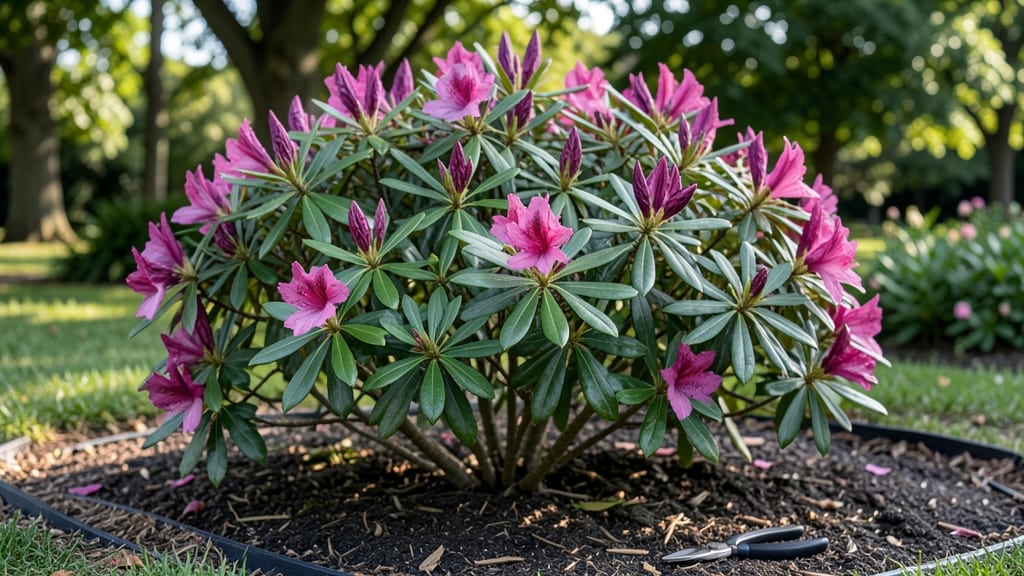
Caring for an azalea tree means unlocking those showstopping blooms that make spring feel like a fairy tale—if you nail the basics.
I’ve learned that azaleas thrive when you treat them like the divas they are: they demand consistent moisture, the right light, and precise pruning to keep their energy focused on flowers, not just leaves.
The secret isn’t complicated, but skipping a step can turn your azalea into a leggy, sparse mess instead of the lush, blooming star it should be.
Start with the right conditions: azaleas love morning sun and afternoon shade, acidic soil (think pine needles or peat moss), and water that keeps their roots damp but never soggy. Most people overwater or under-prune, and both mistakes lead to floppy branches and fewer blooms.
My azalea now bursts with flowers every spring because I prune right after blooming—cutting back just enough to shape the plant without removing next year’s buds. It’s a delicate balance, but once you get it, your azalea will reward you with months of vibrant color.
What you’ll end up with is a tree that blooms reliably year after year, with glossy leaves and branches that don’t sag under the weight of new growth. The key is timing: prune at the right moment, feed with the right fertilizer, and watch how your azalea responds to adjustments.
Even if you’ve struggled before, this method works—no more guessing games. Let’s get your azalea back on track with these simple, science-backed steps.
Whether you’re dealing with a young sapling or a mature tree, the principles stay the same. Azaleas are forgiving if you correct mistakes early, and with a little patience, you’ll have a tree that’s the envy of the neighborhood.
The best part? Once you master the basics, caring for an azalea becomes almost effortless—just like watching your garden come alive in spring.
📚 In This Guide
- What you need
- Instructions
- Tips and common mistakes
- Wrapping up and next steps
What you need
- ● Pruning shears: Bypass pruners (sharp, 5–8" blades) for clean cuts on small branches.
- ● Loppers: Bypass or anvil type (8–12" blades) for thicker branches (½"–1.5" diameter).
- ● Hand saw: Pruning saw with curved blade for stubborn, larger branches (1.5"+ diameter).
- ● Disinfectant: 70% isopropyl alcohol or bleach solution (1 part bleach to 9 parts water) to sterilize tools between cuts.
- ○ Garden gloves: Heavy-duty, cut-resistant (optional but recommended for thorns!).
- ● Pruning sealant: Tree wound paint (only if cutting into large branches; skip for small cuts).
- ● Ladder: Sturdy, extendable (if your azalea is taller than 6 feet).
- ● Trash bags: Heavy-duty for collecting pruned branches.
- ● Notebook & pen: To jot down notes on pruning patterns or growth changes.
- ● Know your azalea’s age and variety (e.g., deciduous vs. evergreen) to tailor pruning timing.
- ● Check the weather forecast—aim for a dry, overcast day to avoid stressing the tree.
- ● Gather safety gear if working near power lines or in high-traffic areas (e.g., long sleeves, closed-toe shoes).
How to care for an azalea tree year-round
Here's the straightforward approach I've used to keep my azaleas blooming beautifully for over a decade.
Understand Azalea's Soil and Light Needs
Azaleas demand acidic soil with a pH between 4.5 and 6.0—any higher and they'll struggle to absorb nutrients. I test my soil annually using a simple kit from the garden center. If the pH creeps above 6.0, I mix in 2-3 pounds of sulfur per 100 square feet of soil and water thoroughly. This keeps roots happy and encourages vibrant blooms.
These trees also love partial shade—think morning sun with afternoon shade or dappled sunlight under taller trees. Too much direct sun scorches leaves, while too little shade weakens blooms. I notice my azaleas produce the most flowers when they get 3-5 hours of morning sunlight and protection from the harsh afternoon rays.
Water Deeply and Consistently
Azaleas hate dry soil but can't tolerate soggy roots either. I water deeply once a week during dry spells, ensuring moisture reaches 6-8 inches down. You'll know it's right when the top 2 inches of soil feel dry to the touch. Overwatering leads to root rot, while underwatering causes buds to drop before opening.
Mulch helps maintain moisture and acidity. Spread 2-3 inches of pine bark mulch around the base, keeping it 6 inches away from the trunk. Replenish mulch annually in early spring. This mimics their natural forest floor habitat and keeps roots cool in summer.
Feed with Acid-Loving Fertilizer Twice a Year
Azaleas need specialized fertilizer—never regular garden fertilizer. I use an acid-forming, slow-release fertilizer (like 8-3-9 with iron and sulfur) in early spring as new growth appears and again in mid-summer after blooming. Apply according to package instructions, usually every 6-8 weeks during growing season.
Here's the thing—too much fertilizer burns roots. I always water the tree 24 hours before and after applying fertilizer to prevent chemical burn. You'll see healthier foliage and bigger blooms within a season if you stick to this schedule.
Prune After Blooming for Next Year's Flowers
Timing is everything with azaleas. Prune right after blooms fade (usually late spring to early summer) to shape the tree and encourage next year's flowers. Remove dead, crossing, or weak branches first—these compete with healthy growth. Then, thin out one-third of the oldest stems at the base to rejuvenate the tree.
Never prune in fall or winter—you'll cut off next year's flower buds. Use clean, sharp pruners and make cuts just above a leaf bud or branch collar. I always sterilize my tools with rubbing alcohol between cuts to prevent disease spread.
Protect Against Pests and Diseases
Azaleas attract few pests, but lace bugs, spider mites, and scale can appear. I check leaves weekly during summer for tiny yellow spots (lace bug eggs) or fine webbing (spider mites). If found, spray with neem oil or insecticidal soap—both work well on azaleas. Apply in early morning to avoid harming bees.
Fungal diseases like powdery mildew show up as white powder on leaves. Improve air circulation by pruning dense branches and avoid overhead watering. If mildew appears, spray with baking soda solution (1 teaspoon baking soda + 1 quart water + a drop of dish soap) every 7-10 days until it clears.
Tips & tricks for perfect azalea care year-round
These simple strategies will help you keep your azaleas thriving with minimal effort—and avoid the most common mistakes that kill these beautiful plants.
Soil pH Precision: Testing your soil annually is non-negotiable, but here's what I learned the hard way: if your pH is borderline (around 6.0), don't just add sulfur—mix it into the top 6 inches of soil and water it in thoroughly. I used to sprinkle it on top, and it never made a difference. Also, if you're planting new azaleas, amend the planting hole with peat moss or pine fines before adding the tree.
Lighting Strategy: That 3-5 hours of morning sun recommendation isn't just about quantity—it's about quality. Position your azalea where it gets gentle morning rays and afternoon shade from a building or taller trees. I once had a tree in full morning sun that got scorched because the sun was too intense. If you don't have natural shade, use a sheer curtain on the south or west side during peak afternoon hours.
Watering Wisdom: The key to that 6-8 inch deep watering isn't just how much you pour—it's when you do it. Water in the early morning so the leaves have all day to dry, preventing fungal diseases. And here's a trick: use a moisture meter to check soil moisture at 6 inches deep. If it's dry, water; if it's still damp, wait. This prevents both underwatering and overwatering.
Fertilizer Timing: That 24-hour watering rule before and after fertilizing is crucial, but timing matters just as much. Apply your first fertilizer dose when you see the first few leaves unfurling in spring—not when buds appear. And for that mid-summer application, wait until after all flowers have faded completely. I used to fertilize right after blooming, and my flowers were always smaller the next year.
Pro Tips for Care For Azalea Tree
- These simple strategies will help you keep your azaleas thriving with minimal effort—and avoid the most common mistakes that kill these beautiful plants.
- I used to sprinkle it on top, and it never made a difference.
- Lighting Strategy: That 3-5 hours of morning sun recommendation isn't just about quantity—it's about quality.
Frequently asked questions
Got questions about keeping your azalea tree happy and blooming? Here are some of the most common concerns—and their answers—to help you master year-round care with confidence!
When is the best time to prune my azalea tree?
Prune your azalea right after flowering (late spring to early summer) to encourage new growth and next year’s blooms. Avoid heavy pruning in fall or winter, as this can stress the plant and reduce flowering. Light shaping can be done anytime, but avoid cutting into old wood—it won’t regrow!
Why are my azalea leaves turning yellow or brown?
Yellow leaves often signal overwatering or poor drainage, while brown edges can mean underwatering, sunburn, or fungal issues. Check soil moisture (it should be slightly damp, not soggy) and ensure your azalea gets morning sun and afternoon shade. If spots appear, treat with a fungicide and improve airflow around the plant.
Can I prune azaleas too much?
Yes! Azaleas are sensitive to heavy pruning. Never remove more than 1/3 of the plant’s foliage in a single session. Over-pruning can lead to fewer blooms, weak growth, or even plant stress. Focus on shaping and deadwood removal—thin out crowded branches to improve airflow and light penetration.
Do azaleas need winter care?
Most azaleas are hardy but benefit from mulch (2-3 inches) around the base to protect roots from freezing. In colder climates, wrap young trees with burlap or use frost cloth. Avoid heavy pruning in winter—wait until spring to assess damage. Evergreen azaleas may need extra water if winter winds dry the soil.
What if my azalea isn’t blooming?
Poor blooming often stems from lack of sunlight, improper pruning, or nutrient deficiencies. Ensure your azalea gets 4-6 hours of morning sun and prune after flowering. Feed with an acidic fertilizer (like 8-3-9) in early spring and fall. If blooms are sparse but leaves are healthy, the plant may just need patience—some varieties bloom every 2-3 years!
Can I replace an old azalea with something easier to care for?
If azaleas feel high-maintenance, consider hydrangeas, rhododendrons, or pieris—they share similar care needs but may be slightly more forgiving. For low-maintenance shrubs, try boxwoods or dwarf gardenias, though they won’t offer the same vibrant spring blooms. Always check your USDA hardiness zone for the best matches!
Wrapping up and next steps
Caring for your azalea tree is all about patience, precision, and a little love—and you’ve got everything you need to make it thrive! 🌸 From mastering the right pruning techniques to understanding soil needs and seasonal adjustments, these steps ensure your tree stays vibrant and healthy year-round.
With the knowledge you’ve gained, you’re now equipped to watch your azalea flourish like never before.
Ready to put your new skills into action? Grab those pruners and schedule your next maintenance session—your azalea will thank you with stunning blooms and lush foliage for seasons to come! 🌿✨