
Pruning
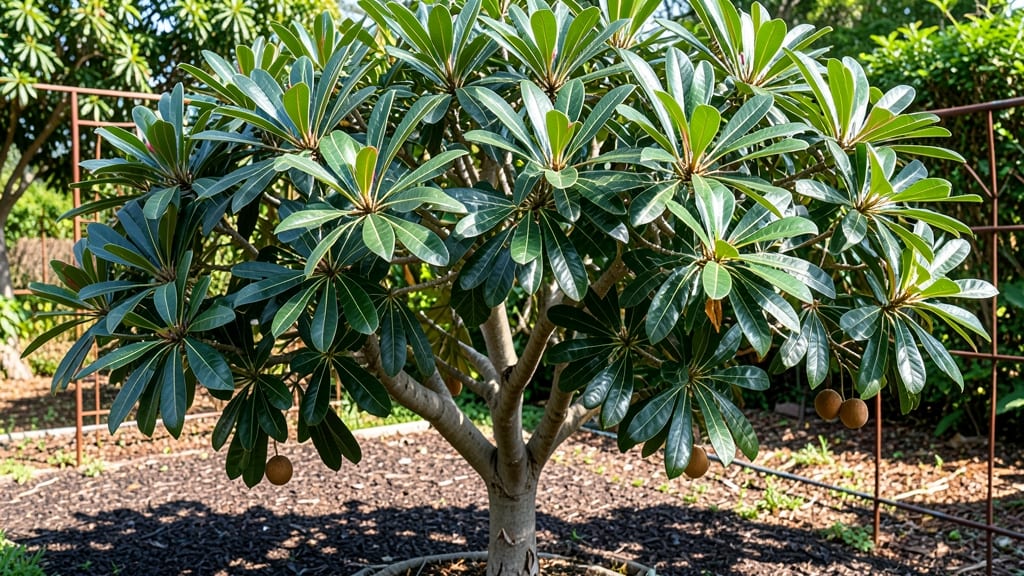
Growing a Jamaican almond tree (Terminalia catappa) means harvesting tropical nuts in just three years—if you nail the right conditions. 🌿 I’ve watched these trees transform from bare-root saplings into towering shade providers with glossy, leathery leaves that turn fiery red in fall.
The secret isn’t just patience; it’s mimicking their native tropical climate as closely as possible.
These trees thrive in USDA Zones 10-12 but can survive brief dips to 25°F once established. They’re not picky about soil—sandy, loamy, or even slightly salty—but they hate waterlogged roots.
A full sun spot with 6+ hours of direct light turns them into fast-growing powerhouses, and they’ll reward you with edible nuts (though they’re more ornamental than productive for most gardeners).
Start with seeds or cuttings—seeds take longer but grow stronger, while cuttings root faster. Within 12-18 months, you’ll see rapid vertical growth, and by year three, you could have a 20-foot shade tree with those iconic umbrella-shaped canopies.
The nuts? Rich in oil and protein, but don’t expect a harvest like a commercial orchard—think of them as a bonus to the stunning foliage.
Pruning is minimal, but removing lower branches keeps the trunk clear for easy nut collection. Watch for scale insects or fungal spots, and you’re golden. Whether you’re in Florida, California, or a warm microclimate elsewhere, this tree delivers tropical drama with minimal fuss.
📚 In This Guide
- What you need
- Instructions
- Tips and common mistakes
- Wrapping up and next steps
What you need
- ● Jamaican almond seeds (Terminalia catappa) – 3–5 seeds (for better germination odds) or a young sapling (if available).
- ● Well-draining potting mix – 5–10 gallons (for seedlings) or 20+ gallons (for mature trees). Use a blend of cactus/succulent mix (60%) and perlite or coarse sand (40%) for optimal drainage.
- ● Containers or garden plot: Seedlings: 5–7-inch pots (with drainage holes) or biodegradable seedling pots.
- ● Mature trees: Large containers (18+ inches in diameter) or a sunny, well-drained garden bed (6+ feet in diameter).
- ● Pruning tools: Bypass pruners (for small branches).
- ● Loppers (for thicker branches, ½–1 inch in diameter).
- ● Saw (for mature wood, 1+ inch in diameter).
- ● Mulch – 2–3 inches of organic mulch (e.g., wood chips or straw) to retain moisture and regulate soil temperature.
- ● Fertilizer – Balanced, slow-release fertilizer (10-10-10 or 20-20-20) or organic options like composted manure or worm castings.
- ● Soil moisture meter – To check drainage and watering needs.
- ● Shade cloth (30–50%) – For protecting young seedlings from intense sun.
- ● Tree support stakes – If planting in windy areas (especially for young trees).
- ● Humidity dome or plastic wrap – To create a greenhouse effect for seeds during germination.
- ● Pest control (neem oil or insecticidal soap) – For aphids or scale insects (common in tropical trees).
Step-by-step instructions for cultivating a Jamaican almond tree
Here's how to nurture this tropical treasure from seed to nut-bearing maturity.
🌱 Step 1: Stratify and Germinate the Seeds
The Jamaican almond's hard seed coat requires a warm, moist pretreatment to break dormancy. Soak the seeds in warm water for 24 hours first—this softens the shell enough for roots to emerge. After soaking, wrap them in a damp paper towel and place inside a sealed plastic bag. Store in a 75-85°F environment, like on top of your fridge or near a sunny window.
Check daily for moisture—squeeze the towel gently; it should feel damp but not dripping. Germination typically takes 3-6 weeks, though some stubborn seeds may take twice as long. You'll know it's working when you see a tiny white root poking through the towel. This is the moment that matters: once roots appear, plant immediately.
I've found that placing the bag in a clear plastic container with a lid creates a mini greenhouse effect, accelerating germination. Just don't let it sit in direct sunlight—heat and light can overcook the seeds before they sprout.
🪴 Step 2: Plant in Well-Draining Soil Mix
Use a lightweight potting mix blended with 30% perlite or coarse sand to prevent root rot—a common killer of young Jamaican almond trees. Fill a 6-inch pot with the mix and make a small hole about 1 inch deep using your finger. Gently place the germinated seed with its root facing downward, then cover lightly with soil.
Press the soil down just enough to secure the seed but don't compact it. The roots need air to breathe as they establish. Water gently until moisture reaches the bottom of the pot—you should see water trickle out the drainage holes. Let it drain completely before placing the pot in its growing location.
Here's the thing—this tree hates soggy feet. If you notice yellowing leaves or mushy stems, you're overwatering. Let the top inch of soil dry out between waterings, and always use a pot with drainage holes.
☀️ Step 3: Provide Bright, Indirect Light and Warmth
Jamaican almond trees thrive in bright, indirect light with temperatures above 60°F. Place your seedling near an east-facing window or under a grow light set to 12-14 hours daily. If you notice the seedling stretching toward the light with long, thin stems, it's begging for more intensity—move it closer to the light source or increase the grow light's strength.
During its first year, maintain 70-80°F temperatures. If your home dips below 60°F at night, use a small space heater or move the pot to a warmer room. Cold drafts will shock the plant and stunt its growth. You'll see strong, bushy growth when conditions are ideal—leaves should be deep green and new ones should unfurl regularly.
Real talk: If you live in a colder climate, plan to overwinter your young tree indoors near a sunny window. These tropical trees aren't frost-hardy and will die if exposed to temperatures below 32°F.
🌿 Step 4: Transplant and Prune for Structure
After 6-12 months, when your seedling reaches 12-18 inches tall, it's ready for its first transplant. Choose a 12-inch pot with drainage holes and use the same well-draining soil mix. Gently remove the seedling from its current pot, loosen the roots if they're circling, and place it in the new container at the same depth it was growing before.
Prune any leggy or weak growth immediately after transplanting to encourage a sturdy structure. Cut back 1/3 of the tallest stems just above a leaf node—this will prompt bushier growth. You'll see new side shoots emerge within 2-4 weeks, signaling the tree is adapting well. This is also when you can start fertilizing lightly with a balanced, water-soluble fertilizer diluted to half strength.
Don't skip this pruning step (I learned the hard way). Unpruned trees grow top-heavy and prone to breaking under the weight of future fruit.
⏰ Step 5: Prepare for Fruit Production in Year 3
By its third year, your Jamaican almond tree should be 6-8 feet tall and ready to produce fruit. At this stage, move it to a 15-gallon container or plant it in the ground in a location with full sun (6+ hours daily). The tree needs space to grow—its roots spread widely, so ensure the container is at least 18 inches deep.
Fertilize monthly during the growing season with a low-nitrogen, high-phosphorus formula to encourage flowering. You'll notice small white flowers in spring—these will develop into the tree's signature red fruit pods. Harvest the pods when they turn bright red and slightly soft to the touch, usually in late summer or early fall. The nuts inside need 6-12 months of drying to soften their hard shell.
Here's where it gets fun—watch the cotyledons pop through the soil after a few days.
Tips & tricks for growing a thriving Jamaican almond tree
These practical insights will help you navigate the quirks of nurturing this tropical plant from seed to fruit-bearing maturity.
Germination Environment: The 24-hour warm water soak is non-negotiable—it softens the seed coat just enough for roots to break through. After soaking, maintain that 75-85°F environment consistently. I've found that placing the sealed bag on top of a refrigerator (not inside) creates the perfect stable warmth without risking overheating. The moment you see that first white root, plant immediately—delaying by even a day can cause the root to dry out or become tangled in the towel.
Soil Mix Precision: That 30% perlite or coarse sand isn't just arbitrary—it's what prevents the root rot that kills so many young Jamaican almond trees. When mixing your potting soil, sift the perlite separately and fold it in gently rather than dumping it all at once. The goal is to create pockets of air around the roots while maintaining moisture retention. Think of it like making a soufflé: you want a light, airy structure that won't collapse under pressure.
Light Transition Strategy: During the first year, your seedling will tell you exactly what it needs through its growth patterns. If you notice leaves developing toward the light source with elongated stems (a condition called etiolation), it's begging for more intensity. Gradually move it closer to the light source in 2-inch increments every few days rather than making one big adjustment. This prevents shock and gives your plant time to adjust its chlorophyll production. The 12-14 hours of grow light isn't just about duration—it's about simulating the consistent daylight these tropical trees experience in their native habitat.
Pruning Visual Cues: When you're ready to prune that 1/3 of leggy growth in Step 4, look for stems that are growing at sharp angles from the main trunk rather than straight up. These are your "water sprouts" that steal energy from fruit production. Make your cuts just above a leaf node where you'll see small buds forming—this is where new growth will emerge. The 2-4 week window for new side shoots is your confirmation that the pruning worked. If you don't see new growth within that time, you may have cut too aggressively or too low.
Pro Tips for Jamaican Almond Tree
- These practical insights will help you navigate the quirks of nurturing this tropical plant from seed to fruit-bearing maturity.
- Germination Environment: The 24-hour warm water soak is non-negotiable—it softens the seed coat just enough for roots to break through.
- Soil Mix Precision: That 30% perlite or coarse sand isn't just arbitrary—it's what prevents the root rot that kills so many young Jamaican almond trees.
Frequently asked questions
Got questions about growing your own Jamaican almond tree? Here are some of the most common ones—and their answers—to help you along the way!
How long does it take for a Jamaican almond tree to produce nuts?
A healthy Jamaican almond tree typically starts producing nuts within 3 to 5 years of planting, depending on growing conditions like sunlight, soil quality, and care. With proper pruning and fertilization, you can encourage earlier fruiting—sometimes as early as 2 years!
Can I grow a Jamaican almond tree in a pot, or does it need to be planted in the ground?
Yes! Jamaican almond trees thrive in large containers (at least 18-24 inches deep) if you live in a cooler climate or have limited space. Use well-draining soil and ensure the pot gets full sun. Just be prepared to move it indoors or to a sheltered spot during frost. Pro tip: Repot every 2-3 years to accommodate root growth!
When and how should I prune my Jamaican almond tree for better nut production?
Prune in late winter or early spring (before new growth starts) to shape the tree and remove dead or crossing branches. Focus on opening the canopy to improve airflow and sunlight penetration—this boosts fruit production! Use clean, sharp pruners and avoid over-pruning, as the tree relies on its leaves for energy. Bonus: Pruning also makes harvesting easier!
Do Jamaican almond trees need cross-pollination to produce nuts?
Nope! Jamaican almond trees are self-pollinating, meaning a single tree can produce nuts without needing another nearby. However, planting two trees can increase yield slightly due to better cross-pollination. Fun fact: Bees and other pollinators still help, so avoid heavy pesticide use near flowering branches.
What should I do if my Jamaican almond tree isn’t growing or looks unhealthy?
Check for these common issues:
Yellow leaves? Likely overwatering or poor drainage—let the soil dry out between waterings.
No new growth? It may need more sunlight (6+ hours daily) or nutrients. Fertilize lightly in spring with a balanced fertilizer.
Pests (like aphids or scale)? Spray with neem oil or insecticidal soap. Avoid harsh chemicals to protect pollinators.
If problems persist, test your soil pH (ideal: 6.0–7.0) and adjust as needed.
Wrapping up and next steps
The Jamaican almond tree is a rewarding tropical gem—packed with flavor, versatility, and stunning foliage. With the right care, patience, and a little pruning know-how, you’ll be harvesting coupe nuts and tawah fruits in just three years! 🌱✨
Ready to turn your backyard into a nutritious oasis? Start by selecting a healthy sapling (or seed) and follow the steps above to nurture it into a thriving tree. Before you know it, you’ll be whipping up homemade treacle or sharing fresh almonds with friends—what’s not to love?
Next step: Mark your calendar for pruning season and watch your tree flourish! 🌿💚