
Pruning
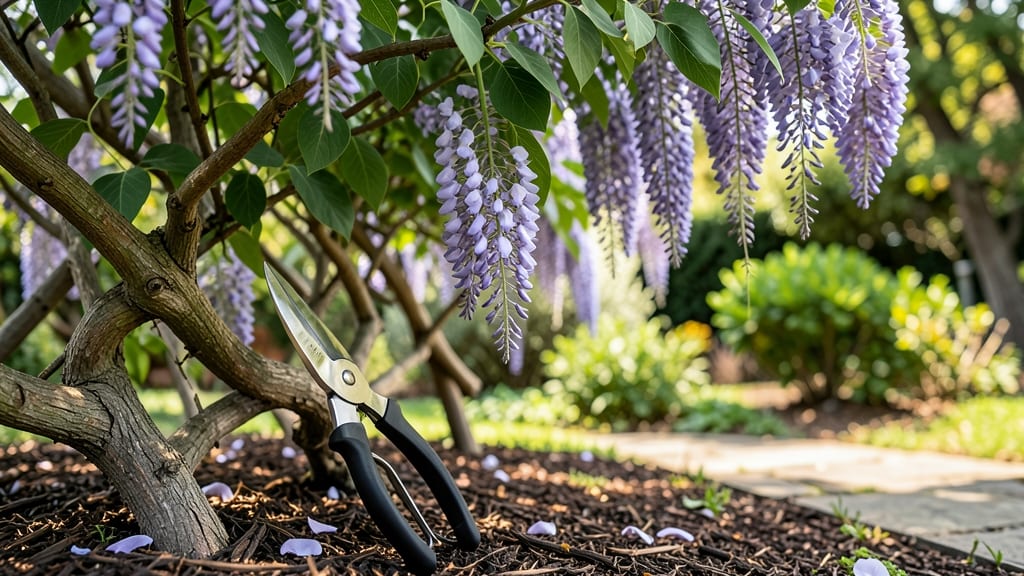
Mastering how to trim a wisteria tree isn’t just about tidiness—it’s about coaxing out those dreamy blooms and stopping the vines from turning your trellis into a tangled jungle. ✨ I’ve wrestled with wisteria vines that grew so wild they smothered my trellis, and I learned the hard way that timing and technique make all the difference.
The right cuts in late winter or early spring encourage lush, flowering growth while keeping the plant manageable.
You’ll need sharp pruning shears, loppers for thicker branches, and gloves—because wisteria thorns are no joke. The goal is to shape the plant while removing dead or crossing branches and thinning out crowded growth.
Wisteria blooms on last year’s growth, so avoid heavy cuts in fall unless you’re dealing with safety hazards.
By summer, you’ll see longer, more abundant blooms and a vine that’s easier to manage. The key is patience: wisteria grows fast, but with consistent pruning, it rewards you with fragrant purple cascades that turn heads.
Just remember—never cut more than one-third of the plant in a single season, or you’ll stunt its flowering.
This method works for both mature vines and new plantings, though young wisteria needs less aggressive pruning. Whether you’re trimming an established vine or training a new one, the same principles apply. Let’s get those shears sharp and those vines under control!
📚 In This Guide
- What you need
- Instructions
- Tips and common mistakes
- Wrapping up and next steps
What you need
- ● Pruning shears (bypass or anvil type) – For small branches (¼"–¾" thick). Choose sharp, high-quality shears for clean cuts.
- ● Loppers (long-handled) – For medium branches (¾"–2" thick). Look for bypass-style loppers with a 20–24" reach for safety.
- ● Pruning saw (curved or folding blade) – For thick branches (2"+ thick). A 12–16" blade with a comfortable grip is ideal.
- ● Ladder or extension pole – For reaching high branches. A sturdy, lightweight ladder (e.g., 10–12 ft aluminum) or a 6–8 ft telescoping pole with a hook.
- ● Disposable gloves (heavy-duty) – To protect hands from thorns and sap. Opt for nitrile-coated gloves for grip and durability.
- ● Rubbing alcohol (70% or higher) – For sterilizing tools between cuts. Prevents disease spread (1 small bottle).
- ● Heavy-duty trash bags or bucket – For collecting pruned branches. A 30-gallon bag or a 5-gallon bucket with a liner works well.
- ● Work boots or closed-toe shoes – For foot protection. Steel-toe boots are best if working near heavy branches.
- ● Pole pruner (long-reach) – For high branches without a ladder. Extends up to 10–12 ft for hard-to-reach spots.
- ● Safety glasses – To shield eyes from debris. Lightweight, wrap-around styles are most comfortable.
- ○ Tree wound dressing (optional) – For sealing large cuts (controversial but some gardeners swear by it). Use sparingly if at all.
- ● Hose with nozzle – For rinsing tools and cleaning sap off branches. A gentle spray helps remove sticky residue.
- ● Partner or helper – For stabilizing the ladder or holding branches. Two hands (or people) make light work!
Step-by-Step instructions for trimming wisteria tree
Here's how to keep your wisteria lush and manageable with seasonal cuts.
✂️ Step 1: Prune After Flowering in Late Spring
This is the most critical time—wait until after the blooms fade but before new growth hardens. You'll see spent flower clusters turning brown; that's your cue. I always prune on a dry, overcast day to reduce stress on the plant.
Start by removing dead, diseased, or crossing branches first. These compete for energy and weaken the tree. Use clean, sharp bypass pruners to make cuts just above a leaf bud or lateral branch. Avoid leaving stubs—wisteria heals poorly from rough cuts.
Next, trim back last year's growth to 2-3 buds from the base of each stem. This encourages dense foliage and more flowers next season. For long, whippy branches, shorten them by one-third to promote bushier growth. You'll see new shoots emerge from those buds within weeks.
✂️ Step 2: Light Summer Maintenance (Optional)
If your wisteria looks unruly mid-summer, do a light shaping trim in July. Focus on thinning out crowded branches to improve airflow—this prevents fungal diseases like powdery mildew. I never cut more than 10% of the plant in summer, though.
Remove any suckers (shoots growing from the base or trunk) immediately. These drain energy from your main plant. Use a hand pruner for small suckers or a pruning saw for thicker ones. Always cut at a 45-degree angle just above a bud to encourage proper regrowth.
Watch for water sprouts—these are fast-growing, vertical shoots that steal energy. Snip them off at the base. A little summer maintenance keeps your wisteria looking tidy without shocking the plant.
✂️ Step 3: Major Structural Pruning in Late Fall
After the first hard frost, when the tree is dormant, do your heaviest pruning. This is when you can reshape the tree's structure without risking new growth. Start by removing any deadwood—these branches won't regrow and can harbor pests.
For overall size control, cut back one-third of the oldest stems to the ground. This rejuvenates the plant and encourages vigorous new growth from the base. I like to leave 3-5 strong, young stems to form the new framework. You'll see fresh green shoots emerge next spring from these cuts.
Thin out weak, thin branches that don't contribute to the tree's shape. Aim for an open-center structure that lets light penetrate to the center. This prevents dense, tangled growth that's hard to maintain. Save your most energetic cuts for fall—the tree uses winter to heal.
⏰ Step 4: Winter Checks and Adjustments
After heavy snow or ice, inspect your wisteria for broken branches. Prune these immediately in late winter (February) before new growth starts. Make clean cuts just above a healthy bud to encourage quick regrowth.
If you notice dieback (dead sections at branch tips), cut back to the last healthy bud. Wisteria is remarkably resilient—it'll send out new shoots from old wood. Just avoid pruning in late winter if you see swollen buds—that means growth is about to start.
This is also the time to plan your spring cuts. Sketch a rough outline of your desired shape. Wisteria grows aggressively, so even a small tree can double in size in one season. A little winter planning prevents major chaos come spring.
Tips & tricks for perfect wisteria trimming
Wisteria thrives when you work with its natural growth cycle—not against it. These small adjustments will transform your pruning from stressful to satisfying.
Timing is Everything: The late spring timing in Step 1 is non-negotiable—waiting until after blooms fade but before new growth hardens prevents shocking the plant. I've learned the hard way that cutting too early removes next year's flower buds! Look for those brown flower clusters as your cue, and always choose an overcast day to minimize stress on the plant. If you must prune on a sunny day, do it in the early morning or late afternoon to prevent leaf scorch.
Cutting Technique Matters: When you're trimming back last year's growth to 2-3 buds in Step 1, make your cuts at a slight angle just above a bud that faces outward. This creates a natural growth pattern and prevents the new shoots from growing back toward the center of the plant. For those whippy branches you're shortening by one-third, use your pruners to make clean cuts—no jagged edges that can attract pests. I keep a small bottle of rubbing alcohol handy to wipe down my tools between cuts for extra sanitation.
Fall Pruning Strategy: In Step 3, when you're doing your major structural pruning after the first frost, focus on removing one-third of the oldest stems completely. This might sound drastic, but it's what gives wisteria its signature vigorous regrowth. The key is to leave 3-5 strong young stems as your new framework—these will become your plant's backbone for next year's growth. I like to mark these stems with a piece of colored tape before making my cuts to ensure I'm keeping the right ones.
Winter Planning Pays Off: That winter planning in Step 4 is where the magic happens. Sketching your desired shape might seem like overkill, but it helps you visualize how your cuts will affect the plant's future growth. Wisteria grows aggressively, so even small adjustments now can prevent major pruning battles later. I've found that taking 10 minutes to sketch my plan saves me hours of work in spring when the plant is most vulnerable to stress.
Pro Tips for Trim Wisteria Tree
- Wisteria thrives when you work with its natural growth cycle—not against it.
- Timing is Everything: The late spring timing in Step 1 is non-negotiable—waiting until after blooms fade but before new growth hardens prevents shocking the plant.
- Cutting Technique Matters: When you're trimming back last year's growth to 2-3 buds in Step 1, make your cuts at a slight angle just above a bud that faces outward.
Frequently asked questions
Got questions about trimming your wisteria? You’re not alone—this fast-growing vine can be tricky! Here are answers to the most common concerns to help you prune like a pro.
When is the best time to trim wisteria?
Wisteria thrives with two key pruning sessions: late winter/early spring (before buds swell) and right after flowering (late spring/early summer). Avoid heavy cuts in fall, as new growth won’t harden before winter. Pro tip: If you miss spring, light pruning in summer is better than nothing!
How much can I cut back wisteria in one year?
Never trim more than 1/3 of the plant in a single year—wisteria is resilient but needs time to recover. For established vines, aim to remove 20-30% of the oldest, thickest stems to encourage new growth. Over-pruning can stress the plant and reduce next year’s blooms. Think of it like a haircut: gradual layers keep it healthy!
What if my wisteria isn’t flowering after pruning?
Lack of blooms often means too much shade, over-fertilizing with nitrogen, or pruning at the wrong time. Ensure your vine gets 6+ hours of sunlight and prune just after flowering to set buds for next year. If needed, reduce nitrogen (use a balanced 10-10-10 fertilizer) and focus on structural cuts to improve airflow. Patience is key: wisteria can take 3–5 years to fully mature!
Can I trim wisteria in containers or small spaces?
Container-grown wisteria needs more frequent pruning (every 2–3 months) to control size and shape. Use support structures like trellises or cages to guide growth upward and prevent tangling. For small spaces, prune aggressively in spring to keep it compact, but still follow the 1/3 rule. Bonus: Regular trims = easier maintenance and better airflow!
What do I do if my wisteria gets too aggressive or invasive?
Wisteria’s rapid growth can be a double-edged sword! To tame an overgrown vine, prune back hard in stages over 2–3 years, focusing on the thickest stems first. For invasive roots, dig out suckers at the base and mulch heavily to suppress regrowth. If it’s climbing onto structures, redirect growth with ties or prune to encourage upward growth. Warning: Wear gloves—wisteria thorns are sharp!
Wrapping up and next steps
Trimming your wisteria tree doesn’t have to be intimidating—with the right tools, timing, and technique, you can keep it thriving and blooming beautifully for years. 🌸 Remember, spring and fall cuts are key to encouraging strong growth and stunning flowers, while safety and patience ensure a stress-free process.
Now that you’re armed with knowledge, grab your gloves and pruners, and give your wisteria the care it deserves!
Ready to transform your garden? Start small—pick a section to trim today, and watch your wisteria flourish with every careful snip. Happy pruning!