
Size
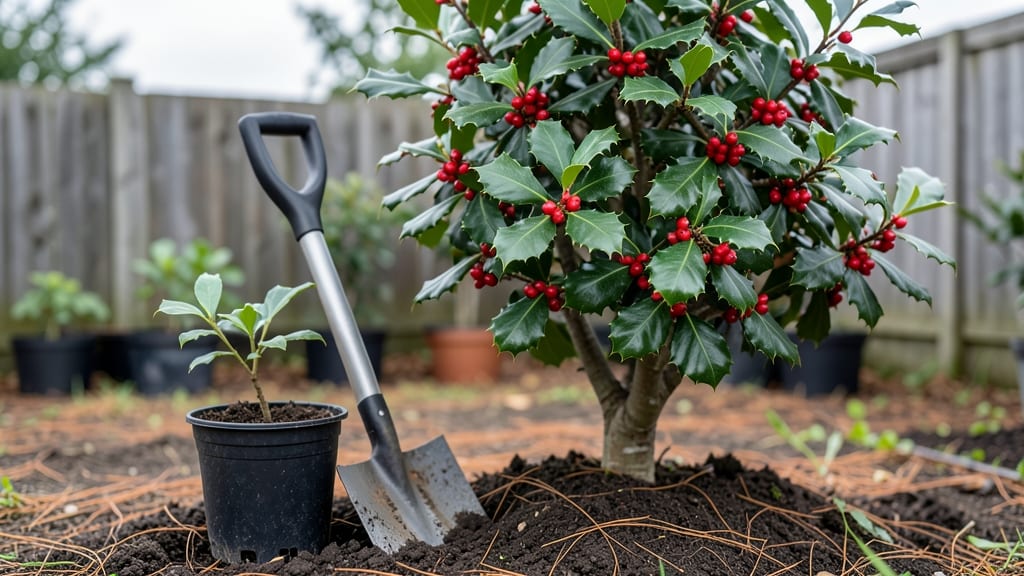
Growing a holly tree means adding year-round structure and color to your yard—spiky evergreen leaves in summer, bright red berries in winter, and that classic holiday charm all year. 🌿 I’ve planted three varieties now, and the key to success starts with the right site and soil prep.
Holly trees thrive where others struggle, but they demand patience: it takes 3-5 years before you see those signature berries.
The real secret isn’t fancy—just well-draining soil and 6+ hours of sun daily. Most holly trees hate soggy roots, so amend heavy clay with compost before planting. Water deeply once a week after establishment, but never let them sit in puddles.
Prune in late winter to shape the tree, but avoid heavy cuts that remove too many berry-producing branches.
You’ll love watching those glossy leaves emerge in spring and the berries ripen by fall. Mature trees handle snow and ice like champions, and deer usually avoid them.
The trade-off? Holly trees grow slowly—expect 1-2 feet per year—but their long-term payoff in curb appeal and wildlife support makes it worth the wait.
Perfect for foundation plantings, privacy screens, or as a standout specimen. Once established, they’re nearly maintenance-free. Here’s how to get started without the common pitfalls that trip up new growers.
📚 In This Guide
- What you need
- Instructions
- Tips and common mistakes
- Wrapping up and next steps
What you need
- ● Holly Tree: Choose a cold-hardy variety like Ilex opaca (American Holly) or Ilex aquifolium (English Holly). Buy from a reputable nursery as a 1-3 gallon container or bare-root sapling.
- ● Planting Hole: Dig a hole twice as wide and just as deep as the root ball.
- ● Well-Draining Soil: Mix 50% native soil with 50% compost or peat moss for optimal drainage.
- ● Mulch: 2-3 inches of organic mulch (pine straw, bark, or shredded leaves) to retain moisture and regulate soil temperature.
- ● Watering Can or Hose: With a gentle spray nozzle for even watering.
- ○ Fertilizer (Optional): A balanced, slow-release fertilizer (10-10-10) or organic options like compost tea or bone meal.
- ● Pruning Shears: Sharp, bypass pruners (for shaping and removing dead branches).
- ● Gloves & Protective Gear: Heavy-duty gardening gloves to avoid prickly holly spines.
- ● Sunlight: Full sun to partial shade (6+ hours of sunlight daily for best growth).
- ● Spacing: Plant holly trees 15-25 feet apart (depending on mature size) to allow for full growth.
- ● pH Level: Ideal soil pH is 5.0–7.0 (slightly acidic to neutral). Test your soil if unsure!
- ● Water Access: Ensure a consistent water source for the first 1-2 years until the tree establishes roots.
- ● Soil Amendments: Sulfur or lime to adjust pH if needed.
- ● Tree Guards: Protective barriers to shield young trees from pests or animals.
- ● Drip Irrigation System: For automated watering during dry spells.
- ● Slow-Release Fertilizer Tablets: For minimal maintenance.
Step-by-step guide to planting and cultivating a healthy holly tree
Holly thrives with the right balance of patience and precision—here's how to establish one that will reward you for decades.
🌱 Step 1: Choose and Prepare the Planting Site
Select a location with full sun to partial shade (at least 6 hours of sunlight daily). Holly tolerates a range of light conditions but produces the most vibrant berries in morning sun with afternoon shade—especially in hotter climates. Test the soil pH with a kit; holly prefers slightly acidic soil (pH 5.0-6.0). If your soil is alkaline, amend with sulfur or peat moss before planting.
Dig a hole twice as wide as the root ball but no deeper—holly roots spread horizontally, not vertically. Loosen the sides of the hole with a shovel to encourage root expansion. Avoid disturbing the root ball when removing the tree from its container, as holly roots are particularly sensitive to damage. Here's the thing—if your soil is compacted, add 2-3 inches of compost to the bottom of the hole to improve drainage and nutrient availability.
🪴 Step 2: Plant the Holly Tree Correctly
Place the holly tree in the hole so the top of the root ball sits level with the surrounding soil—never bury the trunk too deeply, as this can suffocate the plant. Backfill with the native soil, tamping down gently in 2-inch layers to eliminate air pockets. Water deeply after planting to settle the soil and encourage root contact.
Mulch around the base with 2-3 inches of organic mulch, keeping it 3-4 inches away from the trunk to prevent rot. Use pine straw, shredded bark, or wood chips—avoid rocks or inorganic materials, which don’t improve soil structure. Water the tree once a week for the first month to help roots establish, but avoid overwatering; holly trees are surprisingly drought-tolerant once established.
☀️ Step 3: Provide Ongoing Care for Optimal Growth
Holly trees need consistent moisture during their first growing season, so water deeply every 7-10 days—until the top 6 inches of soil feel dry. After the first year, reduce watering to once every 2-3 weeks unless you experience extended drought. Overwatering is a common mistake; holly roots rot easily in soggy soil. You’ll know moisture is right when the soil feels like a wrung-out sponge.
Fertilize in early spring with a balanced, slow-release fertilizer (10-10-10). Apply ½ cup per inch of trunk diameter around the drip line (the edge of the tree’s canopy). Avoid high-nitrogen fertilizers, which encourage leafy growth at the expense of berry production. Prune in late winter or early spring to shape the tree and remove dead or crossing branches. Use clean, sharp pruners and make cuts just above a bud or branch collar.
✂️ Step 4: Encourage Berry Production and Maintain Health
Holly trees are dioecious, meaning male and female trees are required for berries. If you want berries, plant at least one male tree for every 5-6 female trees—pollinators like bees will handle the rest. Female trees produce berries on old wood, so avoid heavy pruning in late summer or fall, which can remove next year’s fruit buds.
Watch for scale insects, spider mites, and holly leaf miner—common pests that can stress young trees. Treat infestations early with neem oil or insecticidal soap, applying in the early morning or evening to avoid harming beneficial insects. Real talk: if you see yellowing leaves, it’s often a sign of overwatering or poor drainage, not disease. Adjust your watering schedule and check the soil moisture before reaching for pesticides.
Tips & tricks for perfect holly tree cultivation
A few strategic moves will set your holly tree up for decades of vibrant growth and berry production—here's what I've learned from years of trial and error.
Location Precision: That 6-hour sunlight minimum is non-negotiable, but here's the thing about afternoon shade—it's especially critical in zones 7 and above. I've seen holly trees in full afternoon sun develop leaf scorch, even with regular watering. If you're planting in a hot climate, position the tree so it gets morning sun but shade from late afternoon rays. This small adjustment makes all the difference for berry quality and leaf health.
Root Ball Care: When removing your holly from the container, I can't stress enough how delicate those roots are. Run your finger around the edge of the root ball to help loosen it gently before lifting. If you force it out, you risk tearing the fibrous roots—something that can take years to recover from. Once in the hole, those horizontal roots need room to spread, which is why we go twice as wide but not deeper. Think of it like giving your tree a spacious apartment, not a cramped closet.
Mulching Strategy: That 2-3 inch layer of organic mulch isn't just decoration—it's a moisture regulator and temperature stabilizer. I've found that pine straw works particularly well because it breaks down slowly while allowing water to penetrate. The key is keeping it 3-4 inches from the trunk; too close and you risk rot. Pro tip: Refresh your mulch annually in early spring to maintain that protective layer as it decomposes.
Watering Wisdom: The 7-10 day watering schedule assumes average conditions, but your holly's needs change dramatically with temperature and soil type. In summer heat, you might need to water every 5-7 days, while sandy soils drain faster than clay. The "wrung-out sponge" test is your best friend here—stick your finger 2 inches down and if it feels dry, it's time to water. Overwatering is the silent killer of holly trees, so when in doubt, wait another day.
Pro Tips for Grow A Holly Tree
- A few strategic moves will set your holly tree up for decades of vibrant growth and berry production—here's what I've learned from years of trial and error.
- Location Precision: That 6-hour sunlight minimum is non-negotiable, but here's the thing about afternoon shade—it's especially critical in zones 7 and above.
- Root Ball Care: When removing your holly from the container, I can't stress enough how delicate those roots are.
Frequently asked questions
Got questions about growing a holly tree?
You’re not alone! Here are answers to the most common queries to help you cultivate a thriving, cold-hardy holly with ease.
How long does it take for a holly tree to grow to maturity?
A holly tree typically reaches maturity—meaning it produces abundant berries and dense foliage—in 5 to 10 years, depending on the variety. Dwarf holly varieties may mature faster (3–5 years), while larger species like American Holly can take a decade or more. Patience pays off with vibrant, year-round color!
Can holly trees survive harsh winters?
Yes! Holly trees are cold-hardy, with many varieties thriving in USDA zones 5–9. Young trees benefit from winter mulching to protect roots, while established hollies often handle frost and snow with ease. Just avoid late spring frosts that can damage tender new growth.
Why aren’t my holly berries red?
Holly berries may stay green or yellow if the tree lacks sufficient sunlight (6+ hours/day), proper fertilization (balanced NPK ratio), or male and female flowers nearby (hollies are dioecious—you need both genders for berries!). Prune strategically in late winter to encourage fruiting.
What’s the best holly variety for small yards?
For compact spaces, consider dwarf varieties like:
- ‘Sky Pencil’ (narrow, columnar, 10–15 ft tall)
- ‘Dwarf Burford’ (slow-growing, 6–8 ft, glossy leaves)
- ‘Winter Gem’ (female, berry-producing, 6–8 ft)
How do I protect my holly tree from pests like spider mites or scale?
Prevent pests with regular inspections (check undersides of leaves) and hose-off infestations gently. For severe cases, use neem oil or insecticidal soap in early spring or fall. Keep trees healthy with proper watering and pruning to deter pests naturally.
Wrapping up and next steps
Growing a holly tree is a rewarding journey that brings year-round beauty and structure to your landscape—whether you choose a compact dwarf variety or a towering classic. With the right soil, sunlight, and care, your holly will thrive, offering glossy leaves, vibrant berries, and seasonal charm for decades.
Now that you’re armed with the know-how, roll up your sleeves and plant that holly! 🌱
Ready to watch it grow? Start by selecting your favorite variety from our guide, then visit the planting section for step-by-step instructions. Happy gardening!