
Pruning
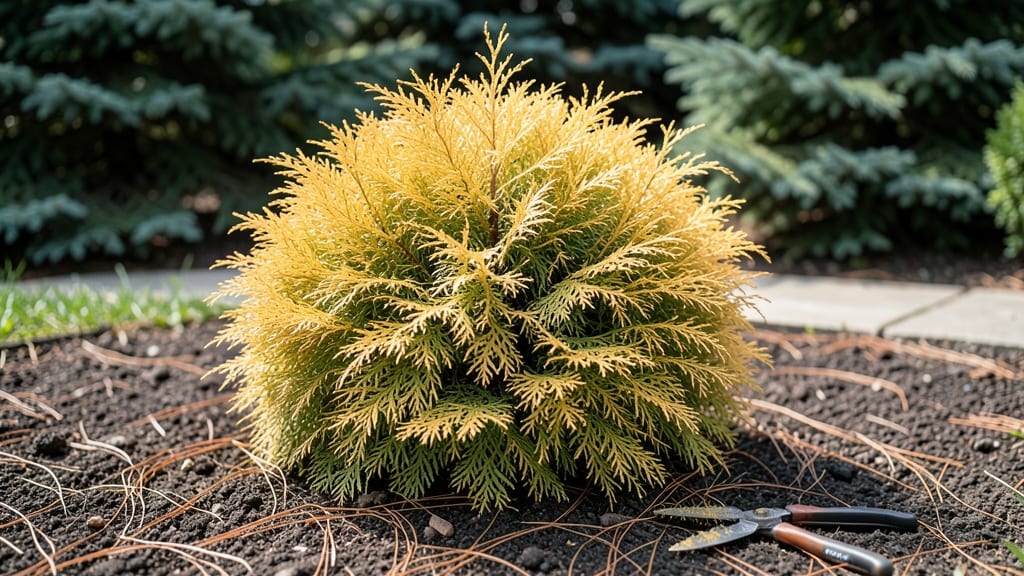
Proper goldcrest cypress tree care transforms this drought-tolerant evergreen into a lush, disease-resistant beauty—just prune it right. 🌲 I’ve learned the hard way that skipping pruning leads to leggy growth and weak branches, but once you master... the timing and technique, your tree becomes the showstopper of the landscape.
The secret lies in year-round light maintenance: a quick trim in early spring to shape new growth, a mid-summer cleanup to remove dead branches, and a minimal winter touch-up to prevent wind damage.
Most gardeners overlook the fall pruning, but that’s when you prep the tree for winter dormancy—cutting back just enough to encourage fresh, tight growth in spring.
You’ll end up with a tree that looks neat, healthy, and full without the floppy, sparse look of neglected cypresses. The foliage stays a rich, golden-green hue even in drought, and the structure remains strong enough to handle heavy snow.
Plus, proper pruning keeps pests at bay—Goldcrests are naturally resistant, but stressed branches attract trouble.
Works for urban yards, rural landscapes, or even large containers—just match your pruning schedule to your climate. Here’s how to keep yours looking its best every season.
📚 In This Guide
- What you need
- Instructions
- Tips and common mistakes
- Wrapping up and next steps
What you need
- ● Pruning shears – Bypass pruners (sharp, 5–7" blades) for clean cuts on small branches.
- ● Loppers – Bypass or anvil type (8–12" blades) for thicker branches (½"–1.5" diameter).
- ● Pruning saw – Curved-tooth saw for branches over 1.5" thick.
- ● Gloves – Heavy-duty, cut-resistant (e.g., Mechanix or leather) to protect hands.
- ● Disinfectant spray – 70% isopropyl alcohol or 10% bleach solution (1 part bleach to 9 parts water) to sterilize tools between cuts.
- ● Rubbing alcohol or hand sanitizer – For cleaning hands after pruning.
- ○ Pruning sealant – Optional but helpful for large cuts (e.g., Tanglefoot Tree Wound Pruning Seal) to prevent disease.
- ● Ladder or step stool – Sturdy, extendable (if tree exceeds 6–8 ft tall).
- ● Heavy-duty trash bags – For collecting pruned branches and debris.
- ● Weather check – Prune on a dry, overcast day (avoid extreme heat or wind).
- ● Safety glasses – To protect eyes from debris.
- ● Long sleeves/pants – Lightweight, breathable fabric to avoid scratches.
- ● Work boots or closed-toe shoes – For stability on uneven ground.
- ● First-aid kit – Basic supplies (bandages, antiseptic wipes) for minor cuts.
- ● Mark your cuts – Use chalk or a pencil to outline where you’ll prune for a clean, intentional shape.
- ● Keep tools sharp – Dull blades crush branches, causing damage. Sharpen before starting!
- ● Work in layers – Remove no more than 25% of foliage in one session to avoid stressing the tree.
Step-by-Step guide to pruning Goldcrest Cypress trees for year-round health
Here’s how to maintain that signature dense, disease-resistant foliage through every season.
🌿 Step 1: Assess the Tree’s Growth Pattern in Early Spring
The best time to start is late February to March, when new growth begins but before the first flush of fresh needles. Look for overcrowded branches—these are the ones competing for light and nutrients, making your tree vulnerable to pests. I focus on the lower third of the tree first, where airflow is often poorest. This is where fungal issues like needle blight hide.
Run your hand along the branches—rough, woody growth signals old wood that needs thinning. Healthy new shoots should feel smooth and flexible. Mark these areas with a small flag or stick; you’ll return to them later in the year. Avoid cutting more than 25% of the tree’s total foliage in one session, or you risk shocking the root system.
✂️ Step 2: Thin Out Crowded Branches with Precision Cuts
Use sharp, bypass pruners (never dull shears—they crush wood and invite disease). Cut just above a healthy lateral branch or bud, making the cut at a 45-degree angle to prevent water pooling. I always aim for the outer third of the branch, removing the oldest growth first. This opens the center to sunlight and air, which is critical for Goldcrest Cypress’s natural disease resistance.
Watch for dead or dying branches—they’ll snap easily when bent or appear brown and brittle. Remove these immediately, cutting back to the nearest healthy growth. If you see yellowing needles, that’s a sign of overwatering or poor drainage; prune those branches aggressively to redirect energy to healthier parts of the tree.
☀️ Step 3: Light Summer Maintenance to Encourage Airflow
Mid-summer isn’t about heavy pruning—it’s about strategic tidying. Wait until July or August, when the tree has finished its primary growth spurt. Focus on trimming back any new shoots that grew too long or too close to the main trunk. These are the branches that can trap moisture and lead to fungal spots.
Here’s the trick: step back and look at the tree from all angles. If you notice a section that looks too dense, that’s where you’ll make small cuts. I like to remove no more than 10% of the foliage in summer—just enough to maintain shape and airflow. Avoid pruning in extreme heat (above 90°F), as it stresses the tree.
🪴 Step 4: Fall Cleanup to Prepare for Winter Dormancy
Late fall (October to November) is the time to remove all dead, diseased, or weak branches. The tree is entering dormancy, so it can handle more aggressive pruning now. Look for branches with sparse needles—these are the ones that won’t recover. Cut them back to the nearest healthy lateral branch or collar.
This is also when I shape the tree’s silhouette. Goldcrest Cypress has a natural pyramid shape, so I taper the top slightly to encourage upward growth. Avoid heavy pruning in November or later, as new growth won’t have time to harden off before winter. If you must prune, do it before the first hard frost (when temperatures drop below 25°F).
⏰ Step 5: Minimal Winter Checks for Frost Damage
Winter pruning is not about shaping—it’s about removing only the damaged. Wait until late winter (February), when the tree has survived the coldest months. Look for brown, crispy branches that died back due to frost. These should be completely removed, cutting back to live wood.
Here’s what I’ve learned the hard way: never prune in freezing temperatures. Cold wood is brittle and can splinter, making ragged cuts that invite pests. If you see new green shoots in late winter, that’s your cue to hold off on pruning—the tree is already pushing new growth, and you’ll disrupt its energy.
Tips & tricks for perfect Goldcrest Cypress pruning
Between us, the difference between a thriving Goldcrest Cypress and one struggling with disease often comes down to these key details.
Seasonal Timing is Everything: The late February to March window in Step 1 is critical because this is when the tree's energy is shifting from dormancy to growth. If you prune too early, you risk damaging tender new buds; too late, and you'll be cutting back growth that's already competing for sunlight. I've seen trees recover beautifully when pruned at the right time, but those pruned outside this window often develop fungal issues within weeks.
Tool Selection Matters More Than You Think: Sharp bypass pruners aren't just about clean cuts—they're about preserving the tree's natural defenses. Dull shears crush the wood fibers, creating entry points for pathogens. I always clean my pruners with rubbing alcohol between cuts on different trees to prevent cross-contamination. For larger branches, consider a pruning saw with a fine-toothed blade to avoid tearing the bark.
Visual Cues for Healthy Growth: When assessing branches in Step 1, focus on three key visual indicators: first, the color contrast between healthy green needles and brown woody growth; second, the flexibility of new shoots versus the brittleness of dead wood; and third, the spacing between branches. Healthy Goldcrest Cypress should have branches spaced about 6-8 inches apart when mature. If you're seeing branches growing directly into each other, that's your signal for aggressive thinning.
Heat Stress Prevention: The 90°F threshold mentioned in Step 3 isn't arbitrary—it's when Goldcrest Cypress starts showing heat stress symptoms like wilting or premature needle drop. On hot summer days, I always prune in the early morning when temperatures are cooler and humidity is higher. If you must prune in the afternoon, work in the shade and keep a spray bottle of water handy to mist the tree occasionally. This simple precaution can make the difference between a tree that recovers quickly and one that struggles for weeks.
Pro Tips for Goldcrest Cypress Tree Care
- Between us, the difference between a thriving Goldcrest Cypress and one struggling with disease often comes down to these key details.
- Seasonal Timing is Everything: The late February to March window in Step 1 is critical because this is when the tree's energy is shifting from dormancy to growth.
- Tool Selection Matters More Than You Think: Sharp bypass pruners aren't just about clean cuts—they're about preserving the tree's natural defenses.
Frequently asked questions
about Goldcrest Cypress tree care—because even the hardiest trees need a little extra love!How often should I prune my Goldcrest Cypress?
Prune your Goldcrest Cypress twice a year for best results: light shaping in early spring (March-April) and heavy maintenance in late winter (January-February) before new growth begins. Avoid pruning in fall or extreme heat—this tree thrives with structure!
Can I prune my Goldcrest Cypress in winter?
Yes! Late winter (January-February) is ideal for pruning because the tree is dormant. This timing reduces stress and encourages fresh, dense growth. Just avoid pruning during frost or freezing temps—wait until the ground thaws slightly for cleaner cuts.
What if my Goldcrest Cypress looks "leggy" or sparse?
Leggy or sparse growth usually means over-pruning or poor maintenance. Trim back no more than 1/3 of the foliage per year and focus on inner branches to encourage density. Use sharp shears and avoid "topping" (cutting the top flat)—this harms the tree’s natural shape.
Are there alternatives to Goldcrest Cypress for dense, low-maintenance hedges?
If Goldcrest isn’t your style, consider Emerald Green Arborvitae (similar disease resistance) or Thuja Green Giant (faster growth). For a cypress-like look, Leyland Cypress is another option—but it grows much taller and needs more frequent pruning.
Why are my Goldcrest Cypress branches turning brown?
Brown branches often signal fungal disease, spider mites, or winter burn. Start by checking for web-like trails (mites) or black/brown spots (fungus). Treat mites with horticultural oil and prune affected branches 1 inch below the damage. For winter burn, mulch the base and avoid pruning until spring.
Wrapping up and next steps
Caring for your Goldcrest Cypress doesn’t have to be overwhelming—just consistent! With the right year-round pruning and a few key practices, you’ll enjoy a dense, disease-resistant tree that thrives for years. 🌿✨ Whether you’re trimming for shape, health, or aesthetics, your efforts will pay off in lush, vibrant foliage.
Ready to take the next step? Grab your pruners and schedule your first maintenance session—your Goldcrest Cypress will thank you! For extra confidence, bookmark this guide or share it with fellow gardening enthusiasts. Happy pruning! 🌱