
Pruning
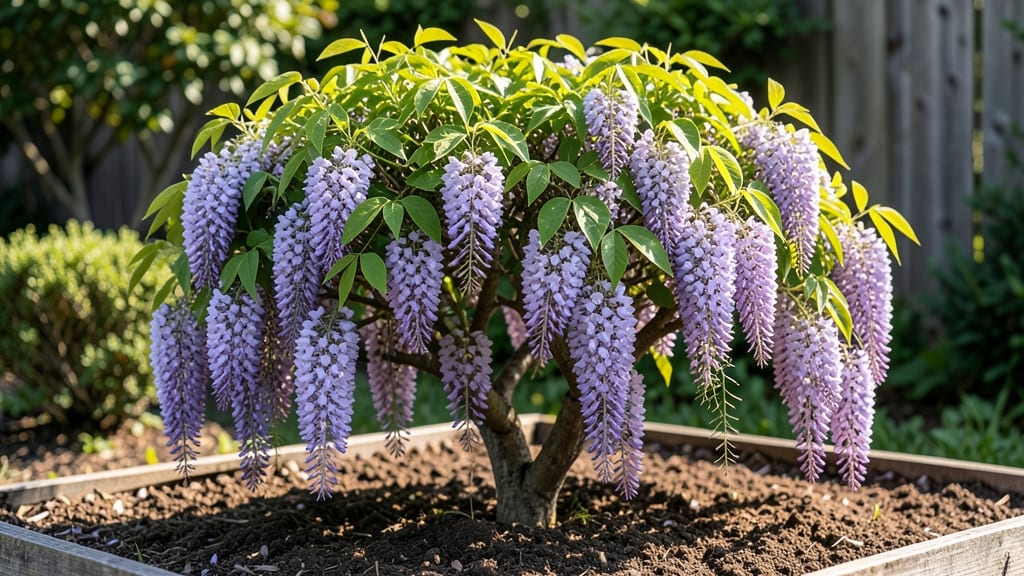
That first burst of lavender-blue flowers in spring—dwarf wisteria trees bring that showstopping display to tiny yards where full-sized vines would sprawl uncontrollably. I planted mine against a trellis three years ago, and now it drapes just enough to frame my patio without taking over the space.
The secret isn't just the compact size; it's how they transform an ordinary corner into a fragrant focal point by late April.
You'll need a spot with at least 6 hours of sun daily, well-draining soil mixed with compost, and patience—these trees take 2-3 years to really bloom.
The pruning is where most people trip up: cut back leggy growth in early spring before buds swell, and you'll encourage denser flowering. My worst mistake? Waiting until summer to prune—those flowers never came back that year.
By summer, you'll have clusters of fragrant blooms that attract hummingbirds and fill the air with a sweet, intoxicating scent. The foliage stays lush all season, and with proper winter protection (a thick layer of mulch), it returns year after year.
The trade-off? They need regular watering the first two years to establish roots.
Perfect for small patios, balconies, or even large containers—just choose a variety like 'Amethyst Falls' for reliable blooms. The key is balancing pruning and feeding, but once you get the rhythm, these little powerhouses deliver decades of color without the chaos of their full-sized cousins.
📚 In This Guide
- What you need
- Instructions
- Tips and common mistakes
- Wrapping up and next steps
What you need
- ● Pruning shears: Bypass pruners (sharp, clean, and sterilized to prevent disease). Recommended: Felco F-2 or similar (💡 Pro tip: Replace blades if dull—smooth cuts heal faster!).
- ● Loppers: For thicker stems (1–2 inches in diameter). Opt for ratcheting loppers for ease on stubborn branches.
- ● Hand pruners: For fine-tuning smaller growth (avoid over-pruning—dwarf wisteria is delicate!).
- ● Gloves: Heavy-duty gardening gloves (wisteria thorns are no joke!).
- ● Disinfectant: 70% isopropyl alcohol or bleach solution (1 part bleach : 9 parts water) to sterilize tools between cuts.
- ○ Pruning sealant: Optional but helpful for larger cuts (e.g., Tanglefoot Tree Wound Pruning Seal to prevent sap loss).
- ● Weather check: Prune on a dry, overcast day (avoid rainy or windy conditions—wet wood splinters!).
- ● Safety glasses: Protect your eyes from flying debris (especially when sawing thicker stems).
- ● Long sleeves/pants: Wisteria thorns are sharp—cover up to avoid scratches!
- ○ Extension pole: For hard-to-reach branches (optional but highly recommended for tall dwarf varieties).
- ● Trash bags: To collect pruned branches (compost or dispose of—do not leave debris near the tree!).
- ● Pruning saw: For stubborn, thick stems (if loppers aren’t enough).
- ● Notebook/pencil: To sketch your tree’s structure before pruning (helps plan cuts!).
- ● Tree tie or zip ties: To secure supports if you’re training young branches.
- ● Fertilizer: Balanced slow-release fertilizer (e.g., 10-10-10) to nourish the tree post-pruning.
Step-by-Step guide for planting and cultivating a dwarf wisteria tree
Here's how to grow this fragrant beauty with minimal space and maximum impact.
Select and Prepare the Planting Site
Choose a location with at least 6 hours of direct sunlight daily—wisteria thrives in full sun but tolerates partial shade in hotter climates. The soil should drain well, so amend heavy clay with 2-3 inches of organic compost from your materials list to improve aeration. Dig a hole twice as wide as the root ball but only as deep—planting too deeply suffocates roots.
I always test drainage by filling the hole with water and waiting for it to fully absorb. If it pools after 30 minutes, add more compost or consider a raised bed. The ideal soil pH for wisteria is 6.0-7.0, so test your soil and adjust with lime or sulfur if needed. This small investment prevents future nutrient deficiencies that stunt flowering.
Plant the Dwarf Wisteria with Proper Spacing
Position the tree so the top of the root ball sits 1 inch above ground level—this prevents stem rot from sitting water. For 4 dwarf wisteria trees, space them 8-10 feet apart in a row or cluster them in a small garden bed with 6 feet between plants. The compact varieties grow 6-10 feet tall but need room to develop their signature cascading habit.
Gently loosen the roots if they're circling the pot, then place the tree in the hole and backfill with native soil mixed with 1 cup of slow-release fertilizer. Water deeply to eliminate air pockets, then create a 2-inch deep basin around the base to direct future watering. Mulch with 2 inches of wood chips, keeping it 6 inches away from the trunk to prevent rot.
Establish Proper Watering and Fertilization Routine
Water deeply 2-3 times per week for the first 6 weeks to encourage deep root growth, then taper to once weekly once established. You'll know it's time to water when the top 2 inches of soil feel dry—wisteria is drought-tolerant once mature but needs consistent moisture when young. Avoid overhead watering to prevent fungal diseases like powdery mildew, which can discolor leaves.
Fertilize in early spring with ½ cup of balanced 10-10-10 fertilizer spread over the root zone, then again in mid-summer after the first flush of flowers. I've found that wisteria responds poorly to high-nitrogen fertilizers—too much green growth at the expense of blooms. Always water after fertilizing to prevent root burn. Prune spent flowers immediately to redirect energy into next year's blossoms.
Prune for Health and Floral Display
Prune in late winter or early spring before new growth begins, removing dead, crossing, or weak branches first. Cut back overly vigorous shoots by ⅓ to ½ to maintain the compact shape. Wisteria flowers on old wood, so avoid heavy pruning in fall or winter—this removes next year's bloom potential. Always use clean, sharp pruners to make cuts at a 45-degree angle just above a bud.
Shape the tree annually by thinning interior branches to improve airflow and sunlight penetration. You'll see the difference immediately—better blooms and fewer pest issues. I like to train the vines along a trellis or arbor if growing against a fence, which creates a stunning vertical display. Never prune after mid-summer, as new growth won't harden off before winter.
Protect and Maintain Through Seasons
Mulch annually in early spring with 2 inches of fresh wood chips, replenishing as it decomposes. This conserves moisture and regulates soil temperature. In winter, protect young trees from harsh winds with burlap wraps if your zone drops below 10°F. Mature wisteria handles cold well, but tender new growth can suffer frost damage. Watch for aphids or spider mites—spray with neem oil at first sign of infestation before they spread.
Monitor for powdery mildew in humid summers by ensuring good airflow and avoiding overhead watering. If leaves yellow, it's often iron chlorosis—apply chelated iron in early spring if soil pH is too high. The reward for proper care? Fragrant, lavender-blue blooms in late spring, often before leaves fully emerge. This is the moment that matters—when the garden transforms into a fragrant cloud.
Tips & tricks for perfect dwarf wisteria cultivation
These insights will help you maximize your dwarf wisteria's potential while avoiding common pitfalls that can stunt growth or reduce blooms.
Sunlight Optimization: While the instructions specify at least 6 hours of direct sunlight, I've found that positioning your trees where they receive morning sun and afternoon shade in hot climates actually improves bloom longevity. The delicate flowers can scorch in intense afternoon heat, so if you're in a Zone 8 or higher, consider a partially shaded spot for the first growing season until the plants establish stronger root systems. This subtle adjustment prevents premature wilting of those coveted lavender-blue blossoms.
Root Ball Prep: Before planting, soak the root ball in water for 10-15 minutes to ensure it's thoroughly hydrated. This prevents transplant shock when you place it in the prepared hole. I also recommend gently teasing apart any circling roots at the bottom of the root ball—this encourages outward root growth rather than the tight spiral pattern that can develop in containers. The goal is to mimic natural root spread in the ground.
Fertilizer Timing: The instructions mention applying ½ cup of 10-10-10 fertilizer in early spring and mid-summer, but I've discovered that a third application in late fall—just before dormancy—can significantly boost next year's flowering. Use half the spring dose (¼ cup) and water it in well. This fall feeding provides essential nutrients while the plant prepares for winter, setting the stage for more abundant blooms the following spring.
Pruning Precision: When pruning those overly vigorous shoots by ⅓ to ½ as mentioned in Step 4, always make your cuts just above a bud that's facing outward. This creates better airflow through the center of the plant and encourages new growth in the right direction. I've seen many gardeners accidentally cut into the bud itself, which creates weak growth points. A quick way to identify the correct bud is to look for the tiny leaf or flower cluster already forming at the node.
Pro Tips for Dwarf Wisteria Tree
- These insights will help you maximize your dwarf wisteria's potential while avoiding common pitfalls that can stunt growth or reduce blooms.
- The delicate flowers can scorch in intense afternoon heat, so if you're in a Zone 8 or higher, consider a partially shaded spot for the first growing season until the plants establish stronger root systems.
- Root Ball Prep: Before planting, soak the root ball in water for 10-15 minutes to ensure it's thoroughly hydrated.
Frequently asked questions
Got questions about growing and caring for your dwarf wisteria tree? Here are some common ones—and their answers—to help you keep your compact beauty thriving!
Is a dwarf wisteria tree really suitable for small gardens?
A dwarf wisteria is perfect for small spaces! Unlike its sprawling cousins, it typically grows 6–10 feet tall (with careful pruning) and 5–8 feet wide. Its compact size makes it ideal for patios, balconies, or even large containers. Just ensure it gets 6+ hours of sunlight daily for best blooms.
When is the best time to prune a dwarf wisteria?
Prune your dwarf wisteria right after flowering (late spring to early summer) to shape it and encourage next year’s blooms. Avoid heavy pruning in fall or winter, as it blooms on old wood. Light trimming to remove dead or crossing branches can happen anytime, but never prune into bare wood—this reduces flowering.
How cold-hardy is a dwarf wisteria tree?
Most dwarf wisterias thrive in USDA Zones 5–9, handling temps down to -15°F (-26°C). However, young plants or newly planted trees may need winter protection (like burlap wraps) in colder climates. If you’re in Zone 4 or below, consider growing it in a large container and moving it indoors during winter.
Can I grow a dwarf wisteria in a pot? How big should the container be?
Yes! Dwarf wisterias adapt well to containers. Choose a pot at least 20–24 inches in diameter with drainage holes to prevent root rot. Use a well-draining potting mix (like a 50/50 blend of soil and compost) and repot every 2–3 years to refresh nutrients. Place the pot in a sunny spot and water when the top inch of soil feels dry.
Why isn’t my dwarf wisteria blooming? What can I do?
If your dwarf wisteria skips blooms, it’s often due to over-pruning (cutting back too aggressively), poor sunlight (<6 hours/day), or lack of nutrients. Try these fixes:
- Ensure it gets full sun (morning sun + afternoon shade works in hot climates).
- Avoid heavy pruning—stick to light shaping after flowering.
- Fertilize in early spring with a balanced, slow-release fertilizer (10-10-10).
- Check for pests (like aphids) or diseases (e.g., powdery mildew) that stress the plant.
What are some good alternatives if I can’t grow dwarf wisteria?
If your climate or space doesn’t suit dwarf wisteria, try these compact, fragrant climbers:
- Clematis ‘Jackmanii’ – Vigorous but prunable; blooms summer to fall.
- Star Jasmine (Trachelospermum jasminoides) – Evergreen, fragrant white flowers, and Zone 7–10 hardy.
- Weigela ‘Wine & Roses’ – Bushy shrub with pink blooms and minimal pruning needs.
- Honeysuckle ‘Annabelle’ – Fast-growing, sweetly scented, and drought-tolerant.
Wrapping up and next steps
The dwarf wisteria tree is a stunning, space-saving solution for small gardens, offering fragrant blooms without the sprawl of its larger cousins. With the right pruning techniques—like timing cuts after flowering and removing dead growth—you’ll keep it healthy, lush, and full of life.
Whether you’re a novice or a seasoned gardener, this compact beauty rewards patience with breathtaking results!
Ready to transform your space? Start small: pick one pruning task this weekend and watch your dwarf wisteria thrive! 🌸✂️