
Trees
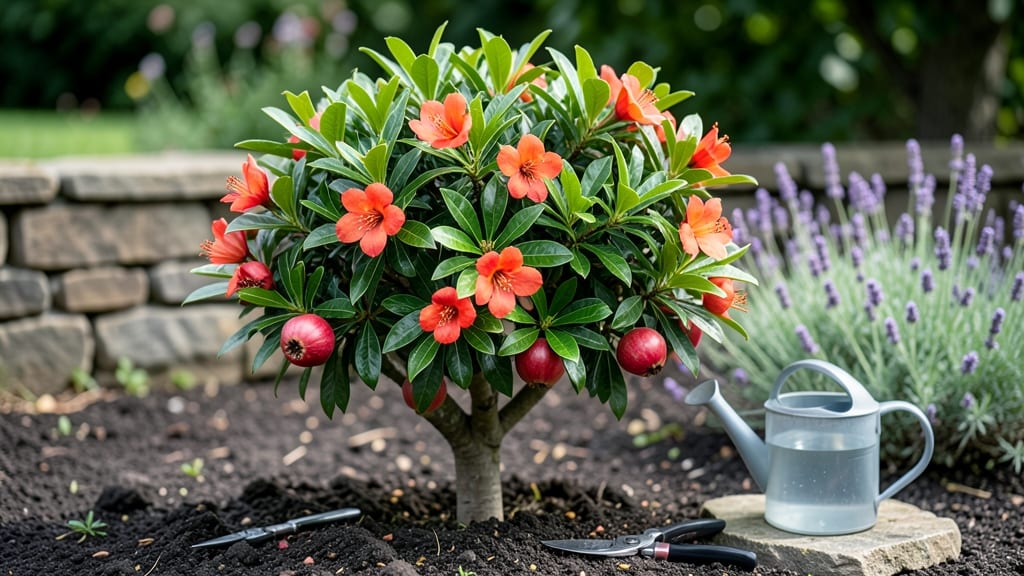
Growing a dwarf pomegranate tree in your backyard means ruby-red jewels all season—no orchard required. 🌱 I planted mine in a 5-gallon container last spring, and it’s already loaded with fruit, proving these little powerhouses thrive even in tiny spaces.
The secret lies in their compact size and adaptability: they handle full sun to partial shade, tolerate drought once established, and even rebound from winter freezes better than their full-sized cousins.
You’ll need well-draining soil (mix in sand or gravel if yours is heavy) and a spot where they have 6+ hours of sunlight daily—balconies, patios, or sunny corners all work.
By summer’s end, you’ll be harvesting bright, juicy pomegranates straight from your own tree—no grocery store detours needed. The fruit keeps producing well into fall, and with proper winter protection (like wrapping the pot or moving it indoors), you’ll get a second harvest next spring. Let’s get yours growing!
Whether you’re a container gardener or just love low-maintenance fruit trees, dwarf pomegranates deliver bold flavor and stunning blooms with minimal fuss. The key is consistent watering (deep but infrequent) and light pruning to shape the tree—no heavy-duty shears required. Ready to grow your own ruby harvest?
📚 In This Guide
- What you need
- Instructions
- Tips and common mistakes
- Wrapping up and next steps
What you need
- ● Dwarf pomegranate tree (1-2 plants, 3-5 ft tall at maturity; look for Punica granatum varieties like ‘Nana’ or ‘Wonderful’).
- ● Well-draining potting mix (5-10 gallons, depending on pot size) or native soil amended with compost (1 part compost to 3 parts soil).
- ● Container or planting area: For pots: 15-20 gallon container (minimum 18" diameter) with drainage holes.
- ● For ground planting: Full sun spot (6+ hours/day) with space for roots to spread (5-6 ft apart).
- ● Organic fertilizer (balanced 10-10-10 or citrus-specific formula, 1 lb per tree).
- ● Mulch (2-3 inches of wood chips or straw to retain moisture).
- ● Gloves & trowel (for planting).
- ● Watering can or hose with gentle spray nozzle (dwarf pomegranates hate soggy roots!).
- ● Pruning shears (sterilized, for shaping and harvest).
- ○ Support stake (optional) if planting in windy areas.
- ○ Fruit thinning tool (optional) to encourage larger pomegranates.
- ● USDA Hardiness Zones 7-11 (or a frost-free microclimate if outside this range).
- ● Patience! Dwarf pomegranates take 2-3 years to bear fruit.
- ● Consistent care: Regular watering (1-2 inches/week) and monthly feeding during growing season.
Step-by-step guide to growing a thriving dwarf pomegranate tree
Here's how to cultivate a dwarf pomegranate that produces fruit reliably in containers or small gardens.
🌱 Step 1: Select and Prepare the Perfect Planting Site
Choose a location with full sun exposure—at least 6-8 hours of direct sunlight daily. Dwarf pomegranates tolerate partial shade but produce fewer fruits. In containers, south-facing patios or balconies work best. The tree needs well-draining soil with a slightly acidic to neutral pH (6.0-7.0)—amend heavy clay soil with compost or sand to improve drainage.
If planting in-ground, dig a hole twice as wide as the root ball but no deeper. Loosen the sides of the hole to encourage root spread. For container growing, select a 5-gallon pot or larger with drainage holes. I use terra cotta pots because they wick away excess moisture, preventing root rot—a common issue with pomegranates.
☀️ Step 2: Plant and Establish for Strong Root Growth
Remove the tree from its nursery container and gently loosen the roots if they're circling. Place the root ball in the prepared hole or pot, ensuring the graft union (the bump where the dwarfing rootstock meets the scion) sits 1-2 inches above soil level. This prevents water from pooling around the graft and rotting it.
Backfill with native soil or your amended potting mix, pressing lightly to eliminate air pockets. Water deeply immediately after planting—this helps settle the soil and removes air gaps around the roots. Mulch the surface with 2-3 inches of organic mulch (like wood chips) to retain moisture and regulate soil temperature. Keep the mulch 2 inches away from the trunk to prevent rot.
💧 Step 3: Water and Fertilize for Optimal Fruit Production
Dwarf pomegranates need consistent moisture but hate soggy roots. Water deeply once a week during the first year, allowing the top 2-3 inches of soil to dry out between waterings. You'll know it's time when the soil feels dry to the touch. In containers, water more frequently—every 4-5 days—since pots dry out faster.
Fertilize twice a year: once in early spring (when new growth begins) and again in mid-summer (after the first harvest). Use a balanced, slow-release fertilizer (like 10-10-10) at half the recommended strength. Over-fertilizing leads to lush foliage but fewer fruits. I also add 1 tablespoon of Epsom salt in spring to boost magnesium, which improves fruit color and sweetness.
✂️ Step 4: Prune for Shape and Fruit Bearing
Prune your dwarf pomegranate annually in late winter or early spring, before new growth starts. Remove dead, diseased, or crossing branches first to improve airflow. Then, shape the tree by cutting back overly long branches to encourage a compact, bushy form. Aim for an open-center shape—this allows sunlight to reach the center, where most fruits develop.
Here's the thing—never prune more than 25% of the tree at once. Pomegranates are resilient, but aggressive pruning stresses the plant and reduces fruit set. After pruning, apply a copper fungicide spray to prevent infections from fresh cuts. In late summer, remove any suckers (shoots growing from the base) to redirect energy to fruit production.
🌿 Step 5: Protect and Harvest for Year-Round Success
Pomegranates are drought-tolerant once established but need consistent care to produce fruit. In late summer, reduce watering slightly to every 10-14 days—this helps concentrate sugars in the fruit. Watch for pests like aphids or scale, which can weaken the tree. A neem oil spray applied in early summer keeps them at bay without harming pollinators.
Harvest fruits when they turn deep red and feel heavy in your hand—usually late fall to early winter, depending on your climate. Twist gently to detach them from the stem. Store unwashed fruits in a cool, dry place for up to 2 months. If your tree produces more flowers than it can support, thin clusters to 3-4 fruits per branch to ensure larger, sweeter pomegranates.
Tips & tricks for perfect dwarf pomegranate cultivation
Real talk: Growing a dwarf pomegranate that thrives in containers or small spaces requires a few strategic adjustments to standard care. Here’s how to maximize your tree’s potential without common pitfalls.
Sunlight Optimization: While the instructions specify 6-8 hours of direct sunlight daily, I’ve found that dwarf pomegranates actually perform best with at least 8 hours in summer—especially in containers where heat escapes faster. If your space gets only 6 hours, supplement with a grow light for 2-3 hours in the evening during peak growing months. South-facing windows or balconies are ideal, but if that’s not possible, rotate the pot weekly to ensure even light exposure. This prevents leggy growth and ensures robust fruit development.
Root Health Strategy: The instructions mention terra cotta pots to prevent root rot, but here’s what nobody tells you—these pots dry out twice as fast as plastic. To balance moisture retention, I add a 2-inch layer of gravel at the bottom of the pot before planting. This creates an air gap that prevents waterlogging while allowing excess moisture to drain. For in-ground planting, avoid compacted soil by mixing in 1 part perlite to 3 parts native soil when amending heavy clay. This improves aeration without altering the slightly acidic to neutral pH range.
Fertilization Timing: The twice-yearly fertilization schedule is spot-on, but the devil’s in the details. When you apply that half-strength 10-10-10 fertilizer in early spring, pair it with a 1 tablespoon of Epsom salt to boost magnesium—this isn’t just about color, it’s about preventing yellowing leaves that can stress the tree before flowering. In mid-summer, switch to a low-nitrogen, high-phosphorus fertilizer (like 5-10-10) to shift energy toward fruit development rather than foliage. This simple tweak can double your harvest in the second year.
Pruning Precision: The instructions warn against pruning more than 25% of the tree at once, but here’s the technique that changed everything for me: Always prune on a dry, sunny day when the tree is dormant. Use sterilized pruning shears to make cuts just above a leaf node or bud, angled slightly downward to prevent water pooling. For container-grown trees, I limit pruning to 15% annually to avoid overstressing the plant—this keeps the tree compact while maximizing fruit-bearing branches. After pruning, I apply a 1-inch layer of fresh mulch around the base (keeping it 2 inches away from the trunk) to protect the tree from temperature fluctuations.
Pro Tips for Dwarf Pomegranate Tree
- Real talk: Growing a dwarf pomegranate that thrives in containers or small spaces requires a few strategic adjustments to standard care.
- If your space gets only 6 hours, supplement with a grow light for 2-3 hours in the evening during peak growing months.
- Root Health Strategy: The instructions mention terra cotta pots to prevent root rot, but here’s what nobody tells you—these pots dry out twice as fast as plastic.
Frequently asked questions
Got questions about growing your own dwarf pomegranate tree? We’ve got answers!
Here are some of the most common queries—from planting tips to troubleshooting—so you can enjoy a thriving ruby harvest all year long.
How long does it take for a dwarf pomegranate tree to bear fruit?
With patience and proper care, a dwarf pomegranate tree typically produces its first fruit in 2-3 years. Young trees focus on root and branch growth, but providing full sun, well-draining soil, and regular watering speeds up fruiting. Pro tip: Prune lightly in early spring to encourage bushier growth and more flowers!
Can dwarf pomegranate trees survive winter in cold climates?
Dwarf pomegranates thrive in USDA Zones 8-11, but with protection, they can survive brief dips to 20°F (-7°C). In colder zones, grow them in containers and move them indoors or wrap the trunk with burlap. Mulch the base with straw or leaves for extra insulation. Pro tip: Avoid heavy pruning in fall—wait until spring to avoid stressing the tree!
How do I know when dwarf pomegranate fruit is ripe?
Ripe dwarf pomegranates turn a deep crimson red and feel slightly soft when gently squeezed (like a ripe avocado). The skin may also crack slightly, revealing the jewel-like arils inside. Warning: Don’t wait too long—they soften quickly once ripe! Harvest with pruning shears to avoid damaging the tree.
What’s the best way to grow a dwarf pomegranate in a pot?
Choose a 15-20 gallon container with drainage holes and use a mix of potting soil, perlite, and compost. Place in full sun (6+ hours daily) and water deeply when the top inch of soil is dry. Pro tip: Fertilize monthly in spring/summer with a citrus-friendly formula (like 6-6-6) for optimal growth!
Why are my dwarf pomegranate leaves turning yellow?
Yellow leaves often signal overwatering, nutrient deficiency, or pests. Check soil moisture—dwarf pomegranates hate soggy roots! Yellowing edges may mean iron deficiency (try chelated iron fertilizer). Inspect for aphids or spider mites; spray with neem oil if needed. Pro tip: Prune affected leaves to redirect energy to healthy growth!
Wrapping up and next steps
Growing a dwarf pomegranate tree is a rewarding way to enjoy vibrant fruit, stunning blooms, and year-round greenery—even in small spaces! 🌱 With the right care, you’ll soon be savoring sweet, jewel-like arils and sharing their beauty with neighbors.
Whether you’re a beginner or a seasoned gardener, this compact citrus relative proves that big flavors don’t require big yards.
Ready to take the next step? Start with a healthy sapling, pick your perfect spot, and watch your ruby harvest unfold. Happy planting—and may your garden be as fruitful as it is colorful! 🍇✨