
Size
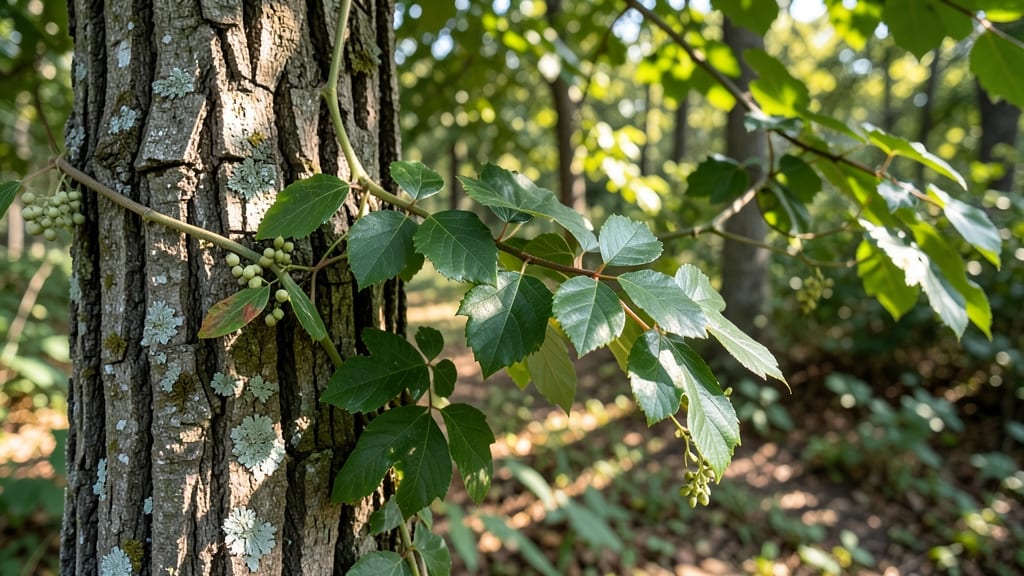
Does poison ivy grow up trees, and if so, how does it manage to scale them so relentlessly? I’ve seen it smother entire oaks, turning a healthy canopy into a tangled mess of toxic vines.
The confusion starts when people mistake it for harmless ivy or Virginia creeper, but those don’t leave the itchy, blistering rashes that poison ivy does.
This vine thrives in shade and moisture, using its roots to strangle branches over time. The good news? It rarely kills mature trees, but it blocks sunlight and weakens them.
Removing it early prevents long-term damage, and the right tools make the job safer—gloves, long sleeves, and a pruner designed for thick stems are non-negotiable. I’ve learned the hard way that skipping precautions leads to regret (and itchy arms).
You’ll spot it by its three shiny leaflets and red stem in spring, or by the way it clings to trunks like a viney hug. The key to removal is cutting at the base where the vine meets the tree, then monitoring for regrowth.
A 10-foot pole saw helps with high branches, and sealing the stump with vinegar kills any lingering roots. No burning—those fumes are worse than the rash.
Once removed, keep an eye out for new shoots. Poison ivy’s seeds can lie dormant for years, so mulching the area with cardboard or landscape fabric stops them from sprouting.
If the tree’s bark is already damaged, consider consulting an arborist. The goal isn’t just to clear the vine—it’s to protect the tree and your skin from future battles.
📚 In This Guide
- What you need
- Instructions
- Tips and common mistakes
- Wrapping up and next steps
What you need
- ● Heavy-duty gloves – Waterproof, thick (12+ mil), and long-cuffed (e.g., rubber or nitrile-coated). Quantity: 1 pair.
- ● Long-sleeved shirt and pants – Tightly woven, 100% cotton or synthetic blend (avoid denim—it can trap oils!). Quantity: 1 set.
- ● Safety goggles – For eye protection during removal. Quantity: 1 pair.
- ● Pruning shears or loppers – Bypass pruners (8-10" blades) for clean cuts. Quantity: 1 pair.
- ● Garden pruners – For smaller vines (4-6" blades). Quantity: 1 pair.
- ● Heavy-duty trash bags – 13-gallon or larger, sealed tightly. Quantity: 2-3 bags.
- ● Rake or stiff brush – For scraping roots or debris. Quantity: 1.
- ● Hose with spray nozzle – For rinsing tools and washing off plants.
- ● Bleach or vinegar – 1 part bleach to 10 parts water (or full-strength vinegar) for cleaning tools.
- ● Face mask (N95 or dust mask) – Reduces inhalation risk from disturbed plants.
- ● Disposable coveralls – For full-body protection (if dealing with dense infestations).
- ● Plastic sheeting – To lay under work area for easy cleanup.
- ● Poison ivy killer (glyphosate-based) – For stubborn roots or regrowth prevention.
- ● Ladder or extension pole – For high-up vines (ensure it’s stable!).
- ● First-aid kit with calamine lotion & antihistamines – Just in case!.
How to identify and manage poison ivy on trees safely
Poison ivy doesn’t just sprawl along the ground—it climbs trees like a stealthy intruder. Here’s how to spot it and handle it without breaking out.
Learn the Three Key Identification Rules
Poison ivy follows three foolproof rules: "Leaves of three, let it be"—that’s your first clue. Look for clusters of three shiny, pointed leaves with smooth or slightly toothed edges. The middle leaf usually has the longest stem, creating a distinct V shape when viewed from above.
Next, check for hairy vines. Young poison ivy stems are covered in fine hairs, and older vines develop a rough, scaly texture. Run your fingers along the stem—if it feels fuzzy or gritty, that’s a red flag. The vine itself is also woody and flexible, not brittle like some other climbing plants.
Finally, watch for white berries in late summer or fall. Poison ivy produces small, waxy white berries that birds love to spread—this is how it invades new trees. If you see these, you’re dealing with mature poison ivy, and removal requires extra caution.
Examine the Tree for Climbing Patterns
Poison ivy doesn’t just hug the trunk—it climbs upward using tendrils or aerial roots. Look for vines twisting around branches or trunk ridges, often forming a spiral pattern as they grow. Unlike some vines, poison ivy doesn’t produce large, leafy tendrils; instead, it clings tightly with small, root-like attachments.
Check the base of the tree first. Poison ivy often starts low, spreading along the ground before climbing. If you see a thick mat of three-leaf clusters at the tree’s feet, it’s likely sending vines upward. Tap the vine gently—if it snaps with a slight give (not a clean break), it’s likely poison ivy.
Pay attention to sunlight exposure. Poison ivy thrives in partial shade but can climb into full sun if the tree provides support. If the vine is thicker than a pencil and has multiple leaf clusters, it’s well-established and may require professional removal.
Confirm with a Safe Test
Before touching anything, do a visual test: Snap off a small section of vine and rub it on a white paper towel. If the oil leaves a yellowish or brownish stain, that’s a strong indicator of poison ivy. Avoid testing with bare hands—use gloves or tools from the start.
Another trick is the rubbing alcohol test. Dab a cotton swab with rubbing alcohol and wipe the leaf surface. Poison ivy leaves often release a slightly oily residue that clings to the swab. This isn’t foolproof, but it’s a quick way to double-check before handling.
If you’re still unsure, take a close-up photo and compare it to trusted sources like the USDA’s poison ivy guide. Misidentification can lead to unnecessary panic—or worse, ignoring a real threat.
Plan Safe Removal (Without Touching the Vine)
Never pull poison ivy by hand. Instead, cut it at the base with long-handled pruners or a pole saw to avoid contact. Wear long sleeves, pants, and gloves, and cover your shoes—oil can transfer from the vine to your skin or clothing.
For vines higher than 6 feet, use a garden pole with a saw attachment or call a professional. If the vine is thick or woody, cutting it may not kill it—it could regrow from roots or remaining stem sections. In that case, apply vinegar or a commercial herbicide (like glyphosate) directly to the cut surface.
After removal, wash tools with soap and water, then rinse with rubbing alcohol to kill any lingering oil. Dispose of the vine in a sealed plastic bag—never burn it, as the smoke contains urushiol, the irritating oil.
Monitor and Prevent Regrowth
Poison ivy is persistent. After removal, check the area weekly for new sprouts, especially near the tree’s base. If you see fresh three-leaf clusters, cut them immediately—they won’t grow back if removed early.
To prevent future infestations, keep the tree base clear of debris and consider mulching with wood chips (not leaves, which can harbor spores). If the tree is in your yard, trim nearby branches to reduce climbing opportunities. For severe cases, professional treatment may be the safest option.
Real talk: Poison ivy is sneaky, but you’ve got this. The key is identifying it early and acting before it spreads. Stay vigilant, and you’ll keep your trees—and your skin—safe.
Tips & tricks for identifying and removing poison ivy on trees
Poison ivy climbing trees can be tricky—here’s how to avoid the most common mistakes and handle it like a pro.
Focus on the Leaf Clusters: In Step 1, when checking for those three shiny leaves, look closely at the leaf edges. The middle leaf’s longer stem creates a distinct V shape—this is your best visual clue. I’ve seen people confuse poison ivy with Virginia creeper (which has five leaflets) because they focus only on the leaf count. The V shape is what gives it away.
Test Before You Touch: The paper towel test in Step 3 is your best defense. I always keep a small bottle of rubbing alcohol in my gardening kit for this exact purpose. If you’re still unsure after the test, snap a photo and compare it to the USDA’s poison ivy guide. Trust me, a rash isn’t worth the risk of misidentification.
Cut at the Right Spot: Step 4 emphasizes cutting at the base, but here’s the key detail: aim for the soil line. If you leave even a tiny piece of stem attached, the plant can regrow. Use long-handled pruners to avoid contact, and if the vine is woody, follow up with vinegar or herbicide to prevent regrowth. I’ve learned this the hard way after seeing poison ivy bounce back stronger than ever.
Monitor for Regrowth: After removal, check the area weekly for new sprouts, especially near the tree’s base. Poison ivy is persistent, and those tiny three-leaf clusters can pop up fast. I set a reminder on my phone to inspect my yard every Sunday—it’s saved me from multiple breakouts over the years.
Pro Tips for Does Poison Ivy Grow Up Trees
- Poison ivy climbing trees can be tricky—here’s how to avoid the most common mistakes and handle it like a pro.
- Focus on the Leaf Clusters: In Step 1, when checking for those three shiny leaves, look closely at the leaf edges.
- Test Before You Touch: The paper towel test in Step 3 is your best defense.
Frequently asked questions
Can poison ivy climb trees without support?
No, poison ivy is a vine that relies on external support to climb. It uses aerial rootlets (tiny hair-like structures) to latch onto tree bark, fences, or other surfaces. Without something to grip, it sprawls along the ground. Pro tip: If you see a vine with three leaflets growing upward on a tree, it’s likely poison ivy!
When is the best time to remove poison ivy from trees?
The ideal time is late fall or early winter (November–February) when the plant is dormant. This reduces regrowth risks. Avoid spring/summer—active vines release more oils (urushiol), increasing irritation. Warning: Wear thick gloves, long sleeves, and goggles to avoid skin contact!
What’s the safest way to kill poison ivy on tree trunks?
Use a vine killer (like glyphosate or triclopyr) or a horticultural vinegar solution (20% acetic acid). Spray directly on the leaves/vines, ensuring full coverage. For thick vines, cut at the base and apply herbicide to the stump. Alternative: Smother small vines with cardboard or mulch (but this may harm the tree!).
What if poison ivy keeps coming back after removal?
Regrowth often means you missed the roots or didn’t treat the base. Dig out any remaining root fragments or reapply herbicide. Monitor for new shoots (they’ll sprout from the same root system). Troubleshooting: If the problem persists, the vine might be connected to a larger underground network—consult a local arborist.
Will removing poison ivy harm the tree?
No, if done carefully! Poison ivy is a parasitic vine that can strangle trees over time. Removing it actually helps the tree by restoring airflow and sunlight. Just avoid damaging the tree’s bark or roots. Bonus: Trees often recover quickly once freed from the vine’s grip!
Wrapping up and next steps
Now that you’re armed with the know-how to spot and handle poison ivy climbing trees, you can tackle outdoor tasks with confidence! Remember: identify first, act carefully—whether you’re pruning, gardening, or just enjoying nature.
If you’re dealing with a stubborn case, don’t hesitate to call in a professional for safe removal.
🌿 Next step: Grab your gloves, spray, and a buddy, then take on that vine with the right precautions. Stay safe out there!