
Pruning
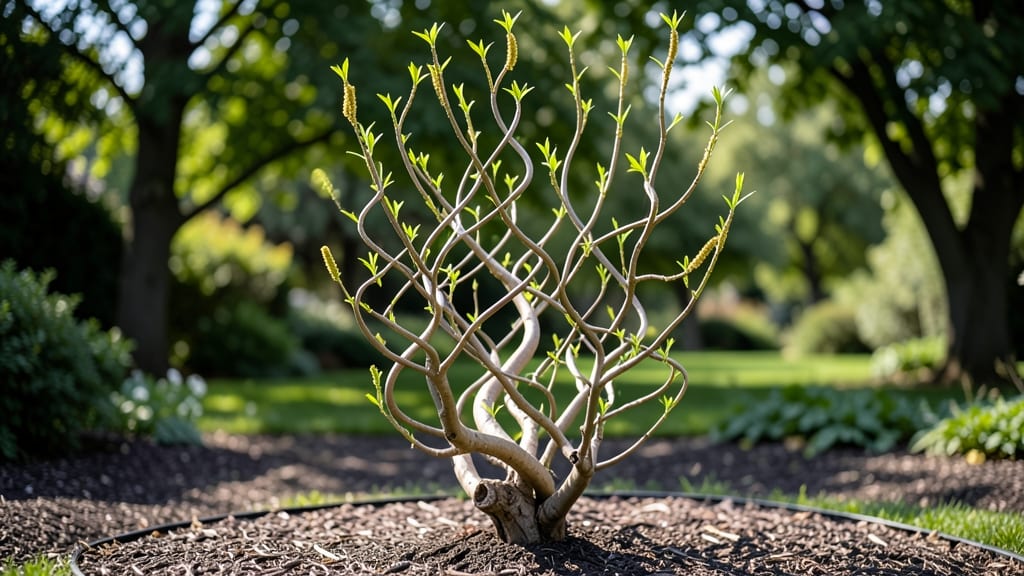
This corkscrew willow tree, with its mesmerizing spiraling limbs, is the star of my garden—so much so that I’ve snapped endless corkscrew willow tree pictures to share with neighbors who marvel at its whimsical design. The truth? Nature does all the work—you just need to know where to place it.
This tree thrives as a standalone statement piece or woven into mixed borders, especially near water where its cascading habit shines. Pair it with hostas for contrast or let it stand alone as a dramatic focal point.
The branches keep their sculptural form year-round, making it a low-maintenance showstopper that even black thumbs can’t kill.
Imagine your garden in late winter when bare branches create intricate shadows, or summer when new growth unfurls in soft green spirals. The corkscrew willow adds vertical drama without requiring pruning—just occasional shaping to keep its signature form.
Perfect for small yards, large estates, or anywhere you want to make a statement with minimal effort.
Whether you’re designing a modern courtyard or a cottage-style garden, this tree adapts beautifully. The key is placement: give it space to sprawl (at least 15 feet wide) and watch it transform from ordinary to extraordinary. Ready to see how it could work in your space? Let’s explore the possibilities.
📚 In This Guide
- What you need
- Instructions
- Tips and common mistakes
- Wrapping up and next steps
What you need
- ● Pruning shears – Sharp, bypass-style shears (4-6" blade length) for clean cuts.
- ● Loppers – For thicker branches (1.5-2" diameter), with a 6-8" cutting capacity.
- ● Pruning saw – Heavy-duty, curved blade for stubborn, woody stems.
- ● Garden gloves – Heavy-duty, cut-resistant gloves to protect your hands.
- ● Disinfectant (70% isopropyl alcohol or pruning sealant) – To prevent disease spread.
- ● 5-gallon bucket or trash bag – For collecting pruned branches.
- ○ Pole pruner (optional but helpful) – Extendable tool (8-12 ft) for high branches.
- ● DSLR or mirrorless camera – With a 50mm or macro lens for detail shots.
- ○ Tripod (optional) – For steady, low-light, or close-up shots.
- ● Natural light or ring light – To highlight the tree’s twisted branches.
- ○ Reflector (optional) – Softens shadows for dramatic effect.
- ● Check local regulations—some areas restrict pruning without permits.
- ● Prune during dormant season (late winter/early spring) for best results.
- ● Wear closed-toe shoes and long sleeves to avoid scratches.
- ● Have a first-aid kit handy for minor cuts or scrapes.
How to plant and maintain a striking corkscrew willow tree
This elegant tree transforms any landscape with its signature twisted branches—here’s how to plant and care for one properly.
Choose the Right Location for Maximum Impact
The corkscrew willow thrives in full sun to partial shade, with at least 6 hours of direct sunlight daily for optimal branch development. I always select a spot near a water feature or open lawn where its unique form will be the focal point. Avoid planting near sidewalks or driveways, as its roots can spread aggressively and damage pavement over time.
Check the soil pH—corkscrew willows prefer slightly acidic to neutral soil (6.0–7.5). If your soil is heavy clay, amend it with 2–3 inches of compost mixed into the top 12 inches of soil before planting. This improves drainage while retaining moisture, which the tree loves. Test drainage by digging a 12-inch-deep hole—if water pools after 24 hours, raise the planting area by 6–12 inches to prevent root rot.
Plant with Proper Spacing and Support
Dig a hole twice as wide as the root ball but no deeper—this encourages roots to spread horizontally rather than settling too low. Gently remove the tree from its container and loosen any circling roots with your fingers. Place the tree in the hole so the top of the root ball sits 1–2 inches above ground level, which prevents water from pooling around the trunk and causing rot.
Backfill with native soil mixed with 1–2 inches of organic mulch, keeping it 3–4 inches away from the trunk to avoid moisture buildup. Water deeply to settle the soil, then add a 3-inch layer of mulch over the root zone. Stake the tree only if necessary—its flexible branches often don’t need support unless planted in a windy area. If staking, use two stakes on opposite sides and tie loosely with soft fabric strips to avoid girdling the trunk.
Water and Fertilize for Healthy Growth
Water the tree deeply 2–3 times per week for the first month after planting, ensuring the soil remains moist but not soggy. After the first month, reduce watering to once a week unless your region experiences drought conditions, then increase to twice weekly. Corkscrew willows are drought-tolerant once established but produce the most dramatic branches with consistent moisture.
Fertilize in early spring with a balanced, slow-release fertilizer (10-10-10) applied at ½ the recommended rate for young trees. Avoid high-nitrogen fertilizers, which promote leafy growth at the expense of branch development. In late fall, top-dress the root zone with 1–2 inches of compost to replenish nutrients naturally. Prune only to remove dead or crossing branches—never trim for shape, as the twisted form is its defining feature.
Prune and Protect for Long-Term Beauty
Inspect the tree annually for dead, diseased, or rubbing branches and prune them in late winter or early spring before new growth begins. Use clean, sharp pruners to make cuts just outside the branch collar, and seal larger wounds with pruning sealant to prevent decay. Avoid heavy pruning—this tree’s drama comes from its natural spiral branches, so minimal intervention keeps it stunning.
Young corkscrew willows are vulnerable to sunscald in harsh winters. Wrap the trunk with tree guard or burlap during the first 2–3 winters to protect it from temperature fluctuations. Mature trees handle cold well but benefit from mulch around the base in winter to insulate roots. If planted near a pond or stream, ensure the water level doesn’t rise above the root zone during floods, as prolonged saturation can weaken the tree.
Tips & tricks for perfect corkscrew willow planting
Transforming your landscape with a corkscrew willow starts with these essential insights that ensure your tree thrives from day one.
Location Strategy: For maximum visual impact, position your corkscrew willow where its twisted branches will be the first thing visitors notice—like near a patio entrance or along a garden path. The required 6 hours of sunlight is non-negotiable for developing those signature spiral patterns, but I’ve found partial shade in afternoon works surprisingly well in hotter climates if you supplement with consistent moisture. Consider planting near a reflective surface like a pond or decorative stones to amplify the tree’s dramatic silhouette.
Soil Preparation Secret: The 24-hour drainage test in Step 1 is your best friend—if water pools after that time, you’re dealing with potential root rot conditions. I’ve seen gardeners skip this and end up with a tree that struggles for years. For heavy clay soils, mix in 2-3 inches of compost into the top 12 inches—this creates ideal porosity while maintaining moisture retention. Pro tip: Add a handful of perlite to the mix for even better drainage without sacrificing fertility.
Planting Depth Precision: That 1-2 inches above ground level placement of the root ball isn’t just arbitrary—it prevents water from pooling around the trunk during heavy rains. I’ve noticed many gardeners plant too deep, which can suffocate the roots. Use a level to ensure the root flare (where roots meet trunk) is clearly visible above soil level. This small detail makes all the difference in long-term health.
Winter Protection Insight: The 2-3 winters of trunk wrapping is crucial in zones with temperature swings below 0°F. I’ve seen beautiful corkscrew willows develop sunscald scars because owners skipped this step. Use tree guard instead of burlap for better insulation—it’s more durable and won’t degrade as quickly. For mature trees, focus on adding 3-4 inches of mulch around the base in late fall to protect roots from freeze-thaw cycles.
Pro Tips for Corkscrew Willow Tree Pictures
- Transforming your landscape with a corkscrew willow starts with these essential insights that ensure your tree thrives from day one.
- Location Strategy: For maximum visual impact, position your corkscrew willow where its twisted branches will be the first thing visitors notice—like near a patio entrance or along a garden path.
- Soil Preparation Secret: The 24-hour drainage test in Step 1 is your best friend—if water pools after that time, you’re dealing with potential root rot conditions.
Frequently asked questions
Got questions about the stunning corkscrew willow tree? Here are some of the most common inquiries—plus answers to help you care for this eye-catching plant with ease!
How fast does a corkscrew willow grow, and how big does it get?
A corkscrew willow (Salix matsudana 'Tortuosa') grows moderately fast—about 2 to 3 feet per year under ideal conditions. Mature trees typically reach 20 to 30 feet tall with a 15 to 25-foot spread. Give it space! Plant it at least 20 feet from structures or other trees to avoid root competition.
Does a corkscrew willow need full sun, and what if my yard is shady?
This willow loves full sun (at least 6 to 8 hours daily) for optimal growth and that signature twisted branching. In partial shade (4+ hours of sun), it’ll still grow but may become less dense or leggy. If your yard is shady, consider a sunny spot in a container or pair it with a fast-growing companion plant that tolerates shade.
How and when should I prune a corkscrew willow to maintain its shape?
Prune in late winter or early spring (before new growth starts) to shape the tree and encourage dense branching. Use clean, sharp pruners to trim:
- Dead, diseased, or crossing branches
- Overly long limbs to maintain its compact, twisted form
- Suckers at the base to redirect energy upward
Are corkscrew willows messy? Do they drop a lot of debris?
While not as messy as some willows, corkscrew willows do shed—especially in spring and fall. Expect:
- Light seed pods (not invasive like mulberries)
- Occasional dropped branches (prune to minimize)
- Yellowing leaves in autumn (normal!)
Can I grow a corkscrew willow in a container, or is it better in the ground?
Yes! A young corkscrew willow (under 3 years old) can thrive in a large container (20+ gallons) with:
- Well-draining soil mix (50% potting soil, 50% perlite/sand)
- Full sun and regular watering (containers dry out faster)
- A wide pot (shallow roots spread horizontally)
Wrapping up and next steps
The corkscrew willow isn’t just a stunning garden star—it’s a versatile and low-maintenance addition that transforms any space into a work of art. 🌿 Whether you’re drawn to its twisting branches, its ability to thrive in wet soils, or its dramatic visual impact, this tree delivers year-round beauty with minimal effort.
Ready to bring its charm to your yard? Start by sketching a planting plan or reach out to a local nursery to find the perfect specimen—your garden’s next masterpiece is just a branch away!