
Pruning
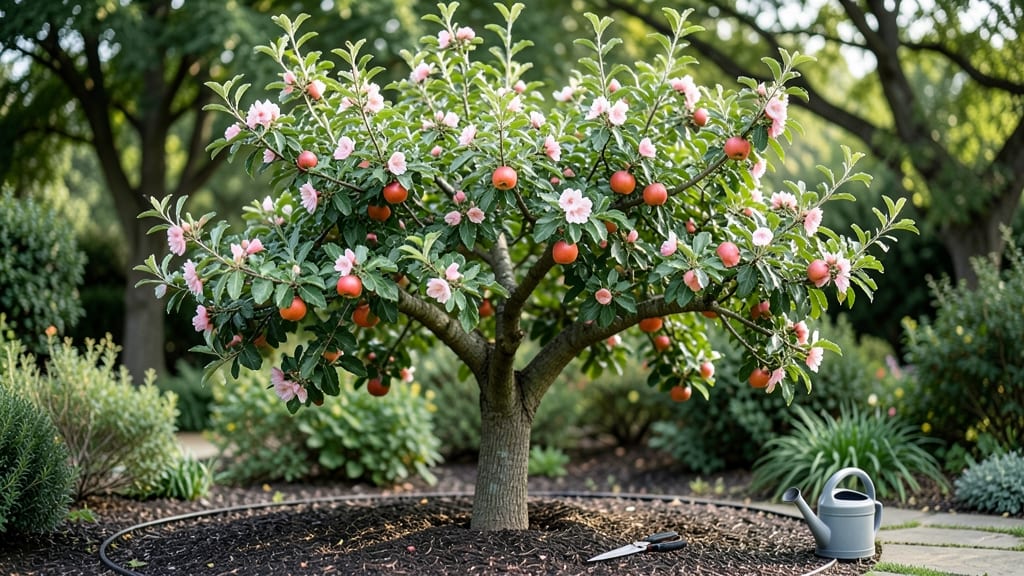
Picture the Beverly Hills apple tree standing sentinel in a manicured lawn, its sleek silhouette as recognizable as a Hollywood sign. This iconic cultivar isn’t just about fruit—it’s about year-round elegance, with glossy foliage that turns fiery in autumn and a pruned shape that commands attention.
The secret to maintaining that polished look? Three strategic cuts that keep it both productive and picture-perfect.
What makes this tree so special isn’t just its history—it’s how it transforms any space. Whether you’re shaping a front yard or a city park, its compact growth and refined branches create a focal point that feels both classic and contemporary.
The pruning process itself is simpler than you’d think, focusing on open structure rather than heavy fruit loads—because in this case, form truly matters more than function.
By the time you’re done, you’ll have a tree that looks like it belongs in a luxury garden magazine, not just your backyard. The branches will frame your home like an artist’s brushstroke, and the seasonal color shifts will give your landscape effortless drama.
This isn’t just gardening—it’s landscape storytelling with every cut.
Best of all, the same principles work for other ornamental apple cultivars, whether you’re dealing with a dwarf variety in a container or a standard tree in a public space.
The key is balance: prune to reveal the tree’s natural beauty, not to force it into a shape it wasn’t meant to hold.
📚 In This Guide
- What you need
- Instructions
- Tips and common mistakes
- Wrapping up and next steps
What you need
- ● Pruning shears: Bypass pruners (sharp, clean, and sterilized with rubbing alcohol to prevent disease). Look for ergonomic handles for comfort during long sessions.
- ● Loppers: For thicker branches (1.5"–2" diameter). Choose bypass-style loppers for precision cuts.
- ● Pruning saw: For branches too thick for loppers (2"–6" diameter). A curved-tooth saw minimizes tear-out.
- ● Gloves: Heavy-duty, cut-resistant gloves (e.g., mechanics’ gloves) to protect hands from thorns and sharp tools.
- ● Disinfectant: 70% isopropyl alcohol or a pruning sealant (like Tanglefoot Pruning Seal) to seal cuts and prevent infection.
- ● Ladder or step stool: Sturdy and tall enough to reach the tree’s highest branches safely. Extendable ladders work well for mature trees.
- ● Heavy-duty trash bags: For collecting pruned branches (10–15 gallons total). Biodegradable bags are eco-friendly!
- ○ Marking twine or flags: Colored twine or small flags to tag branches for removal (optional but helpful for complex cuts).
- ● Hand saw: For fine-tuning cuts on stubborn branches.
- ● Pruning paint: (e.g., Tree Wound Pruning Seal) to protect large cuts from pests.
- ● Work apron with pockets: Keeps tools organized and hands free.
- ● Safety glasses: Protects eyes from debris (especially when using a pruning saw).
- ● Tree growth regulator: (e.g., Apogee) to reduce stress on the tree post-pruning.
Instructions for pruning a Beverly Hills apple tree for year-round beauty
Three well-timed cuts transform this iconic tree into a sculptural centerpiece.
Perform the Winter Structural Pruning
Start in late winter or early spring—before buds swell—when the tree is still dormant. This is the most critical cut: it establishes the tree’s framework for the coming year. Remove any dead, diseased, or crossing branches first; these are easy to spot as they lack sap flow or have dark, mushy wood.
Next, open the canopy by thinning out 25-30% of the interior branches. Look for limbs growing inward or rubbing against others—these compete for sunlight and create weak entry points for pests. Use clean, sharp pruning shears to make cuts just outside the branch collar (the swollen area where the branch meets the trunk). Avoid leaving stubs, as they invite rot.
Here’s the thing—this first cut defines everything. If you leave too many branches, the tree will grow crowded and produce smaller fruit. If you remove too much, you risk shocking the tree. Aim for a balanced silhouette where light can penetrate to the center. You’ll know you’ve done it right when you can see through the canopy from all angles.
Summer Light Pruning for Fruit and Form
About 6-8 weeks after flowering, return to the tree with a fresh set of shears. This mid-season pruning encourages airflow, reduces disease risk, and shapes the tree for better fruit production. Focus on suckers (vigorous shoots growing from the base or trunk) and water sprouts (fast-growing vertical shoots). These compete with fruit-bearing branches and should be cut back to a bud or removed entirely.
Next, thin out some of the fruit clusters if they’re overly dense. Overloaded branches can snap under the weight, and the fruit will be smaller. Leave one cluster per spur (the short, stubby branches where apples form) to give the remaining fruit room to grow. You’ll see the spurs clearly—they’re the thickened areas along the branches where buds form in clusters.
This is the moment that matters: prune just above an outward-facing bud to encourage the branch to grow away from the center. If you cut back to an inward-facing bud, you’ll create a dense, shaded interior that invites fungal issues. Step back frequently to check your progress—you want the tree to resemble an open vase shape, not a dense ball.
Light Fall Cleanup for Winter Readiness
In late fall, after leaves have dropped but before hard frosts, make one final pass. Remove any dead or diseased wood that may have appeared over the summer, as well as any branches that grew too vigorously in response to summer pruning. These cuts help the tree enter dormancy with fewer energy drains.
Now’s also the time to reduce the size of overly long branches by up to one-third if needed. Look for limbs that grew excessively during the growing season—they’ll be the longest and thinnest. Cut them back to a lateral bud or branch to maintain a compact, elegant form. Avoid heavy pruning now, though; the tree needs time to heal before winter.
Real talk: this final cut isn’t about shaping as much as it is about preparation. A well-pruned tree in fall recovers more quickly in spring and produces stronger growth. You’ll notice fewer broken branches in windstorms and a more uniform canopy by next season. It’s a subtle difference, but it makes all the difference in the tree’s longevity.
Tips & tricks for pruning a Beverly Hills apple tree
These strategic insights will help you transform your tree into a year-round masterpiece without the guesswork.
Timing is Everything: The late winter/early spring window for Step 1 is critical because the tree is fully dormant, making it easier to identify dead wood and diseased branches. I've seen many gardeners skip this step because they think the tree looks fine, but those hidden problems will only worsen over time. The 25-30% thinning target might seem arbitrary, but it's based on arboricultural studies showing this balance maximizes both fruit production and air circulation. Take your time with this cut—rushing leads to uneven growth patterns.
Summer Pruning Precision: When you're 6-8 weeks post-flowering in Step 2, focus on those water sprouts—they're the vertical shoots growing straight up. These might look vigorous, but they're actually energy vampires that drain resources from fruit production. Cut them back to a lateral bud, not just any bud. I learned this the hard way after watching several trees develop dense canopies that blocked sunlight from reaching the lower branches. The "one cluster per spur" rule might seem restrictive, but it's what prevents your apples from becoming the size of marbles.
Fall Preparation Strategy: The late fall cleanup in Step 3 is often overlooked, but it's the secret to winter resilience. When you reduce those overly long branches by up to one-third, you're not just shaping the tree—you're teaching it to develop stronger structural integrity. I recommend marking these branches with surveyor's tape before making cuts so you can visualize the final shape. This small investment of time prevents future storm damage and makes spring pruning much easier. The key is to work just before hard frosts, when the tree has entered dormancy but hasn't yet suffered frost damage.
Pro Tips for Beverly Hills Apple Tree
- These strategic insights will help you transform your tree into a year-round masterpiece without the guesswork.
- Timing is Everything: The late winter/early spring window for Step 1 is critical because the tree is fully dormant, making it easier to identify dead wood and diseased branches.
- Summer Pruning Precision: When you're 6-8 weeks post-flowering in Step 2, focus on those water sprouts—they're the vertical shoots growing straight up.
Frequently asked questions
Got questions about keeping your Beverly Hills apple tree thriving with strategic pruning? Here are some answers to the most common ones—because even the most glamorous trees need a little TLC!
When is the best time to prune my Beverly Hills apple tree?
The ideal times are late winter (dormant season) and early spring—just before buds swell. Avoid pruning in fall, as wounds may not heal before winter. Pro tip: If you must prune in summer, do it after harvest to minimize stress on the tree.
How do I know which branches to cut?
Focus on dead, diseased, or crossing branches first. Then remove suckers (shoots at the base) and water sprouts (vertical shoots). Keep the open-center shape for airflow. Rule of thumb: Never cut more than 25% of the tree’s canopy in one session.
Will pruning reduce my apple harvest?
Not if done right! Strategic pruning boosts fruit quality by improving sunlight and airflow. However, over-pruning can reduce yield. Stick to the 3-cut method in the article, and you’ll see bigger, juicier apples next season.
Can I use the same pruning techniques for other apple trees?
Yes! The Beverly Hills apple tree’s pruning principles apply to most standard apple varieties. However, columnar or dwarf trees need lighter cuts. Always research your tree’s specific needs—some varieties (like Honeycrisp) are more sensitive to pruning.
What if my tree’s branches bleed sap after pruning?
Sap bleeding is normal! It won’t harm the tree, but you can seal cuts larger than ½ inch with pruning sealant to prevent pests. Avoid thick applications—just a thin coat works. Bonus: Prune on a dry, cool day to minimize sap flow.
Wrapping up and next steps
Transforming your Beverly Hills apple tree into a stunning year-round masterpiece is easier than you think! With just three strategic cuts, you can enhance its health, beauty, and fruit production—all while keeping it elegant and manageable. 🌿✂️
Now that you’re armed with the right tools, techniques, and answers to common questions, it’s time to roll up your sleeves and give your tree the TLC it deserves. Start by scheduling your first pruning session this fall—your tree (and future harvests!) will thank you. Happy pruning! 🌟