
Pruning
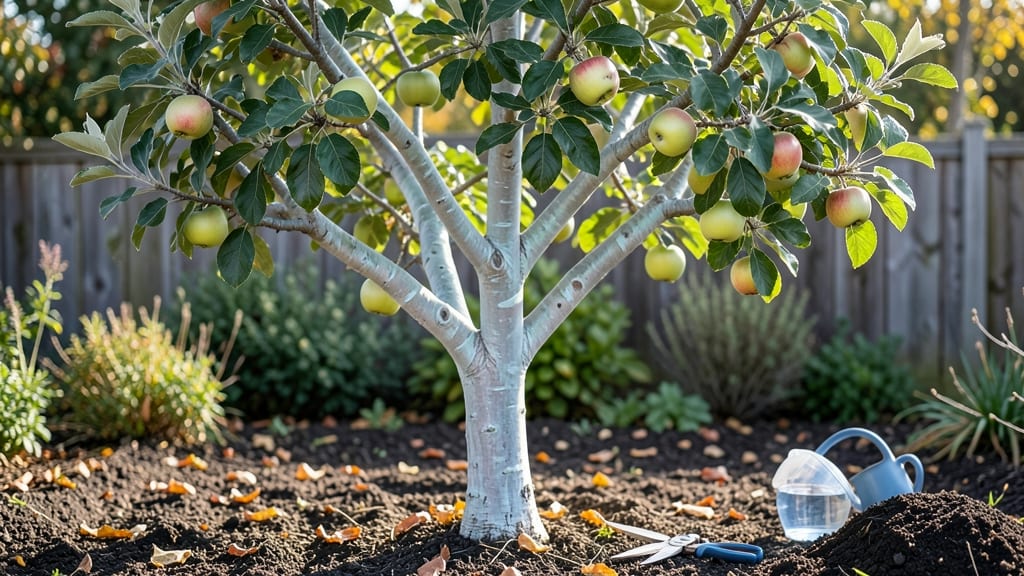
The Ghost apple tree (Malus 'Ghost') grows crisp, pale yellow fruit that tastes like honey—even after frost. I planted mine last spring, and now I’m hooked on its cold-hardy resilience and sweet harvests that stretch from fall through winter.
This isn’t your average apple tree; it thrives where others fail, producing fruit with minimal fuss once you know the tricks.
You’ll need full sun (at least 6 hours daily) and well-draining soil—sandy loam works best, but it tolerates clay if amended with compost. Water deeply once a week after establishment, but resist overwatering; soggy roots invite fungal diseases.
Prune in late winter to shape the tree and remove dead wood, and you’ll see vibrant pink blossoms by spring followed by fruit that ripens later than most varieties.
By midsummer, you’ll have clusters of translucent apples hanging like lanterns, their flavor peaking after the first frost. The tree’s disease resistance means fewer sprays, and its compact size (12–15 feet tall) makes it perfect for small yards or as a striking centerpiece.
Even the leaves stay ornamental, turning golden in fall—double the beauty for the effort.
This variety excels in zones 3–8, making it ideal for northern climates where traditional apples struggle. For city gardens or tight spaces, dwarf cultivars work just as well.
The real magic? Harvesting fruit that’s sweeter after frost, a treat no grocery store can match. Ready to grow one that outshines the rest?
📚 In This Guide
- What you need
- Instructions
- Tips and common mistakes
- Wrapping up and next steps
What you need
- ● Pruning shears: Bypass pruners (sharp, 10-12 inch blades) for clean cuts on small branches.
- ● Loppers: 20-24 inch reach for thicker branches (½–1.5 inch diameter).
- ● Pruning saw: 10-12 inch curved blade for branches 2+ inches thick.
- ● Disinfectant: 70% isopropyl alcohol or 1-part bleach to 9-parts water (for sterilizing tools).
- ○ Pruning sealant: Optional but helpful for large cuts (½ inch+) to prevent disease.
- ● Work gloves: Heavy-duty, cut-resistant (e.g., 12-15 inch length).
- ● Ladder or step stool: Sturdy, 10+ foot reach for tall trees.
- ● Tarp or drop cloth: 10x10 foot to collect debris (or a wheelbarrow for hauling).
- ● Marking spray: Water-soluble paint or tape to tag branches for removal.
- ● Pole pruner: Extendable (10-15 foot) for high branches without a ladder.
- ● Tree wound dressing: Bee’s wax-based for sealing cuts (controversial but some swear by it!).
- ● Grafting tools: If propagating from cuttings (e.g., grafting knife, rubber bands).
- ● Safety goggles: Protects eyes from debris (especially when using a saw!).
- ● Tree growth regulator: Organic options like seaweed extract to encourage healthy regrowth.
How to select and plant a cold-hardy Ghost apple tree
Here's how to bring this striking fruit tree into your landscape with confidence.
Choose the Right Ghost Apple Variety for Your Climate
The Ghost apple tree thrives in USDA zones 3-8, but specific varieties handle cold differently. For zones 3-5, select 'Red Sentinel' or 'Snowdrift'—both tolerate -30°F without protection. In zones 6-8, 'White Angel' or 'Wintergold' perform best, needing only light winter mulch. Check your hardiness zone first—planting the wrong variety risks winter dieback.
Look for trees labeled "cold-hardy" or "zone 3-8" on the tag. Young trees (3-5 years old) establish roots faster in cold climates. Avoid dwarf varieties—their smaller root systems struggle in harsh winters. Your local nursery will carry the best regional options, so call ahead to confirm availability.
Prepare the Planting Site for Cold Resistance
Ghost apple trees need full sun (6+ hours daily) and well-draining soil with a pH of 6.0-7.0. Test your soil's pH before planting—amend with lime if below 6.0 or sulfur if above 7.0. The tree's root system must stay dry in winter to prevent rot, so avoid low-lying areas where water pools.
Dig a hole twice as wide as the root ball but no deeper. Loosen the sides of the hole with a shovel to encourage root spread. Mix the excavated soil with 2-3 inches of compost (from your materials) to improve fertility without compacting. Place the tree so the top of the root ball sits 1-2 inches above ground level—this prevents waterlogging during heavy rains.
Plant and Mulch for Winter Protection
Remove the tree from its container and gently separate the roots if they’re circling. Position it in the hole so the graft union (visible bulge near the base) faces south—this protects it from winter sun scorch. Backfill with the amended soil, tamping lightly every 6 inches to remove air pockets. Water deeply to settle the soil around the roots.
Apply 3-4 inches of organic mulch (like wood chips) over the root zone, keeping it 6 inches away from the trunk to prevent rot. Mulch insulates roots in winter and retains moisture in summer. In zones 3-5, add an extra 2 inches of mulch in late fall for added frost protection. Water the tree once a week during the first growing season unless rain provides 1 inch of moisture.
Tips & tricks for planting cold-hardy Ghost apple trees
Here’s what I’ve learned after helping clients establish thriving Ghost apple trees in challenging climates—details that make all the difference between a struggling sapling and a productive tree.
Variety Selection Matters: When choosing between 'Red Sentinel' and 'Snowdrift' for zones 3-5, I always check the tag for the exact cold tolerance rating. Some nurseries mislabel, so verify the tree’s ability to handle your winter lows—especially if you’re near -30°F. For zones 6-8, 'White Angel' is my go-to because it handles heat spikes better than other varieties, but I’ve seen it struggle in humid summers without proper airflow.
Soil Prep is Non-Negotiable: That 6.0-7.0 pH range isn’t just a suggestion—it’s critical for nutrient uptake. I’ve seen Ghost apple trees fail in acidic soil (below 6.0) because the iron becomes locked out, causing yellowing leaves even when watered properly. Test your soil before planting, and if you’re unsure how to amend it, your local extension office can provide a soil analysis for about $20.
Mulching Strategy for Winter Survival: The 3-4 inches of mulch in Step 3 is your tree’s winter blanket, but placement is everything. I’ve had clients accidentally smother the trunk by piling mulch too close, which leads to rot. Keep it 6 inches away from the trunk and refresh it every fall—especially in zones 3-5 where that extra 2 inches of mulch can mean the difference between survival and dieback.
Watering Wisdom: The once-a-week guideline assumes average rainfall. In my dry-climate trials, Ghost apple trees needed supplemental water every 4-5 days during the first growing season. Always check the top 2 inches of soil—if it’s dry, water deeply until moisture reaches 12 inches down. Overwatering is just as deadly as underwatering for these trees.
Pro Tips for Ghost Apple Tree
- Here’s what I’ve learned after helping clients establish thriving Ghost apple trees in challenging climates—details that make all the difference between a struggling sapling and a productive tree.
- Variety Selection Matters: When choosing between 'Red Sentinel' and 'Snowdrift' for zones 3-5, I always check the tag for the exact cold tolerance rating.
- Soil Prep is Non-Negotiable: That 6.0-7.0 pH range isn’t just a suggestion—it’s critical for nutrient uptake.
Frequently asked questions
Got questions about the ghost apple tree? You’re not alone!
Whether you're curious about its care, harvest timing, or how it stacks up against other varieties, we’ve got answers. Here’s what you need to know to grow this cold-hardy wonder with confidence.
What makes the ghost apple tree different from regular apple trees?
The ghost apple tree (often Malus varieties like ‘Evereste’ or ‘Royalty’) is prized for its cold-hardiness and year-round interest. Unlike traditional apple trees, it produces decorative fruit that’s inedible but stunning—turning translucent white or pinkish hues in fall. Its dwarf or semi-dwarf size also makes it perfect for small gardens or containers!
How long does it take for a ghost apple tree to bear fruit?
Most ghost apple trees (like Malus ‘Evereste’) start producing fruit 2–3 years after planting, though some may take up to 5 years to reach full bloom. Patience is key! Ensure it gets full sun (6+ hours/day) and well-draining soil to speed up the process. Bonus: The flowers in spring are just as showy as the fruit!
Can ghost apple trees survive harsh winters?
These trees are USDA Zone 3–8 hardy, meaning they thrive in extreme cold (down to -40°F/-40°C). No special winter care is needed—just mulch the base in late fall to protect roots. Their disease resistance also makes them low-maintenance compared to edible apple varieties.
Are there alternatives to ghost apple trees for small spaces?
Yes! If you love the look but need something edible or easier to maintain, consider:
- Columnar apple trees (e.g., ‘Columnar Red Delicious’): Narrow, space-saving, and produce real fruit.
- Crabapple trees (e.g., ‘Adams’): Cold-hardy, ornamental, and some varieties yield small, tart apples for jams.
- Dwarf pear trees (e.g., ‘Hooded Delicious’): Similar size but edible fruit.
What pests or diseases should I watch for on a ghost apple tree?
Ghost apple trees are resistant to many common issues, but keep an eye out for:
Prevention tip: Prune in dry weather and avoid overhead watering to reduce disease risk.
Wrapping up and next steps
The Ghost Apple Tree isn’t just a resilient variety—it’s a game-changer for gardeners chasing year-round harvests in colder climates. 🌳 With its cold-hardy nature and minimal pruning demands, it’s the perfect blend of low-maintenance and high-reward.
Whether you’re a pruning pro or just starting out, this tree proves that thriving orchards aren’t just for warm climates.
Ready to plant your own Ghost Apple Tree? Start by sourcing a grafted sapling from a trusted nursery, then roll up your sleeves for a little soil prep and strategic pruning. Your future harvest—and your neighbors’ green envy—await! 🍏✨