
Pests and Diseases
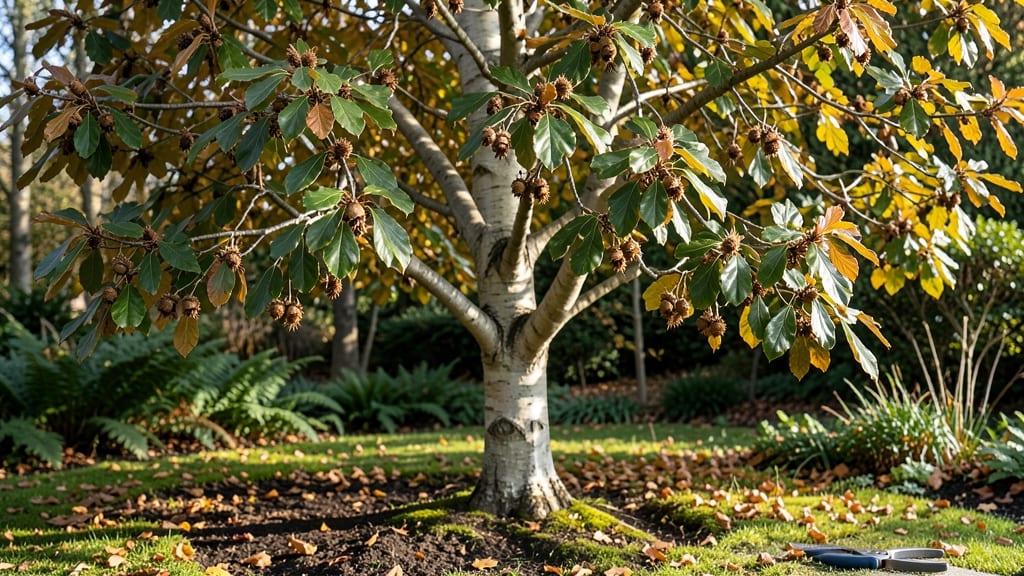
Beech tree leaves and fruit reveal the tree’s true character—velvety copper in fall, glossy green in summer, and those iconic triangular nuts that feed wildlife. 🌿 I’ve watched my beech trees transform from scraggly saplings to stately giants, and the secret to their healthy growth lies in understanding their needs year-round.
The key is patience and observation: beech trees thrive in partial shade with well-draining soil, and their leaves change color later than oaks, often lingering into winter. The nuts take two years to mature, so don’t rush—let nature handle the timing.
Prune only in late winter to avoid stressing the tree, and watch for powdery mildew on leaves, which can weaken fruit production.
📚 In This Guide
- What you need
- Instructions
- Tips and common mistakes
- Wrapping up and next steps
What you need
- ● Pruning shears – Sharp, bypass-style shears (for clean cuts on branches and leaves). Quantity: 1 pair.
- ● Gloves – Heavy-duty, chemical-resistant gloves (to protect hands from sap, pests, or fertilizers). Quantity: 1 pair.
- ● Ladder or step stool – Sturdy and tall enough to reach the tree’s canopy. Height: 10+ feet (adjust based on tree size).
- ● Garden hose with nozzle – For rinsing leaves, applying fungicides, or flushing pests off the tree.
- ● Spray bottle or backpack sprayer – Size: 1-2 gallons (for targeted treatments like neem oil or insecticidal soap).
- ● Fungicide – Copper-based or sulfur-based (to prevent beech leaf disease or powdery mildew). Quantity: 1-2 bottles (follow label rates).
- ● Insecticide – Systemic or contact-based (e.g., horticultural oil for scale insects or spinosad for borers). Quantity: 1 bottle.
- ● Plastic sheeting or drop cloth – Size: 6x8 feet (to protect ground during treatments).
- ● Trash bags – Heavy-duty, 30+ gallon (for collecting fallen leaves, fruit, or pruned debris). Quantity: 2-3 bags.
- ● Magnifying glass – For closely inspecting leaves or fruit for early signs of pests/diseases.
- ● Tree wound dressing – Pruning sealant (only use if necessary; beech trees typically heal without it).
- ● Soil moisture meter – To monitor root health, especially during drought or fruit development.
- ● Bird netting – Size: Custom-fit (to protect beech nuts from squirrels or birds if harvesting fruit).
- ● Notebook & pen – For tracking treatment dates, pest sightings, or seasonal changes.
- ● ✅ Weather check: Avoid treating trees when rain is forecasted within 24 hours (to prevent washing off sprays).
- ● ✅ Tree identification: Confirm it’s a beech tree (e.g., American, European, or Oriental) to tailor care.
- ● ⚠️ Safety first: Wear long sleeves/pants and eye protection when using pesticides or climbing.
- ● 🌿 Local regulations: Check if your area restricts certain pesticides—some are banned for organic gardening.
Step-by-step year-round care for thriving beech trees
Here’s how to keep your beech tree lush and productive through every season.
🌱 Step 1: Spring Planting and Early Season Prep
Plant your beech tree in early spring when soil temperatures reach 50°F—this gives roots time to establish before summer heat. Dig a hole twice as wide as the root ball but no deeper, then loosen the soil at the bottom to encourage root spread. The key is gentle handling; beech trees hate disturbed roots, so tease out any circling roots with your fingers.
Mulch immediately with 3-4 inches of organic mulch (like wood chips) around the base, keeping it 6 inches away from the trunk to prevent rot. Water deeply right after planting—10-15 gallons—until the soil is saturated 6 inches down. You’ll know it’s right when water pools on the surface but drains within 30 minutes.
☀️ Step 2: Summer Maintenance for Leaf and Fruit Health
Beech trees need full sun to partial shade—6+ hours of direct sunlight daily—but watch for signs of stress. If leaves turn yellow or curl, it’s often due to underwatering or compacted soil. Water once a week during dry spells, delivering 20-30 gallons slowly at the base. Avoid overhead watering; fungal spores on leaves can trigger brown spot disease.
Fertilize in early summer with a balanced 10-10-10 formula. Apply ½ cup per year of tree age (e.g., 2 cups for a 4-year-old tree) around the drip line, then water it in. The goal is steady growth, not sudden spikes—beech trees respond best to slow, consistent feeding.
✂️ Step 3: Fall Cleanup and Winter Protection
Remove fallen leaves and fruit in late fall to prevent pests and diseases from overwintering. Rake up debris 3 feet out from the trunk, then compost it away from the tree. This is also the time to prune—remove dead, crossing, or weak branches using clean, sharp pruners. Make cuts just outside the branch collar to avoid damaging the tree’s natural healing zone.
Mulch again in late fall with 2-3 inches of fresh mulch, piling it higher than in spring to insulate roots from freezing. Water deeply before the first hard frost to help the tree store moisture for winter. If your area gets below 10°F, wrap the trunk with tree wrap to prevent sunscald damage.
🌿 Step 4: Year-Round Monitoring for Pests and Disease
Check leaves monthly for signs of beech scale (white bumps on stems) or anthracnose (dark spots on leaves). Early intervention is key—spray with neem oil at the first sign of trouble, focusing on the undersides of leaves where pests hide. Avoid chemical sprays; beech trees are sensitive to harsh treatments.
Healthy beech trees produce sweet, triangular nuts in fall. If you’re growing them for fruit, thin out nuts when they’re half-grown to ensure the tree’s energy goes to a few high-quality nuts rather than a weak crop. Harvest when the husks split open naturally—never force them or you’ll damage the tree.
Tips & tricks for thriving beech trees
Keeping your beech tree healthy year-round takes a few key strategies—here's what I've learned from years of growing them successfully.
Spring Planting Precision: When planting in early spring at 50°F soil temperatures, use a shovel to create vertical slices along the sides of the planting hole. This helps break up compacted soil and encourages root expansion right from the start. I've found that adding a handful of compost to the bottom of the hole gives roots an extra nutrient boost during their critical first growing season.
Watering Wisdom: That 10-15 gallon watering after planting isn't just about quantity—it's about technique. Use a garden hose with a slow setting to deliver water gradually over 30 minutes. This prevents runoff and allows water to penetrate deeply. For the weekly summer watering of 20-30 gallons, consider using a soaker hose placed at the base to deliver water directly to the roots without wetting the leaves.
Fertilizer Timing: The early summer fertilization window is crucial, but timing matters just as much as quantity. Apply your 10-10-10 fertilizer right after a deep watering session. This helps dissolve the granules and ensures they reach the root zone effectively. I've noticed that applying fertilizer too early in spring can encourage leaf growth before the roots are ready to support it, leading to stress.
Pro Tips for Beech Tree Leaves And Fruit
- Keeping your beech tree healthy year-round takes a few key strategies—here's what I've learned from years of growing them successfully.
- Spring Planting Precision: When planting in early spring at 50°F soil temperatures, use a shovel to create vertical slices along the sides of the planting hole.
- Watering Wisdom: That 10-15 gallon watering after planting isn't just about quantity—it's about technique.
Frequently asked questions
Got questions about caring for beech tree leaves and fruit? You’re not alone—these trees can be tricky! Here are answers to the most common concerns to keep your beech tree thriving year-round.
When do beech tree leaves and fruit appear, and how long do they last?
Beech tree leaves typically emerge in early spring (April–May, depending on your climate) and stay green until late fall (October–November). Their edible nuts (fruit) mature in late summer to early fall (August–October) and drop to the ground by winter. If leaves turn brown early, it could signal disease or stress—check for pests or nutrient deficiencies!
Why are my beech tree leaves yellowing or curling, and what can I do?
Yellowing or curling leaves often mean pest infestations (like spider mites or scale insects) or fungal diseases (e.g., beech leaf disease). Start by pruning affected branches and applying neem oil or insecticidal soap. For fungal issues, use a copper-based fungicide and improve air circulation around the tree. If the problem persists, consult a local arborist.
Can I eat beech tree nuts (fruit), and are they safe for pets?
Beech nuts are technically edible for humans but bitter and tough—most people don’t eat them raw. Roasting can make them palatable, but they’re not a staple food. Never feed them to pets (especially dogs), as they can cause digestive upset or blockages. Stick to pet-safe treats like apples or carrots instead!
How do I protect beech tree leaves and fruit from winter damage?
Beech trees are hardy, but young trees or those in harsh climates benefit from mulching (2–3 inches of wood chips) to insulate roots. Avoid heavy pruning in late fall/winter, as it stresses the tree. If your area gets extreme cold (<10°F), wrap the trunk with burlap to prevent sunscald. Water deeply before the first frost to help roots withstand winter.
What’s the best alternative if my beech tree isn’t producing fruit or leaves?
If your beech tree is healthy but not fruiting, it might be male-only (beech trees need both male and female flowers for nuts). Try planting a pollinator-friendly tree nearby, like an oak or hickory. For leaf issues, consider fertilizing in early spring with a balanced 10-10-10 formula or compost. If the tree is struggling overall, a soil test can reveal nutrient deficiencies.
Wrapping up and next steps
Caring for your beech tree’s leaves and fruit doesn’t have to be overwhelming—just consistent! By staying vigilant against pests like beech leaf disease and fungal threats, and providing the right nutrients and pruning, you’ll set your tree up for lush, healthy growth year after year. 🌿✨
Ready to take action? Start by scheduling a seasonal checkup—whether it’s spring pruning, summer pest monitoring, or fall soil prep. Your beech tree will thank you with vibrant foliage and bountiful fruit for seasons to come!