
Pruning
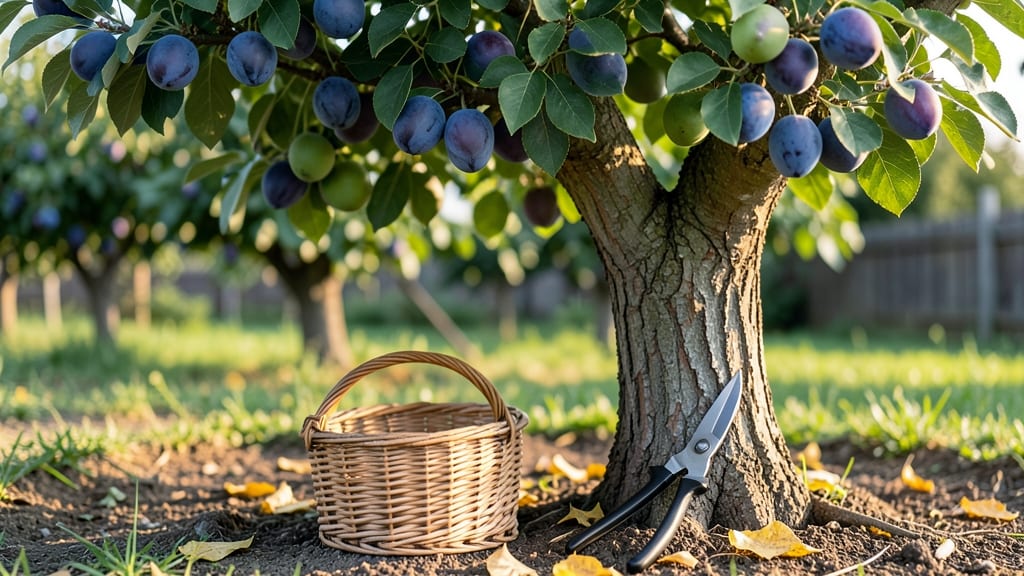
Your plum tree fruit harvest starts with just three strategic pruning cuts each winter. 🌿 I’ve watched my own trees go from sparse, bitter fruit to bursting with sweet, juicy plums—all because of when and how I pruned, not just how much.
The key isn’t aggressive thinning; it’s understanding which branches hold next year’s fruit and which ones are just stealing energy.
Plums need sunlight and air to ripen properly, and those three cuts open up the canopy so every branch gets equal exposure. You’ll also shape the tree to make harvesting easier—no more wrestling with tangled limbs or reaching into thorny tangles.
The best part? Those same cuts encourage stronger growth in spring, setting the stage for double the fruit the following season.
By summer, you’ll spot tiny green plums forming where the light hits best. They’ll swell into deep purple or red jewels by late July or August, depending on your variety, and the scent alone will have you checking the tree twice a day.
Japanese plums ripen first, while European varieties hold firm until fall—both types reward patience with flavors that range from tart to dessert-worthy.
This method works for container-grown plums too, though dwarf varieties need slightly more frequent pruning. Whether you’re dealing with a mature tree or a young sapling, the same principles apply: less cutting, more strategic shaping. Ready to turn your tree into a fruit factory?
📚 In This Guide
- What you need
- Instructions
- Tips and common mistakes
- Wrapping up and next steps
What you need
- ● Pruning shears: Sharp, bypass-pruning shears (for cuts up to ½ inch in diameter). Example: Felco F-2 or similar.
- ● Loppers: For thicker branches (½ to 1½ inches). Example: Corona 44007.
- ● Pruning saw: For branches over 1½ inches. Example: Fiskars 10-inch pruning saw.
- ● Disinfectant: 70% isopropyl alcohol or a 10% bleach solution (to sterilize tools between cuts).
- ● Rubbing alcohol or hand sanitizer: For cleaning hands before/after pruning.
- ● Garden gloves: Heavy-duty, cut-resistant (e.g., Mechanix Wear or similar).
- ● Tarp or drop cloth: To collect debris (5’x7’ minimum).
- ○ Marking twine or flags: For tagging branches to remove (optional but helpful for planning).
- ● Pruning sealant: (e.g., Tanglefoot Tree Wound Pruning Seal) for large cuts—controversial but some swear by it!
- ● Extension pole: For high branches (e.g., 6–10 ft telescoping pole with lopper attachment).
- ● Notebook & pen: To sketch your tree’s structure before/after pruning.
- ● Safety glasses: If working near power lines or in windy conditions.
- ● Tree growth regulator: (e.g., Apogee) for post-pruning care (if desired).
How to prune a plum tree for maximum fruit production
Here's the method I've used for years to turn a struggling plum tree into a fruit-bearing powerhouse.
✂️ Step 1: Perform Winter Dormancy Pruning (Late Winter)
Start your pruning when the tree is completely dormant—typically late February to early March before buds begin to swell. This is the cleanest cut of the year because the tree isn't actively growing, so it won't bleed sap. I always use clean, sharp pruning shears to make cuts at a 45-degree angle just above a bud or branch collar.
Remove any dead, diseased, or crossing branches first. You'll know a branch is dead if it's brittle and snaps when bent or has no green underneath the bark. Crossed branches rub against each other, creating wounds that invite pests and disease. Cut these back to the trunk or main branch, leaving a smooth, sloping cut that won't collect water.
Next, thin out the canopy by removing one-third of the weakest branches—these are the ones growing straight up or those that are thinner than a pencil. This opens the center of the tree to sunlight, which is crucial for fruit development. Watch for any branches growing toward the center of the tree; these compete for sunlight and should be pruned back to the main trunk or scaffold branches.
☀️ Step 2: Summer Pruning for Air Circulation (Mid-July)
About 6-8 weeks after the last frost, when the tree is actively growing but before new fruit sets, perform your second pruning. This is all about improving airflow and sunlight penetration. Look for suckers—those vigorous shoots growing from the base or trunk—and remove them completely. Suckers drain energy from the tree and don't produce fruit.
Next, trim back any branches that are growing too vigorously. You'll spot these as the ones with long, lanky growth and few leaves. Cut these back by one-third to one-half to encourage bushier growth. This step reduces the risk of fungal diseases like brown rot, which thrives in dense, shaded canopies.
Here's the thing—this is the pruning that most gardeners skip, but it makes a huge difference in fruit quality. After pruning, water the tree deeply to help it recover. You'll see new shoots forming within a few weeks, and these will produce better-quality fruit next season.
✂️ Step 3: Light Post-Harvest Pruning (Late Fall)
After you've harvested the fruit, give your plum tree a final trim in late October or early November, just before the first hard frost. This is a lighter pruning focused on shaping the tree and removing any branches that produced poor-quality fruit this year. Cut back these branches to the main scaffold or trunk to encourage new, more productive growth next season.
Remove any branches that are rubbing against each other or those that are growing inward. These are the ones that will compete for sunlight and resources. You'll also want to trim back any branches that are growing too low or too close to the ground, as these are more susceptible to damage from lawn equipment and pests.
This final pruning isn't about removing a lot of wood—it's about refining the shape of the tree. Think of it as giving your plum tree a haircut to keep it looking neat and healthy. After pruning, apply a 2-3 inch layer of mulch around the base of the tree (but not touching the trunk) to protect the roots over winter.
Tips & tricks for perfect plum tree pruning
These simple strategies will help you transform your plum tree into a fruit-producing machine year after year.
Timing is Everything: The late February to early March window for winter pruning is critical because it's when your tree is completely dormant. This timing prevents excessive sap bleeding and gives your tree time to heal before spring growth begins. I've seen plum trees that were pruned too early in winter develop frost damage on fresh cuts—so mark your calendar for that late winter date!
Tool Technique: Your pruning shears should be as sharp as a chef's knife. Dull blades tear the bark and create jagged wounds that invite disease. I like to sharpen mine with a file before each pruning session. For thicker branches (over ½ inch), use a pruning saw. Always make your cuts at a 45-degree angle just above a bud or branch collar—this ensures proper healing and prevents water from pooling on the cut.
Visual Pruning Guide: Think of your plum tree like a well-lit stage play. You want sunlight reaching every part of the canopy, not just the outer branches. Remove any branches growing straight up (they'll compete with the main scaffold) and those thinner than a pencil. For branches growing inward, cut them back to the main trunk or scaffold branches. This creates that perfect open center where sunlight can work its magic on fruit development.
Recovery Care: After your summer pruning, don't just walk away! Water the tree deeply to help it recover from the stress of cutting. I like to give mine about 10 gallons of water spread over the root zone. This encourages new shoots to form within a few weeks, which will produce better-quality fruit next season. The key is to water slowly so it soaks into the soil rather than running off.
Pro Tips for Plum Tree Fruit
- These simple strategies will help you transform your plum tree into a fruit-producing machine year after year.
- Timing is Everything: The late February to early March window for winter pruning is critical because it's when your tree is completely dormant.
- Tool Technique: Your pruning shears should be as sharp as a chef's knife.
Frequently asked questions
Got questions about growing and maintaining your plum tree? You’re not alone! Here are some of the most common queries—plus quick, actionable answers to keep your tree thriving and fruiting year after year.
When is the best time to prune a plum tree for maximum fruit production?
Prune your plum tree three times a year: late winter (before buds swell) to remove deadwood, early spring (after last frost) to shape the tree, and summer (after harvest) to encourage new growth. Avoid heavy pruning in fall—it can invite disease. Timing is key to balancing airflow, sunlight, and fruit yield!
How do I tell if my plum tree needs pruning, or am I overdoing it?
Watch for these signs:
- Overcrowded branches (shading the center)
- Dead, diseased, or crossing limbs (rubbing bark = future wounds)
- Fruit clusters on old wood (prune to redirect energy to younger branches)
Can I prune a plum tree in summer? Won’t that hurt the fruit?
Yes! Summer pruning (6–8 weeks after harvest) is ideal for plum trees—it boosts fruit quality by thinning out excessive growth and improving airflow. Focus on removing suckers, water sprouts, and overripe fruit clusters. Just avoid heavy cuts during hot spells to prevent stress. Think of it as a spa day for your tree!
What should I do if my plum tree isn’t producing fruit after pruning?
Several factors could be at play:
- Age: Young trees (under 3–5 years) may need patience.
- Pollination: Plums often need cross-pollination—plant a second variety nearby.
- Nutrients: Test soil for nitrogen/phosphorus; fertilize in early spring.
- Pruning mistakes: Too much heading back (cutting back to a bud) can reduce blooms.
Are there any plum tree alternatives if I don’t want to deal with pruning?
If pruning feels overwhelming, consider low-maintenance alternatives like:
| Fruit | Pruning Needs | Bonus Perk |
|---|---|---|
| Fig | Minimal (just remove dead wood) | Drought-tolerant and fast-growing! |
| Pomegranate | Light shaping (1–2 cuts/year) | Stunning winter foliage + edible seeds. |
| Blueberry | Annual light pruning (after harvest) | Superfood with minimal effort. |
Plums are rewarding but require intentional care. If you’re up for it, the payoff—juicy, homegrown fruit—is worth it!
Wrapping up and next steps
Growing a thriving plum tree isn’t just about patience—it’s about strategic care, and pruning is your secret weapon. 🌿 With just three key cuts—dormant-season shaping, summer thinning, and late-winter cleanup—you’ll unlock year-round fruit abundance while keeping your tree healthy and productive.
Whether you’re a beginner or a seasoned gardener, these techniques make pruning simple and rewarding.
Ready to harvest that plum bounty? Grab your pruners, mark your calendar for the next pruning window, and watch your tree flourish. Happy pruning—and here’s to a fruit-filled future! 🍑✨