
Pruning
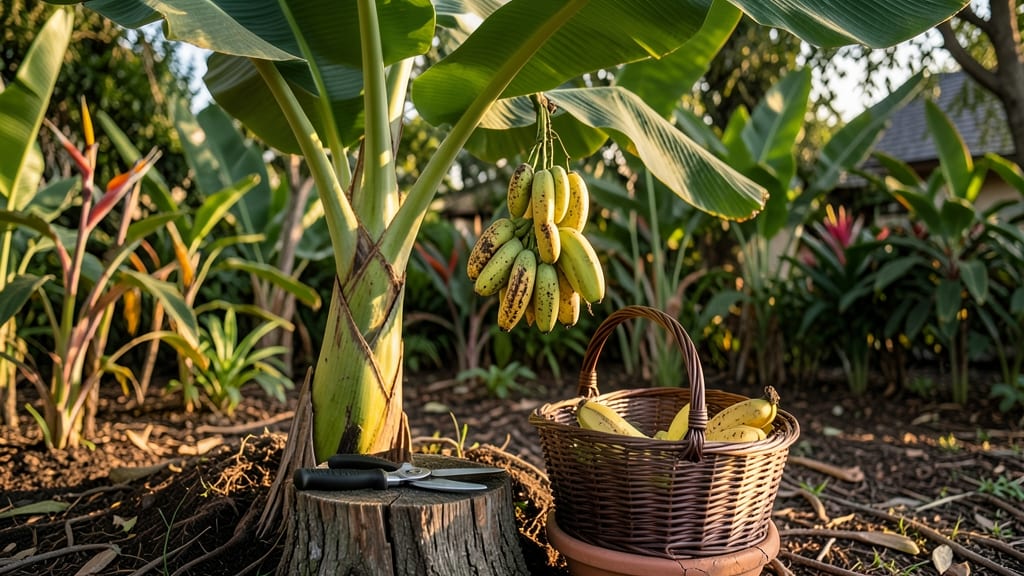
Your banana tree fruit harvest could double—if you prune like a pro. 🌱 The secret to year-round fruiting isn’t just warm weather; it’s strategic pruning that keeps your plant focused on producing those sweet, heavy bunches.
I’ve learned the hard way that cutting at the wrong time or in the wrong way can leave you with just a handful of small bananas instead of the towering clusters you dream of.
Start with the right tools: sharp pruners and a clean workspace. You’ll need to remove old, unproductive stems while preserving the plant’s energy for new growth. Most banana trees respond best to pruning right after harvest, when the plant naturally shifts its focus.
For dessert varieties like Cavendish, aim for 3-4 mature stems—any more and the plant spreads itself too thin. Cooking bananas like Red Dacca can handle slightly more stems since they’re hardier.
What you’ll end up with is a banana tree that produces two to three harvests per year instead of one. The fruit will be larger, the stems stronger, and your plant will look like it’s thriving—not just surviving.
The key is patience: after each pruning, give the plant 4-6 weeks to recover before expecting another flush of fruit. That’s when you’ll see those signature banana blossoms unfurling, signaling another bounty on the way.
This method works for both indoor pots and outdoor tropical climates—just adjust watering to match your region. If you’ve ever wondered why your banana tree just sits there looking pretty but never fruits, this is the game-changer you’ve been missing.
Let’s get those pruners out and turn that plant into a fruit factory.
📚 In This Guide
- What you need
- Instructions
- Tips and common mistakes
- Wrapping up and next steps
What you need
- ● Pruning shears – Sharp, bypass-style (not anvil) for clean cuts (1 pair).
- ● Hedge shears or loppers – For thicker stems (1–2, 6–8" blades).
- ● Gloves – Heavy-duty, cut-resistant (1 pair) to protect from jagged edges.
- ● Disinfectant (70% isopropyl alcohol or bleach solution) – To sterilize tools between cuts (1 small bottle).
- ○ Pruning saw (optional) – For very thick pseudostems (1, 10–12" blade).
- ● Trash bags or compost bin – For pruned debris (2–3 large bags or access to compost).
- ● Rake or broom – To clear fallen leaves/sap (1).
- ● Safety glasses – Recommended if working near eyes (1 pair).
- ● A healthy banana tree (showing signs of fruit production or overgrowth).
- ● Knowledge of your climate – Banana trees thrive in USDA Zones 10–11; prune in late winter/early spring (or post-harvest in colder regions).
- ● Patience! – Pruning banana trees takes time and gentle hands to avoid shocking the plant. 💡
Step-by-Step pruning guide for year-round banana fruit production
Here’s how to keep your banana tree thriving—and producing fruit—throughout the year.
🌿 Step 1: Identify and Remove Dead or Diseased Psuedostems
Start by examining your banana tree’s pseudostems—those thick, layered trunks. Look for blackened, mushy, or hollow sections, which signal rot or disease. These are your first targets. Use sterilized pruners (cleaned with rubbing alcohol) to cut through the pseudostem at the base of the affected area. The goal is to prevent the issue from spreading to healthy tissue.
I like to prune in the early morning when the plant is hydrated. If you notice yellowing leaves or a foul smell, that’s your cue to act fast. Once you’ve removed the damaged pseudostem, discard it in the trash—not your compost—since diseased material can contaminate other plants.
✂️ Step 2: Prune Suckers for Stronger Fruit Production
Banana trees produce suckers—those smaller shoots that grow from the base of the main stem. You’ll want to keep only 1-2 of the strongest, healthiest suckers per tree. Use your pruners to snip off the rest at the base, making a clean cut just above the soil line. This redirects the plant’s energy toward fruit production instead of growing extra stems.
Here’s the thing—don’t rush this step. Wait until the main pseudostem has already produced fruit and is starting to yellow. That’s when the suckers are ready to take over. If you prune too early, you might stunt the tree’s growth. Watch for new shoots that are at least 6 inches tall before deciding which to keep.
☀️ Step 3: Trim Excess Leaves for Better Airflow and Sunlight
Banana trees love light, and crowded leaves can trap moisture, leading to fungal issues. Focus on inner leaves that are yellowing or overlapping. Use your pruners to cut these back to the pseudostem, leaving only the outermost healthy leaves. This ensures sunlight reaches the center of the plant, where fruit develops.
I usually trim 10-15% of the foliage at a time—never more than that. You’ll know you’ve done enough when you can see light filtering through the center of the plant. Avoid cutting into the heart (the tight cluster of leaves at the top), as this can damage the growing point. If you see brown, crispy edges on leaves, that’s a sign of over-trimming—back off and let the plant recover.
🌱 Step 4: Encourage New Growth with Post-Pruning Care
After pruning, give your banana tree a deep watering to help it recover. Focus on the root zone, soaking the soil until water runs out the drainage holes. Follow up with a balanced fertilizer (like 10-10-10) to support new growth. I like to apply this in the early afternoon when the plant can absorb nutrients efficiently.
Keep an eye on the new suckers that emerge. These will eventually replace the old pseudostem. If you notice any pale or wilted leaves after pruning, that’s normal—your tree is adjusting. But if the leaves stay limp for more than a week, it might need more water or shade. Move the tree to a slightly shaded spot for a few days if needed.
Tips & tricks for perfect banana tree fruit production
Keeping your banana tree productive year-round takes a few key strategies that most gardeners miss.
Timing is Everything: The early morning timing in Step 1 isn't just about convenience—banana trees are most hydrated then, which makes pruning cleaner and reduces stress on the plant. If you must prune later in the day, wait until at least 2 hours before sunset to give the tree time to recover before nightfall. Watch for dew on the leaves as your cue that morning is the ideal time.
Sucker Selection Strategy: When choosing which suckers to keep in Step 2, look beyond just size—healthy suckers should have vibrant green leaves and firm stems. I've found that the sucker closest to the main stem often produces the strongest fruit, but always keep at least one backup in case the primary one fails. The 6-inch height guideline is a good rule, but I've successfully kept slightly smaller suckers when they show strong leaf growth.
Leaf Trimming Visual Cues: The 10-15% foliage guideline in Step 3 can be tricky to visualize. Think of it this way: if you can see sunlight filtering through the center of the plant when you stand 3 feet away, you've trimmed enough. I keep a small mirror handy to check the center—if you can see your reflection in the leaves, you've gone too far. The outer leaves should still form a protective canopy around the fruit.
Post-Pruning Recovery: That deep watering in Step 4 isn't just about hydration—it helps wash away any fungal spores that might have been disturbed during pruning. I've had the best results using a hose with a gentle spray nozzle to avoid compacting the soil. The early afternoon fertilizer timing works because the tree can absorb nutrients before evening temperatures drop, giving it a strong boost for recovery.
Pro Tips for Banana Tree Fruit
- Keeping your banana tree productive year-round takes a few key strategies that most gardeners miss.
- Timing is Everything: The early morning timing in Step 1 isn't just about convenience—banana trees are most hydrated then, which makes pruning cleaner and reduces stress on the plant.
- Sucker Selection Strategy: When choosing which suckers to keep in Step 2, look beyond just size—healthy suckers should have vibrant green leaves and firm stems.
Frequently asked questions
Got questions about maximizing your banana tree fruit harvest?
You’re not alone! Whether you're a first-time grower or a seasoned gardener, these answers will help you troubleshoot, time your pruning, and get the most out of your banana tree.
How often should I prune my banana tree for fruit production?
Prune your banana tree once per year during its dormant season (late fall or early winter in most climates). This encourages new suckers (offshoots) and ensures energy focuses on fruit production. Avoid pruning during active growth or flowering—this can stress the plant and reduce yields.
Why aren’t my banana trees producing fruit even after pruning?
Banana trees need warmth, sunlight, and proper nutrients to fruit. Check these first:
- Light: Ensure 6+ hours of direct sun daily.
- Water: Keep soil consistently moist but well-drained.
- Fertilizer: Use a balanced, potassium-rich fertilizer (like 10-10-10) during flowering.
- Age: Trees under 18 months may not fruit yet—be patient!
When is the best time to harvest banana tree fruit?
Harvest bananas when the fruits are still slightly green but firm—this ensures peak ripening post-harvest. For indoor ripening, pick when the hand (cluster) turns mostly yellow with a few brown spots. Avoid harvesting overripe fruit, as it won’t ripen further and may spoil quickly.
Can I prune a banana tree too much? What are the signs?
Yes! Over-pruning removes too much foliage, starving the tree of energy. Signs include:
- Yellowing leaves (nutrient deficiency).
- Stunted growth or no new suckers.
- Poor fruit development (small, misshapen bananas).
Are there banana tree varieties better for year-round fruit production?
For heavy, consistent harvests, try these varieties:
Variety
Climate Suitability
Fruiting Notes
Dwarf Cavendish
Tropical/subtropical
Fruits 2–3 times/year; cold-sensitive.
Red Dacca
Warm climates (USDA Zones 10–11)
Large, red bananas; needs heat to thrive.
Lady Finger (Pisang Awak)
Tropical
Small, sweet bananas; prolific producer.
Choose based on your local frost risk and growing season length!
Wrapping up and next steps
Pruning your banana tree isn’t just about keeping it tidy—it’s the secret to unlocking year-round harvests! 🌱 By mastering the right techniques, tools, and timing, you’ll encourage stronger growth, bigger fruit, and a healthier plant. Whether you’re a beginner or a seasoned gardener, these steps make heavy harvests achievable.
Ready to transform your banana tree? Start small—pick one technique to practice this season, then build from there. Before you know it, you’ll be enjoying bountiful, homegrown bananas all year long. Happy pruning!