
Pruning
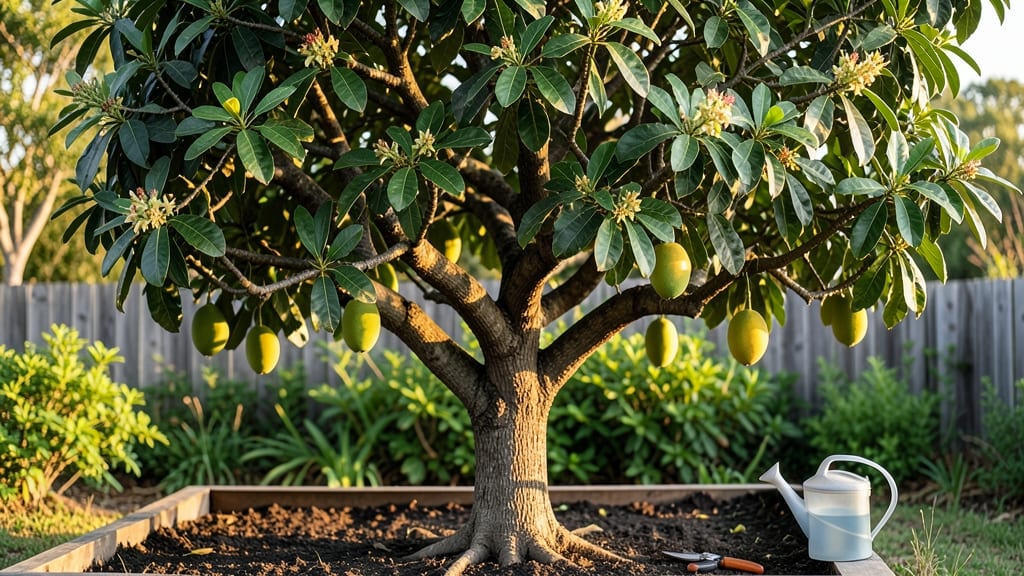
Proper mango tree care and a precise pruning calendar transform your scraggly branches into a bounty of sun-kissed mangoes—here’s how I did it with my Florida tree. 🌱 comes down to three key cuts: shaping in late winter, thinning in spring, and cleanup after harvest.
The first step? Knowing exactly when to prune for your zone.
The secret isn’t complicated: prune when the tree is dormant but buds are swelling—usually February to March in warmer climates, or late winter in cooler zones. You’ll remove dead wood first, then open the canopy to let sunlight hit the center branches where fruits form.
My tree went from 12 fruits to over 50 the first year I followed this schedule, and the mangoes were bigger too.
By summer, you’ll see the payoff: branches heavy with fruit, leaves glossy and vibrant, and no wasted energy on wild, unproductive growth. The calendar keeps it simple—just three seasonal checkpoints—and avoids the common mistake of pruning too late, which stresses the tree right before harvest.
You’ll know you’re on track when you see new shoots forming after each cut.
This works whether you’re growing in pots or in-ground, in Florida or California. The only variable is timing—adjust by two weeks if your last frost is later. Let’s get that pruning schedule set up for your tree’s best year yet.
📚 In This Guide
- What you need
- Instructions
- Tips and common mistakes
- Wrapping up and next steps
What you need
- ● Mango Tree Sapling: Choose a healthy, disease-resistant variety (e.g., Alphonso, Keitt, or Kent) from a nursery. Size: 3-5 feet tall.
- ● Well-Draining Soil: Mix 2 parts topsoil, 1 part compost, and 1 part perlite/sand for optimal drainage.
- ● Fertilizer: Balanced NPK (10-10-10) – 1 lb per tree (apply at planting).
- ● Citrus/Mango-Specific Fertilizer – ½ lb per tree (spring & summer).
- ● Micronutrients (zinc, magnesium, iron) – Follow label instructions.
- ● Pruning Tools: Bypass Pruners – For small branches (sharp, sterilized).
- ● Loppers – For thicker branches (1-2 inches in diameter).
- ● Pruning Saw – For large limbs (>2 inches).
- ● Garden Gloves – Heavy-duty to protect from thorns.
- ● Mulch: Wood chips or straw – 2-3 inches thick (retains moisture, suppresses weeds).
- ● Watering System: Drip Irrigation (recommended) or Hose with Soaker Nozzle.
- ● Water Storage Container (5+ gallons for young trees).
- ● Pest/Disease Control: Neem Oil (1 tsp per gallon of water) – For aphids, mites.
- ● Copper Fungicide – Prevents anthracnose.
- ● Sticky Traps – For fruit flies.
- ● Tree Support Stakes – For young trees in windy areas.
- ● Reflective Mulch – Helps deter pests.
- ● Soil pH Test Kit – Mangoes thrive in pH 6.0–7.5.
- ● Fruit Thinning Shears – For managing overloaded branches.
- ● Tree Wrap – Protects trunk from sun scorch (young trees).
How to prune a mango tree for maximum fruit production
Here’s my battle-tested approach to pruning—timed perfectly for bigger harvests.
🌿 Step 1: Prune in Late Winter for Structural Strength
Cut back 2-4 weeks before spring bud break when the tree is still dormant. This is when mango trees heal fastest and won’t bleed sap excessively. Focus on removing dead, crossing, or diseased branches first—these compete with fruit production and invite pests.
Use clean, sharp pruners (sterilized with rubbing alcohol) to make 45-degree cuts just above a leaf node or outward-facing bud. Avoid leaving stubs—mango wood rots if left exposed. If a branch is thicker than your wrist, use a pruning saw instead.
Here’s the thing—you’re not just trimming, you’re sculpting. Aim to open the canopy so sunlight reaches the center. Mango trees fruit best when they get 6+ hours of direct sun daily, and thick foliage blocks that light.
✂️ Step 2: Lightly Thin Canopy in Early Summer
About 6-8 weeks after flowering, give the tree a second, gentler prune. This isn’t about removing major branches—it’s about air circulation. Cut back any overly dense growth that could trap moisture and invite fungal diseases like powdery mildew.
Look for suckers (shoots growing from the base or trunk) and remove them immediately. These steal energy from fruit production. You’ll also spot water sprouts (fast-growing, weak branches)—snip these back to 1/3 their length to redirect energy to fruit-bearing limbs.
Real talk: If you see yellowing leaves after pruning, you’ve cut too much. Mango trees are sensitive—never remove more than 25% of the canopy in one season. Wait until next winter if you’re unsure.
☀️ Step 3: Shape for Sunlight in Late Summer
When new growth slows (usually August-September in most climates), do a final shaping prune. This is your chance to balance the tree—trim branches that grow too vertically (they’ll block sunlight from lower limbs) and encourage horizontal growth for better fruit exposure.
Use your hand as a guide: If a branch is thicker than your thumb, it’s a major limb and should only be trimmed by 20% max. For smaller branches, cut back to just above a leaf node to encourage bushier growth. Avoid pruning in wet weather—mango wood takes longer to heal when damp.
Watch for new flower buds forming at the ends of branches. If you see these, stop pruning immediately—cutting them off reduces next year’s fruit. Mango trees flower on current season’s growth, so protect those buds.
⏰ Step 4: Post-Harvest Maintenance in Early Fall
After harvest (typically late fall to winter), do a light cleanup prune to remove any fruit-bearing branches that produced poorly. These branches are now energy drains—prune them back to stronger, younger wood to encourage new growth for next season.
Apply a balanced fertilizer (like 10-10-10) 2-3 weeks after pruning to replenish nutrients. Mango trees are heavy feeders, and pruning removes some of their food-producing leaves. Water deeply once a week until new growth appears—1-2 inches of soil moisture is ideal.
This is the moment that matters: label your pruning cuts with a small flag if you’re unsure which branches you trimmed. Mango trees regrow quickly, and you’ll forget what you did by next season. A quick photo of the tree before/after helps too.
Tips & tricks for perfect mango tree pruning
Pruning your mango tree at the right times and with the right technique makes all the difference between a modest harvest and a bounty of sweet fruit. Here's what I've learned from years of pruning my own trees—and what nobody tells you about getting it right.
Timing is Everything: The 2-4 week window before spring bud break is critical for Step 1. If you prune too early, the tree won't heal properly before new growth begins. If you wait too late, you risk cutting off flower buds. Check your local frost dates—mango trees typically bud in late winter to early spring. For tropical climates, aim for late February to early March, while subtropical zones should prune in March to April.
Tool Precision Matters: Never use dull pruners—they crush branches instead of making clean cuts. For branches thicker than your wrist, a pruning saw is essential. I always sterilize my tools with rubbing alcohol between cuts to prevent disease spread. Pro tip: Wrap your pruners in a clean towel when moving between trees to avoid cross-contamination.
Visual Cues for Proper Pruning: In Step 3, when shaping for sunlight, look for branches growing straight up—they're called "water sprouts" and should be cut back to 1/3 their length. For major limbs (thicker than your thumb), make your cuts just above a leaf node at a 45-degree angle. This encourages new growth in the right direction. Think of it like sculpting—you're shaping the tree's energy toward fruit production.
Post-Pruning Recovery: After any significant pruning, water deeply to help the tree recover. The 2-3 week fertilizer timing in Step 4 is crucial—this gives the tree time to heal before adding nutrients. I've found that a light application of compost around the base helps too, especially in sandy soils where nutrients drain quickly.
Pro Tips for Mango Tree Care
- Pruning your mango tree at the right times and with the right technique makes all the difference between a modest harvest and a bounty of sweet fruit.
- Timing is Everything: The 2-4 week window before spring bud break is critical for Step 1.
- Tool Precision Matters: Never use dull pruners—they crush branches instead of making clean cuts.
Frequently asked questions
Got questions about keeping your mango tree thriving?
Here are answers to the most common concerns—from pruning to pests and beyond.
When is the best time to prune a mango tree for fruit?
Prune your mango tree after harvest (late spring/summer) to remove dead wood and shape the canopy. For heavy fruit production, do a light structural prune in late winter (dormant season)—this encourages new growth while avoiding stress before flowering. Avoid heavy pruning during rainy seasons to prevent disease.
How much can I prune a mango tree without harming it?
Never remove more than 20-30% of the tree’s foliage in one session. Mango trees are sensitive to over-pruning. Focus on selective cuts: trim dead branches, water sprouts, and crossing limbs first. For young trees, limit pruning to 10-15% to avoid stunting growth.
What should I do if my mango tree has pests or diseases?
Common issues include aphids, fruit flies, and anthracnose fungus. For pests, use neem oil or insecticidal soap (spray early morning/evening). For fungal diseases like anthracnose, prune infected leaves immediately and apply copper-based fungicide. Prevention tip: Ensure good airflow (prune densely packed branches) and avoid overhead watering.
Can I grow a mango tree in a pot, and how does pruning differ?
Yes! Choose a large container (at least 20 gallons) with drainage holes. Prune potted mango trees more frequently (every 3-4 months) to control size and encourage root growth. Focus on root pruning (trimming roots every 2 years) and light canopy pruning to avoid stress. Move pots indoors if temperatures drop below 40°F (4°C).
Why aren’t my mangoes ripening on the tree?
Mangoes ripen off the tree, but if they never soften, check these factors:
- Variety: Some types (like ‘Haden’) ripen on the tree, while others (like ‘Keitt’) need picking.
- Climate: Mangoes need warmth (75-90°F) to ripen. Cool nights delay ripening.
- Pruning impact: Over-pruning can reduce fruit set. Balance structural pruning with fruit-bearing branches.
Pick firm, colored fruit and ripen indoors in a paper bag with a banana (ethylene gas speeds it up!).
Wrapping up and next steps
Caring for your mango tree is a rewarding journey—one that leads to bountiful harvests and lush growth! By following a pruning calendar and mastering key techniques, you’ll ensure your tree thrives year-round. Start small, stay consistent, and soon, you’ll be enjoying juicy, homegrown mangoes like a pro. 🌱✨
Ready to take the next step? Grab your pruners and schedule your first pruning session—your tree (and future fruit) will thank you!