
Pruning
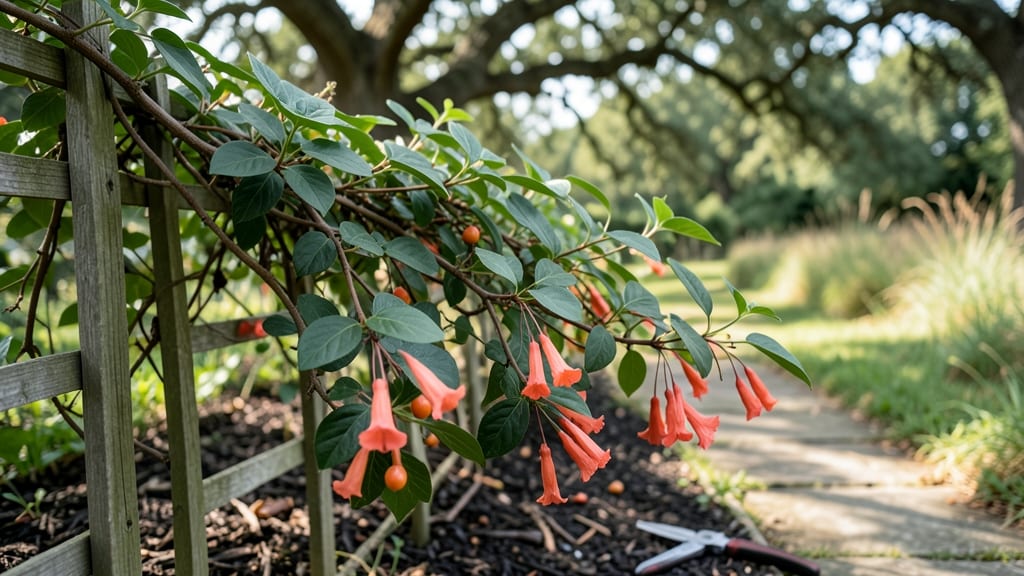
That intoxicating honeysuckle scent isn’t just summer—it can be yours all year with the right wild honeysuckle tree. I’ve turned my backyard into a fragrant haven by mastering pruning cuts that keep the blooms coming, even in winter’s chill.
The secret lies in understanding which branches to encourage and which to trim away, transforming a single plant into a seasonal perfume factory.
Wild honeysuckle thrives with minimal fuss: partial sun, well-drained soil, and a little patience. My Lonicera sempervirens climbs a trellis while Lonicera japonica sprawls along fences, both bursting with tubular flowers that hummingbirds adore.
The key is timing—prune after flowering to preserve next year’s blooms, and you’ll enjoy that sweet, heady fragrance from spring through frost.
You’ll end up with a lush, fragrant focal point that doubles as a pollinator magnet. The glossy leaves stay green year-round, and with strategic cuts, you’ll coax fresh blooms even in late fall.
Imagine stepping into your garden and being wrapped in that signature scent—it’s the kind of transformation that makes neighbors ask, “What’s that amazing smell?”
Works for climbers, shrubs, or small trees—just match the variety to your space. Whether you’re dealing with native species or cautious about invasives, this approach keeps your honeysuckle happy and your garden irresistibly fragrant. Let’s get those pruners ready!
📚 In This Guide
- What you need
- Instructions
- Tips and common mistakes
- Wrapping up and next steps
What you need
- ● Pruning shears: Bypass pruners (for clean cuts) or anvil pruners (for thicker branches). Choose sharp, stainless-steel blades (5–8 inches long) to avoid crushing stems.
- ● Loppers: Bypass-style (18–24 inches) for branches ½–2 inches thick.
- ● Pruning saw: Curved-tooth (for branches 2+ inches thick). A foldable design saves space!
- ● Gloves: Heavy-duty gardening gloves (nitrile-coated for grip and protection from thorns).
- ● Disinfectant: 70% isopropyl alcohol or rubbing alcohol (in a spray bottle) to sterilize tools between cuts.
- ○ Pruning sealant: Optional but helpful—use tree wound paint (like Tanglefoot Tree Wound Pruning Sealer) for cuts larger than ½ inch.
- ● Bucket or bag: A 5-gallon bucket or heavy-duty trash bag for collecting clippings.
- ● Weather check: Prune on a dry, cloudy day (avoid extreme heat or frost).
- ● Safety glasses: Protect your eyes from debris—wrap-around style recommended.
- ● Long sleeves/pants: Lightweight, breathable fabric to shield from thorns and sun.
- ● Ladder or stool: Only if needed—ensure it’s stable and rated for your weight.
- ○ Map of the tree: Sketch or photo of the honeysuckle’s structure to plan cuts (optional but highly recommended for beginners!).
How to prune a wild honeysuckle tree for year-round blooms
Pruning this hardy shrub isn't just about shaping—it's about unlocking its natural fragrance cycle.
Time Your Cuts for Maximum Flowering
Wild honeysuckle blooms on both old and new wood, so timing matters less than with some shrubs, but precision still pays off. The best window is late winter to early spring—right before buds swell but before leaves emerge. This February to March timing ensures you remove dead growth while stimulating fresh spring blooms.
If you miss that window, don't panic. A second light pruning in late spring after flowering encourages a second flush of fragrant blooms. Just avoid heavy cuts after August—new growth won't harden off before winter. Look for dormant buds along stems as your cue: when you see them plumping up, it's time to prune.
Remove Dead and Crossing Branches First
Start with your pruning shears and tackle the obvious: dead, diseased, or damaged branches. These are easy to spot—they're brown, brittle, or devoid of leaves. Cut them back to the main stem at a 45-degree angle, about ¼ inch above a healthy bud facing outward. This prevents water from pooling on the cut.
Next, remove any branches that cross or rub against others. These create wounds that invite pests and disease. Thin out crowded areas to improve airflow—wild honeysuckle hates humidity trapped against its stems. Aim to open up the center of the shrub so light can reach all branches. You'll know you're doing well when you can see sunlight filtering through to the inner stems.
Shape for Airflow and Fragrance Distribution
Wild honeysuckle responds best to open, airy pruning. Step back and visualize the shrub as a vase shape—wider at the base, narrowing toward the top. Cut back the longest branches by one-third to encourage bushier growth. For each cut, make it just above an outward-facing bud to direct new growth away from the center.
Here's the thing—wild honeysuckle's fragrance comes from its flowers, and more flowers mean more scent. By pruning to maintain an open structure, you're not just shaping the plant; you're creating an environment where every branch can produce blooms. Avoid shearing—this shrub rewards precision over blunt cuts. You'll see new growth emerge within 4-6 weeks, and those fresh shoots will be your next round of fragrant blooms.
Maintain Through the Growing Season
After your main pruning, wild honeysuckle needs minimal maintenance. Remove spent flowers throughout the season to encourage more blooming, but don't overdo it—let some seed pods form if you want to attract birds. In late summer, give the shrub a light trim to tidy up any unruly growth, but avoid heavy cuts that could reduce winter hardiness.
Water deeply after pruning to help the plant recover, but wild honeysuckle is drought-tolerant once established. Mulch around the base with 2-3 inches of organic mulch to retain moisture and regulate soil temperature. You'll know your pruning was successful when the shrub bursts into bloom within 6-8 weeks of your initial cuts, filling the air with its signature fragrance.
Tips & tricks for perfect wild honeysuckle pruning
Real talk: pruning wild honeysuckle isn't rocket science, but these small details make all the difference between a fragrant garden and one that just looks pretty. The key is working with the plant's natural growth patterns rather than against them.
Timing is Everything: Those February-March cuts are your golden window because you're removing winter-killed growth while the plant is still dormant but ready to burst into spring. I've learned the hard way that cutting too early (when buds are still tight) or too late (when leaves appear) reduces flowering potential. Look for those plump, swollen buds—when they're visible but haven't opened yet, that's your cue. For the second pruning in late spring, wait until you see at least 50% of flowers have faded before trimming.
Precision Over Speed: The 45-degree angle cut about ¼ inch above an outward-facing bud isn't just a suggestion—it's the difference between healthy regrowth and weak, inward-growing branches. I used to make quick cuts, but now I take my time to make clean cuts that heal properly. Pro tip: Sterilize your pruning shears between cuts with rubbing alcohol to prevent spreading disease from any infected branches you might encounter.
Visual Cues Matter More Than Rules: Instructions mention sunlight filtering through as your success indicator, but here's what nobody tells you—you should also see fresh green growth emerging from the center within 4-6 weeks. If you don't see new shoots by then, you might have pruned too aggressively. The vase shape isn't just aesthetic; it's about creating a structure where every branch gets equal sunlight and air circulation, which directly translates to more flowers and more fragrance.
Seasonal Maintenance Shortcuts: That late summer light trim doesn't need to be perfect—focus on removing only the most unruly growth that's clearly out of place. I've found that simply removing any branches longer than 12 inches that are growing straight up (they'll never flower well) gives the biggest fragrance boost with minimal effort. And don't forget: the 2-3 inches of mulch acts as both moisture regulator and winter insulator, so refresh it annually rather than piling on thick layers each time.
Pro Tips for Wild Honeysuckle Tree
- Real talk: pruning wild honeysuckle isn't rocket science, but these small details make all the difference between a fragrant garden and one that just looks pretty.
- Timing is Everything: Those February-March cuts are your golden window because you're removing winter-killed growth while the plant is still dormant but ready to burst into spring.
- Precision Over Speed: The 45-degree angle cut about ¼ inch above an outward-facing bud isn't just a suggestion—it's the difference between healthy regrowth and weak, inward-growing branches.
Frequently asked questions
Got questions about keeping your wild honeysuckle tree fragrant and healthy? Here are answers to some of the most common ones—so you can prune with confidence!
When is the best time to prune wild honeysuckle for fragrance?
The ideal time is late winter or early spring (just before new growth starts). This ensures you remove dead wood while leaving healthy buds intact. Avoid pruning in fall—it can stimulate tender new growth that won’t survive winter frost. For a light trim to encourage blooms, you can also prune right after flowering in late spring.
How do I know if I’m pruning too much or too little?
Wild honeysuckle is forgiving, but never remove more than 1/3 of the plant in one season. Too much pruning can stress the tree and reduce flowering. Look for dead, diseased, or crossing branches—these are your top priorities. If you’re unsure, start with a light trim and observe how the tree responds before committing to heavier cuts.
Can I prune wild honeysuckle in summer? What are the risks?
You can prune in summer, but it’s riskier. Heavy pruning during hot months can stimulate weak, leggy growth that’s vulnerable to pests or drought. If you must prune, do it early morning or late evening to reduce stress on the plant. Stick to light shaping or deadwood removal—avoid heavy cuts unless absolutely necessary.
Will pruning my wild honeysuckle make it grow faster?
Not necessarily! Pruning won’t speed up growth, but it can encourage denser, healthier blooms by improving airflow and sunlight penetration. Focus on removing deadwood and shaping rather than aggressive cuts. Over-pruning can actually slow growth by stressing the tree. Think of it as a maintenance task, not a growth hack.
What should I do if my wild honeysuckle stops flowering after pruning?
If blooms disappear, you may have pruned too late in the season (after buds formed) or removed too many flowering branches. Solution: Next year, prune just after flowering (late spring) and avoid heavy cuts in fall/winter. If the issue persists, check for pests, disease, or nutrient deficiencies—wild honeysuckle thrives with well-draining soil and occasional fertilizer in early spring.
| Quick Troubleshooting Guide |
|---|
|
Problem: No fragrance Fix: Prune to open the canopy—more sunlight = more blooms! |
|
Problem: Leggy growth Fix: Cut back overlong branches by 1/3 to encourage bushier growth. |
|
Problem: Yellowing leaves Fix: Check for overwatering or poor drainage; prune affected branches. |
Wrapping up and next steps
Discovering the beauty of a wild honeysuckle tree is a rewarding journey—one that thrives on patience, care, and a little green-thumb know-how! 🌿 With the right pruning techniques, you can enjoy its intoxicating fragrance and vibrant blooms year-round, transforming your garden into a lush, aromatic haven.
Whether you're a seasoned gardener or just starting out, these tips will help you master the art of nurturing this stunning plant.
Ready to take the next step? Start by observing your tree this season—note its growth patterns, blooming cycles, and any signs of stress. Then, grab your pruners and essential tools (you already know what you need from our guide!) and give your honeysuckle the TLC it deserves.
Happy pruning—your garden (and nose!) will thank you! 🌸✂️