
Pruning
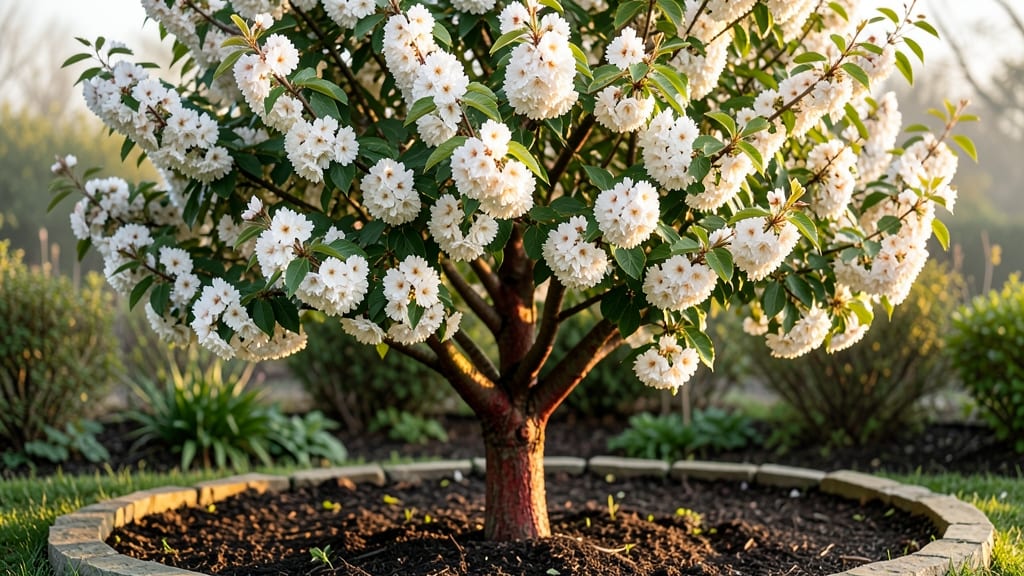
The Whitegold cherry tree isn’t just another ornamental—it’s a year-round showstopper with snow-white blooms that last from late winter through spring, followed by glossy foliage that turns golden in fall. 🌸 I planted mine in full sun last March, and by June, it was already covered in blossoms, drawing neighbors to stop and admire it.
The key to keeping it this stunning? Three strategic trims that shape growth, encourage blooms, and prevent disease.
This tree thrives in well-draining soil with a pH between 6.0 and 7.0, and it’s hardy in zones 5 through 8—meaning it’s perfect for gardeners in the Midwest, Northeast, or Pacific Northwest.
Plant it where it gets at least 6 hours of sunlight daily, and you’ll see those iconic white flowers appear earlier and last longer than most cherry varieties. Just avoid heavy clay soil, which can suffocate roots and lead to fungal issues.
With the right care, your Whitegold will reward you with three seasons of interest: fragrant blooms in winter, lush green foliage in summer, and fiery fall colors.
The pruning schedule I’ll share keeps it compact, healthy, and free of dead branches—so you’re not left with a leggy mess by summer. Plus, the tree’s small size (20–25 feet tall) makes it ideal for smaller yards or as a striking focal point.
Ready to transform your landscape into a cherry blossom paradise? The secret lies in timing—spring, summer, and late winter cuts—and I’ll walk you through each step, including how to spot pests early and keep your tree thriving for decades. Let’s get started!
📚 In This Guide
- What you need
- Instructions
- Tips and common mistakes
- Wrapping up and next steps
What you need
- ● Pruning shears: Bypass-style, sharp, and sterilized (e.g., Felco F-2 or equivalent). 2–3 pairs recommended for larger branches.
- ● Loppers: For branches ½"–2" thick (e.g., Corona or Fiskars). 1 pair with a ratcheting mechanism for leverage.
- ● Pruning saw: For thick branches (2"+) (e.g., Felco F-1P). 1 saw with a fine-tooth blade.
- ● Gloves: Heavy-duty, cut-resistant (e.g., Mechanix or pruning-specific). 1–2 pairs (one for wet/dry conditions).
- ● Disinfectant: 70% isopropyl alcohol or 10% bleach solution (1 bottle or spray). Sanitize tools between cuts!
- ○ Pruning sealant: Optional but helpful (e.g., Tanglefoot Tree Wound Pruning Seal). Small jar for quick touch-ups.
- ● Ladder or step stool: Sturdy, extendable (reach 10–12 ft for mature trees). 1 unit with non-slip feet.
- ● Tarp or drop cloth: To collect debris (5’x5’ or larger). 1–2 sheets for easy cleanup.
- ● Extension pole pruners: For high branches without a ladder (e.g., 10–15 ft reach).
- ● Grafting tape: For large wounds (e.g., Tree Tape).
- ● Work gloves with grip: For extra comfort on rough bark.
- ● Camera or sketchbook: To map pruning cuts before trimming.
- ● Safety glasses: Protect eyes from debris.
Step-by-step guide for pruning your Whitegold cherry tree
Here's how to keep your tree blooming beautifully year-round with just three focused cuts.
✂️ Step 1: First Trim After Spring Blooms
Wait until 2-3 weeks after flowering when new growth appears—this ensures you don't remove next year's blossoms. Grab your clean, sharp pruning shears and focus on removing any crossing branches or those growing inward. These compete for sunlight and weaken the tree's structure.
Look for branches that rub against each other—they'll eventually tear open wounds that invite disease. Cut these back to the nearest outward-facing bud. I always make my cuts at a 45-degree angle, about ¼ inch above the bud, to prevent water from pooling on the wound.
Remove any dead, diseased, or broken branches completely. You'll know a branch is dead if it's dry, brittle, and snaps easily when bent. These should come out at the base. Limit yourself to removing no more than 25% of the tree's canopy in this first trim—this keeps the tree healthy without shocking it.
✂️ Step 2: Light Summer Pruning for Airflow
About 6-8 weeks after the first trim, do a quick check for any branches that are growing too densely. The goal here is to improve airflow through the tree's center. Thin out branches that are growing straight up—these create a "bottlebrush" effect that blocks light and air from reaching the inner branches.
Focus on the outer third of the tree where new growth is most active. Cut back any suckers (those low-growing shoots at the base) and water sprouts (vertical shoots growing from the trunk or branches). These compete with the main structure for nutrients. Make these cuts just above a leaf bud or side branch.
Here's the thing—don't overdo it. Just remove what's absolutely necessary. The Whitegold cherry tree is naturally vigorous, and too much summer pruning can stress it. If you're unsure, just step back and look at the tree from all sides. If you can see light and air moving through the center, you're doing great.
✂️ Step 3: Late-Winter Structural Trim
Schedule this 4-6 weeks before your last frost date, when the tree is still dormant but the ground has thawed. This is when you'll shape the tree for next year's blooms. Start by removing any dead, diseased, or crossing branches from the previous season. You'll know these immediately—they'll be starkly different from the healthy branches.
Next, look for branches that are growing too close together. Remove the smaller or weaker branch, cutting back to a strong outward-facing bud. This opens up the tree and encourages more flowers. I like to step back frequently to visualize the tree's overall shape—aim for an open, vase-like form that lets light reach all branches.
Finally, trim back any branches that grew too long last season. Cut them back to a strong lateral branch or bud. This encourages a bushier, more compact growth habit and more abundant blooms. After this trim, give the tree a deep watering to help it recover before the growing season kicks in.
Tips & tricks for perfect Whitegold cherry tree pruning
Here's what I've learned after years of keeping my Whitegold cherry tree blooming like crazy—these tricks make all the difference.
Timing is Everything: The 2-3 week window after flowering is your magic time. If you prune too early, you risk cutting off next year's blossoms. I mark my calendar right after the last petals fall—this ensures I never miss the perfect moment. For summer pruning, the 6-8 week rule gives new growth time to establish before you touch it again.
Cutting Technique Matters: That 45-degree angle isn't just for looks—it prevents water from pooling on the wound. I use a clean, sharp pair of pruning shears (I keep a dedicated pair just for my cherry tree) and always cut just above an outward-facing bud. This simple technique makes all the difference in how quickly the tree heals and grows back stronger.
Visualize Your Tree: Before you make any cuts, step back and look at your tree from all sides. In Step 3, when shaping for next year's blooms, I imagine an open vase shape that lets light reach every branch. This isn't just about aesthetics—it's about creating an environment where every bud gets the sunlight it needs to bloom beautifully.
Pro Tips for Whitegold Cherry Tree
- Here's what I've learned after years of keeping my Whitegold cherry tree blooming like crazy—these tricks make all the difference.
- Timing is Everything: The 2-3 week window after flowering is your magic time.
- Cutting Technique Matters: That 45-degree angle isn't just for looks—it prevents water from pooling on the wound.
Frequently asked questions
When is the best time to prune a Whitegold cherry tree for year-round blooms?
The Whitegold cherry tree thrives with three strategic trims:
- Late winter (before buds swell) – Removes dead/diseased wood and shapes the tree.
- Early summer (after first flush of blooms) – Encourages dense foliage and prepares for fall blooms.
- Late summer/early fall (after second bloom) – Light pruning to maintain shape and promote winter blooms.
How much can I trim without harming the tree?
For Whitegold cherries, never remove more than 25% of the canopy in one session. Over-pruning reduces blooms and weakens the tree. Focus on:
- Dead, crossing, or inward-growing branches.
- Thinning out crowded areas for airflow.
- Shaping for balance (avoid "lion’s tail" effect).
Will pruning affect the tree’s cold hardiness or winter blooms?
Pruning correctly enhances cold hardiness! The Whitegold is already hardy to USDA Zone 5, but:
- Avoid heavy pruning in late fall—it can expose the tree to winter burn.
- Prune after the last hard frost in spring to prevent frost damage to fresh cuts.
- Winter blooms (if any) are a bonus—focus on spring/summer trims for the best display.
Are there alternatives to the Whitegold for year-round color?
If you love blooms but want variety, consider these low-maintenance alternatives:
- Kwanzan Cherry (Prunus serrulata ‘Kwanzan’) – Profuse pink blooms spring/fall, Zone 5-8.
- Bradford Pear (Pyrus calleryana ‘Bradford’) – White spring blooms, Zone 5-9 (but invasive roots!).
- Dwarf Flowering Almond (Prunus glandulosa ‘Sinocover’) – Compact, pink/white blooms, Zone 5-8.
- Fruitless Olive (Olea europaea ‘Fruitless’) – Silver foliage + tiny white blooms, Zone 8-11.
Why did my Whitegold cherry tree stop blooming after pruning?
Common culprits:
- Over-pruning – Removed too many bloom-producing branches.
- Wrong timing – Pruned after the last bloom flush (cut blooms = no flowers!).
- Nutrient deficiency – Lack of phosphorus/potassium (use a balanced fertilizer in early spring).
- Stress – Overwatering, poor drainage, or pest damage.
Wrapping up and next steps
Transforming your Whitegold cherry tree into a stunning year-round beauty is totally within reach—thanks to those three precision trims! With the right tools, timing, and care, you’ll unlock a cascade of blooms that’ll make your garden the talk of the neighborhood. 🌸
Ready to take the next step? Mark your calendar for spring, summer, and winter trims, and watch your tree thrive. Start small—grab your pruners, dust off those gloves, and give your Whitegold the love it deserves. Happy pruning!