
Pruning
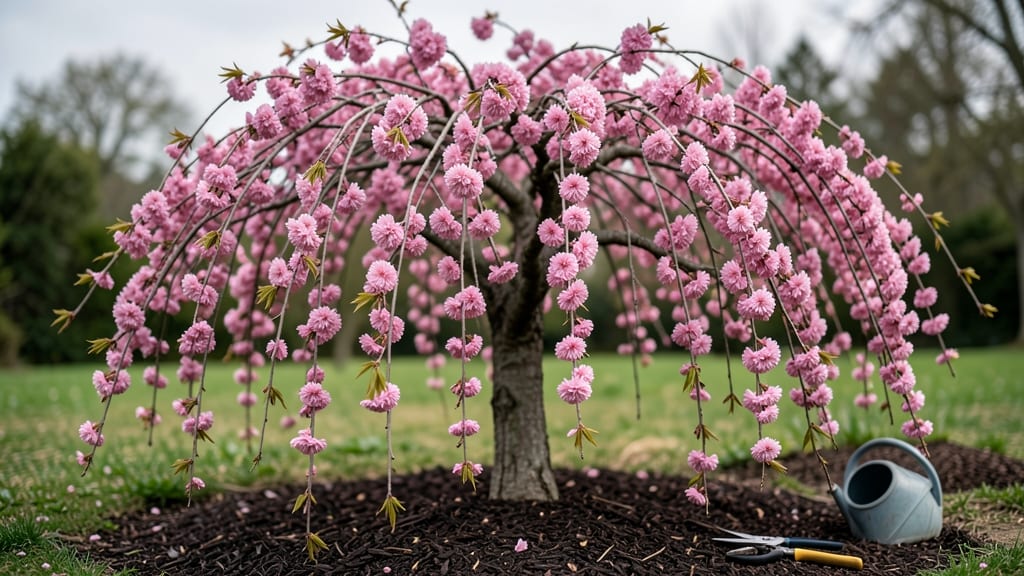
A weeping Japanese flowering cherry tree transforms any garden into a living watercolor painting. ✨ The way its branches cascade like silk ribbons, especially when covered in delicate pink or white blossoms, makes it the star of spring.
My first one arrived as a bare-root sapling, and within three years, it became the focal point of my front yard—no pruning required, just pure grace.
This tree thrives in open spaces where its 6-10 foot canopy can spill over lawns or water features. Pair it with hostas for dappled shade or boxwoods for structured contrast.
The key to keeping it stunning? Light pruning after blooming to shape its natural weeping form—never cut back into old wood, or you’ll lose next year’s flowers.
Imagine your garden in spring: soft petals drifting on the breeze, branches heavy with blossoms, and that signature cherry scent filling the air. With minimal upkeep, this tree offers year-round interest—spring blooms, summer foliage, and autumn’s fiery hues.
It’s the kind of plant that makes neighbors stop and say, "How did you get that?"
Perfect for cottage gardens, Japanese-inspired landscapes, or even urban courtyards with enough space. The secret to its beauty? Letting it grow naturally while guiding its shape with gentle pruning. Here’s how to keep it looking effortlessly elegant.
📚 In This Guide
- What you need
- Instructions
- Tips and common mistakes
- Wrapping up and next steps
What you need
- ● Pruning shears: Bypass pruners (for small branches, ¼"–½" in diameter). Choose sharp, stainless-steel blades for clean cuts. (1 pair)
- ● Loppers: For medium branches (½"–2" in diameter). Opt for ratcheting or bypass loppers for precision. (1 pair)
- ● Pruning saw: For thick branches (2"+). A curved-tooth saw prevents tearing. (1)
- ● Gloves: Heavy-duty, cut-resistant gloves (e.g., leather or synthetic mesh) to protect hands from thorns and rough bark. (1 pair)
- ● Disinfectant: 70% isopropyl alcohol or a pruning sealant (e.g., Tanglefoot Tree Wound Pruning Seal) to prevent disease. (small bottle)
- ● Extension pole: 3–6 ft telescoping pole with a pruner attachment for high branches. (1)
- ● Ladder: Sturdy, non-slip ladder (e.g., aluminum or fiberglass) rated for your tree’s height. (1)
- ● Heavy-duty trash bags: For collecting pruned branches. (2–3 bags)
- ● Rake or broom: To clear debris from the base. (1)
- ● Hand pruners: For tiny twigs (⅛"–¼"). (1 pair)
- ● Tree wound dressing: (e.g., Arborseal) for larger cuts—controversial but useful for some gardeners.
- ● Safety glasses: To shield eyes from debris. (1 pair)
- ● Knee pads: For comfort if you’re working on the ground. (1 pair)
- ● Notebook & pen: To jot down pruning notes or sketch your tree’s structure.
Instructions for pruning your weeping Japanese flowering cherry
Keep your tree's elegant shape with these simple, seasonal cuts.
✂️ Step 1: Prune Immediately After Flowering
Timing is everything with these trees. The best window is right after blooms fade—usually late April to early May in most climates. This lets the tree recover before summer heat stress. I always wait until at least 50% of flowers have dropped to avoid cutting off next year's bloom buds.
Start by removing any dead, diseased, or crossing branches first. These compete with healthy growth and create weak entry points for pests. Make clean cuts at a 45-degree angle just outside the branch collar (that swollen area where the branch meets the trunk). Never leave stubs—they invite rot and weak regrowth.
🌿 Step 2: Shape the Canopy for Graceful Weeping
Weeping cherries need open, airy growth to maintain their signature cascading form. Focus on selective thinning rather than heavy shearing. Look for branches growing straight up—these block light and disrupt the natural weeping habit. Remove one-third of the upward-growing branches to encourage the tree's natural downward growth pattern.
For side branches, aim to create even layers that fan out gracefully. I like to leave 3-5 main scaffold branches spaced evenly around the trunk. If any branch is growing too aggressively toward the center, cut it back to a side bud to redirect energy outward. The goal is light penetration all the way to the ground—this keeps the lower branches alive and flowering.
☀️ Step 3: Summer Light Pruning for Air Circulation
During June and July, do a quick check for suckers (those vigorous shoots growing from the base) and water sprouts (thin, upright shoots). These steal energy from your main branches. Simply snip them off at the base with clean pruners—no need for fancy cuts here. I do this every 4-6 weeks to keep them from becoming established.
Pay special attention to the inner canopy. If you see branches rubbing together or growing too densely, make small cuts to open up space. The rule here is less is more—you're not shaping, just maintaining airflow. Good circulation prevents fungal diseases like powdery mildew, which can ruin next year's blooms.
⏰ Step 4: Late Winter Dormant Pruning
In late winter (February-March), before buds swell but after hard frosts, do your structural pruning. This is when you can see the tree's framework clearly. Start by removing any deadwood—branches that snap easily when bent or have no green tissue inside when cut. Then look for weak crotches (where branches meet the trunk at sharp angles)—these are prone to splitting in storms.
For the main branches, cut back last year's growth by about one-third to encourage new flowering shoots. Make your cuts just above an outward-facing bud to maintain the tree's natural shape. Avoid heavy pruning—you don't want to stimulate too much new growth that won't have time to harden off before winter.
🪴 Step 5: Post-Pruning Care for Recovery
After any significant pruning, give your tree a deep watering to help it recover. The roots need to support new growth, and fresh cuts are vulnerable to drying out. I always apply a 2-3 inch layer of mulch (but keep it 6 inches away from the trunk) to retain moisture and regulate soil temperature.
Watch for new growth in 4-6 weeks—this is your signal the pruning worked. If you see yellowing leaves or wilting, you may have cut too aggressively. In that case, the tree will recover but may skip flowering that year. For the first month after pruning, avoid fertilizing—let the tree focus on healing cuts rather than producing new leaves.
Tips & tricks for pruning your weeping Japanese flowering cherry
These simple, expert-backed tips will help you maintain your tree's elegant form without stressing it out.
Timing is Everything: The late April to early May window for post-bloom pruning is critical—this gives your tree time to recover before summer heat. I've seen trees stressed beyond recovery when pruned too early. Watch for that 50% bloom drop before cutting, and avoid pruning during extreme heat or drought periods.
Tool Selection Matters: Use sharp, clean pruners for every cut—dull blades crush branches, creating wounds that invite disease. I keep a dedicated pair just for my cherry tree and sanitize them with rubbing alcohol between cuts. For thicker branches over ½ inch, switch to loppers or a pruning saw to avoid tearing the bark.
Shape with Purpose: When thinning upward-growing branches in Step 2, think of your tree like a fountain—water (or light) should flow freely through all layers. I like to visualize removing every third upward branch to create that signature weeping silhouette. For side branches, look for the 3-5 scaffold branches mentioned in the instructions and prune others to maintain even spacing.
Recovery Checklist: After pruning, monitor your tree closely for 4-6 weeks—this is when you'll see if your cuts were successful. New growth should appear vibrant and green. If you notice yellowing leaves or wilting, you may have removed too much foliage. Remember, these trees are delicate—think of pruning as sculpting, not hacking.
Pro Tips for Weeping Japanese Flowering Cherry Tree
- These simple, expert-backed tips will help you maintain your tree's elegant form without stressing it out.
- Timing is Everything: The late April to early May window for post-bloom pruning is critical—this gives your tree time to recover before summer heat.
- Tool Selection Matters: Use sharp, clean pruners for every cut—dull blades crush branches, creating wounds that invite disease.
Frequently asked questions
Got questions about keeping your weeping Japanese flowering cherry tree (Prunus serrulata 'Pendula') lush and blooming? You’re not alone! Here are some of the most common queries—plus expert answers to help you prune with confidence.
When is the best time to prune a weeping cherry tree?
The ideal window is late winter or early spring, just before buds swell but before blooming season (typically February–March in most climates). Avoid pruning in fall—it can stimulate late growth vulnerable to frost damage. Pro tip: If you must prune after blooms, do so lightly to avoid sacrificing next year’s flowers!
How much can I trim back without harming the tree?
Weeping cherries thrive on selective pruning—never remove more than 25% of the canopy in a single session. Focus on:
- Dead/diseased branches (cut to the nearest healthy bud).
- Crossing or rubbing branches (thin to improve airflow).
- Overly long branches (shorten by ⅓ to maintain shape).
Warning: Avoid "shearing" the tree—it disrupts the graceful weeping habit!
Can I prune a weeping cherry tree in summer?
Summer pruning is possible but riskier. If you must, do it after June to avoid stressing the tree before winter. Limit cuts to light shaping or removing water sprouts. Heavy pruning in summer can trigger excessive sucker growth or attract pests. For best results, stick to dormant-season pruning!
Why are my weeping cherry tree’s branches dying after pruning?
Common culprits include:
- Pruning too late (after bloom) or in wet conditions (increases disease risk).
- Cutting too close to the trunk (leave a ¼-inch stub above buds).
- Over-pruning (weakens the tree’s energy reserves).
- Fungal infections (sterilize tools with rubbing alcohol between cuts).
Fix it: Apply dormant oil in late fall to protect against pests/diseases.
Are there dwarf varieties of weeping cherry trees that need less pruning?
Yes! If space or maintenance is a concern, consider these compact options:
Variety
Mature Height
Pruning Needs
Prunus serrulata 'Pendula Plena'
15–20 ft
Light annual pruning to maintain shape.
Prunus subhirtella 'Autumnalis'
10–15 ft
Minimal pruning; blooms year-round!
Prunus serrulata 'Kiku-shidare-zakura'
12–15 ft
Focus on airflow—avoid heavy cuts.
Bonus: These varieties often require less aggressive pruning while still delivering stunning blooms!
Wrapping up and next steps
The weeping Japanese flowering cherry tree is a stunning addition to any garden, offering year-round elegance with its cascading blooms and graceful form. By mastering the art of pruning—whether for seasonal shaping, disease prevention, or reviving vitality—you can ensure this tree thrives for decades.
Remember, patience and precision are key: trim in late winter or early spring, and always prioritize airflow and natural structure.
Ready to give your tree the care it deserves? Grab your tools, roll up your sleeves, and start pruning with confidence! 🌸✂️ For even more tips, explore our advanced pruning techniques or join a local gardening community to share your progress.