
Pruning
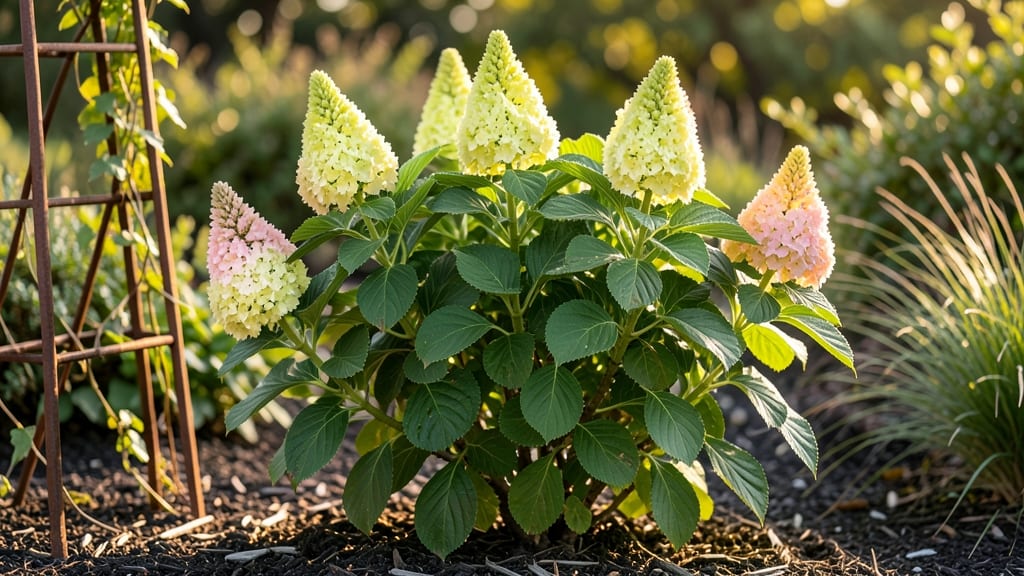
Growing a tree form Limelight hydrangea transforms your landscape with bold, upright blooms that change from lime green to deep burgundy—no pruning headaches required. 🌿 I’ve nurtured these stately beauties for years, and the key to their dramatic shape lies in how you plant and prune them from day one.
Unlike their bushy cousins, these hydrangeas grow tall and narrow, making them perfect for small spaces or as striking focal points.
The secret to their heavy blooms starts with the right spot: full sun to partial shade and well-draining soil rich in organic matter. Space them 8 to 10 feet apart to give their roots room to anchor deep, which means fewer floppy stems and more structural strength.
Water deeply once a week during the first growing season to encourage strong root growth—this is when you set the stage for years of effortless beauty.
Pruning feels counterintuitive at first—you’ll actually trim them in late winter or early spring before new growth appears. This encourages those iconic upright branches to thicken and produce foot-long blooms by midsummer.
Skip the shears in fall, and you’ll avoid the dreaded "limelight lag" where plants struggle to rebound after heavy flowering. The result? A hydrangea that looks like it was designed by a landscape architect, not a novice gardener.
Once established, these hydrangeas handle seasonal shifts like a pro: mulch in winter to protect roots, fertilize lightly in spring, and watch as they outperform other varieties with longer blooming seasons and fewer pests.
Troubleshoot yellowing leaves by checking for overwatering, and stunted growth usually means they need more sunlight or a boost of phosphorus-rich fertilizer. With these simple steps, your Limelight will steal the show year after year.
📚 In This Guide
- What you need
- Instructions
- Tips and common mistakes
- Wrapping up and next steps
What you need
- ● Tree Form Limelight Hydrangea (1 mature plant, 3–6 feet tall, depending on age)
- ● Pruning shears (sharp, bypass-style, 10–12 inches long)
- ● Hand pruners (for smaller branches, 5–6 inches)
- ○ Loppers (optional, for thicker stems, 18–24 inches)
- ● Disinfectant (70% isopropyl alcohol or diluted bleach solution)
- ○ Pruning sealant (optional, for large cuts, water-based)
- ● Garden gloves (cut-resistant, nitrile-coated)
- ● Garden twine or rubber tree ties (for support, 1–2 rolls)
- ● Mulch (2–3 inches of organic mulch, like shredded bark)
- ● Slow-release fertilizer (balanced, 10-10-10 or 20-20-20, 1–2 lbs)
- ○ Extension pole (optional, for high branches, 6–10 feet)
- ● Wheelbarrow or bucket (for clippings, 5–10 gallons)
- ● Notebook & pen (to track pruning dates and notes)
- ● Hose with nozzle (for post-pruning watering)
- ● Sun hat & sunscreen (because you’re the star too! ☀️)
Step-by-Step guide to pruning tree form Limelight hydrangeas for year-round shape
Mastering this shrub’s dramatic growth takes patience and precision—here’s how to sculpt it like a pro.
🌿 Step 1: Prune in Late Winter for Structural Foundation
Timing matters most here. Wait until late winter (just before buds swell) to prune, when the plant is still dormant but ready to respond. I use sharp, clean pruners to make cuts at a 45-degree angle about ¼ inch above a outward-facing bud. This ensures new growth starts in the right direction.
Remove any dead, crossing, or inward-growing branches first—they compete for energy and distort shape. Aim to create an open center, letting light penetrate to the core. You’ll see the skeletal structure emerge as you work, guiding where future blooms will form.
🌿 Step 2: Shape in Early Spring for Bloom Control
Once buds begin to fatten (around early March in most climates), focus on refining the tree form. Limelight hydrangeas bloom on new wood, so prune back one-third of last year’s growth to encourage dense, vibrant blooms. Cut just above a healthy, outward-facing bud—this prevents the plant from growing too leggy.
I like to step back every few cuts to check the balance. The goal is a pyramidal silhouette with the widest point at the top. If branches grow too close, thin them out to improve airflow—this prevents fungal diseases that can ruin blooms.
☀️ Step 3: Light Summer Maintenance for Airflow and Health
After the initial spring pruning, shift to light maintenance throughout summer. Remove any spent blooms (deadheading) to redirect energy to next year’s flowers. Cut back to the first set of healthy leaves below the bloom cluster—this keeps the plant tidy and encourages bushier growth.
Watch for suckers (shoots growing at the base) and prune them immediately. These compete with the main structure and weaken the tree form. A quick trim with clean shears keeps the plant focused on its intended shape.
✂️ Step 4: Final Touch-Up in Fall for Winter Readiness
As temperatures drop (around October), give your hydrangea a final inspection. Prune any weak, damaged, or diseased branches to prevent winter rot. Cut back to a strong lateral branch or bud, making sure the cut is smooth and clean.
This is also the time to reduce watering—hydrangeas need less moisture in fall. Mulch around the base with 2-3 inches of organic mulch to protect roots from freezing. You’ll notice the plant looks more structured and prepared for dormancy.
⏰ Step 5: Year-Round Checks for Long-Term Success
Even between pruning seasons, keep an eye on your Limelight. In early spring, check for bud break—this is your cue to adjust pruning if needed. If branches grow too long, trim them back by 10-15% to maintain the tree form.
I also recommend fertilizing lightly in spring with balanced, slow-release fertilizer to support new growth. Avoid heavy feeding in fall—it encourages tender shoots that won’t survive winter. With consistent care, your hydrangea will reward you with bold, year-round blooms and a perfect tree-like silhouette.
Tips & tricks for perfect tree form Limelight hydrangeas
Sculpting your Limelight hydrangea into a stunning tree form takes more than just timing—it’s about precision and understanding how the plant responds to each cut. Here’s what I’ve learned after shaping dozens of these beauties.
Timing Secret: The late winter pruning in Step 1 is your foundation—don’t rush it. If you prune too early, you risk cutting off buds that haven’t swollen yet. I wait until I see the first hint of bud swelling, which usually happens in early February in my zone 6 garden. This ensures you’re cutting just above dormant buds that will burst into life with the right conditions. Pro tip: Mark your calendar for late winter—this is non-negotiable for tree form success.
Technique Tip: When shaping in early spring (Step 2), focus on creating that perfect pyramidal silhouette by always cutting back to outward-facing buds. Here’s a trick I use: Hold your pruners at a 45-degree angle and make your cut just above the bud while looking at the branch from the side. This ensures new growth will angle outward, filling in the structure naturally. If you’re unsure which buds face outward, gently bend the branch—buds on the side that bends away from you are the ones to target.
Summer Maintenance: The light summer pruning in Step 3 is where most people go wrong. Don’t just snip off dead blooms—cut back to the first set of healthy leaves below each bloom cluster. This might seem drastic, but it encourages the plant to put energy into new growth lower on the stem, creating a fuller, more compact tree form. I always carry a small pair of pruners in my gardening bag during summer so I can deadhead as soon as blooms fade—this prevents seed formation that drains the plant’s energy.
Winter Preparation: That final fall touch-up in Step 4 isn’t just about cleaning up—it’s about setting your hydrangea up for winter survival. When you mulch with 2-3 inches of organic material, make sure to pull it back slightly from the stem to prevent rot. I also recommend adding a layer of straw or pine needles on top of the mulch for extra insulation in colder climates. This simple step can mean the difference between a plant that survives winter and one that struggles to rebound in spring.
Pro Tips for Tree Form Limelight Hydrangea
- Sculpting your Limelight hydrangea into a stunning tree form takes more than just timing—it’s about precision and understanding how the plant responds to each cut.
- Timing Secret: The late winter pruning in Step 1 is your foundation—don’t rush it.
- Technique Tip: When shaping in early spring (Step 2), focus on creating that perfect pyramidal silhouette by always cutting back to outward-facing buds.
Frequently asked questions
about Tree Form Limelight Hydrangea—because even the best bloomers need a little TLC! Here are answers to the most common queries to keep your shrub thriving and stunning year-round.How often should I prune my Tree Form Limelight Hydrangea?
Prune once a year, ideally in late winter or early spring (before new growth emerges). This timing ensures you remove dead wood while preserving next year’s blooms. Avoid summer pruning—it can reduce flowering potential. For heavy bloomers like Limelight, light shaping in early spring is key!
Will Tree Form Limelight Hydrangea survive winter in colder climates?
Yes! This variety is hardy to USDA Zones 3-9, but young plants or harsh winters may need protection. Mulch the base with 2-3 inches of organic mulch (like shredded bark) and wrap the canopy in burlap if temps drop below 0°F. Evergreen foliage adds a bonus winter interest!
Why aren’t my Limelight Hydrangeas blooming as heavily as expected?
Heavy blooms rely on proper pruning + sunlight. Check these fixes:
Softwood cuttings in early summer work best:
If space is tight, consider these compact hydrangea varieties with similar Limelight-style blooms:
Can I propagate Tree Form Limelight Hydrangea from cuttings?
Pro tip: Label cuttings—they’ll resemble the parent plant but may take 1–2 years to bloom.
What’s a good alternative if Tree Form Limelight is too large for my space?
Variety
Height
Bloom Color
Little Lime™ (Hydrangea paniculata)
3–4 ft
Lime green → creamy yellow
Endless Summer® ‘Blushing Bride’ (H. macrophylla)
3–5 ft
Pink/white (re-blooms!)
Firelight® (H. paniculata)
4–5 ft
Ruby red → chartreuse
Wrapping up and next steps
Transforming your Tree Form Limelight Hydrangea into a stunning, year-round showstopper is all about patience, precision, and a little love! 🌿 With the right pruning techniques—like strategic cuts in late winter or early spring—you’ll unlock heavy, vibrant blooms that keep the spotlight on your garden.
Remember, consistency is key, and soon you’ll be the envy of the neighborhood with your lush, well-shaped beauty.
Ready to take the next step? Grab your pruners and schedule your first pruning session this season—your hydrangea will thank you with a bloom-filled reward! 🌸