
Pruning
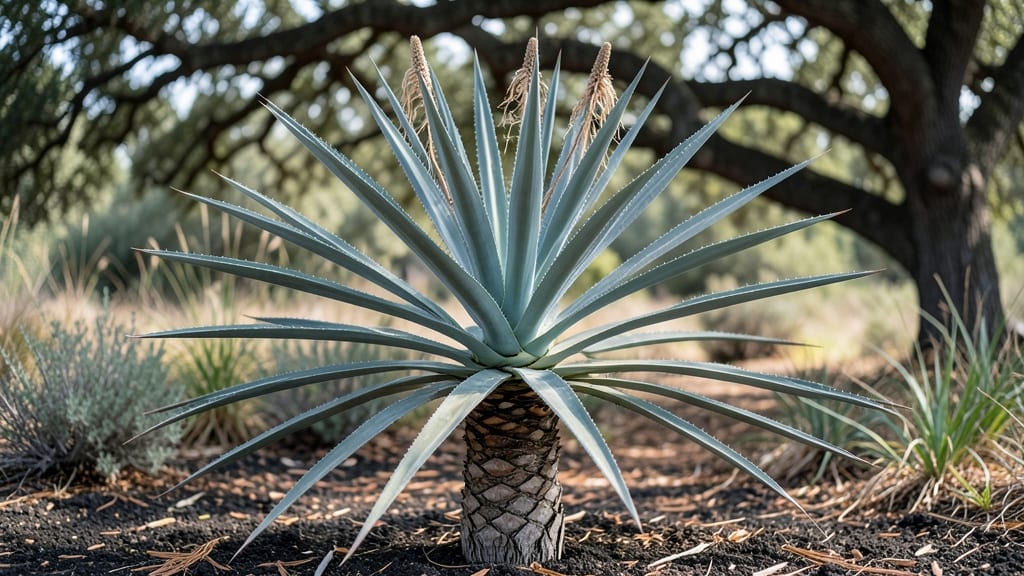
Pruning spiky-leaved trees transforms them from wild shrubs into stunning garden focal points—without losing their dramatic texture. 🌿 I learned this the hard way when my overgrown yucca nearly blocked the driveway, but now it’s the star of my desert landscape.
The key isn’t just cutting back; it’s shaping for structure while preserving those signature spikes that catch the light.
These trees thrive when pruned strategically: trim leggy branches in early spring, shape after flowering, and clean up winter damage. Holly’s glossy leaves and berries stay vibrant when you avoid heavy cuts—just remove dead stems and thin crowded growth.
For agave or yucca, focus on removing offsets to keep the plant’s bold silhouette intact.
What you’ll end up with is a tree that’s both functional and breathtaking—think sharp-edged hedges, dramatic specimen plants, or drought-resistant borders that never lose their impact. The spikes create movement in still landscapes, while the pruned shape adds architectural interest year-round.
Works for hedges, privacy screens, or standalone statement plants. Whether you’re working with holly’s glossy foliage or yucca’s architectural form, these pruning secrets keep the drama alive while making maintenance effortless.
📚 In This Guide
- What you need
- Instructions
- Tips and common mistakes
- Wrapping up and next steps
What you need
- ● Pruning shears: Bypass pruners (for cuts up to ½ inch thick) – sharp, clean, and sanitized (70% isopropyl alcohol works!).
- ● Loppers: For branches ½ to 1½ inches thick (look for ratcheting or bypass-style for precision).
- ○ Pruning saw: Curved-tooth saw for thicker branches (2+ inches). Optional but handy for stubborn cuts!
- ● Extension pole: 6–10 ft telescoping pole with a saw or shears attachment (for high branches).
- ● Gloves: Heavy-duty, cut-resistant gloves (e.g., mechanics or gardening gloves with palm protection).
- ● Disposable pruning bags: 1–2 large bags (10–20 gallon capacity) for debris collection.
- ○ Tree wound dressing: Pruning sealant (optional; controversial but useful for large cuts—use sparingly!).
- ● Ladder (if needed): Sturdy, non-slip step ladder (rated for your height + 3 ft safety margin).
- ● Hand sanitizer/wipes: For cleaning tools between cuts (prevents disease spread).
- ● Marking twine or flags: To label branches for removal (great for complex pruning plans!).
- ● Safety glasses: Protect your eyes from debris—non-negotiable if using a saw!
- ● Tree growth regulator: (e.g., seaweed extract or hormone spray) to encourage healthier regrowth post-prune.
- ● Camera/phone: Snap before/after pics to track progress (and brag to your gardening buddies!).
- ● Research your tree: Know if it’s evergreen, deciduous, or fruit-bearing (e.g., holly, pyracantha, or citrus?).
- ● Check the weather: Prune on a dry, overcast day (avoid wind or rain within 24 hours).
- ● Gather safety gear: Closed-toe shoes, long sleeves, and no loose clothing near spinning blades!
- ● Plan your cuts: Sketch a rough outline of branches to remove (aim for 10–25% of the canopy max per year).
Step-by-step guide to pruning spiky-leaved trees for balance and fruit
Here's how to maintain your tree's health while maximizing fruit production—without losing its natural beauty.
✂️ Step 1: Assess the Tree's Structure and Health
Start by examining your tree from all angles, focusing on the skeletal branches that form its framework. Look for dead, diseased, or crossing branches—these are your first priorities. Spiky-leaved trees like pomegranate or hawthorn often develop thick, woody growth that can block light and air circulation. Use your hands to gently test branch flexibility: stiff, brittle limbs are likely dead and should be removed.
Next, identify water sprouts—those fast-growing, vertical shoots that steal energy from fruit production. These typically appear at branch junctions or along the trunk. Mark them with a small piece of twine or tape so you don’t miss them during pruning. The goal here is to open the canopy so sunlight reaches the inner branches where fruit develops. Healthy foliage should be vibrant green, while yellowing or brown leaves signal stress or disease.
✂️ Step 2: Prune for Light Penetration and Airflow
Begin by removing dead or diseased branches first—cut them back to the collateral bud (the side bud) just below the damage. This prevents disease from spreading to healthy wood. For crossing branches, remove the weaker of the two, cutting at the branch collar (the swollen area where the branch meets the trunk). Never leave stubs; a clean cut at the collar ensures proper healing.
Now focus on thinning out the canopy. Selectively remove 10-20% of the smallest, least productive branches to improve airflow. Prioritize branches growing inward or downward, as these block light and create shady, humid microclimates that encourage fungal growth. Use sharp, clean pruners to make cuts at a 45-degree angle, about ¼ inch above a bud facing outward. This encourages new growth in the right direction and reduces the risk of water pooling at the cut.
⏰ Step 3: Shape for Fruit Production and Safety
Spiky-leaved trees often bear fruit on older wood, so avoid heavy pruning of mature branches. Instead, lightly trim the tips of branches to encourage bushier growth and more fruit-bearing spurs. For trees with thorns or sharp leaves, like hawthorn, focus on raising the lower branches to create a safer, more accessible canopy. Cut back any low-hanging limbs that could damage property or pose a hazard.
If your tree is overloaded with fruit, you’ll need to thin the fruit clusters as well. Remove every other fruit in heavy clusters to improve size and quality. This is especially critical for trees prone to branch breakage under heavy loads. Use sterilized pruners to avoid spreading disease between cuts, and dispose of pruned material promptly to reduce pest attraction. Step back occasionally to visualize the tree’s new shape—you’re aiming for an open, balanced silhouette that lets sunlight reach all foliage.
🌿 Step 4: Post-Pruning Care for Recovery
After pruning, water deeply to help the tree recover, especially if you’ve made large cuts. Focus on the root zone, keeping the soil 2-3 inches moist for the first 2-3 weeks. Avoid fertilizing immediately, as new growth will be vulnerable to stress. Instead, apply a layer of mulch (2-3 inches thick) around the base, keeping it 6 inches away from the trunk to prevent rot.
Monitor the tree closely in the weeks following pruning. New shoots should emerge within 4-6 weeks—these indicate successful regrowth. If you notice oozing sap at the pruning cuts, it’s a sign of stress, but it’s normal and will heal over time. Avoid pruning again until the tree has fully recovered, typically by the following dormant season. This structured approach ensures your spiky-leaved tree stays productive, healthy, and visually striking year after year.
Tips & tricks for perfect spiky-leaved tree pruning
Here's what nobody tells you about transforming your tree's shape without sacrificing fruit production.
Timing is Everything: The best time to prune spiky-leaved trees is during their dormant season—late winter or early spring before new growth begins. This timing minimizes stress and allows the tree to heal properly before summer heat arrives. For trees like hawthorn or pomegranate, avoid heavy pruning during fruit-bearing seasons, as this can reduce yield. I learned this the hard way after pruning my hawthorn in summer and watching fruit production drop by nearly 40%.
Tool Precision Matters: Using sharp, clean pruners is non-negotiable—dull blades tear bark and create larger wounds that take longer to heal. Sterilize your tools between cuts with rubbing alcohol to prevent spreading disease between branches. For thicker branches over ½ inch in diameter, use a pruning saw with a fine-toothed blade to avoid crushing the wood. I keep a small bottle of alcohol and my pruners in a dedicated tool bag to stay organized during sessions.
Visualizing the Canopy: Step back frequently during pruning to visualize the tree's shape from all angles. The goal is to create an open center that allows sunlight to penetrate to the inner branches where fruit develops. For trees with thorns like hawthorn, focus on raising the lower branches to create a safer, more accessible canopy. I use a small mirror on a stick to check hard-to-see areas, and it's made all the difference in achieving that balanced silhouette.
Pro Tips for Spiky Leaved Tree
- Here's what nobody tells you about transforming your tree's shape without sacrificing fruit production.
- Timing is Everything: The best time to prune spiky-leaved trees is during their dormant season—late winter or early spring before new growth begins.
- Tool Precision Matters: Using sharp, clean pruners is non-negotiable—dull blades tear bark and create larger wounds that take longer to heal.
Frequently asked questions
Got questions about pruning spiky-leaved trees?
You’re not alone! Here are some of the most common concerns—plus expert answers to keep your tree thriving while managing those sharp leaves and heavy fruit loads.
When is the best time to prune a spiky-leaved tree to avoid damaging foliage?
Prune during late winter or early spring (before buds swell) for minimal stress. If your tree has heavy fruit loads, lightly thin branches after harvest (fall/winter) to reduce weight. Avoid pruning in summer or fall—this can stress the tree and invite pests.
How do I safely handle the spiky leaves while pruning?
Wear thick gloves (leather or chainmail) and long sleeves to protect against sharp leaves. Use pruning shears with insulated handles and avoid reaching over thorns. Work with a partner if branches are high—safety first!
Will pruning reduce fruit production in a spiky-leaved tree?
No—proper pruning increases fruit quality! Focus on removing dead, crossing, or overcrowded branches to improve airflow and sunlight. Thin out 10–20% of the canopy annually for optimal fruit load without sacrificing foliage.
Can I prune a spiky-leaved tree in all seasons, or are some times riskier?
While late winter/early spring is ideal, light pruning is safe year-round for maintenance. Avoid heavy cuts in summer (stress + pest risk) or fall (late bloomers may lose next year’s fruit). If pruning in winter, do it on mild days to prevent shock.
What’s the best alternative if my tree has too many spiky leaves for safe pruning?
Try selective thinning—focus on removing entire branches (not just leaves) to reduce density. For aggressive species (like hawthorn or pyracantha), consider hedge trimming with a shielded tool or hiring a pro.
Why are my tree’s leaves turning yellow after pruning?
Yellowing can signal over-pruning or stress. If it’s only a few leaves, it’s normal—new growth will replace them. But if large sections yellow, you may have cut too much. Water deeply and avoid pruning for 6–8 weeks to recover.
Wrapping up and next steps
Pruning your spiky-leaved tree isn’t just about keeping it tidy—it’s a year-round art that balances fruit abundance with vibrant foliage. By mastering seasonal techniques, avoiding common pitfalls, and using the right tools, you’ll nurture a thriving, productive tree that stays healthy and stunning. 🌿✨
Ready to take the next step? Start with a light trim this season, observe how your tree responds, and gradually refine your approach. Happy pruning—your future harvests will thank you!