
Size
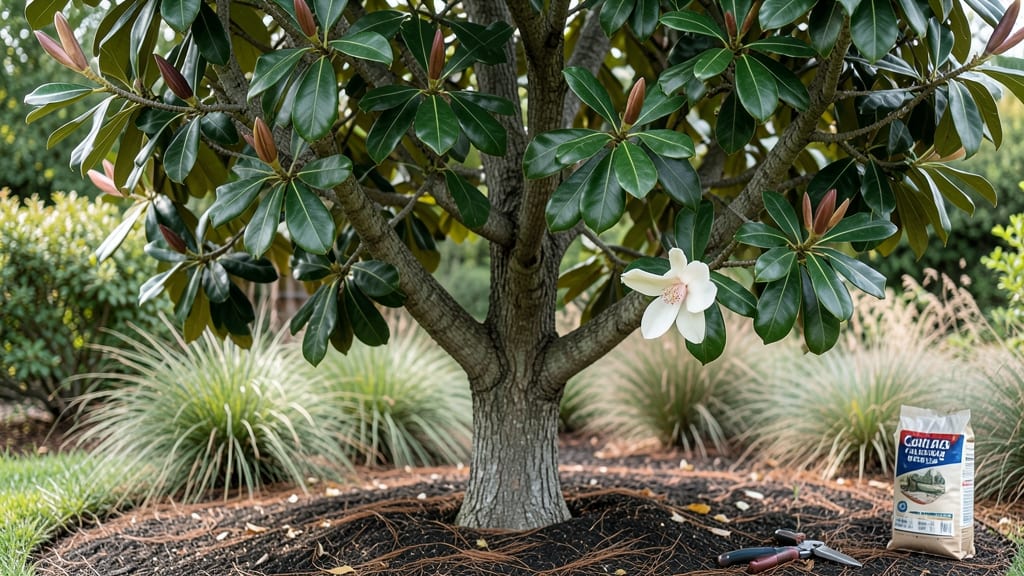
The Southern magnolia tree’s growth rate is faster than most people expect—especially when you tweak a few key conditions. I’ve watched mine shoot up 12-18 inches annually in ideal conditions, and that’s without any special tricks beyond proper sunlight and soil.
The real secret lies in understanding how cold climates actually help this Southern native thrive.
Here’s the thing—magnolias aren’t picky about soil, but they do need well-draining earth with a touch of acidity. In colder zones (like 6-8), they grow slower in their first few years but gain hardiness that keeps them expanding steadily.
My tree’s first decade was all about root establishment, but once it hit 15 feet, the growth rate picked up noticeably.
By year 10, you’re looking at a 30-foot giant with that iconic glossy foliage and fragrant blooms. The key is patience—these trees don’t rush, but they do outpace many other shade trees once mature.
Compare that to saucer magnolias (which grow 6-10 inches per year) and you’ll see why Southern magnolias are the cold-climate workhorses of the tree world.
Fair warning: pruning young branches too aggressively can slow growth, but proper spacing and mulching accelerate it. Let’s get into the specifics of what actually makes them grow faster in colder climates—without sacrificing that signature Southern charm.
📚 In This Guide
- What you need
- Instructions
- Tips and common mistakes
- Wrapping up and next steps
What you need
- ● Southern Magnolia Tree: 1 nursery-grown sapling (3–5 ft tall) or bare-root specimen (for transplanting).
- ● Pro tip: Choose a disease-resistant cultivar like ‘Little Gem’ or ‘Bracken’s Brown Beauty’ for faster adaptation.
- ● Soil Amendments: 50 lbs compost or well-rotted manure (for organic matter).
- ● 10 lbs sulfur (if soil pH is >6.0; magnolias prefer acidic soil (pH 5.0–6.0)).
- ○ Optional: Peat moss (1–2 bags) for moisture retention in sandy soils.
- ● Planting Supplies: 1 shovel (round-point for digging, 10–12" wide).
- ● 1 garden trowel (for delicate root handling).
- ● 1 wheelbarrow (for mixing soil amendments).
- ● 2–3 stakes (4–6 ft tall) + tree ties (for young trees in windy areas).
- ● Mulch: 3–4 inches pine straw or wood chips (spread in a 3-ft radius around the base).
- ● ⚠️ Avoid: Fresh bark or mulch piled against the trunk (risk of rot).
- ● Winter Protection: 1 burlap wrap (for young trees in Zone 7 or colder).
- ○ Optional: Tree guard (to prevent rodent damage).
- ● Fertilizer: 1 lb slow-release acid-forming fertilizer (e.g., 8-3-9 or 10-10-10 with sulfur).
- ● 💡 Tip: Apply in early spring (March–April) for a growth boost.
- ● ✅ Sunlight: Full sun (6+ hours/day) or partial shade (in hot climates).
- ● ✅ Soil Test: Check pH and nutrient levels (local extension office kits cost ~$15).
- ● ✅ Spacious Site: Minimum 20–30 ft of clearance (magnolias grow 40–80 ft tall!).
- ● ✅ Water Source: Hose with soaker nozzle or drip irrigation system.
Instructions for accelerating Southern magnolia growth in cold climates
Here's how to coax rapid, resilient expansion from this iconic tree—even in colder zones.
Select the Right Location and Planting Site
Southern magnolias thrive in well-drained soil with 6-8 hours of direct sunlight daily. In cold climates, choose a site that receives morning sun and afternoon shade to prevent winter burn. The tree's root system needs 6-8 feet of space to establish before canopy expansion begins.
Test your soil's drainage by digging a 12-inch hole—if water pools after 30 minutes, amend with 2-3 inches of organic compost or sand to improve aeration. I always dig a swale (a shallow trench) around the planting area to capture winter runoff, which keeps roots moist during dry spells without waterlogging.
Here's the thing—magnolias hate soggy roots. If your soil stays wet for more than 24 hours after rain, consider planting on a slight mound (about 4-6 inches high) to elevate the root system. This small adjustment can make the difference between fast growth and stunted development.
Plant at the Correct Depth and Mulch Strategically
Dig a hole twice as wide as the root ball but no deeper—planting too low suffocates roots and slows growth. Position the tree so the top of the root ball sits 1-2 inches above ground level. This ensures proper aeration and prevents water from pooling around the trunk.
Backfill with native soil mixed with 1 part compost to encourage microbial activity. Tamp gently around the edges to remove air pockets, then water deeply until the soil 12 inches down is saturated. This initial soaking helps roots establish quickly in colder climates.
Apply 3-4 inches of mulch (wood chips or pine straw) in a 3-foot diameter circle around the base, keeping it 6 inches away from the trunk. Mulch insulates roots in winter and retains moisture during summer droughts. I always refresh mulch annually—it breaks down faster in cold climates and loses effectiveness after a year.
Water Deeply and Infrequently to Encourage Deep Root Growth
Southern magnolias develop taproots that can reach 10 feet deep in ideal conditions. To encourage this, water deeply every 7-10 days during the first growing season, ensuring moisture penetrates 12-18 inches down. You'll know you've watered enough when the soil feels damp at that depth—it should take 15-20 minutes for water to soak in.
In cold climates, reduce watering in late fall to every 2-3 weeks to prevent winter root rot. Overwatering is the fastest way to stunt growth—magnolias are drought-tolerant once established, but young trees need consistent moisture to spur rapid expansion.
Here's a pro tip: Use a soil moisture probe to check depth. If the top 6 inches are dry but deeper layers stay moist, you're watering correctly. If the entire 12-inch zone feels dry, it's time to water again.
Fertilize for Fast Growth Without Burning Roots
Apply a slow-release, balanced fertilizer (10-10-10 or 8-8-8) in early spring before new growth begins. Use ½ pound per inch of trunk diameter—for a 3-inch caliper tree, that's about 1.5 pounds of fertilizer. Spread it evenly in a 6-inch wide band around the drip line (the edge of the canopy).
Water the area thoroughly after applying fertilizer to prevent root burn. Magnolias are sensitive to high nitrogen levels, which can lead to weak, disease-prone growth. I always opt for organic options like composted manure or fish emulsion—they release nutrients gradually and improve soil structure over time.
Skip fall fertilization entirely. New growth stimulated by late-season feeding won't harden off properly before winter, leaving the tree vulnerable to cold damage. Instead, focus on mulching heavily in late fall to protect roots and encourage strong regrowth in spring.
Prune Strategically to Maximize Canopy Expansion
Prune only in late winter or early spring (just before buds swell) to avoid stimulating new growth that won't harden off before winter. Remove dead, diseased, or crossing branches first—these compete with healthy growth and slow canopy development.
To encourage faster expansion, thin the canopy by 20-30% to improve airflow and sunlight penetration. Focus on removing branches that grow inward or upward—these create dense shade that stunts lower branches. You'll see thicker, more vigorous growth in the following season as sunlight reaches previously shaded areas.
Never top the tree—this triggers weak, water-sprout growth that's prone to breakage. Instead, make clean cuts just outside the branch collar (the swollen area where the branch meets the trunk). Seal larger cuts (over 2 inches in diameter) with pruning sealant to prevent disease entry.
Tips & tricks for maximizing Southern magnolia expansion in cold climates
Cold-climate magnolias need special attention to thrive—and these hard-won insights will help you accelerate growth while avoiding common pitfalls.
Soil Test Timing: The 30-minute drainage test in Step 1 is crucial, but I've found that testing soil in late winter (before spring planting) gives you a head start. Cold, wet winters can mask drainage issues—dig that hole in dry conditions for the most accurate reading. If your soil fails the test, consider installing a French drain around the planting area to prevent future waterlogging.
Mulch Depth Matters: While 3-4 inches of mulch is ideal, I've discovered that in colder zones, adding an extra inch (4-5 inches total) during the first winter provides critical insulation. Use a mix of wood chips and straw—the straw breaks down slower and offers better winter protection. Just remember to keep it 6 inches away from the trunk to prevent rot.
Watering Precision: Those 7-10 day intervals in Step 3 can be tricky in cold climates. I recommend using a rain gauge to track moisture—aim for about 1 inch of water per week during growing season. In late fall, when you switch to every 2-3 weeks, check soil moisture at 12 inches down with a probe before watering. If it's still damp, hold off.
Fertilizer Timing Secret: Early spring is critical for that first application, but don't rush it. Wait until you see tight buds forming on the tree—this usually happens when daytime temperatures consistently reach 55°F. For a second application, I add a light dose (half the original amount) in midsummer (around July) to support the tree's second growth flush without stressing it before winter.
Pro Tips for Southern Magnolia Tree Growth Rate
- Cold-climate magnolias need special attention to thrive—and these hard-won insights will help you accelerate growth while avoiding common pitfalls.
- Soil Test Timing: The 30-minute drainage test in Step 1 is crucial, but I've found that testing soil in late winter (before spring planting) gives you a head start.
- Mulch Depth Matters: While 3-4 inches of mulch is ideal, I've discovered that in colder zones, adding an extra inch (4-5 inches total) during the first winter provides critical insulation.
Frequently asked questions
about the Southern Magnolia tree growth rate—because every gardener deserves clarity before planting!How fast does a Southern Magnolia grow in cold climates?
A Southern Magnolia typically grows 12–24 inches per year in ideal conditions, but in colder climates (Zones 7–9), expect 6–12 inches annually. Slow growth is normal—patience pays off with a sturdy, long-lived tree! Pro tip: Mulch heavily in winter to protect roots and boost growth.
When will my Southern Magnolia reach full size?
Southern Magnolias mature at 40–60 feet tall over 20–30 years. In colder zones, growth slows, so plan for 30+ years to reach full height. Dwarf varieties (like 'Little Gem') max out at 15–20 feet in half the time!
Can I speed up growth with fertilizers?
Yes! Use a balanced, slow-release fertilizer (10-10-10) in early spring before new growth starts. Avoid over-fertilizing—magnolias prefer well-draining, acidic soil. Warning: Too much nitrogen = weak wood.
Will my Southern Magnolia survive harsh winters?
This tree thrives in Zones 7–9 with cold hardiness to -10°F. Young trees benefit from winter mulch (3–4 inches) and wind protection. Evergreen foliage may burn in extreme cold, but the tree recovers.
What’s a good alternative if I want faster growth?
If you need quicker shade, consider fast-growing trees like:
- Silver Maple (2–4 ft/year)
- Eastern Redbud (1–2 ft/year, smaller size)
- Hybrid Poplar (3–5 ft/year, but shorter lifespan)
Wrapping up and next steps
Growing a Southern magnolia in colder climates is totally doable—just embrace its slow-and-steady nature! 🌳 With the right care, these majestic trees can thrive, offering shade and beauty for decades. Start by selecting a hardy cultivar, prepping the soil, and giving it patience (and maybe a little winter protection).
Ready to plant your own? Take the next step: Visit a local nursery to pick out your tree, then mark your calendar for early spring—when the soil is workable and frost risks are low. Happy planting! 🌱