
Pruning
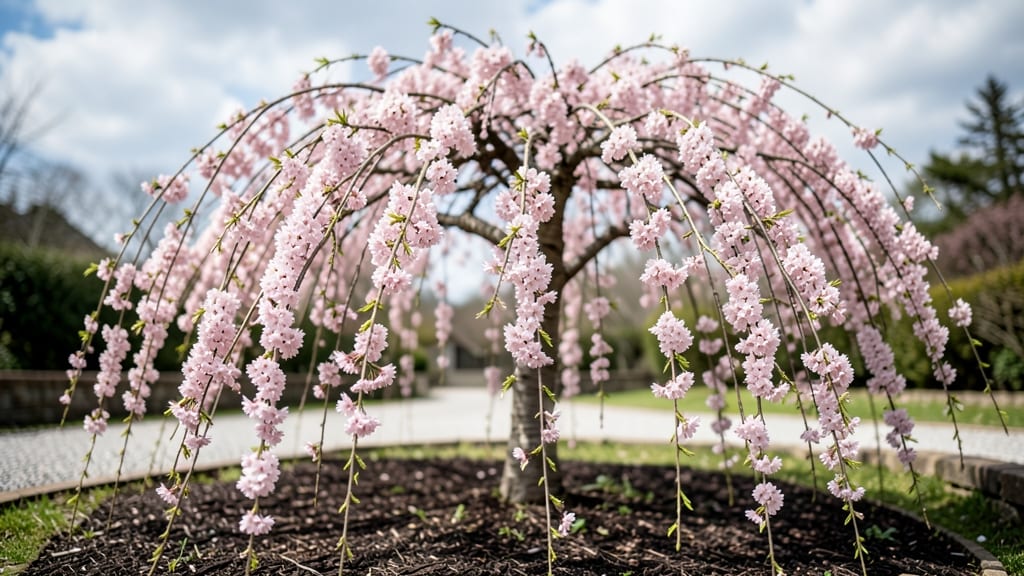
The Shidare Yoshino weeping cherry tree transforms any space into a living waterfall of pink and white blooms. 🌸 I fell in love with its graceful arcs the first time I saw one arching over a Japanese garden path—now I’m obsessed with how it thrives with almost no fuss.
This isn’t your typical high-maintenance cherry; it rewards patience with dramatic year-round interest, from spring blossoms to autumn color.
What makes this tree so special? It handles zones 5-8 like a champ, tolerates urban pollution better than most cherries, and its weeping habit means you’ll never need heavy pruning—just occasional shaping to keep those cascading branches from touching the ground.
The secret to its lush growth? Well-draining soil, morning sun with afternoon shade, and consistent moisture without soggy roots.
By year three, you’ll have a 20-foot-high fountain of flowers that blooms earlier and longer than standard cherries. The petals create a pink snowstorm effect, and even the winter branches add texture to your landscape. Plus, deer and rabbits usually leave it alone—unlike many ornamentals.
Whether you’re planting near a patio, along a fence, or as a standalone specimen, this tree delivers high-impact beauty with low-maintenance effort. Let’s get yours growing strong from the start.
📚 In This Guide
- What you need
- Instructions
- Tips and common mistakes
- Wrapping up and next steps
What you need
- ● Pruning shears: Bypass pruners (sharp, clean, and sterilized to prevent disease). Recommended: Felco F-2 or similar (for branches up to ½ inch thick).
- ● Loppers: For thicker branches (up to 1.5 inches). Example: Corona 44007.
- ● Hand pruners: Anvil pruners (for small twigs) as a backup.
- ● Pruning saw: Curved-tooth saw for stubborn branches (e.g., Fiskars X27).
- ● Disinfectant: 70% isopropyl alcohol or a copper-based pruning spray (to sterilize tools between cuts).
- ● Gloves: Heavy-duty gardening gloves (cut-resistant, like Felco 440).
- ● Ladder or step stool: Sturdy and tall enough to reach the tree’s canopy safely.
- ○ Pruning sealant: Optional but helpful (e.g., Tree Seal Tape) for larger cuts to prevent disease.
- ● Trash bags: Heavy-duty for collecting pruned branches.
- ● Timing: Prune Shidare Yoshino in late winter/early spring (before buds swell) or summer (after flowering). Avoid pruning in fall.
- ● Weather: Choose a dry, calm day to minimize stress on the tree.
- ● Tree health: Inspect for pests/diseases (e.g., cherry leaf spot) before pruning. Treat if needed.
- ● Safety gear: Safety glasses (to protect from debris) and closed-toe shoes.
- ○ Optional: Pruning guide: A branching diagram or reference photo of a healthy Shidare Yoshino for comparison.
- ● Mulch: Organic mulch (e.g., wood chips) to protect roots post-pruning.
- ● Watering can: For post-pruning hydration if the tree is stressed.
Step-by-Step guide to planting and caring for a Shidare Yoshino weeping cherry tree
This elegant tree thrives with the right approach—here’s how to plant and nurture it for stunning year-round beauty.
🌱 Step 1: Choose the Perfect Planting Spot
The Shidare Yoshino loves full sun to partial shade—at least 6 hours of direct sunlight daily for vibrant blooms. I always pick a location with well-draining soil and shelter from strong winds, which can damage its delicate branches. A slightly elevated area prevents waterlogging, which this tree absolutely hates.
Dig a hole twice as wide as the root ball but only as deep as the container it came in. Loosen the roots gently if they’re circling—this encourages outward growth. The tree’s cascading habit means it’ll spread 15-20 feet wide, so give it space to gracefully spill over terraces or gardens.
🪴 Step 2: Plant with Proper Soil and Support
Amend the native soil with 2-3 inches of compost mixed into the bottom of the hole—this improves fertility without overwhelming the tree. Place the Shidare Yoshino in the center, ensuring the root flare (where roots meet the trunk) sits 1-2 inches above ground level. This prevents rot and encourages strong anchoring.
Backfill with native soil, pressing lightly to remove air pockets but not compacting too firmly. Water deeply to settle the soil, then add a 3-inch layer of mulch (like shredded bark) around the base, keeping it 6 inches away from the trunk. This conserves moisture and regulates soil temperature—critical for young trees.
☀️ Step 3: Water and Fertilize for Strong Growth
Water deeply once a week during the first year, ensuring the soil stays moist but not soggy. You’ll know it’s right when the top 2 inches of soil feel damp—stick your finger in to check. Overwatering leads to root rot, which this tree is particularly susceptible to.
In early spring, apply a balanced, slow-release fertilizer (10-10-10) around the drip line, not the trunk. This feeds the roots without burning them. Avoid heavy nitrogen—it promotes leafy growth at the expense of those iconic pink spring blooms and graceful form.
✂️ Step 4: Prune Strategically for Year-Round Shape
This tree’s beauty lies in its natural weeping form, so pruning is minimal. Remove dead, diseased, or crossing branches in late winter or early spring before new growth starts. Use clean, sharp pruners to make cuts just above a bud or branch collar.
If you notice leggy growth, lightly trim the tips to encourage bushier branches—but never cut more than 25% of the canopy in one season. The goal is to preserve its elegant silhouette, not reshape it. Avoid heavy pruning after summer, as it can stimulate tender growth that won’t survive winter.
⏰ Step 5: Protect and Maintain Through the Seasons
In winter, apply a 3-inch layer of mulch to insulate roots from freezing temperatures. Young trees benefit from burlap wrapping if your climate drops below 10°F—just remove it in early spring to avoid overheating.
Watch for aphids or scale insects on new growth. A hose spray usually dislodges them, but severe infestations may need neem oil treatment. The Shidare Yoshino is generally low-maintenance, but consistent care ensures its dramatic curves and seasonal interest last for decades.
Tips & tricks for perfect Shidare Yoshino weeping cherry tree planting
Here's what nobody tells you about nurturing this stunning tree—details that make all the difference between a struggling sapling and a showstopping landscape feature.
Sunlight Secret: That 6 hours of direct sunlight isn't just about blooms—it's about the tree's overall health. I've seen Shidare Yoshinos planted in partial shade struggle with weak stems that can't support their own weight. If your location only gets 4-5 hours, consider supplementing with a grow light during winter months when daylight is shortest. The tree's cascading branches need strong structural support to maintain their elegant weeping form.
Root Ball Revelation: When loosening circling roots in Step 1, don't just pull them apart—score the root ball with your fingers or a knife to encourage outward growth. This creates a more fibrous root system that anchors better and accesses nutrients more efficiently. I learned this the hard way after seeing a Shidare Yoshino topple in a windstorm—its roots were too tightly bound to spread properly.
Mulch Mastery: That 3-inch layer of mulch around the base serves multiple purposes beyond moisture retention. It creates a natural insulation barrier that helps regulate soil temperature, which is especially important during our unpredictable spring weather. I always use shredded bark mulch because it breaks down slowly and improves soil structure over time. The key is keeping it 6 inches away from the trunk—piling it against the bark can cause rot.
Pruning Precision: When trimming leggy growth in Step 4, make your cuts just above a bud that's facing outward. This encourages new growth in the direction you want while maintaining the tree's natural weeping silhouette. I've seen gardeners accidentally cut above inward-facing buds, which creates dense growth that obscures the tree's graceful curves. A quick visual check with your hand can help determine bud orientation.
Pro Tips for Shidare Yoshino Weeping Cherry Tree
- Here's what nobody tells you about nurturing this stunning tree—details that make all the difference between a struggling sapling and a showstopping landscape feature.
- Sunlight Secret: That 6 hours of direct sunlight isn't just about blooms—it's about the tree's overall health.
- Root Ball Revelation: When loosening circling roots in Step 1, don't just pull them apart—score the root ball with your fingers or a knife to encourage outward growth.
Frequently asked questions
Got questions about keeping your Shidare Yoshino weeping cherry tree lush and stunning with minimal effort? Here are some of the most common ones—plus answers to help you grow with confidence!
How often should I prune a Shidare Yoshino weeping cherry tree?
Prune your Shidare Yoshino once a year, ideally in late winter or early spring (before buds swell). This timing encourages vibrant blooms and maintains its graceful weeping shape. Avoid heavy pruning in fall—it can stress the tree and reduce winter hardiness.
Why aren’t my Shidare Yoshino branches drooping as dramatically as they should?
If your tree’s branches aren’t weeping as expected, it could be due to over-pruning of the central leader or lack of structural support. Focus on thinning out dense growth rather than cutting back main branches. For extra drama, gently bend young branches downward and stake them until they set.
Can Shidare Yoshino survive in cold climates, and how do I protect it?
Yes! This variety thrives in USDA Zones 5-8, but young trees or those in harsh winters may need winter protection. Wrap the trunk with tree guard or burlap to prevent sunscald, and mulch heavily (3-4 inches) around the base. Avoid pruning in late fall—wait until late winter to minimize stress.
Are there dwarf or smaller versions of Shidare Yoshino for limited spaces?
While Shidare Yoshino itself isn’t naturally dwarf, you can find grafted or container-friendly cultivars like ‘Shidarezakura’ (which matures at 15-20 ft tall). For tighter spaces, opt for bonsai-trained weeping cherries or patio-sized varieties like ‘Kanzan’ (though it’s not weeping, it’s low-maintenance!).
What pests or diseases should I watch for in my Shidare Yoshino?
Keep an eye out for aphids, spider mites, and scale insects—they love new growth! Treat infestations early with horticultural oil or insecticidal soap. Powdery mildew can also appear in humid conditions; improve airflow by pruning dense branches and avoid overhead watering.
Pro Tip: Mulch like a pro!
Spread 3-4 inches of organic mulch (like wood chips) around the base of your tree, but keep it 6 inches away from the trunk. This retains moisture, regulates soil temp, and reduces weeds—all while keeping your Shidare Yoshino thriving with minimal fuss!
Wrapping up and next steps
The Shidare Yoshino weeping cherry tree is a stunning, low-maintenance beauty that rewards patience with its graceful arcs and vibrant blooms—all while requiring minimal pruning! 🌸 Whether you’re a seasoned gardener or just starting out, its adaptability makes it a dream for any landscape. Ready to embrace its elegance?
Your next step? Plan your planting or pruning season—spring is ideal for shaping, but even a little care now sets the stage for years of breathtaking cascades. Go ahead—let nature’s artistry unfold in your own backyard! 🌿