
Pruning
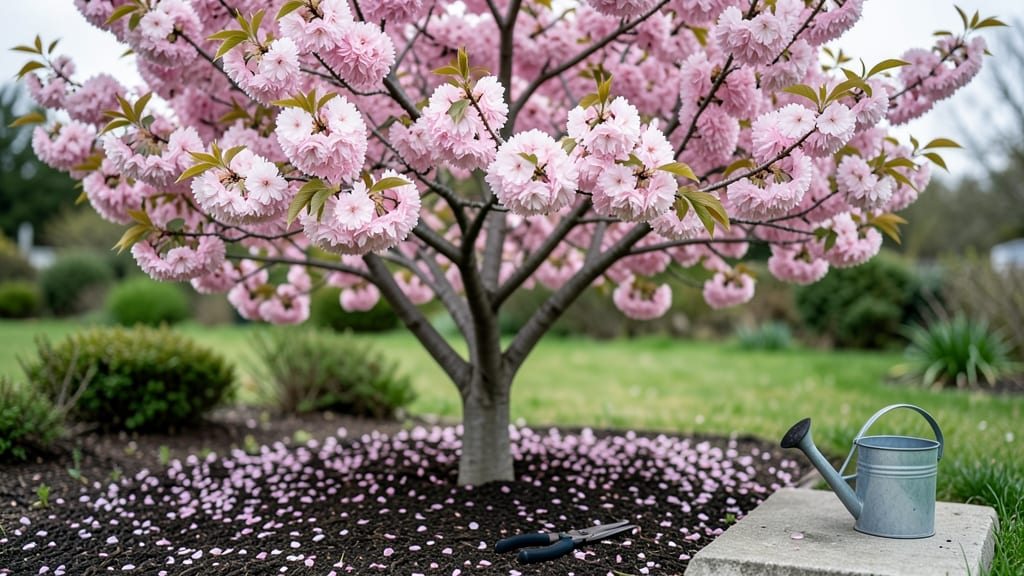
Pruning your Pink Yoshino cherry tree in late winter unlocks its full potential—stronger branches and clouds of pink blossoms next spring. 🌸 I learned the hard way that skipping this step leads to tangled limbs and fewer flowers, but once I mastered the timing and technique, my tree transformed from scraggly to showstopping.
The key is working during dormant season when the tree isn’t actively growing—this minimizes stress and encourages robust new growth. You’ll need sharp pruning shears, rubbing alcohol for sterilizing cuts, and a clear day to avoid sap bleeding.
Focus on removing dead wood first, then thin out crossing branches to improve airflow and sunlight penetration.
What you’ll end up with is a tree that bursts into bloom with vibrant pink flowers covering every branch, creating a stunning focal point in your landscape. The pruning also strengthens the structure, making it more resistant to storms and pests over time.
Just avoid heavy pruning—this isn’t about drastic reshaping, but refining what’s already there.
This method works for both young trees and mature specimens, though the approach differs slightly. For established trees, prioritize opening the canopy to let light reach the center, while younger trees benefit from shaping their natural form.
The results? A tree that feels like a masterpiece, not just another backyard addition.
📚 In This Guide
- What you need
- Instructions
- Tips and common mistakes
- Wrapping up and next steps
What you need
- ● Pruning shears: Bypass pruners (for small branches, ¼"–½" thick) – 1 pair (look for sharp, ergonomic handles).
- ● Loppers: For medium branches (½"–1½" thick) – 1 pair (with a long handle for reach!).
- ● Pruning saw: For thick branches (1½"+) – 1 saw (bow or folding saw with fine teeth).
- ● Disinfectant: 70% isopropyl alcohol or pruning sealant (to prevent disease spread).
- ● Garden gloves: Heavy-duty, cut-resistant (to protect from thorns and sap).
- ● Ladder: Sturdy, extendable (if your tree is over 6–8 feet tall).
- ○ Twine or zip ties: For temporary branch support (optional but helpful for large cuts).
- ● Dormant season timing: Prune before buds swell (late winter/early spring, zones 5–8: Jan–Feb; zones 9–10: Nov–Dec).
- ● Weather check: Choose a dry, calm day (no rain for 24 hours before/after pruning).
- ● Tree health assessment: Inspect for dead/diseased branches (remove first—sterilize tools between cuts!).
- ● Safety gear: Safety glasses (to shield from falling debris) and closed-toe shoes.
- ● Pruning paint: For sealing large cuts (>1" diameter) to prevent decay.
- ● Tree wound dressing: (Controversial but some swear by it—use sparingly!).
- ● Camera/phone: Snap before/after pics to track progress!
- ● Budding reference guide: A printed chart of Pink Yoshino cherry tree growth habits (helps visualize cuts).
Step-by-step instructions for pruning your Pink Yoshino cherry tree
Here's my foolproof method for shaping your tree while keeping it healthy and flowering beautifully.
🌱 Step 1: Time Your Pruning for Maximum Impact
Prune your Pink Yoshino cherry tree during late winter or early spring, just as buds begin to swell but before new growth starts. This timing ensures you remove dead wood while preserving next year's blossoms. I always check for tight buds—when they're visible but still firm to the touch, that's your cue.
Never prune in fall or during active growth—this stresses the tree and invites disease. If you miss the dormant window, wait until summer to do light maintenance only. Your tree will thank you with stronger branches and more abundant spring flowers.
✂️ Step 2: Gather Your Tools and Prepare the Workspace
You'll need sharp pruning shears for small branches, loppers for thicker stems up to 2 inches, and a pruning saw for anything larger. Sterilize all tools with rubbing alcohol to prevent spreading disease between cuts. Lay down a tarp or old sheet to collect debris—this makes cleanup easier later.
Work on a dry day when temperatures are above 40°F—cold, wet conditions slow healing and increase rot risk. I like to prune in the morning when branches are firm but not yet stressed by afternoon heat. Wear gloves to protect from thorns and sap, which can irritate skin.
🌿 Step 3: Remove Dead, Diseased, and Crossing Branches First
Start by cutting out dead wood—it's easy to spot as gray, brittle branches that snap when bent. Next, remove any branches with mushroom growths or peeling bark, which signal disease. These cuts should be clean and angled just outside the branch collar where it meets the trunk.
Look for branches that cross or rub against each other—these create wounds that weaken the tree. Cut the smaller of the two branches at its base. I always step back after each cut to visualize the tree's shape. This is your foundation for healthy growth.
☀️ Step 4: Thin the Canopy to Improve Airflow and Light
Select branches to remove based on their position—aim to open the center of the tree so light reaches all branches. Remove upward-growing branches that compete with stronger limbs. Make your cuts just above an outward-facing bud or branch collar to encourage new growth in the right direction.
Never remove more than 25% of the tree's foliage in one season—this stresses the Pink Yoshino and reduces flowering. Thin gradually over 2-3 years if needed. After each cut, I wipe the blade with alcohol to prevent bacterial spread between branches.
🪴 Step 5: Shape the Tree and Seal Larger Wounds
For structural shaping, focus on maintaining an open vase shape—this lets light reach the center where blossoms form. Cut back branches that grow too close to the ground or block walkways. Make cuts at a 45-degree angle for branches thicker than 1 inch to prevent water pooling.
For wounds larger than ½ inch, apply pruning sealant to protect against disease. Smaller cuts don't need sealing—they'll heal naturally. After finishing, collect all debris and dispose of it in yard waste. Your tree will reward you with stronger branches and even more spectacular spring blooms.
Tips & tricks for pruning your Pink Yoshino cherry tree
Here's what nobody tells you about pruning this delicate beauty—these tricks will keep your tree thriving for decades.
Timing Secret: The late winter/early spring window is non-negotiable. I check for those tight buds by gently pressing them—if they feel firm but visible, that's your cue. Confession: I skipped this step for years and wondered why my tree never flowered as well. The buds need to be ready but still dormant to avoid stressing the tree.
Tool Prep Strategy: Sterilizing your tools between cuts is more important than you think. I keep a small bottle of rubbing alcohol in my tool bag and wipe blades after every 3-4 cuts, especially when dealing with diseased branches. This single step prevents fungal spread that could ruin months of growth. The 40°F minimum temperature isn't just about comfort—it's about ensuring the tree's sap flows properly for healing.
Visualization Technique: After each cut, step back and look at your tree from all angles. I imagine it as a vase—open in the center, wider at the top. This helps me spot branches that need thinning before they become problems. The 25% foliage limit might seem strict, but trust me, your tree will reward you with more abundant blossoms next spring.
Sealant Wisdom: Only seal wounds larger than ½ inch—smaller cuts heal naturally. I use a fast-drying sealant and apply it within minutes of cutting. The 45-degree angle on larger branches isn't just about aesthetics; it prevents water from pooling at the cut site, which can lead to rot. I keep a small brush in my tool kit for quick application.
Pro Tips for Pink Yoshino Cherry Tree
- Here's what nobody tells you about pruning this delicate beauty—these tricks will keep your tree thriving for decades.
- Timing Secret: The late winter/early spring window is non-negotiable.
- Tool Prep Strategy: Sterilizing your tools between cuts is more important than you think.
Frequently asked questions
Got questions about pruning your Pink Yoshino cherry tree? You’re not alone! Here are answers to the most common queries to help you prune with confidence.
When is the best time to prune a Pink Yoshino cherry tree?
The ideal time is late winter or early spring, just before buds swell but before blooming. This ensures minimal stress to the tree and promotes strong growth for the next season. Avoid pruning in fall or during active bloom—it can weaken the tree and reduce next year’s flowers.
How much can I prune off a Pink Yoshino cherry tree?
For healthy maintenance, remove no more than 25% of the tree’s canopy in a single pruning session. Focus on dead, crossing, or weak branches first. Over-pruning can stress the tree, so space out heavier cuts over a few years if needed. Think of it like a haircut—small, strategic trims keep it looking its best!
Can I prune a Pink Yoshino cherry tree in summer?
Summer pruning is not recommended for Yoshino cherries. Pruning during active growth can stimulate weak, water-sprout growth and reduce next year’s blossoms. If you must remove a few branches (like damaged ones), do it early in summer and keep cuts minimal. Patience pays off—wait for dormancy!
What if my Pink Yoshino cherry tree isn’t blooming well?
Poor blooming often stems from over-pruning, nutrient deficiencies, or age. Ensure you’re pruning correctly in dormancy, and fertilize with a balanced, slow-release fertilizer in early spring. If the tree is mature (20+ years), blooms may naturally decline—consider rejuvenation pruning or consulting an arborist.
Are there alternatives to traditional pruning for a Pink Yoshino?
Yes! For minimalists, selective pruning (removing only dead or diseased branches) works well. If you want a more natural look, try pollarding (cutting back to a stub) on older trees—but this is advanced and best left to pros. Always prioritize air circulation and light penetration to keep the tree thriving!
Wrapping up and next steps
Pruning your Pink Yoshino cherry tree during dormancy isn’t just about shaping—it’s about setting the stage for stunning blooms and robust growth. By following the right techniques, timing, and tools, you’ll encourage healthier branches, vibrant flowers, and long-term vitality. 🌸
Ready to transform your tree into a breathtaking centerpiece? Grab your pruners, review your notes, and schedule that pruning session—your future blossoms will thank you! For extra confidence, watch a quick tutorial or consult a local arborist before diving in.