
Pruning
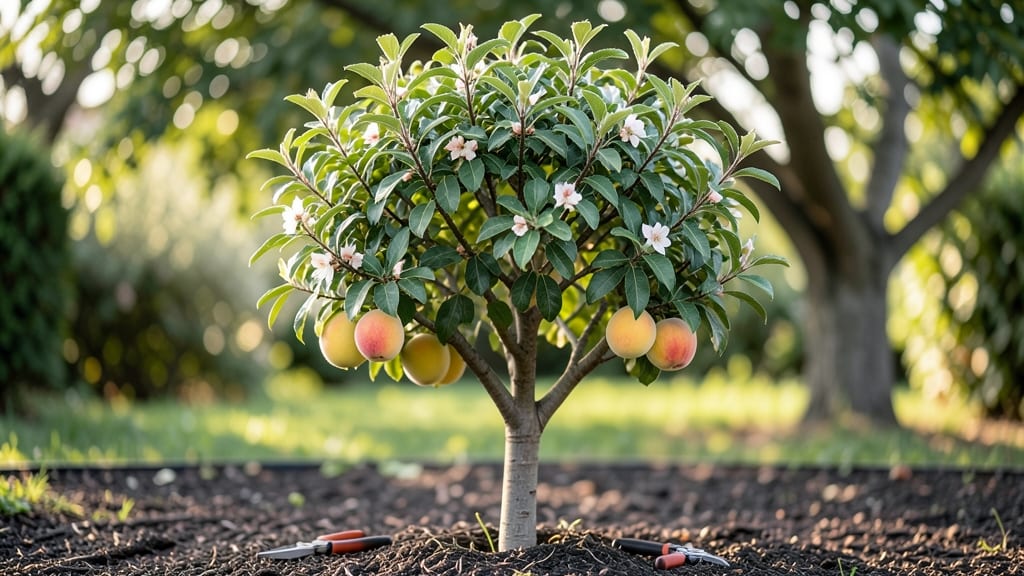
A semi dwarf peach tree delivers all the sweet rewards of a full-size tree in a fraction of the space—perfect for backyards, patios, or even large containers. 🌱 I planted mine last spring, and within months, it was already bearing fruit without the sprawling mess of traditional varieties.
The key isn’t just the dwarfing rootstock; it’s how you shape it early to support those heavy fruit loads without snapping branches.
Start with well-draining soil mixed with compost—peaches hate soggy roots—and give it 6+ hours of sunlight daily. Water deeply once a week (more in summer heat), but avoid wetting the leaves to prevent fungal diseases.
Pruning in late winter is your secret weapon: open the center for airflow and cut back crossing branches to keep energy flowing to fruit production.
By summer, you’ll watch those fuzzy blossoms turn into juicy peaches—sweeter than store-bought and harvested at peak ripeness. The compact size means no ladder needed, and the tree stays manageable even as it matures.
The only trade-off? You’ll need to thin fruit early to avoid branch damage, but that’s a small price for homegrown peaches.
Works in zones 5-9 with proper winter protection, and container-growing is possible if you choose a 5-gallon pot and dwarfing rootstock. Here’s how to set yours up for success—no orchard experience required.
📚 In This Guide
- What you need
- Instructions
- Tips and common mistakes
- Wrapping up and next steps
What you need
- ● Semi dwarf peach tree sapling (5–6 ft tall at planting, grafted for disease resistance 🌿)
- ● Pruning shears (bypass-type, sharp, and sanitized with rubbing alcohol 🔪)
- ● Loppers (for thicker branches, 20–24" cutting range ⚒️)
- ● Pruning saw (for stubborn branches, 12–16" blade 🪓)
- ● Garden gloves (cut-resistant, size medium/large 🧤)
- ● Disinfectant spray (70% isopropyl alcohol or copper fungicide 🧴)
- ○ Tree wound sealant (optional but helpful for large cuts 🌳)
- ● Staking kit (if young tree needs support: 2–3 stakes + ties 🪵)
- ● Mulch (2–3" layer of wood chips or straw to retain moisture 🍂)
- ● Extension pole pruner (for high branches 🌿🔝)
- ● Handheld leaf blower (to clear debris post-pruning 🌬️)
- ● Tree pruning guide (printed or app for reference 📱)
- ● Organic fertilizer (balanced 10-10-10 or citrus-specific blend 🌱✨)
Step-by-step guide for planting and caring for semi-dwarf peach trees
Here's how to establish a productive, space-efficient peach orchard in your yard.
🌱 Step 1: Choose the Perfect Planting Site and Prepare the Soil
Semi-dwarf peach trees thrive in full sun—select a location that receives at least 6-8 hours of direct sunlight daily. Avoid low-lying areas where cold air settles, as peaches are frost-sensitive. The soil should drain well but retain moisture; peaches hate soggy roots. If your soil is heavy clay, amend it with 2-3 inches of compost mixed into the top 12 inches of soil.
Dig a planting hole twice as wide as the root ball but only as deep. This encourages roots to spread horizontally rather than settling into a deep, confined space. Loosen the sides of the hole with a shovel to prevent compaction. Here's the thing—peaches grow best when their roots can access nutrients and water easily, so don't rush the soil prep.
🪴 Step 2: Plant at the Right Depth and Stake for Support
Remove the tree from its container and gently tease the roots apart if they're circling. Place the tree in the hole so the graft union (the bump where the rootstock meets the scion) sits 2-3 inches above the soil line. This prevents the union from being buried, which can cause the tree to produce suckers instead of fruit. Fill the hole with soil, tamping it down lightly to remove air pockets.
Stake the tree immediately using a 4-5 foot tall stake placed 3-4 inches away from the trunk. Tie the tree to the stake with soft tree ties or strips of old fabric, leaving room for the trunk to swell slightly as it grows. Water deeply right after planting to settle the soil and eliminate air gaps around the roots. You'll see new growth within 4-6 weeks if the tree is properly established.
☀️ Step 3: Water Deeply and Mulch to Retain Moisture
Water the tree deeply once a week for the first month, ensuring the soil is moist 12 inches down. After that, water every 7-10 days, adjusting for rainfall—peaches need 1-1.5 inches of water per week. Overhead watering can spread disease, so use a soaker hose or drip irrigation placed at the tree's base. Keep the water 2-3 inches away from the trunk to prevent rot.
Apply 3-4 inches of organic mulch (like wood chips or straw) around the tree, keeping it 6 inches away from the trunk. Mulch helps retain moisture, regulate soil temperature, and suppress weeds. Refresh the mulch annually in late winter. Watch for cracked or peeling bark—this signals the tree isn't getting enough water, especially in hot summers.
✂️ Step 4: Prune for Structure and Fruit Production
Prune your semi-dwarf peach tree in late winter or early spring, before buds swell but before new growth begins. Remove dead, diseased, or crossing branches first, cutting back to the branch collar. Open the center of the tree to allow light and air circulation—peaches need good airflow to prevent fungal diseases. Aim for a vase-shaped canopy with a strong central leader.
Thin out excess fruit in late spring, leaving 6-8 inches between peaches. This ensures larger, higher-quality fruit and prevents branches from breaking under the weight. You'll know you're doing it right when the remaining peaches are uniform in size and the tree looks balanced. Prune again in summer to remove any suckers (shoots growing from the rootstock) and water sprouts (fast-growing vertical shoots).
🌿 Step 5: Fertilize and Monitor for Pests/Diseases
Apply a balanced, slow-release fertilizer (like 10-10-10) in early spring, spreading it 6-12 inches from the trunk and watering it in. Avoid high-nitrogen fertilizers, which promote leafy growth at the expense of fruit. In late summer, switch to a low-nitrogen, high-phosphorus fertilizer (like 5-10-10) to support root and fruit development. Test your soil every 2-3 years to adjust nutrients as needed.
Watch for peach leaf curl, a fungal disease that causes puckered, curled leaves. Treat with a copper fungicide in late fall or early spring before buds swell. Aphids and scale insects can also be an issue—blast them off with a strong stream of water or use neem oil for organic control. Healthy trees with good airflow rarely have major pest problems, so keep up with pruning and watering.
Tips & tricks for perfect semi-dwarf peach tree care
Took me years of trial-and-error to learn these essential tricks for growing robust, fruit-bearing semi-dwarf peach trees.
Site Selection Wisdom: The 6-8 hours of daily sunlight requirement is non-negotiable—peaches need this full sun exposure to develop flavorful fruit. I've seen trees in partial shade produce tiny, bland peaches. If your yard has limited sun, consider a south-facing location or even a raised bed to maximize sunlight exposure. Also, avoid planting near large trees that will compete for nutrients and water.
Root Ball Preparation: When planting, gently loosening the root ball's outer edges encourages faster root establishment. I've found that making 2-3 vertical cuts around the root ball with a knife helps roots spread more quickly into the surrounding soil. This simple step can mean the difference between a struggling tree and one that thrives from day one.
Mulching Strategy: The 3-4 inches of organic mulch should be refreshed annually in late winter—this prevents soil compaction and maintains proper moisture levels. I recommend using wood chips over straw because they break down more slowly, providing long-term benefits. Keep that mulch ring 6 inches away from the trunk to prevent rot while still protecting the roots.
Pruning Insight: During your late winter/early spring pruning, look for branches that grow at sharp angles—these are more prone to breaking under fruit weight. I aim to create a vase shape with the strongest branches forming a natural scaffold. This structural approach prevents future problems while maximizing fruit production potential.
Pro Tips for Semi Dwarf Peach Tree
- Took me years of trial-and-error to learn these essential tricks for growing robust, fruit-bearing semi-dwarf peach trees.
- Site Selection Wisdom: The 6-8 hours of daily sunlight requirement is non-negotiable—peaches need this full sun exposure to develop flavorful fruit.
- Root Ball Preparation: When planting, gently loosening the root ball's outer edges encourages faster root establishment.
Frequently asked questions
Got questions about your semi dwarf peach tree? You’re not alone!
Here are answers to the most common concerns to help you grow a thriving, fruit-loaded tree with ease.
How often should I prune a semi dwarf peach tree?
Prune your semi dwarf peach tree twice a year for best results: late winter (before buds swell) to shape the canopy and remove dead wood, and summer (after fruiting) to thin out crowded branches. Light maintenance pruning can be done year-round to encourage airflow and sunlight penetration.
Can a semi dwarf peach tree support heavy fruit loads without sagging?
Yes! Semi dwarf varieties are bred to handle moderate fruit loads better than standard trees, but support is key. Use tree ties or stakes during fruiting season to prevent branches from bending. Avoid overloading—thin fruit clusters in spring to ensure quality harvests and reduce stress on the tree.
How long does it take for a semi dwarf peach tree to bear fruit?
With proper care, a semi dwarf peach tree typically bears fruit in 2–3 years after planting. Dwarf varieties mature faster than standard trees, but patience pays off—consistent watering, pruning, and fertilization speed up the process. Choose a self-pollinating variety for easier fruiting.
What’s the best way to protect my semi dwarf peach tree in winter?
Semi dwarf peach trees are semi-hardy but need protection in cold climates. Wrap the trunk with tree guard or burlap to prevent sunscald and rodent damage. Mulch the base with 3–4 inches of organic mulch (like straw or wood chips) to insulate roots. Avoid heavy snow buildup on branches—gently shake it off to prevent breakage.
What are some alternatives if my semi dwarf peach tree isn’t thriving?
If your tree struggles with disease, pests, or poor growth, consider dwarf peach varieties (like ‘Bonanza’ or ‘Redhaven’) for smaller spaces or columnar peach trees for ultra-compact growth. For low-maintenance options, try peach-plum hybrids (e.g., ‘Flordaprince’) that resist common peach diseases like brown rot.
Wrapping up and next steps
Growing a semi dwarf peach tree is a rewarding journey that combines compact space with bountiful harvests—perfect for both beginners and seasoned gardeners! 🌱 With the right pruning techniques, you’ll ensure a healthy canopy, maximize fruit production, and keep your tree manageable.
Whether you’re trimming for shape, airflow, or disease prevention, remember: patience and consistency are key.
Ready to reap the sweet rewards? Start by observing your tree weekly, especially during its active growing season. Grab your pruners, dust off your gloves, and give your semi dwarf peach tree the care it deserves—your future peach pies will thank you! 🍑✨