
Pruning
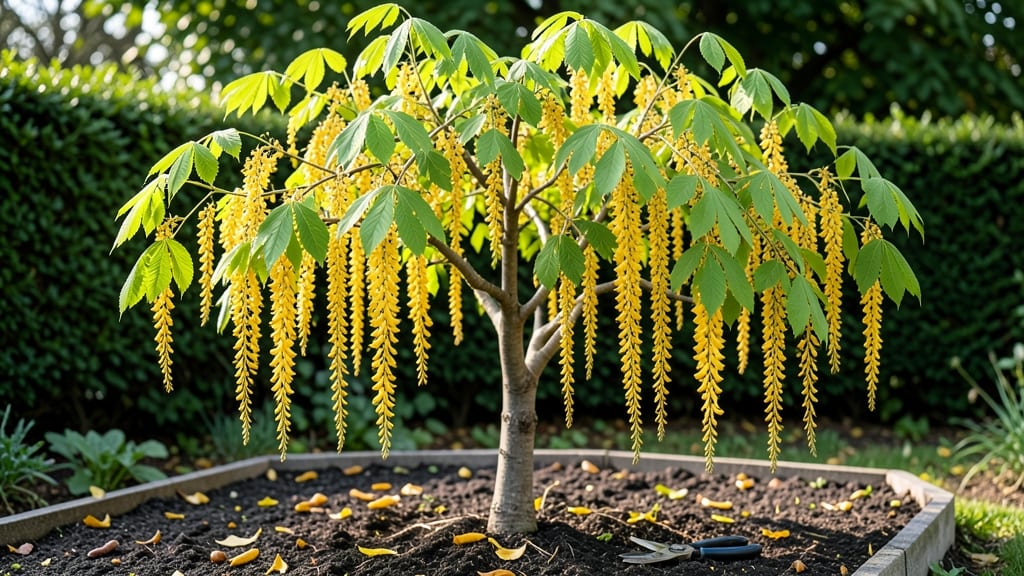
The red laburnum tree (Laburnum × watereri 'Vossii') is a stunning but dangerous beauty—its golden blooms dazzle, but those seed pods are deadly if ingested.
I learned the hard way when my curious dog sniffed at them last spring, and now I prune with extra care to keep both my garden and my pets safe.
This tree thrives in full sun and well-drained soil, but its branching habits and toxicity require smart pruning to maintain its showstopping form without risks.
Pruning red laburnums isn’t just about aesthetics—it’s about safety and health. The best time to trim is late winter or early spring, right before new growth starts. Remove dead, crossing, or weak branches first, then shape the tree by thinning out crowded areas to improve airflow.
Since the seed pods are toxic, focus on keeping the canopy open so they don’t litter the ground where kids or pets might reach them.
With the right approach, your red laburnum will reward you with vibrant yellow blooms in late spring and a graceful, airy silhouette all summer. The key is patience: avoid heavy pruning in fall, as it can stimulate tender growth that won’t survive winter.
Instead, make gradual cuts to maintain its natural shape while keeping the toxic pods under control.
For gardeners in USDA Zones 5-8, this tree is a standout, but its toxicity means it’s best planted where children and pets won’t have easy access.
A well-pruned red laburnum can live for decades, becoming a cherished focal point—just remember, its beauty comes with responsibility. Let’s get those shears ready!
📚 In This Guide
- What you need
- Instructions
- Tips and common mistakes
- Wrapping up and next steps
What you need
- ● Pruning shears or loppers – Bypass pruners (8-10" blades) for small branches, loppers (18-24" handles) for thicker limbs (up to 2" diameter).
- ● Pruning saw – For branches thicker than 2" (avoid bolt cutters—they crush wood).
- ● Gloves – Heavy-duty, chemical-resistant gloves (nitrile or leather) to protect against sap and seeds.
- ● Safety glasses – To shield eyes from debris and sap splashes.
- ● Ladder or extension pole – Aluminum or fiberglass (avoid metal ladders near power lines).
- ● Disposable bags or bucket – For collecting seed pods and pruned branches (seal pods in a labeled bag—toxic!).
- ● Rubbing alcohol (70% or higher) – To sterilize tools between cuts and clean sap off skin.
- ○ Marking twine or flags – Optional but helpful for tagging branches to remove.
- ● Tree wound dressing – Only use if pruning large wounds (>2" diameter); avoid for small cuts.
- ● Pole pruner – For high branches without a ladder (extendable up to 10-12').
- ● Work gloves with grip – For better traction on slippery branches.
- ● First-aid kit – In case of sap irritation or minor cuts.
- ● Camera or sketchpad – To document the tree’s structure before pruning.
Step-by-Step pruning guide for a healthy red laburnum tree
Here's how to shape your tree safely while protecting pets and children from toxic seed pods.
✂️ Step 1: Time Your Pruning for Optimal Growth
Prune your red laburnum in late winter or early spring, just as buds begin to swell but before new growth appears. This timing ensures you remove dead branches while encouraging vigorous spring growth. Avoid pruning in fall—it stimulates tender new growth that won't harden off before winter's chill.
If you must prune in summer, do it immediately after flowering to avoid cutting off next year's blooms. The tree's bright yellow flowers are its most striking feature, so protect them whenever possible. Look for branches that cross or rub against each other—these are prime candidates for removal first.
✂️ Step 2: Remove Dead, Diseased, or Crossing Branches
Start by cutting out any dead, diseased, or broken branches using clean, sharp pruners. Make your cuts just outside the branch collar—the swollen area where the branch meets the trunk. This ensures proper healing and prevents unsightly stubs. For larger branches, use loppers or a pruning saw, cutting at a 45-degree angle about ¼ inch outside the branch collar.
Next, remove any branches that cross or rub against each other. These create wounds that invite disease and weaken the tree's structure. If a branch is growing straight upward, prune it back to a lateral branch to encourage a more open, balanced shape. Always cut back to a healthy bud or lateral branch—never leave a stub.
✂️ Step 3: Thin the Canopy for Better Airflow
Step back and assess the tree's overall shape. Your goal is to create an open, airy canopy that allows sunlight to reach the interior branches. Focus on removing overcrowded or inward-growing branches starting from the bottom of the tree and working your way up. This technique, called "thinning," improves airflow and reduces the risk of fungal diseases.
For each branch you remove, aim to reduce the canopy by no more than ¼ of its total volume in one season. Over-pruning stresses the tree and can lead to weak growth or even death. Look for branches that are less than ½ inch in diameter—these are easier to remove and won’t leave large wounds. If you're unsure, leave it for another year.
✂️ Step 4: Clean Up and Dispose of Toxic Seed Pods
After pruning, collect and dispose of any seed pods that have fallen or remain on the tree. Red laburnum seed pods are highly toxic if ingested, posing a serious risk to pets and children. Wear gloves when handling them, and place the pods in a sealed bag for disposal in the trash—not the compost.
Clean your pruning tools with rubbing alcohol or a 10% bleach solution to prevent the spread of disease. Wipe down the tools thoroughly and store them in a dry place. If you notice any sap oozing from the cuts, it’s a sign the tree is healthy—this sap helps seal the wound naturally. Avoid applying wound dressings, as they can trap moisture and promote rot.
⏰ Step 5: Monitor and Maintain Year-Round
Check your red laburnum tree monthly during the growing season for any new dead, diseased, or crossing branches. Early intervention prevents small issues from becoming major problems. Water deeply but infrequently—1-2 inches per week—especially during the first year after pruning, to help the tree recover.
In early spring, apply a balanced, slow-release fertilizer around the tree's drip line (the area directly under the canopy). This encourages strong root and branch growth. Mulch with 2-3 inches of organic mulch, keeping it 6 inches away from the trunk to prevent rot. Avoid over-mulching, as it can suffocate the roots and attract pests.
Tips & tricks for perfect red laburnum tree pruning
Working with red laburnum trees requires precision—especially when balancing growth and safety. Here’s how to avoid common pitfalls and get the best results.
Timing is Everything: The late winter or early spring window is critical for pruning. If you miss this, wait until immediately after flowering in summer—never prune in fall. I’ve seen too many trees stressed by late-season cuts that fail to harden off before winter. For a quick check, look for swollen buds that haven’t yet burst open; that’s your cue to start.
Branch Collar Technique: When removing branches in Step 2, focus on cutting just outside the branch collar—the swollen area where the branch meets the trunk. This might seem small, but it’s the difference between a clean heal and an unsightly stub. For larger branches, use a 45-degree angle cut about ¼ inch outside the collar. I’ve made the mistake of cutting too close, leaving ugly wounds that never seal properly.
Canopy Thinning Strategy: In Step 3, prioritize removing overcrowded branches from the bottom up. This creates an open canopy that improves airflow and reduces disease risk. Remember the ¼ volume rule—never remove more than that in one season. I learned this the hard way after over-pruning and watching my tree struggle to recover. Start with branches less than ½ inch in diameter; they’re easier to remove and leave smaller wounds.
Toxic Seed Pod Safety: After pruning, collect all seed pods—even those already on the ground. These pods contain toxins that are dangerous to pets and children. Wear gloves when handling them, and dispose of them in sealed trash bags. I’ve had to explain to neighbors why their dogs got sick after chewing on fallen pods, and it’s a lesson I won’t forget.
Pro Tips for Red Laburnum Tree
- Working with red laburnum trees requires precision—especially when balancing growth and safety.
- Timing is Everything: The late winter or early spring window is critical for pruning.
- Branch Collar Technique: When removing branches in Step 2, focus on cutting just outside the branch collar—the swollen area where the branch meets the trunk.
Frequently asked questions
about pruning and caring for your red laburnum tree—plus tips to keep your garden (and pets) safe!When is the best time to prune a red laburnum tree?
The ideal time to prune is late winter or early spring (February–March), just before new growth begins. Avoid pruning in fall or during flowering season (April–May), as this can stress the tree or reduce next year’s blooms. Pro tip: If you must prune after flowering, do so immediately to minimize seed pod formation (which are toxic).
Are red laburnum seed pods dangerous? How do I remove them safely?
Yes! All parts of the tree—especially seed pods—are highly toxic if ingested. Wear gloves and long sleeves when pruning, and dispose of pods in sealed trash bags. Never compost them. Keep pets and children away from fallen pods, which can cause severe illness or even death. Safety first!
How much can I trim back a red laburnum tree?
You can remove up to 25–30% of the tree’s canopy in a single pruning session without harming it. For heavy pruning (e.g., shaping or rejuvenation), spread it over 2–3 years to avoid shock. Focus on dead, crossing, or overcrowded branches first, then thin out the interior for airflow. Pro tip: Use clean, sharp tools to prevent disease.
Is red laburnum safe for pets or livestock?
No!
All parts of the tree—leaves, flowers, seed pods, and bark—are toxic to dogs, cats, horses, and other animals. Symptoms of poisoning include drooling, vomiting, diarrhea, weakness, or seizures. If ingestion occurs, contact a vet immediately. Keep pets away from fallen debris and prune carefully to minimize risks. Better safe than sorry!
What if my red laburnum isn’t flowering? Can I fix it?
Poor flowering can stem from over-pruning, poor nutrition, or lack of sunlight. Ensure your tree gets at least 6 hours of sun daily and prune lightly to encourage new growth. Fertilize in early spring with a balanced, slow-release fertilizer (10-10-10). If the tree is young (<5 years), patience is key—it may take time to mature and bloom. Pro tip: Mulch around the base to retain moisture and nutrients.
What tools do I need for safe pruning?
Gather these essentials:
- Bypass pruners (for small branches)
- Loppers (for thicker branches, ½–1½ inches)
- Pruning saw (for branches >1½ inches)
- Gloves & long sleeves (to avoid sap/seed pod contact)
- Disposable bags (for toxic debris)
- Rubbing alcohol or bleach (to sterilize tools between cuts)
Wrapping up and next steps
The red laburnum tree is a stunning yet high-maintenance beauty that rewards patience with vibrant blooms and lush foliage—when handled with care. Remember, its toxic seed pods demand caution, while strategic pruning unlocks its full potential.
Whether you’re trimming for safety, shape, or health, now’s the perfect time to roll up your sleeves and give your tree the TLC it deserves!
Next steps:
- 📅 Mark your calendar for late winter/early spring—ideal pruning season!
- 🧤 Grab your gloves and tools (and maybe a friend for the heavy branches).
- 🌿 Start small—even a few cuts can make a difference!
Your red laburnum will thank you with years of golden cascades—stay safe and happy pruning! 🌟