
Pruning
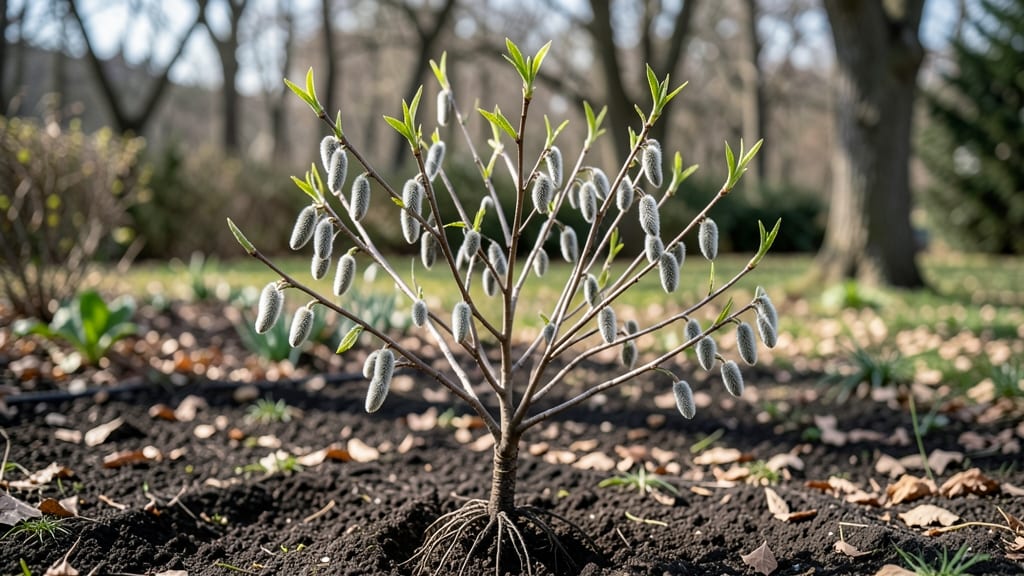
Caring for pussy willow trees during dormancy is where you set the stage for next year's showstopping catkins. 🌿 I've learned that winter isn't a time to neglect these trees—it's when proper pruning and protection create stronger branches and heavier bloom loads.
The key moments happen between late winter and early spring, when the tree is still asleep but ready to wake up with purpose.
You'll need sharp pruning shears, a ladder (for taller trees), and a clear plan for removing dead wood while preserving the natural shape. Pussy willows thrive in full sun to partial shade and moist, well-drained soil—so don't skimp on watering during their first growing season.
The right approach turns a delicate-looking tree into a sturdy performer that blooms reliably for decades.
What you'll end up with is a tree that bursts with fuzzy catkins in early spring, long before most flowers even think about waking up. The branches will be sturdy enough to support the weight of those heavy blooms, and the overall form will be more balanced and attractive.
This is how you go from "oh, that's nice" to "wow, look at that" in your landscape.
Works for both landscape planting and container growing—just adjust the pruning scale accordingly. The dormant season is your chance to give this tree the foundation it needs for a spectacular show next year. Let's get those branches ready!
📚 In This Guide
- What you need
- Instructions
- Tips and common mistakes
- Wrapping up and next steps
What you need
- ● Pruning shears: Bypass pruners (sharp, 6–8" blades) for clean cuts on small branches.
- ● Loppers: Bypass or anvil type (20–24" handles) for thicker branches (up to 2" diameter).
- ● Pruning saw: Curved-tooth hand saw for branches 2–4" thick (avoid rust—stainless steel is ideal).
- ● Gloves: Heavy-duty, cut-resistant (e.g., leather or synthetic blend) to protect from thorns and sap.
- ● Disinfectant: 70% isopropyl alcohol or rubbing alcohol + paper towels to sterilize tools between cuts.
- ○ Rubbing alcohol (10% solution): 1 part alcohol : 9 parts water for sealing larger cuts (optional but helpful for wound healing).
- ● Ladder or step stool: Sturdy, non-slip (extendable ladder for taller trees; ensure weight capacity >200 lbs).
- ● Safety gear: Safety glasses (ANSI-rated)
- ● Ear protection (if using a chainsaw for large limbs)
- ● Long sleeves/pants (to avoid scratches from branches)
- ● Chainsaw: Gas/petrol or battery-powered (for branches >4" thick; choose a low-vibration model for comfort).
- ● Tree wound paint: Not essential (modern research suggests it’s often unnecessary, but use only on cuts >2" if desired).
- ● Work gloves with grip: For stability when handling slippery branches.
- ● Trash bags or bucket: For debris disposal (line bags with plastic to avoid sap stains).
- ● Pruning sealant: Tanglefoot or similar (to deter pests from fresh cuts).
- ● Extension pole: For high branches (attach pruners/loppers to avoid ladder use).
- ● Check local pruning regulations (some areas restrict dormant-season work).
- ● Confirm the tree is dormant (no leaves, late winter/early spring).
- ● Have a clear plan—sketch or note where cuts will be made.
- ● Ensure the tree is healthy (no signs of disease like cankers or oozing sap).
Step-by-Step instructions for winterizing your pussy willow tree
Here's how I prepare my willows for winter—so they burst into bloom come spring.
⏰ Step 1: Prune Dead or Weak Branches Before Dormancy
Start by removing any branches that died over the summer or show signs of disease. Look for branches with no leaves, brown bark, or fungal growth—these won’t survive winter and can spread problems. I use clean, sharp pruners to make cuts just outside the branch collar where it meets the trunk.
Don’t over-prune—remove only what’s necessary. You’ll see healthy branches have green bark and small buds along their length. These are the ones to keep for next year’s growth. If you’re unsure, wait until late winter when buds swell to confirm which branches are still alive.
💧 Step 2: Water Deeply Before the Ground Freezes
Pussy willows need moisture to establish strong roots before winter. Water the tree deeply—about 10 gallons for every 1 inch of trunk diameter—to saturate the soil down to 2 feet deep. You’ll know it’s enough when water runs out the drainage holes if planted in a container, or when the soil feels damp 6 inches down with a trowel.
Do this 4-6 weeks before your first hard frost. Avoid watering once the ground freezes—it can damage roots. Mulch after watering to lock in moisture and insulate roots. I use 3-4 inches of shredded bark mulch, keeping it 6 inches away from the trunk to prevent rot.
☀️ Step 3: Protect Young Trees from Winter Burn
Young pussy willows (under 3 years old) are most vulnerable to winter burn, where sun exposure dries out bark. Wrap the trunk and lower branches in tree wrap or burlap if your winters drop below 10°F. Start wrapping after the ground freezes to avoid trapping moisture.
For established trees, focus on the south and west sides where afternoon sun is harshest. You’ll notice winter burn as brown, cracked bark—this happens when rapid temperature swings dry out the outer layers. A light coat of white latex paint (thinned with water) can also reflect sunlight and reduce stress.
🌿 Step 4: Monitor for Pest Hides and Early Thaw Damage
Check your tree once a month during winter for signs of pests like willow borers or scale insects. Look for tiny holes in bark or sticky residue on branches—these are red flags. If you find them, treat with neem oil spray in early spring before buds open.
After heavy snowfall, brush off accumulated snow from branches to prevent breakage. If temperatures fluctuate above 32°F, avoid pruning—new growth is weak and won’t survive a return to freezing. Instead, wait until late winter when buds begin to swell to assess any winter damage.
Tips & tricks for perfect pussy willow tree care
Here's what I've learned after winterizing dozens of pussy willows—these details make all the difference for next year's blooms.
Pruning Precision: When removing branches in Step 1, make your cuts at a 45-degree angle just outside the branch collar. This prevents water from pooling at the cut site, which can lead to rot. I always sterilize my pruners with rubbing alcohol between cuts to avoid spreading disease. The goal is to remove only what's clearly dead—healthy branches will have green bark and visible buds, even in winter.
Watering Wisdom: The 10 gallons per inch of trunk diameter in Step 2 might sound like a lot, but it's crucial for deep root establishment. I recommend using a soil probe to check moisture at 6 inches down—this is the real test, not just surface dampness. For container-grown willows, let water run through completely to ensure thorough saturation. Remember, once the ground freezes, watering becomes impossible, so get it done early in that 4-6 week window.
Winter Burn Protection: For young trees facing temperatures below 10°F, I've found that tree wrap works better than burlap because it's more breathable and stays in place longer. Apply it snugly but not too tight—you should be able to fit one finger between the wrap and trunk. The key is starting after the ground freezes to prevent moisture buildup that could encourage fungal growth. For established trees, that white latex paint trick really works—just make sure to use a water-based formula that won't damage the bark.
Pest Prevention: That monthly winter check in Step 4 is non-negotiable. I keep a small magnifying glass handy to inspect for tiny holes or sticky residue that signals scale insects. Neem oil spray is my go-to treatment, but I always apply it in early spring when the tree is just starting to wake up—this gives the neem time to work before pests become active. A gentle brush with a soft broom removes accumulated snow without damaging branches, and I always check the south and west sides first where sun exposure is most intense.
Pro Tips for Pussy Willow Tree Care
- Here's what I've learned after winterizing dozens of pussy willows—these details make all the difference for next year's blooms.
- Pruning Precision: When removing branches in Step 1, make your cuts at a 45-degree angle just outside the branch collar.
- Watering Wisdom: The 10 gallons per inch of trunk diameter in Step 2 might sound like a lot, but it's crucial for deep root establishment.
Frequently asked questions
Got questions about keeping your pussy willow tree thriving? Here are some of the most common concerns—and straightforward answers—to help you navigate dormant-season care like a pro.
When is the best time to prune pussy willow trees for maximum blooms?
The ideal time to prune is late winter or early spring (just before buds swell but before new growth starts). This encourages heavy bloom loads in spring while avoiding stress to the tree. If you miss this window, fall pruning (after leaves drop) is the next best option—but avoid pruning in late summer or fall, as it can stimulate tender growth vulnerable to cold.
How much can I trim off without harming the tree?
For healthy pussy willows, you can remove up to 25-30% of the canopy in a single session. Focus on dead, diseased, or crossing branches first, then thin out crowded areas to improve airflow. Avoid "topping" (cutting the main stem)—this weakens the tree and reduces future blooms. Pro tip: Use sharp bypass pruners for clean cuts at a <45° angle just outside the branch collar.
What if my pussy willow isn’t blooming well? Could it be the pruning?
Poor blooms often stem from over-pruning, wrong timing, or stress. Check these fixes:
Pruned too late? New growth may not have time to harden off before winter.
Cut back too aggressively? Reduce next year’s pruning to 10-15%.
Lack of sunlight? Pussy willows need full sun (6+ hours/day) for robust blooms.
Nutrient deficiency? Apply a balanced fertilizer (10-10-10) in early spring.
If the issue persists, test soil pH—willows prefer slightly acidic to neutral (6.0–7.0).
Can I grow pussy willow trees from cuttings? How do I do it?
Pussy willows are easy to propagate from dormant branches:
- Cut 6–12" sections with 3–5 buds in late winter.
- Strip lower leaves, leaving a few at the top.
- Place cuttings in water or moist potting mix (they root quickly!).
- Keep in indirect light and change water every 2–3 days.
- Transplant outdoors after roots are 2–3" long (spring or fall).
Pro tip: Use a rooting hormone to speed up the process!
How cold can pussy willow trees tolerate? Do I need to protect them in winter?
Pussy willows are hardy to USDA Zones 4–8, meaning they handle temps down to -30°F (-34°C). However, young trees or newly planted cuttings may need mulch (2–3" of wood chips) around the base to insulate roots. Avoid wrapping the trunk—this can trap moisture and cause rot. Bonus: Snow acts as natural insulation, so no extra steps are needed in heavy-snow regions!
Wrapping up and next steps
Caring for your pussy willow tree during the dormant season is like laying the foundation for a stunning spring display—a little effort now means lush, heavy blooms later! 🌿 By mastering pruning techniques, protecting against pests, and nurturing its roots, you’ll set your tree up for years of vibrant growth.
Ready to see those fuzzy catkins burst with color? Grab those pruners and get started—your tree’s future beauty is in your hands!
💡 Next step: Mark your calendar for early spring to admire the fruits of your labor—and maybe even share your willow’s charm with neighbors! 🌸