
Pruning
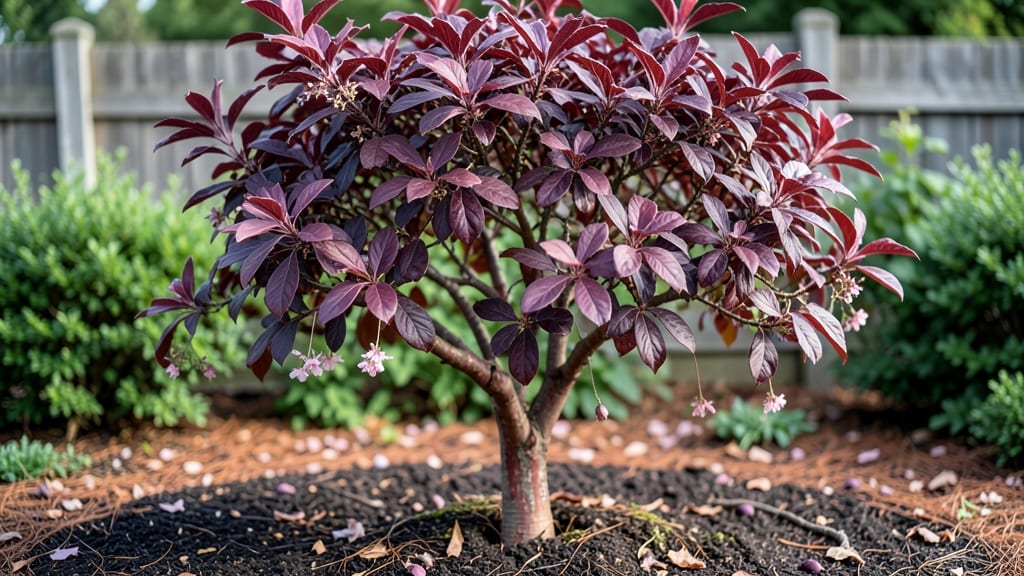
Your purple leaf peach tree starts with winter’s quiet magic—when dormant branches hold the secret to next summer’s vibrant purple canopy. I’ve watched mine transform from bare twigs to a blaze of color by carefully timing pruning, feeding, and protection during these cold months.
The key isn’t just cutting back, but preparing the tree to burst into growth when spring arrives.
You’ll need sharp pruners, a 3-in-1 oil for winter protection, and a plan to feed the roots before dormancy ends. Purple leaf peaches thrive in full sun and well-draining soil, but their real showstopper? That deep purple foliage that outshines regular peaches.
The trade-off? Fruit production is minimal—this tree is all about ornamental drama, not harvests. Still, the payoff is worth it for any gardener who loves bold, seasonal color.
By late winter, you’ll see fresh green shoots pushing through the bark—proof your pruning paid off. The tree’s disease resistance improves with proper winter care, and those purple leaves stay vibrant longer than most.
Just avoid over-pruning (keep 60-70% of last year’s growth) and protect against late frosts. Think of it as a winter makeover for a summer superstar.
Works in USDA Zones 5-9, though colder climates need extra winter wrap. Whether you’re shaping a young tree or reviving an older one, these steps ensure your purple leaf peach becomes the standout feature of your landscape. Ready to turn winter into a growth foundation?
📚 In This Guide
- What you need
- Instructions
- Tips and common mistakes
- Wrapping up and next steps
What you need
- ● Pruning shears: Bypass pruners (sharp, 6-8" blades) for clean cuts on small branches.
- ● Loppers: 1 pair (18-24" handles) for thicker branches (up to 2" diameter).
- ● Pruning saw: Curved-tooth saw for branches over 2" in diameter.
- ● Disinfectant: 70% isopropyl alcohol or a 10% bleach solution (1 part bleach to 9 parts water) to sterilize tools between cuts.
- ● Garden gloves: Heavy-duty, cut-resistant gloves (size medium/large for comfort).
- ● Rubbing alcohol or hydrogen peroxide: Small bottle (4 oz) for quick tool cleaning mid-pruning.
- ○ Tree wound dressing (optional): Pruning sealant (e.g., Tanglefoot Tree Wound Pruning Sealer) for large cuts.
- ● Tarp or drop cloth: 4’x6’ to catch debris and protect the ground.
- ● Weather check: Prune on a dry, calm day with temps between 40°F–60°F (avoid frost or rain within 24 hours).
- ● Tree assessment: Inspect the tree for dead/diseased branches (mark with flagging tape if needed).
- ● Safety gear: Safety glasses (for debris) and long sleeves/pants (protection from thorns or sawdust).
- ● Extension ladder (if needed): Sturdy, 20-24’ ladder with non-slip feet for tall trees.
- ● Sharpener: File or sharpening stone to hone dull shears/saws.
- ● 🔥 Pack a small bucket with water and a sponge to clean tools every 30 minutes—prevents sap buildup.
- ● ✨ Bring a notepad to sketch your pruning plan (label branches for removal/thinning).
- ● 🌡️ Work in layers: Start with large branches, then move to smaller ones to avoid overloading tools.
Step-by-Step guide for revitalizing a purple leaf peach tree in dormancy
Transform your tree's winter rest into a springtime comeback with these precise, season-tested techniques.
Assess and Prune for Structural Health
Begin by evaluating your tree’s framework. Look for branches that cross, rub against each other, or grow inward—they’ll compete for sunlight and create weak entry points for disease. Use sharp bypass pruners to make clean cuts at a 45-degree angle, just outside the branch collar where it meets the trunk. This ensures proper healing and prevents unsightly stubs.
Remove any dead, diseased, or broken branches first—they’re the easiest to spot by their dry, brittle wood or lack of buds. Next, target branches that exceed one-third the diameter of the trunk at the base; these are too large to prune now and would cause unnecessary stress. Thin the canopy by about 20-25% to improve air circulation, which is critical for preventing fungal issues like peach leaf curl.
Apply a Balanced Fertilizer for Spring Awakening
Use a 10-10-10 or 8-8-8 balanced fertilizer to provide equal parts nitrogen, phosphorus, and potassium. Spread ½ cup per inch of trunk diameter around the drip line (the area directly under the outer canopy). Work the fertilizer into the top 2-3 inches of soil using a hand fork—this prevents burning roots and ensures even distribution.
Water the area deeply after applying fertilizer to help it dissolve and move into the soil. Avoid overwatering, though; soggy soil can leach nutrients away before the tree’s roots can absorb them. If your soil is heavy clay, mix in 2 inches of compost to improve drainage and microbial activity, which will help break down the fertilizer more efficiently.
Protect Against Winter and Early Spring Pests
Inspect the tree for signs of overwintering pests like scale insects or aphids, which often hide in bark crevices or under bud scales. If you find sticky residue (honeydew) or tiny black sooty mold on leaves, treat the tree with horticultural oil or neem oil—both are effective during dormancy when pests are less active but still vulnerable. Apply the oil when temperatures are above 40°F to avoid damaging the tree.
Wrap the trunk of young trees with tree guard or burlap to protect against sunscald and rodent damage. Avoid plastic wraps, which can trap moisture and encourage rot. For mature trees, focus on removing any remaining leaf litter or fallen fruit from the base, as these can harbor pests and diseases over winter.
Monitor Soil Moisture and Mulch Strategically
Check soil moisture by inserting your finger 2-3 inches deep into the soil. If it feels dry, water deeply to 12 inches below the surface—this encourages deep root growth. Purple leaf peach trees are somewhat drought-tolerant, but consistent moisture during dormancy prevents root stress and sets the stage for vigorous spring growth.
Apply a 3-inch layer of organic mulch (such as wood chips or straw) around the base of the tree, keeping it 6 inches away from the trunk to prevent rot. Mulch retains soil moisture, regulates temperature, and suppresses weeds. Refresh the mulch annually in late winter to maintain its effectiveness and prevent compaction.
Tips & tricks for revitalizing a purple leaf peach tree
Here's what nobody tells you about transforming dormant purple leaf peach trees into vibrant spring showpieces.
Pruning Precision: When making those 45-degree cuts in Step 1, focus on removing branches that grow inward or cross—they're the real culprits behind poor air circulation and disease entry points. I learned this the hard way after pruning too aggressively and seeing new growth develop fungal spots. Always cut just outside the branch collar where it meets the trunk; this tiny detail makes all the difference in how quickly wounds heal.
Fertilizer Timing: The ½ cup per inch of trunk diameter measurement in Step 2 might seem arbitrary, but it's actually based on the tree's nutrient needs during dormancy. For young trees with trunks under 2 inches, you'll only need about 1 cup total. Spread the fertilizer in a circular pattern beyond the drip line—this mimics how nutrients would naturally disperse in a forest ecosystem. Watering immediately after application helps dissolve the granules before they can burn tender roots.
Pest Protection Strategy: In Step 3, when applying horticultural oil above 40°F, focus on the undersides of branches and bud scales where pests hide. I've found that adding a few drops of dish soap to the oil mixture (just 1 teaspoon per gallon) helps it spread more evenly and increases effectiveness. This is particularly important for purple leaf peach varieties, which are prone to aphid infestations that can turn leaves black and stunted.
Mulching Mastery: That 3-inch layer of organic mulch in Step 4 isn't just for show—it creates a microclimate that regulates soil temperature and retains moisture. For trees in particularly dry climates, I recommend using straw instead of wood chips, as it breaks down more slowly and provides longer-term moisture retention. Just remember to keep it 6 inches away from the trunk to prevent rot and rodent nesting.
Pro Tips for Purple Leaf Peach Tree
- Here's what nobody tells you about transforming dormant purple leaf peach trees into vibrant spring showpieces.
- Pruning Precision: When making those 45-degree cuts in Step 1, focus on removing branches that grow inward or cross—they're the real culprits behind poor air circulation and disease entry points.
- Fertilizer Timing: The ½ cup per inch of trunk diameter measurement in Step 2 might seem arbitrary, but it's actually based on the tree's nutrient needs during dormancy.
Frequently asked questions
Got questions about keeping your purple leaf peach tree thriving during dormancy? Here are some common concerns—and expert answers—to help you prune with confidence!
When is the best time to prune a purple leaf peach tree?
The ideal window is late winter or early spring, before buds swell but after the coldest weather passes (typically USDA Zones 5-9, aim for February–March). Pruning in dormancy prevents disease spread and encourages vibrant foliage. Avoid pruning in fall—it invites pests and weakens winter hardiness.
How much can I trim back a purple leaf peach tree?
For healthy growth, remove no more than 25-30% of the canopy in a single session. Focus on:
- Dead, diseased, or crossing branches
- Suckers at the base (they drain energy)
- Overcrowded limbs to improve airflow
Why are my purple leaf peach tree’s leaves turning brown after pruning?
Brown leaves post-pruning usually mean stress or infection. Check for:
- Weather: Sudden temperature swings or drought can shock the tree.
- Tools: Dirty pruners may spread bacterial canker. Sterilize with 70% rubbing alcohol.
- Over-pruning: If you cut too aggressively, the tree may struggle to regrow leaves.
Can I prune a purple leaf peach tree in containers?
Yes! Container-grown purple leaf peach trees follow the same rules but require extra caution:
- Prune lightly (10-15%) to avoid root stress in limited soil.
- Repot every 2–3 years to refresh nutrients.
- Use well-draining mix (50% potting soil, 30% perlite, 20% compost) to prevent root rot.
Will pruning affect fruit production if I grow peaches?
If your tree produces peaches, strategic pruning boosts fruit quality by:
- Opening the canopy for sunlight (sweeter peaches!).
- Removing water sprouts (they divert energy from fruit).
- Thinning branches to reduce disease risk (e.g., brown rot).
Wrapping up and next steps
Mastering the art of dormant-season pruning for your purple leaf peach tree unlocks its full potential—vibrant foliage, robust growth, and delicious fruit! 🌿 By following these steps, you’ve set the stage for a healthier, more productive tree while keeping its stunning purple hues intact.
Now that you’re armed with the right tools and techniques, roll up your sleeves and give your tree the care it deserves—your future harvests will thank you!
Ready to take it further? Mark your calendar for next year’s pruning season and consider investing in a quality pruning saw or sharpening your skills with a workshop. Happy gardening—your purple leaf peach tree is counting on you! 🌟