
Trees
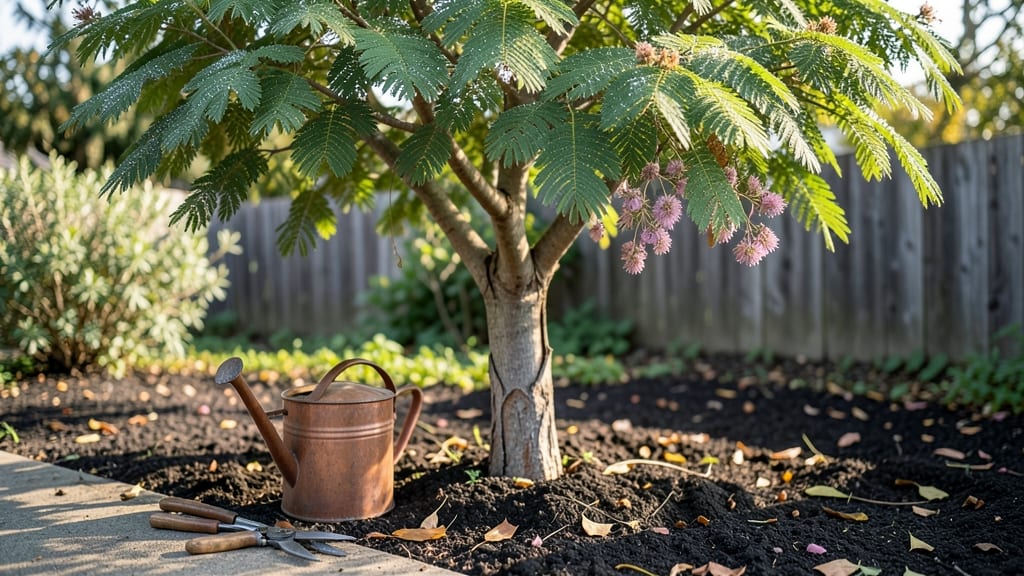
Yellowing mimosa leaves and stunted growth can turn your tree into a sad shadow of its former self—but I’ve fixed this exact problem in my own backyard. 🌱 The culprits are usually hidden: spider mites munching on undersides, powdery mildew clinging to damp foliage, or soil that’s either too dry or waterlogged.
What’s worse, these issues snowball if ignored, leaving you with bare branches by summer.
Most people grab the wrong solution first—spraying harsh chemicals that burn leaves or overwatering to "revive" thirsty roots. Instead, start with a close inspection of leaves and soil. Check for tiny webs (spider mites), white powder (mildew), or cracked earth (drought).
The fix often comes down to three simple steps: pruning correctly, adjusting water, and applying targeted treatments—no guesswork needed.
By the time you’re done, your mimosa will be bouncing back with fresh green leaves and sturdy new growth. The key is catching problems early—before they turn your tree into a skeleton.
I’ll walk you through the five most common fixes, including how to tell pests apart, when to prune, and what to avoid doing that makes things worse.
Works for both young saplings and mature trees, whether you’re dealing with a single branch or the whole canopy. Let’s get your mimosa thriving again—no more sad, yellowed leaves or weak stems holding it back.
📚 In This Guide
- What you need
- Instructions
- Tips and common mistakes
- Wrapping up and next steps
What you need
- ● Pruning tools: Bypass pruners (sharp, clean, and sterilized)
- ● Loppers (for thicker branches, 16-20 inch handles)
- ● Hand saw (for large branches, 7-10 inch blade)
- ● Safety gear: Work gloves (heavy-duty, cut-resistant)
- ● Safety goggles
- ● Long sleeves/pants (to protect from thorns)
- ● Diagnostic tools: pH soil test kit (digital or liquid)
- ● Moisture meter (for checking soil hydration)
- ● Fertilizers & amendments: Balanced granular fertilizer (10-10-10 or 20-20-20 NPK ratio, 1-2 lbs per 100 sq ft)
- ● Iron supplement (chelated iron, for chlorosis issues)
- ● Organic mulch (3-4 inches of pine bark or wood chips)
- ● Cleanup supplies: Disinfectant (70% isopropyl alcohol or bleach solution)
- ● Trash bags (for pruned branches)
- ○ Tree wound dressing (for large pruning cuts, optional but speeds healing)
- ● Hose with nozzle (for rinsing leaves if pest-related issues are suspected)
- ● Notebook & pen (to track progress and symptoms)
- ● Camera (to document before/after changes)
How to diagnose and fix mimosa tree health issues
Here's how I tackle the most common problems—yellowing leaves, stunted growth, and pests—using simple checks and proven fixes.
🌿 Step 1: Check Soil Moisture and Drainage
Stick your finger 2 inches deep into the soil. If it feels bone-dry, your mimosa isn’t getting enough water—these trees thrive when the topsoil stays consistently moist but never soggy. Water deeply until it drains from the bottom of the pot or soil, then wait until the top inch feels dry before watering again.
If the soil stays waterlogged, that’s the real issue. Mimosa roots rot quickly in standing water. Amend heavy clay soil with 1-2 inches of compost to improve drainage, or repot into a container with fresh, well-draining mix if growing in a pot. Yellowing leaves with brown edges? That’s your clue to cut back on water.
☀️ Step 2: Assess Sunlight Exposure
Mimosa trees need full sun—6+ hours daily. If leaves turn yellow or grow sparse, your tree isn’t getting enough light. Move it to a sunnier spot immediately. Watch for leaves stretching toward the light—that’s a clear sign of light hunger. South-facing windows or outdoor locations work best.
Too much direct afternoon sun in hot climates? Burned leaves (brown, crispy edges) mean it’s time to provide afternoon shade. A sheer curtain or partial shade cloth will protect the tree without stunting growth. Mimosa trees are tough, but they’ll tell you when the sun’s too harsh.
💧 Step 3: Inspect for Pests and Disease
Flip over the leaves and check the stems for tiny webs, sticky residue, or crawling insects. Spider mites and aphids love mimosa trees, and their damage causes yellowing leaves and weak growth. Spray the tree with a strong stream of water to dislodge pests, then treat with neem oil (mix 1 tablespoon with 1 quart of water) if infestations persist.
Fungal issues like powdery mildew show up as white, powdery patches on leaves. Improve airflow by pruning crowded branches and avoid overhead watering. If you spot black spots or leaf drop, remove affected leaves immediately and apply a copper fungicide to prevent spread.
✂️ Step 4: Prune for Airflow and Shape
Dead, diseased, or crossing branches weaken the tree and invite pests. Use clean, sharp pruners to trim back any branches rubbing against each other or growing inward. Cut just above a leaf node or outward-facing bud to encourage healthy growth. Prune in late winter or early spring before new growth begins.
Thin out dense foliage to improve airflow—mimosa trees hate humidity trapped in their branches. You’ll see new, vibrant leaves emerge within weeks of a good pruning session. Just don’t overdo it; mimosa trees rely on their foliage for energy, so never remove more than 25% of the canopy at once.
🪴 Step 5: Fertilize at the Right Time
Yellowing leaves can signal nutrient deficiency. Mimosa trees need balanced fertilizer (10-10-10) applied in early spring, just as new growth starts. Mix 1 tablespoon of fertilizer per gallon of water and water deeply to distribute nutrients evenly. Avoid fertilizing in fall or winter—the tree’s dormant and won’t use the nutrients.
If older leaves yellow first, it’s often nitrogen deficiency. If new leaves are pale, phosphorus or potassium might be lacking. Test your soil every 2-3 years to pinpoint exact needs. Over-fertilizing burns roots and causes more problems than it solves, so always follow the recommended amounts.
Tips & tricks for reviving mimosa trees
These simple strategies will help you diagnose and fix common issues before they become serious problems.
Soil Check: Mimosa trees hate soggy roots, so always test soil moisture by sticking your finger 2 inches deep. If it feels dry, water thoroughly until it drains from the bottom—this prevents underwatering. For container plants, ensure pots have drainage holes and use a well-draining mix. I learned this the hard way after losing a mimosa to root rot from overwatering in a sealed pot.
Light Hunger Signs: Watch for leaves stretching toward the light—this is your tree’s way of saying "I need more sun!" Mimosa trees thrive with 6+ hours of direct sunlight daily. If you’re indoors, rotate the plant weekly so all sides get equal exposure. South-facing windows are ideal, but outdoor locations with morning sun and afternoon shade work too in hot climates.
Pest Prevention: Neem oil isn’t just for treating pests—it’s a great preventive! Mix 1 tablespoon with 1 quart of water and spray the tree every 2 weeks during growing season. This deters spider mites and aphids before they become a problem. Always spray in the early morning so the solution has time to dry before evening dew forms.
Pruning Wisdom: When pruning, focus on removing dead or crossing branches first—they’re the biggest energy drainers. For shaping, cut just above a leaf node or outward-facing bud to encourage healthy growth. I always prune in late winter when the tree is dormant, and I never remove more than 25% of the canopy at once. This keeps the tree strong and prevents shock.
Pro Tips for Problems With Mimosa Trees
- These simple strategies will help you diagnose and fix common issues before they become serious problems.
- Soil Check: Mimosa trees hate soggy roots, so always test soil moisture by sticking your finger 2 inches deep.
- Light Hunger Signs: Watch for leaves stretching toward the light—this is your tree’s way of saying "I need more sun!"
Frequently asked questions
Got questions about mimosa tree woes? You’re not alone!
Here are some of the most common concerns—plus quick fixes to keep your tree thriving.
Why are my mimosa tree leaves turning yellow?
Yellowing leaves are usually a sign of overwatering or nutrient deficiency. Mimosa trees prefer well-draining soil—check for soggy roots or compacted ground. If the soil’s too wet, reduce watering and improve drainage. For yellowing from lack of nutrients, fertilize with a balanced, slow-release formula in early spring.
How do I stop my mimosa tree from growing weak or leggy?
Leggy growth happens when trees don’t get enough sunlight or pruning. Mimosa trees thrive in full sun—place them in a spot with at least 6–8 hours of direct light daily. Prune back overgrown branches in late winter or early spring to encourage bushier growth and better airflow.
Are mimosa trees invasive or harmful to pets?
Mimosa trees (Albizia julibrissin) can be invasive in some regions, spreading aggressively via seeds. They’re also toxic to pets if ingested—symptoms include vomiting or diarrhea. Keep them away from curious pups and kittens, and monitor for spread if planted in wild areas.
What’s a good alternative to a mimosa tree?
If you love the pink blooms but hate the hassle, try these low-maintenance, pet-friendly alternatives:
- Crape Myrtle – Drought-tolerant with stunning summer flowers.
- Fringe Tree – Non-invasive with fragrant blooms.
- Japanese Zelkova – Disease-resistant and adaptable.
How do I revive a struggling mimosa tree?
Start with these 3 steps:
- Check the roots – Ensure they’re not waterlogged or girdled (roots circling the trunk). Loosen compacted soil if needed.
- Fertilize lightly – Use a low-nitrogen fertilizer (like 5-10-5) in spring to avoid burning roots.
- Prune deadwood – Remove any brown, brittle branches to redirect energy to healthy growth.
Wrapping up and next steps
Mimosa trees can be stunning additions to your landscape, but their yellowing leaves and weak growth don’t have to be a mystery. From nutrient deficiencies to pests and environmental stressors, the solutions are often simpler than you think!
With the right care—like pruning, soil testing, and pest control—your mimosa can bounce back stronger than ever. 🌿
Don’t let these challenges discourage you! Start with one fix (like improving drainage or fertilizing) and monitor progress over time. Your mimosa’s revival could be just a few steps away—so roll up your sleeves and give it the TLC it deserves! 💪