
Tools
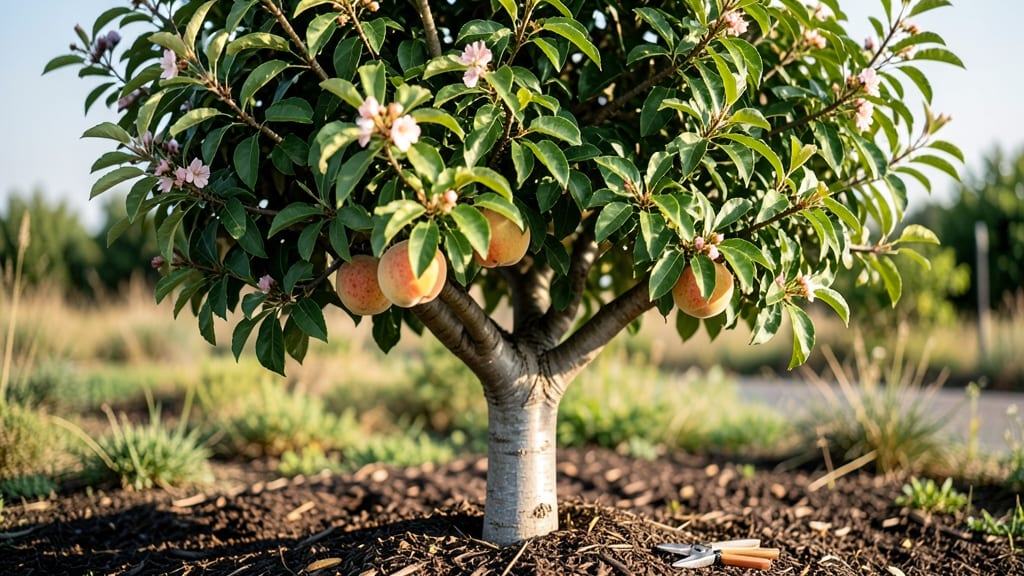
A peach tree garden transforms your yard into a sun-drenched paradise where golden fruit hangs alongside fragrant blossoms. I planted mine last spring, and now it’s the centerpiece of our backyard—shade in summer, beauty in spring, and harvests that last from July through September.
The key isn’t just the tree itself but how you design the space around it, blending practicality with pure charm.
Start with 6-8 hours of sunlight daily and well-draining soil—peaches hate soggy roots. Space your tree 20-25 feet from other plants (or structures) to prevent root competition and allow airflow that keeps pests at bay.
Around the tree, mix in companion plants like rosemary (repels pests), marigolds (brighten the bed), and clover (fixes nitrogen). These little helpers make the garden thrive while keeping the peach tree happy.
By summer’s end, you’ll have a three-tiered bounty: lush foliage for shade, fragrant blossoms returning in spring, and fruit that ripens in waves. The tree’s dappled shade creates a cozy spot for seating, while the understory plants add texture and color.
Even the pruned branches become firewood or mulch—nothing goes to waste in this design.
This garden works for small backyards or large estates, adapting to your space. Whether you’re growing one tree or a grove, the principles stay the same: sunlight, companions, and seasonal care. Let’s make your peach tree the star of the show—without sacrificing beauty or function.
📚 In This Guide
- What you need
- Instructions
- Tips and common mistakes
- Wrapping up and next steps
What you need
- ● Peach Tree Saplings: 1–3 dwarf or semi-dwarf varieties (e.g., Elberta, Redhaven, or J.H. Hale), depending on space.
- ● Garden Soil: Well-draining, slightly acidic (pH 6.0–6.5) loam or a mix of topsoil and compost (50/50 ratio).
- ● Organic Fertilizer: Balanced 10-10-10 or citrus-specific fertilizer (e.g., Espoma Citrus-Tone).
- ● Mulch: Wood chips or straw (2–3 inches deep) to retain moisture and suppress weeds.
- ● Pruning Tools: Bypass pruners (for clean cuts)
- ● Loppers (for thicker branches)
- ● Hand saw (for large limbs)
- ● Watering Supplies: Drip irrigation kit or hose with a gentle spray nozzle.
- ● Support Stakes: 3–4 wooden or metal stakes (6–8 feet tall) + tree ties.
- ● Soil Amendments: Composted manure or worm castings for extra nutrients.
- ● Pest Control: Neem oil, copper spray, or bird netting (for fruit protection).
- ● Seasonal Tools: Fruit thinning shears (for summer pruning)
- ● Harvest basket or ladder (for high branches)
- ● Garden Journal: To track trims, pests, and harvest dates!
How to maintain a thriving peach tree through three seasonal trims
Here’s how I keep my peach trees productive and healthy using precise seasonal pruning—no guesswork, just results.
Winter Pruning for Structure and Airflow
Start in late winter, just before buds swell but before new growth begins. This is your chance to shape the tree’s framework and prevent disease by removing dead or crossing branches. Use sharp pruning shears to cut back to a strong outward-facing bud, always making cuts at a 45-degree angle just above a bud.
Remove any branches that rub against each other or grow inward—they’ll create wounds where pests and diseases can enter. Thin out about 20-30% of the canopy to improve airflow and sunlight penetration. You’ll notice the tree’s skeletal structure become clearer, which makes future pruning easier.
Here’s the thing—don’t overdo it. If you remove too much wood, the tree will struggle to produce fruit. Focus on opening the center of the tree so light reaches the interior branches. After pruning, apply a thin layer of dormant oil spray to protect against overwintering pests.
Summer Pruning to Control Growth and Fruit Load
Mid-summer, around late June or early July, is the time to prune for fruit production and to manage excessive growth. Remove any suckers (shoots growing from the base or trunk) immediately—they sap energy from the main tree. Also, cut back any branches that are growing too vigorously, especially those that are shading the center of the tree.
Thin out some of the fruit clusters if the tree is overloaded. A general rule is to leave one peach per cluster to ensure the remaining fruit grows large and sweet. You’ll see the branches become less crowded, and the remaining peaches will have better air circulation, reducing the risk of fungal diseases like brown rot.
This is also the time to remove any dead, diseased, or damaged wood. Sterilize your pruning tools between cuts with rubbing alcohol to prevent spreading disease. After pruning, water the tree deeply to help it recover from the stress of trimming.
Light Post-Harvest Pruning for Next Year’s Growth
After harvesting peaches in late summer, take a final pass to clean up the tree and prepare it for dormancy. Remove any remaining fruit mummies (dried-up peaches still clinging to the branches) and any branches that were damaged during harvest. These can harbor pests and diseases over winter.
Prune out any weak or poorly placed branches—those that are too close to the ground or growing in awkward directions. The goal here is to keep the tree’s energy focused on next year’s growth rather than maintaining unnecessary wood. You’ll see the tree’s shape become more balanced and open, which is ideal for next season’s fruit production.
Apply a balanced fertilizer (like 10-10-10) around the drip line of the tree to replenish nutrients lost during fruit production. Water thoroughly to help the fertilizer integrate into the soil. This final trim ensures your peach tree goes into dormancy strong and healthy, ready to burst into growth come spring.
Tips & tricks for perfect seasonal peach tree maintenance
Keeping your peach tree thriving requires precision timing and strategic cuts—here’s how to elevate your pruning game beyond the basics.
Tool Preparation: Before you begin pruning in any season, sterilize your pruning shears with rubbing alcohol between each cut. This prevents spreading diseases like brown rot between branches. I also recommend sharpening your blades annually—dull tools cause unnecessary damage to the tree’s bark, creating entry points for pests. In Step 1, when you’re making those 45-degree cuts, a sharp tool ensures clean incisions that heal properly.
Visual Pruning Cues: In Step 2, when thinning fruit clusters, look for peaches that are uniformly spaced along the branch. The ideal spacing is about 6-8 inches between fruits, which allows them to develop properly without competing for nutrients. Also, prioritize removing smaller peaches first—they’re less likely to reach full size anyway. This visual approach ensures you’re not just guessing about fruit load but actively shaping a productive harvest.
Seasonal Timing Insight: The late June to early July window for summer pruning is critical because it allows the tree to heal before winter. If you’re in a warmer climate, you might need to prune slightly earlier, but never after mid-July—this can stimulate new growth that won’t harden off before winter. In Step 3, your post-harvest cleanup should happen within 2-3 weeks after picking to prevent overwintering pests from establishing in those fruit mummies.
Fertilizer Application Strategy: When applying that balanced 10-10-10 fertilizer in Step 3, focus on spreading it evenly in a ring about 2 feet from the trunk (the drip line). Water it in immediately to prevent burning the roots. I’ve found that splitting the application—half in early spring and half after harvest—gives the tree a steady nutrient supply without overwhelming it at any single time. This approach mirrors how peach trees naturally cycle nutrients through their growth seasons.
Pro Tips for Peach Tree Garden
- Keeping your peach tree thriving requires precision timing and strategic cuts—here’s how to elevate your pruning game beyond the basics.
- Tool Preparation: Before you begin pruning in any season, sterilize your pruning shears with rubbing alcohol between each cut.
- Visual Pruning Cues: In Step 2, when thinning fruit clusters, look for peaches that are uniformly spaced along the branch.
Frequently asked questions
Got questions about growing your own peach tree garden? Here are some of the most common ones—plus quick answers to help you cultivate a thriving orchard year-round!
When is the best time to plant a peach tree?
The ideal time to plant a peach tree is in late winter or early spring (before buds break) or in fall (6–8 weeks before the first frost). This gives roots time to establish before extreme temperatures. Avoid planting in summer’s heat, which can stress young trees.
How long does it take for a peach tree to bear fruit?
Most peach trees take 3–5 years to produce fruit after planting, depending on the variety and growing conditions. Dwarf varieties may fruit sooner (2–3 years), while standard trees can take up to 7 years. Patience pays off—healthy trees reward you with juicy peaches!
Can I grow peaches in containers or small spaces?
Yes! Dwarf peach tree varieties (like ‘Bonanza’ or ‘Redhaven’) thrive in containers (minimum 20-gallon pots) or small gardens. Ensure the pot has drainage holes, use well-draining soil, and place it in full sun. Just remember: container trees need more frequent watering and may produce smaller yields than in-ground trees.
What are the most common peach tree pests, and how do I prevent them?
Peach trees often face peach tree borers, aphids, or peach leaf curl fungus. To prevent pests:
- Apply neem oil or insecticidal soap early in the season.
- Prune for airflow to reduce humidity (fungus loves damp leaves!).
- Inspect trees regularly for chewed bark or sticky sap (signs of borers).
Do peach trees need winter protection?
Young peach trees (<3 years old) benefit from winter mulch (6–8 inches of straw or wood chips) and tree wraps to protect bark from sun scald. Mature trees usually handle cold well, but extreme winters (below 0°F) may require burlap wraps or row covers. Prune in late winter (before buds swell) to avoid frost damage.
Wrapping up and next steps
Creating a peach tree garden that thrives year-round is totally within reach—with the right seasonal trims, you’ll enjoy a bountiful harvest for decades! 🌱 From winter pruning to summer maintenance, each step ensures your tree stays healthy, productive, and pest-resistant.
Remember, patience and consistency are key, but the sweet rewards (both literal and visual) make it all worth it.
Ready to take the next step? Start small—pick one season’s trim to master, then expand your skills as you go. Before you know it, your backyard will be the talk of the neighborhood, and your peach tree will be the star of the show! Happy pruning! 🍑✨