Diseases
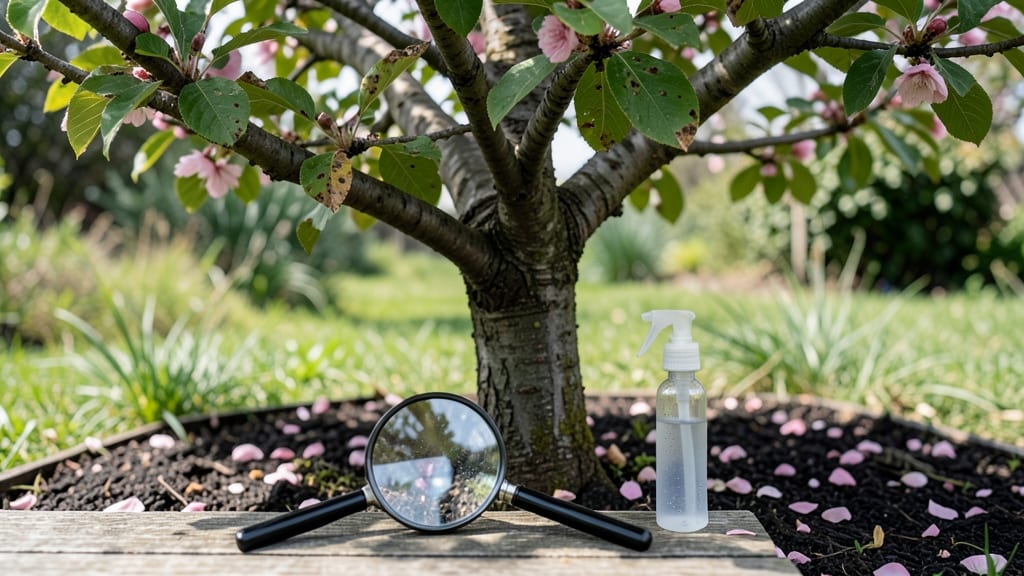
Peach tree fungus on leaves starts with tiny brown spots that multiply like a bad rumor—until your tree’s health is at stake. 🌿 I’ve seen it turn vibrant green foliage into a sad, spotted mess in just a few weeks, and the key to stopping it is acting fast before those spores take over.
Most cases come from brown rot or leaf spot, thriving where water pools or air can’t circulate. The good news? Pruning infected leaves, applying neem oil, and spacing your trees properly can reverse the damage.
I’ll show you exactly how to spot the early signs and stop it before your harvest suffers.
📚 In This Guide
- What you need
- Instructions
- Tips and common mistakes
- Wrapping up and next steps
What you need
- ● Hand lens or magnifying glass (10x magnification) – For closely inspecting leaf spots, spores, or fungal growth.
- ● Pruners or shears (sterilized) – Sharp, clean pruners (preferably bypass pruners) to remove infected leaves, branches, or fruit.
- ● Disposable gloves (nitrile or latex) – Protects your hands from spores and chemicals.
- ● Heavy-duty trash bags (2-3) – For disposing of infected plant debris (seal tightly!).
- ● Garden hose with nozzle – For rinsing leaves and removing debris.
- ● Fungicide (copper-based or sulfur-based) – Example brands: Copper Soap, Neem Oil Fungicide, or Myclobutanil (follow label instructions!).
- ○ Baking soda solution (optional but effective) – Mix 1 tbsp baking soda + 1 tsp horticultural oil + 1 gallon water + a drop of dish soap.
- ● Spray bottle – For targeted fungicide application.
- ● Lime sulfur – A broad-spectrum fungicide for severe cases (use cautiously!).
- ● Compost bin or burn pile – If you can’t dispose of debris in trash bags, composting (if disease-free) or burning is an option.
- ● Plant disease identification guidebook – Or a reliable app like PlantVillage for diagnosing fungal issues.
Step-by-Step instructions for treating peach tree fungus on leaves
Here's how I tackle fungal infections—preventing spread and restoring your tree's health.
🌿 Step 1: Identify the Fungal Infection
Start by examining the leaves closely. Common peach tree fungi like brown rot or leaf spot appear as dark spots with yellow halos, or powdery white coatings. I always check the undersides of leaves first—fungi love hiding there. Compare what you see with trusted extension service photos to confirm.
Look for these key signs: spots larger than ¼ inch, premature leaf drop, or blackened fruit. If you notice these, you're dealing with a serious infection that needs immediate action. The earlier you catch it, the easier it is to treat.
✂️ Step 2: Prune and Remove Infected Parts
Grab your pruning shears and remove any leaves, branches, or fruit showing signs of fungus. Cut at least 6 inches below the infected area to ensure you're removing the entire affected section. I always sterilize my shears with rubbing alcohol between cuts to prevent spreading spores.
Collect all pruned material in a sealed plastic bag and dispose of it in the trash—not your compost pile. Fungal spores can survive composting and reinfect your tree. After pruning, rake up any fallen leaves from under the tree and add them to the disposal bag.
💧 Step 3: Apply Fungicide and Improve Airflow
Once you've removed the infected parts, treat the tree with a copper-based fungicide or a neem oil solution (mix 2 tablespoons neem oil with 1 quart water and ½ teaspoon mild soap). Apply it in the early morning or late evening when humidity is lower, so the solution stays effective longer.
After spraying, focus on improving airflow around your peach tree. Thin out any overcrowded branches and remove nearby plants that might be blocking sunlight or airflow. Good airflow helps leaves dry quickly, which prevents fungal spores from taking hold.
☀️ Step 4: Prevent Future Infections
Water your peach tree at the base, avoiding the leaves to keep them dry. Early morning watering gives leaves time to dry before nightfall, reducing fungal growth. I also mulch around the base with 2-3 inches of organic mulch to protect the roots and keep the soil moist but not soggy.
Finally, monitor your tree regularly throughout the growing season. Catch any new signs of infection early, and treat them immediately. A consistent maintenance routine keeps your peach tree healthy and fungus-free year after year.
Tips & tricks for treating peach tree fungus
Here's what I've learned from years of battling peach tree fungus—and how to make the process even more effective.
Early Detection is Key: Don't wait until you see widespread damage! Check your tree's leaves every 7-10 days during growing season, especially after rain. I keep a small magnifying glass handy to spot those early signs on the undersides of leaves. The ¼-inch spot size mentioned in Step 1 is your warning flag—catch it before it gets that big!
Sterilization Matters: Between cuts in Step 2, I don't just wipe my pruning shears—I flame them with a propane torch for 10 seconds to kill any lingering spores. Regular rubbing alcohol works too, but the heat method gives me extra peace of mind. This simple step prevents you from accidentally spreading the infection to healthy parts of your tree.
Fungicide Application Technique: When mixing your neem oil solution in Step 3, I add a dash of baking soda (about ½ teaspoon) to the mix—it boosts the fungicidal properties. Spray until leaves are glistening wet on both sides, not just damp. The early morning application timing is crucial because cooler temps prevent the solution from evaporating too quickly.
Airflow Strategy: After improving airflow in Step 3, I make it a habit to check for any remaining obstructions every 2-3 weeks. Even small branches or weeds can block airflow. I also avoid overwatering—peach trees only need 1-1.5 inches of water per week—because soggy leaves create the perfect environment for fungal growth.
Pro Tips for Peach Tree Fungus On Leaves
- Here's what I've learned from years of battling peach tree fungus—and how to make the process even more effective.
- Early Detection is Key: Don't wait until you see widespread damage!
- Sterilization Matters: Between cuts in Step 2, I don't just wipe my pruning shears—I flame them with a propane torch for 10 seconds to kill any lingering spores.
Frequently asked questions
What does peach tree leaf fungus look like, and how do I tell it apart from other issues?
Peach tree fungus often appears as dark brown or black spots with fuzzy or powdery edges (like peach leaf curl or brown rot). Unlike insect damage, fungal spots usually have halos or yellowing around them. Check the undersides of leaves too—some fungi (like powdery mildew) leave white, dusty patches.
When is the best time to treat peach tree fungus on leaves?
Act early—as soon as you spot symptoms! For peach leaf curl, apply fungicide before buds swell in late winter/early spring. For brown rot or anthracnose, treat during rainy seasons or when leaves emerge. Preventative sprays (copper-based or sulfur) in fall can also help.
Are there natural or organic ways to treat peach tree leaf fungus?
Yes! Try these eco-friendly options:
- Neem oil: Spray on leaves (1 tsp per quart of water) to smother fungal spores.
: 1 tbsp baking soda + a few drops of soap in a gallon of water—spray weekly. - Prune & dispose: Remove infected leaves immediately (don’t compost them!).
- Improve airflow: Thin dense branches to reduce humidity, a fungus’s favorite.
Note: For severe cases, chemical fungicides (like copper fungicide or myclobutanil) may be needed.
Will peach tree fungus kill my tree if I don’t treat it?
It can, but it depends on the fungus and how fast you act. Peach leaf curl weakens trees over time, while brown rot can destroy blossoms and fruit. If left untreated, repeated infections stress the tree, making it vulnerable to pests or death. Early intervention = healthier peaches!
How often should I monitor my peach tree for fungus after treatment?
Check your tree every 1–2 weeks during spring and fall (peak fungus seasons). After rain or high humidity, inspect leaves, buds, and fruit for new spots. Pro tip: Keep a tree health journal to track patterns and adjust treatments as needed.
Wrapping up and next steps
Catching peach tree fungus early gives you the best shot at saving your harvest—and your tree! 🌱 By identifying symptoms like discolored leaves or powdery spots and acting fast with organic or chemical treatments, you can protect your peach tree’s health.
Don’t wait until it’s too late—check your trees regularly and address issues before they spread.
Ready to take action? Start by inspecting your trees this week and applying the prevention tips you’ve learned. Your future peach harvests will thank you! 🍑✨