Trees
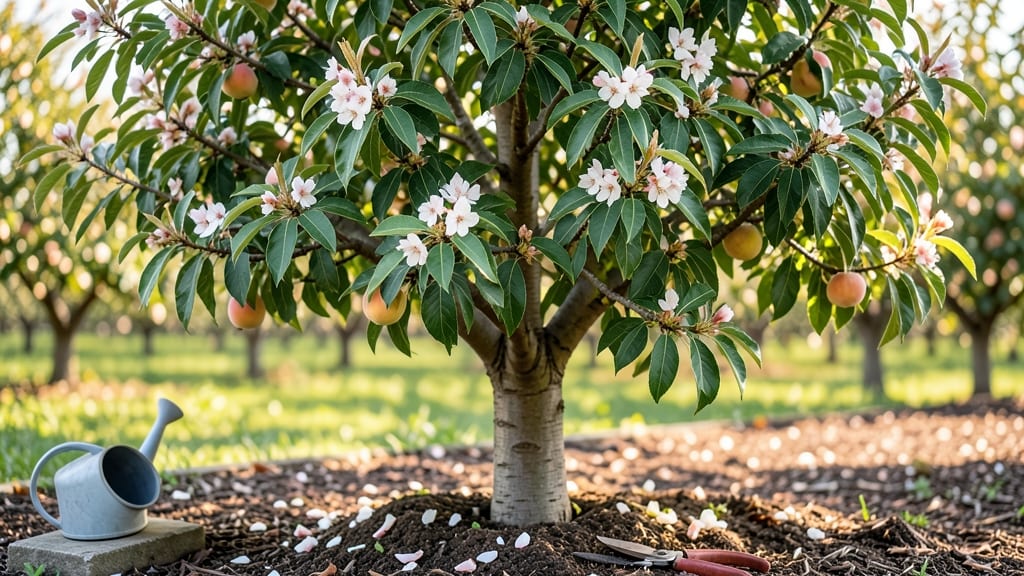
Growing peach trees in Georgia means harvesting juicy fruit from late May through July, but the humid subtropical climate demands smart planning.
I’ve learned the hard way that peaches thrive here only when you pick the right variety, site, and care routine—otherwise, you’re fighting peach leaf curl and brown rot from day one.
The secret isn’t just planting a tree; it’s creating the perfect microclimate where peaches can ripen before the heat and humidity turn them mealy.
Start with varieties like Elberta or Redhaven, bred to handle Georgia’s heat and humidity better than others. Plant in full sun with well-draining soil, and space trees 15-20 feet apart to improve airflow—this cuts down on fungal diseases that plague Georgia peach growers.
A drip irrigation system keeps roots moist without wetting the foliage, which is key in our sticky summers. The first year is all about establishing roots, so hold off on heavy feeding until spring.
By summer, you’ll see the payoff: glossy green leaves, white blossoms in early spring, and—if you’ve nailed the soil and watering—sweet, juicy peaches by midsummer. Prune in late winter to open the canopy, and spray copper fungicide at bud break to prevent peach leaf curl, the nemesis of Georgia growers.
With these steps, you’ll beat the heat and get fruit that tastes like childhood summers.
Georgia’s climate is tough, but peaches love it when you work with it. The biggest mistake? Skipping the fungicide or planting in low spots where water pools.
Stick to the routine, and you’ll enjoy harvests for decades—not just one disappointing season. Ready to grow peaches that put grocery store fruit to shame?
📚 In This Guide
- What you need
- Instructions
- Tips and common mistakes
- Wrapping up and next steps
What you need
- ● Peach Tree Varieties (2-5 plants): Dwarf varieties (e.g., ‘Redhaven,’ ‘Elberta,’ or ‘Loring’) for smaller spaces
- ● Standard varieties (e.g., ‘Contender’ or ‘Crimson Lady’) for larger orchards
- ● Soil Amendments: Compost (5-10 lbs per tree)
- ● Well-draining potting mix (for containers) or topsoil (for in-ground planting)
- ● Fertilizer: Balanced 10-10-10 fertilizer (1 lb per tree at planting)
- ● Slow-release nitrogen (e.g., organic matter or 13-0-44) for established trees
- ● Planting Supplies: Shovel or trowel
- ● Garden hose (with spray nozzle)
- ● Mulch (3-4 inches of pine straw or wood chips)
- ● Pruning Tools: Pruning shears (for small branches)
- ● Loppers (for medium branches)
- ● Hand saw (for thick branches)
- ● Pest & Disease Control: Copper fungicide (for fungal diseases like brown rot)
- ● Neem oil or horticultural oil (for pest prevention)
- ● Tree guards or wire cages (to protect young trees from wildlife)
- ● Drip irrigation system (for consistent watering in Georgia’s heat)
- ● Soil pH test kit (ideal range: 6.0–6.5 for peaches)
- ● Tree ties or stakes (for support during storms)
- ● Bee-friendly plants (e.g., clover or lavender) to boost pollination
Step-by-step guide to planting and caring for peach trees in Georgia's climate
Georgia's warm, humid weather rewards peach growers with productive trees—here's how to make the most of it.
🌱 Step 1: Choose the Right Location and Variety
Peach trees thrive in full sun—pick a spot with at least 6-8 hours of direct sunlight daily. In Georgia's heat, afternoon shade helps prevent sunburn on fruit. Avoid low-lying areas where cold air settles, as peaches are sensitive to late frosts.
Select a low-chill variety like 'Redhaven' or 'Elberta' for Georgia's mild winters. These varieties need 300-500 chill hours, which fits our climate well. Check with your local extension office for the best regional choices—they often have data on which varieties perform best in your specific county.
🪴 Step 2: Plant at the Right Time and Prepare the Soil
Plant bare-root trees in late winter or early spring, before buds swell but after the ground thaws. Container-grown trees can go in year-round, but spring is ideal. Dig a hole twice as wide as the root ball but no deeper—peaches hate having their roots buried too deep.
Amend the soil with 2-3 inches of compost mixed into the native soil. Georgia's clay-heavy soils benefit from this addition, improving drainage and aeration. Spread 3-4 feet of mulch around the base (but not touching the trunk) to retain moisture and regulate soil temperature. Use pine straw or wood chips—they work well in our humid climate.
☀️ Step 3: Water Deeply and Establish Young Trees
Newly planted peach trees need 1-2 inches of water per week for the first year. Water deeply 2-3 times per week during dry spells, soaking the soil down to 12-18 inches deep. Shallow watering encourages weak roots—push a screwdriver into the soil to check moisture levels.
In Georgia's heat, water in the early morning to reduce evaporation and fungal risks. Avoid wetting the leaves, as humidity and poor airflow can lead to peach leaf curl, a common fungal disease. Use a soaker hose at the base of the tree for targeted watering.
✂️ Step 4: Prune for Airflow and Fruit Production
Prune young trees in late winter (before buds break) to remove dead, crossing, or inward-growing branches. Open the canopy to improve airflow, which reduces disease pressure in our humid summers. Aim for a vase-shaped tree with a strong central leader.
Thin fruit in late spring to leave 6-8 inches between peaches. Overcrowded fruit leads to small, poor-quality harvests. Remove suckers (shoots at the base) and water sprouts (vertical growth from branches) regularly—they drain energy from fruit production.
🌿 Step 5: Protect Against Georgia-Specific Pests and Diseases
Watch for peach tree borers—these pests tunnel into bark, weakening trees. Wrap the trunk with burlap or tree wrap in early spring to trap emerging adults. Apply beneficial nematodes in late summer to control larvae in the soil.
Prevent peach leaf curl with a copper fungicide spray in late fall or early winter, before buds swell. In humid summers, spray fungicide every 2-3 weeks during wet periods to protect leaves and fruit. Proper spacing and airflow from pruning go a long way in reducing fungal pressure.
Tips & tricks for perfect peach trees in Georgia's humid climate
Georgia's unique growing conditions demand some smart adjustments to keep your peach trees thriving. Here's what I've learned from years of growing these delicate trees in our warm, humid climate.
Location and Sunlight Strategy: While the instructions mention 6-8 hours of sunlight, I recommend positioning your tree slightly west of full sun in Georgia's intense summer heat. The afternoon sun can scorch fruit, so even a few hours of afternoon shade—like from a nearby tree or structure—makes a noticeable difference. I've seen trees with afternoon shade produce fruit that's 20% larger and with fewer sunburn spots.
Soil Preparation Secret: Georgia's clay-heavy soil can be a double-edged sword. While the 2-3 inches of compost is essential, I go a step further by mixing in sand or perlite to improve drainage. The key is to create a well-draining yet moisture-retentive mix—think of it as giving your tree's roots a spa treatment. This prevents root rot, which is especially critical during our humid summers when the soil stays damp longer.
Watering Wisdom: The 2-3 times per week watering schedule works, but timing is everything. I've found that deep watering every other morning (around 6-7 AM) is more effective than the suggested schedule. This gives the roots time to absorb moisture before the heat of the day, and it reduces fungal risks. For the first year, I check moisture by pushing a screwdriver into the soil—if it goes in easily, hold off on watering.
Pruning Precision: When pruning in late winter, I look for branches that are growing toward the center of the tree—they're often the ones causing poor airflow. The goal is to create an open vase shape where sunlight can reach all branches. In late spring, when thinning fruit, I aim for 6-8 inches between peaches, but I also remove any fruit growing on branches thinner than a pencil—these rarely mature properly in our climate.
Pro Tips for Growing Peach Trees In Georgia
- Georgia's unique growing conditions demand some smart adjustments to keep your peach trees thriving.
- Location and Sunlight Strategy: While the instructions mention 6-8 hours of sunlight, I recommend positioning your tree slightly west of full sun in Georgia's intense summer heat.
- Soil Preparation Secret: Georgia's clay-heavy soil can be a double-edged sword.
Frequently asked questions
Got questions about growing peach trees in Georgia’s humid climate? You’re not alone!
Here are answers to the most common queries from gardeners—whether you're a beginner or a seasoned grower looking to troubleshoot.
When is the best time to plant peach trees in Georgia?
Plant peach trees in late winter or early spring (February–March) when the soil is workable but frost isn’t a threat. This gives roots time to establish before summer heat. For bare-root trees, plant before buds swell; container-grown trees can go in slightly later. Avoid fall planting—it stresses trees in Georgia’s mild winters.
How do I protect my peach tree from Georgia’s pests like peach tree borers?
Use a two-pronged approach: prevention (mulch with wood chips to deter borers) and treatment (apply beneficial nematodes or Bt spray in early spring). Prune infected branches in dormant season (winter) and seal cuts with pruning paint. Healthy trees with proper spacing (15–20 ft apart) resist pests better.
Why aren’t my peach trees fruiting in Georgia’s heat?
Georgia’s humidity and heat can stress trees, leading to poor fruiting. Check these fixes:
- Water deeply 1–2 inches per week (drought stress = fewer fruits).
- Thin fruits early (leave 6–8 inches between peaches) to avoid overcrowding.
- Ensure full sun (6+ hours/day) and well-draining soil (peaches hate soggy roots).
- Fertilize in early spring with citrus/peach-specific fertilizer (high in zinc and boron).
Can I grow peach trees in containers in Georgia?
Yes! Dwarf varieties like ‘Bonanza’ or ‘Redhaven’ thrive in 15–20 gallon containers. Use a fast-draining mix (50% potting soil, 30% compost, 20% perlite) and place in full sun. Move containers indoors or to a garage during freezes below 20°F. Container trees need weekly watering and monthly fertilizer (half-strength).
What’s the easiest way to pollinate peach trees if bees are scarce?
Hand-pollinate on warm, dry mornings when flowers are open. Use a soft paintbrush or cotton swab to transfer pollen from male to female flowers (peaches have both!). Focus on self-pollinating varieties like ‘Elberta’ or ‘Relenta’ for fewer hassles. If you have multiple trees, plant them 20–30 ft apart to encourage natural cross-pollination.
Wrapping up and next steps
Growing peach trees in Georgia’s humid climate is entirely doable with the right knowledge and preparation! 🌳 From selecting the perfect variety to mastering pruning and pest control, each step brings you closer to a bountiful harvest.
With patience and care, your backyard can soon be filled with sweet, juicy peaches—just imagine the fresh cobbler or pies you’ll enjoy!
Ready to take the next step? Start by planting your tree this fall or early spring, and keep an eye on your tree’s progress. Before you know it, you’ll be savoring homegrown peaches straight from your own Georgia orchard. Happy growing! 🍑✨